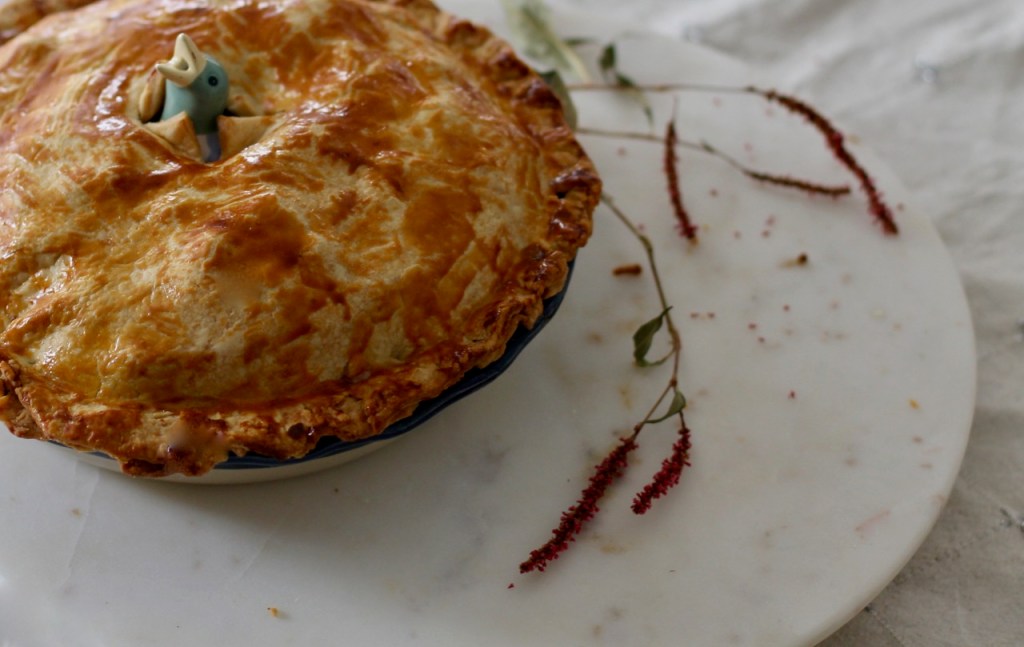
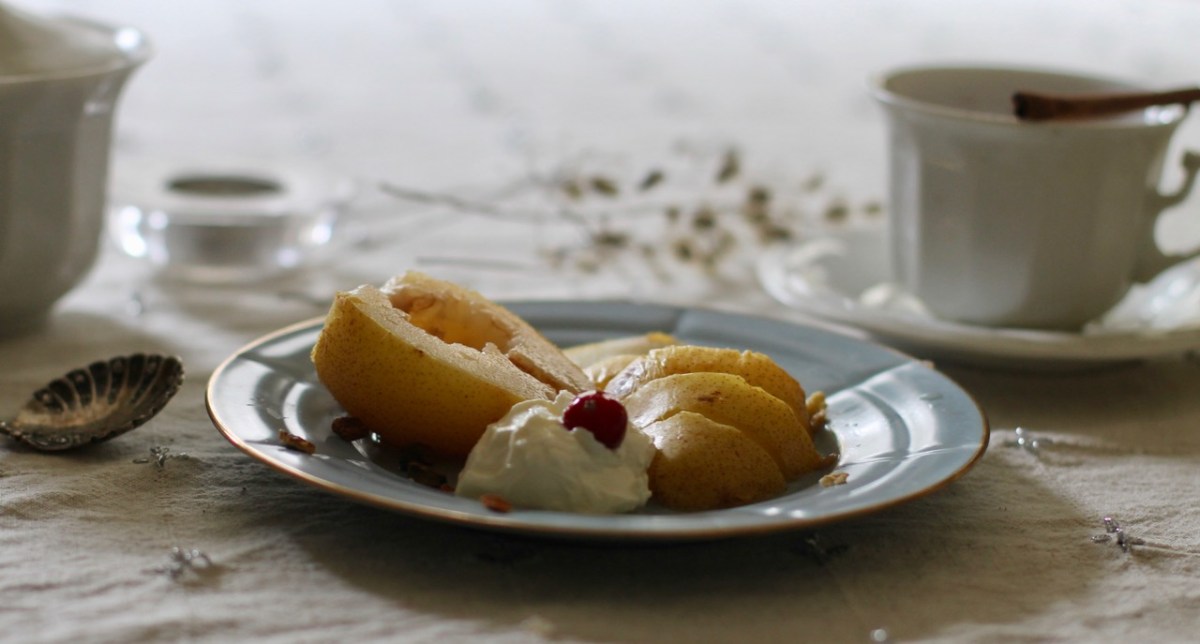
Poached pears and pear autumn drink

You get two for one with this recipe! There are the fabulous poached pears and also you get to enjoy its delicious liquid as a tea. They can be served for the holidays to delight your guests. You can also serve them any time when you need a little boost in the fall. As a practitioner of Chinese Medicine, I like creating individualized teas for people but it is also gratifying to come up with fun seasonal teas as well. This fall drink is no exception.

The sugar is caramelized, the warming spices are gently infused and the sweet pears are added at the end for poaching. The end products are the firm poached pears that can accompany any fall dish and this wonderful light drink that warms your body and soul. You can surprise your guests for Thanksgiving dinner with these delicious treats!

The sweet and juicy pears are also valuable for health. They are cooling and slightly acidic. They help the lungs by moving stagnation and keeping them moist during the dry season. They are high in fiber that is very much needed in the fall. Pears are also good source of antioxidants, minerals like copper, iron, potassium, manganese, magnesium and vitamins A, B, and C.

Recipe

INGREDIENTS

  • 2 Qt of cold water
  • 3-4 larger firm but ripe pears (Bosc, Bartlett). You can poach more pears in this liquid. You can leave the stems attached if they have stems.
  • 1/8 -1/4 cup of sugar
  • 1 Tbsp Mulling spice (please see below)
  • zest of lemon peel
  • 3 slices of an orange (optional)
  • pinch of salt
  • maple syrup or caramel sauce, optional

Method

  • Place 2 Qt water along with the sugar in a medium size pot. Bring to a boil, this will caramelize the sugar.
  • Turn the heat down and simmer the spices for 10 minutes. I chose cinnamon, all spice, orange peel, ginger, cloves, cardamom. It is a good idea to set a timer, time is important here. Please see the recipe below.
  • Meanwhile wash the pears. You can peel them and cut the bottoms of the pears off or just leave them as they are.
  • Turn off heat completely and add the pears into the pot. Keep them in the steam for about 5 – 10 minutes. The pears will poach in the steam. You want your pears to be soft but not mushy.
  • Serve the poached pears with dinner or own its own as a dessert with maple syrup or caramel sauce. Keep the liquid for a delicious warming drink.

Mulling spice

  • 1 tsp cinnamon chips
  • 1 tsp allspice berries
  • 3 pieces of cloves
  • 1 Tbsp dried orange peel
  • 7  cardamom seeds
  • 1/2 tsp of dried ginger root (cut and sifted) or 1 tsp fresh ginger root

enjoy!

Recipe, photo and text by twincitiesherbs.com.

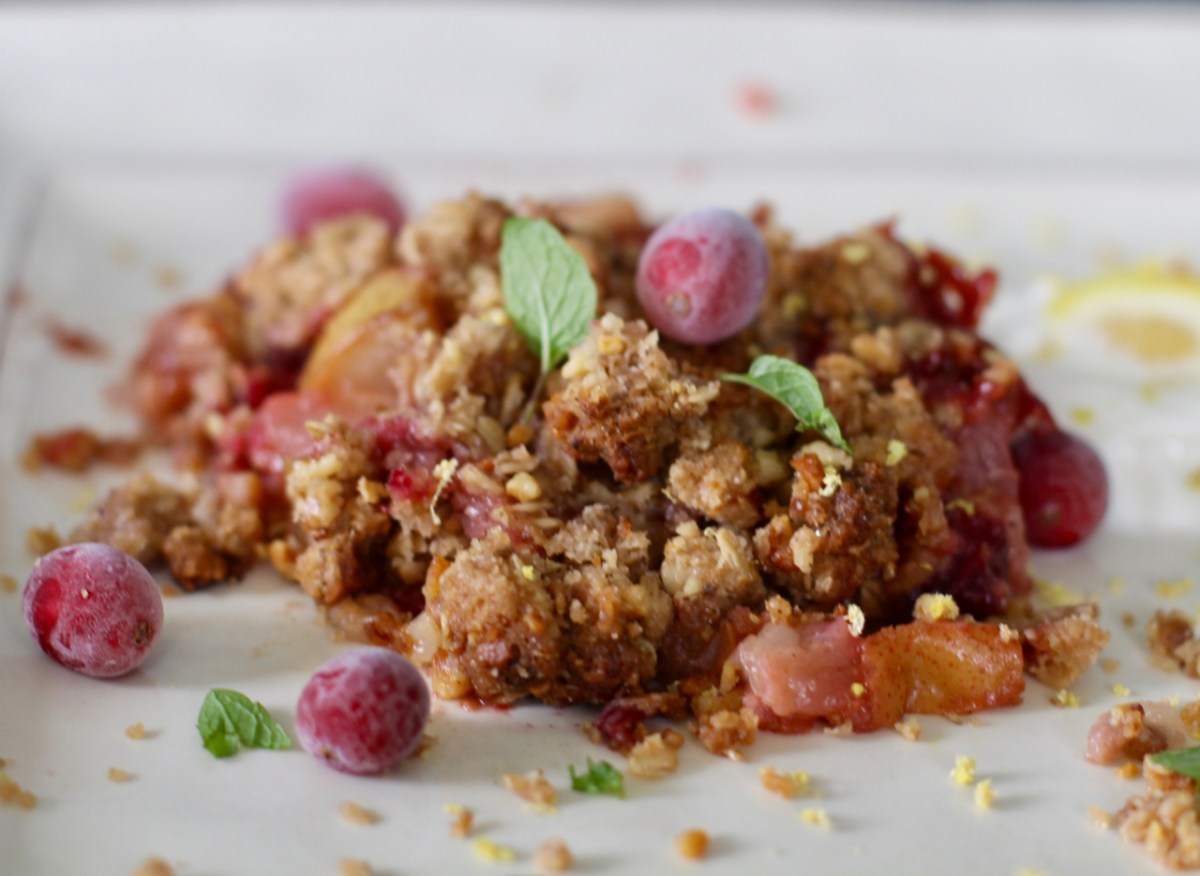
Cranberry pear crisp

This is such an exciting time for cooking in the Midwest. Fall’s abundance in vegetables and fruits is such a blessing for any cook. All the gorgeous fall colors are just dazzling. I had a hard time deciding what to post, there is so much to choose from. I guess they call this time of year the harvest season for a reason. So I decided to make something fun. How does a cranberry pear crisp sound?

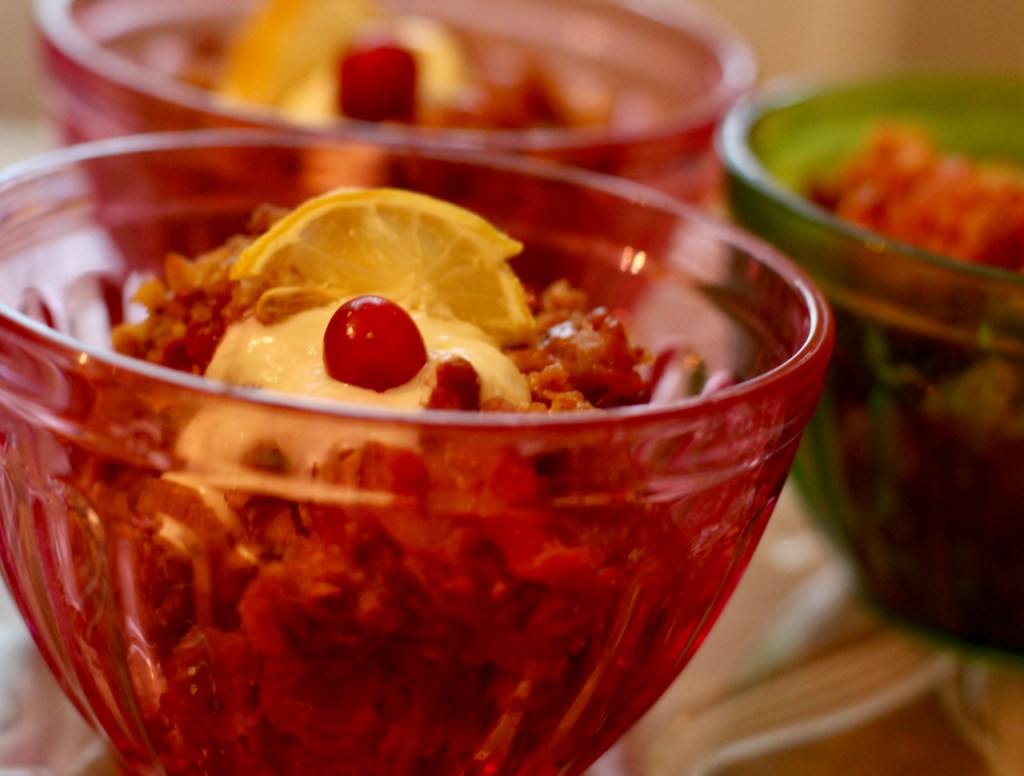
I really like how this recipe turned out. The sweet buttery pears work well with the sourness of the bitter cranberries and all this is topped with the crunchy oatmeal topping. You can serve it with a little heavy cream or ice cream!

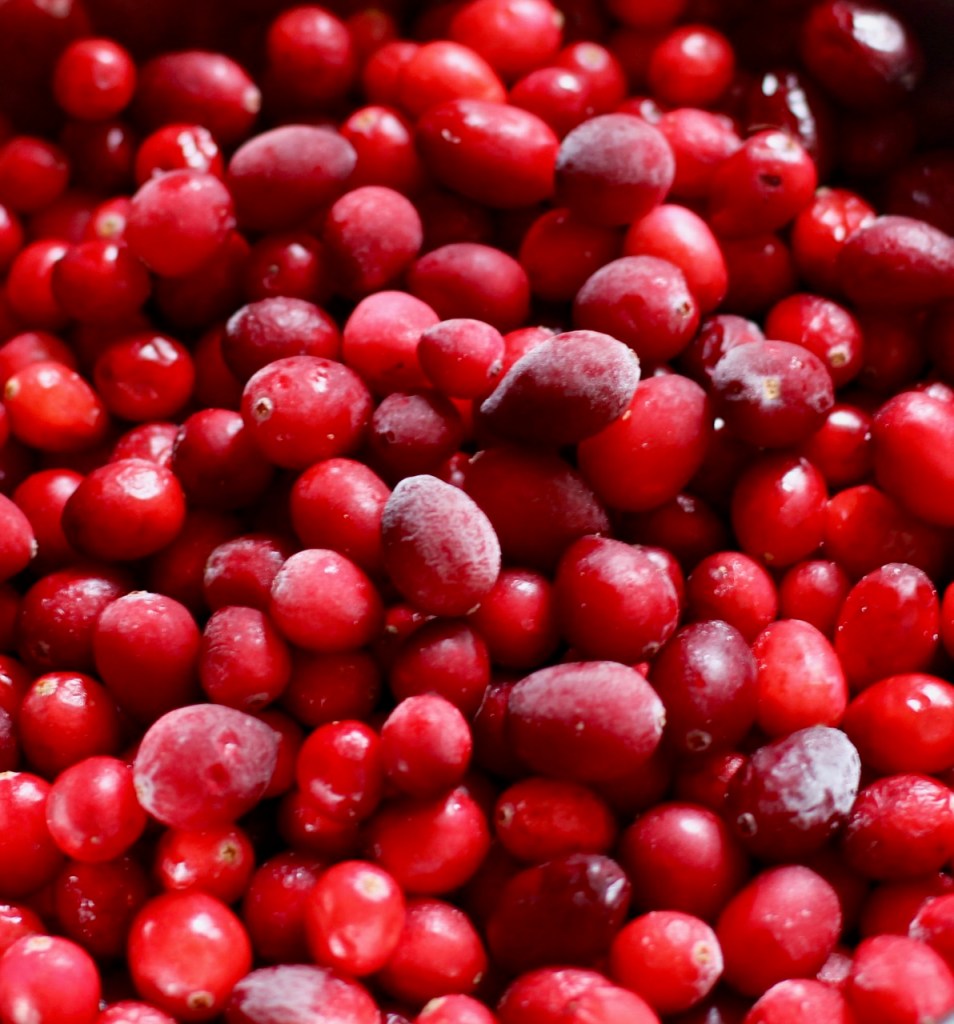
Cranberries are not just for the holidays! Most people associate cranberries with Thanksgiving or maybe Christmas because it is red like Santa’s coat. I have served cranberries after Thanksgiving and I was reminded that it was not Thanksgiving time. However, many creative chefs use cranberries for cooking and baking because they are so unique and healthy. These berries are more sour but are also bitter at the same time. It is usually hard to find fruits with bitter flavor. I personally like to add it to other sweet fruits to make the sweet dishes more exciting.

The refreshing tangy cranberries have been used as food and medicine for a long time. Cranberries are native to North America, the Pequot Indians of Cape Cod called them ibimi, bitter fruit. Native Indians used them for preserving meat. Later, the Natives shared them with the Pilgrims who started making sweet sauces. Cranberries are incredibly valuable for health as they are rich in vitamin C, fiber, flavanoids, phenols and many substances that give protection against tooth decay and infections.

One more interesting fact. Cranberries have an open space inside the middle that allows them to float on top of the water. This interesting adaptation allows them to get away from not being sweet and not having to rely on animals to spread their seeds to survive. In addition, the Native Americans believed the cranberries nourish and protect the kidneys and the bladder.

The sweet and juicy pears are also valuable for health. They are cooling and slightly acidic. They help the lungs by moving stagnation and keeping them moist during the dry season. They are high in fiber that is very much needed in the fall. Pears are also good source of antioxidants, minerals like copper, iron, potassium, manganese, magnesium and vitamins A, B, and C.

RECIPE

INGREDIENTS FOR THE TOPPING

  • 1 cup of old fashioned rolled oats
  • 1/2 cup of white flour
  • 1 stick (8 tbsp) of butter, melted
  • 2 tbsp-1/4 cup of brown sugar + 2 tbsp for the top
  • 1/8 tsp salt
  • zest of 1 lemon (optional)
  • 1 tsp apple pie spice or 1/2 tsp cinnamon + 1/4 tsp nutmeg + 1/4 cloves+ little mace or 1 tsp cinnamon
  • 1/2 cup of chopped pecans or walnuts + more for serving
  • heavy cream or ice cream for serving

INGREDIENTS FOR THE FRUITS

  • 5-6 ripe but firm pears (I used Bartlett)
  • 2 cups of fresh organic cranberries
  • 1/4 – 1/2 cup of brown sugar (I think 1/4 cup was plenty but if you have a sweet tooth or the pears are not very sweet, use 1/2 cup of sugar)
  • 2 Tbsp flour or 1 Tbsp corn starch
  • 1 lemon’s juice (use the lemon from earlier)
  • 1/8 tsp salt
  • 2 Tbsp orange peel (optional)
  • 1 tsp apple pie spice or 1/2 tsp cinnamon + 1/4 tsp nutmeg + 1/4 cloves+ little mace or 1 tsp cinnamon
  • 1 Tbsp graded fresh ginger or 1.5 tsp dried ginger (cut and sifted)
  • 2 Tbsp whiskey (optional)

METHOD

  • Preheat oven to 375 F. Have baking rack in the lower third of the oven.
  • Take a stick of butter out of the refrigerator.
  • Wash cranberries. Discard any unripe ones. In a smaller bowl add the cranberries, 1/4- 1/2 cup of sugar, lemon juice, orange peel. Let this mixture sit until cranberries give off some juice. You can add whiskey if you wish. Set aside.
  • Make topping. Cream the melted butter with the sugar. Add oats, flour, cinnamon, 1/8 tsp nutmeg, salt, lemon zest. Mix well. Fold in the nuts by hand. Let it sit for an hour. Set aside.
  • Wash, core and cut up pears into small cubes. You can peel them if the skin is tough, otherwise if they are soft no need to peel them. Set aside.
  • Assemble the fruit base. In a bigger bowl, mix 1 tsp apple spice, salt, flour or cornstarch, orange peel, pears, ginger and cranberry mixture with its juice (prepared earlier) together. Put it into a 2 Qt size baking dish.
  • Put topping on the top. Sprinkle top with some sugar (optional). I also graded a little nutmeg on the top.
  • Bake for 30 minutes or until the top has a nice orange color.
  • Serve with heavy cream or ice cream. Add some extra nuts if you wish.

enjoy!

Picture and text by Twincitiesherbs.

Source

https://www.fooducate.com/community/post/Cranberries-Sour-or-Bitter%3F/58314899-7934-4AC8-4ECE-ACFECC9CD4A1

https://www.nantucketconservation.org/properties/cranberries

https://www.nutrition-and-you.com/pears.html

https://www.seriouseats.com/2014/11/what-to-do-with-cranberries.html

Plum gnocchi (szilvás gombóc)

Plum gnocchi brings back some very sweet childhood memories … delicious plums wrapped in soft, pillowy dough with a hint of bread crumbs spiced with a little sugary cinnamon. In Hungary, it is often served as a second dish after a heavier soup but it t can also be a dessert. Late summer is the time when plums are ready so I’m so excited to have them again.

Plum gnocchi is made in many countries of central Europe: in Italy (Gnocchi de susine), Hungary (szilvás gombóc), Croatia (Knedle sa sljivama), Austria (Zwetschkenknödel), Romania (Galuste cu prune), Slovenia (Slivovi cmoki), etc. Supposedly, it originated in the region of Trieste that has a colorful history being part of different countries. Trieste is in Italy today but was part of the Astro-Hungarian Empire for some time. Oh and all those other countries that Plum gnocchi is made have some affiliation to Hungary …

Gnocchi (pronounced nyow kee) is an Italian word that means knuckle or knots. Gnocchi is a mixture of flour and water. In this recipe potatoes are also added.

So what nationality is Plum gnocchi? Today, people in any of those above mentioned countries would argue that it is theirs but please read on … If you know European history and how countries have changed, this recipe might reflect the ever changing times. Also, remember potatoes came from the new World …

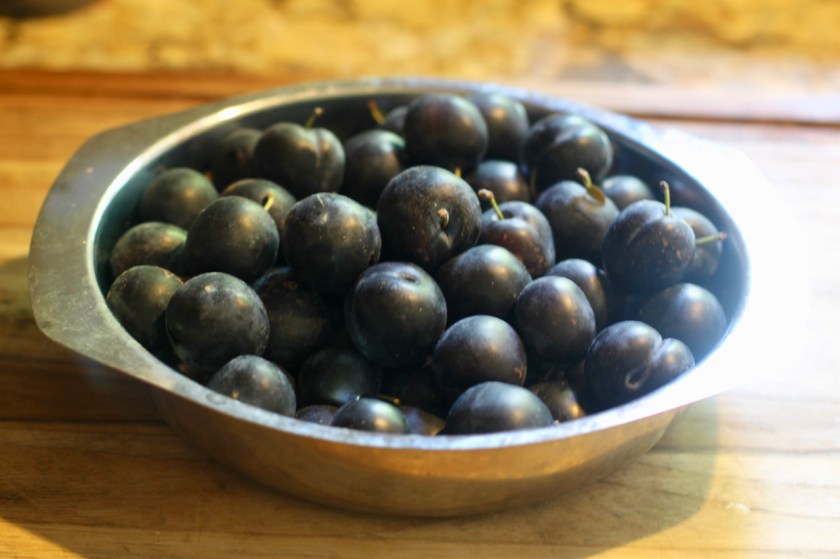
It doesn’t matter who invented it, indeed it is a fabulous dish. The main ingredient is the plum. Plums are slightly cooling with a sweet and sour flavor, so it will need the pungent cinnamon! Try to get the Italian or the Hungarian purple plums but other sweet, great tasting plums will work too. So take a bite of this intriguing history …

RECIPE

Makes about 18 balls plus the little gnocchi pieces

INGREDIENTS

  • about 1 lb russet potatoes (4-5 potatoes
  • 2 cups flour or more depending on the dough
  • 1 Tbsp semolina flour (optional)
  • 1 egg
  • 3 Tbsp sugar
  • 1 tsp apple pie spice or cinnamon
  • 1 Tbsp butter
  • 1/2 tsp salt
  • 18 sweet plums – depending on the size of your plums

Coating

  • 1 cup bread crumbs
  • 1/2 cup of walnuts (finally chopped)
  • 5 Tbsp butter
  • 1 tsp apple spice (1/2 tsp ground cinnamon, 1/4 tsp clove, 1/8 nutmeg, 1/8 tsp mace)
  • 1 T sugar
  • pinch of salt

DIRECTIONS

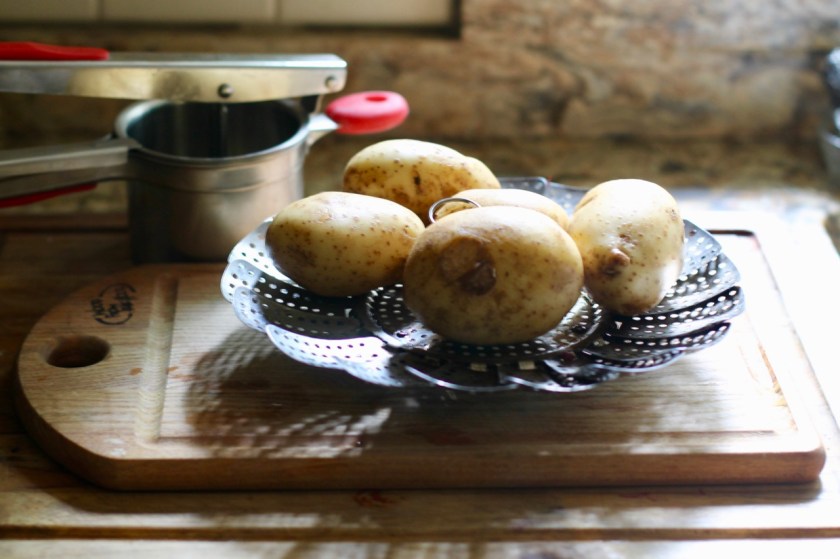
Cooking the potatoes. Add cold water to the pot, bring the water to boil. Place the potatoes with the skin on in a large pot. Turn heat down and continue cooking on medium low heat covered for about 45 – 60 minutes or until potatoes are tender. Peel them while they are still hot but you can handle. Mash the potatoes while they are warm. I like to place the potatoes onto a metal steamer with ‘feet’ so the vitamins and minerals don’t leach into the water and so they don’t soak up too much water. If the potatoes are too wet, the dough will need more flour and will be harder. (Please see picture below).

Puree the potatoes. Puree the potatoes while they are still warm, I was able to do it as soon as the peels were taken off. I used a potato ricer. I put the potatoes through the larger holes of the ricer, then the smaller ones. It is worth investing in a potato ricer if you want a nice and soft dough. Potato masher can also work. Let the potatoes cool completely.

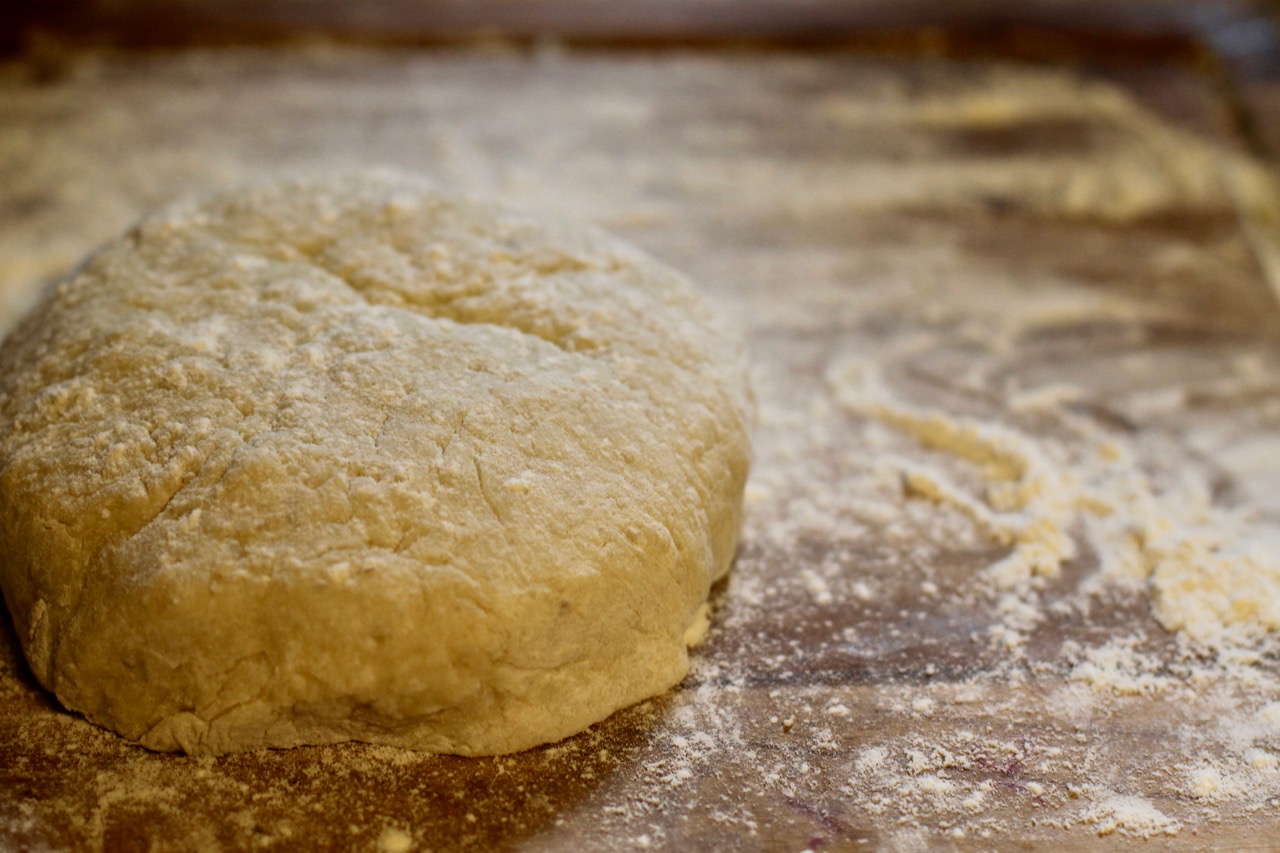
Kneed the dough. Mix in the flour, salt, egg, 1 Tbsp of butter, potatoes and start kneading the dough to make a ball. Do not over do it. Make sure your potatoes are at room temperature. If they are warm they will take up too much flour. You can use the fridge for 5 minutes if needed.

Let the dough rest for 1 hour.

Start boiling the water for the plum balls. Fill a 5 qt pot with about 3 qt water. Bring to a boil with a little salt. This will be used for the plum balls.

Meanwhile, prepare the plums. Wash them, cut them in half and take out the pits. Set aside.

Make the bread crumb coating. Melt the butter on low heat and add the crumbs stirring frequently for about 10 minutes or until the crumbs soak up the butter and become golden brown. Use lower heat so the butter doesn’t burn. When heat is turned off, add the cinnamon, sugar and chopped walnuts. Mix. This will be used to coat the balls.

Sugar filling for the inside of the balls. Mix the 3 Tbsp sugar, 1 tsp cinnamon and a pinch of salt for the stuffing.

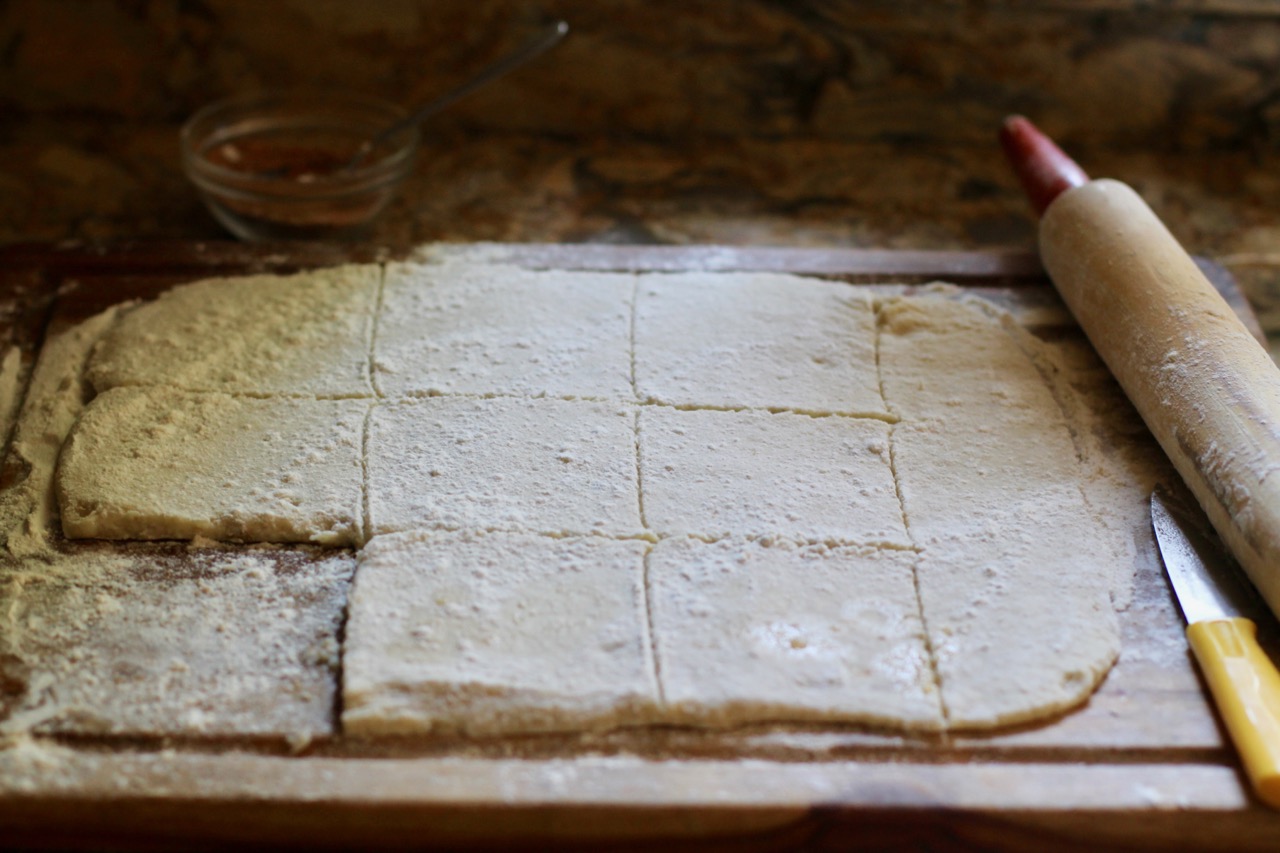
Preparing the dough. After 1 hour, place the dough on a flat, floured surface and start stretching it to 1 cm thickness until it is a squarish shape. Roll out the dough on a lightly floured surface with a rolling pin. Cut out 9 squares. Don’t worry about getting the shape perfect because we will use the left overs for the mini gnocchi, Hungarian nudlis.

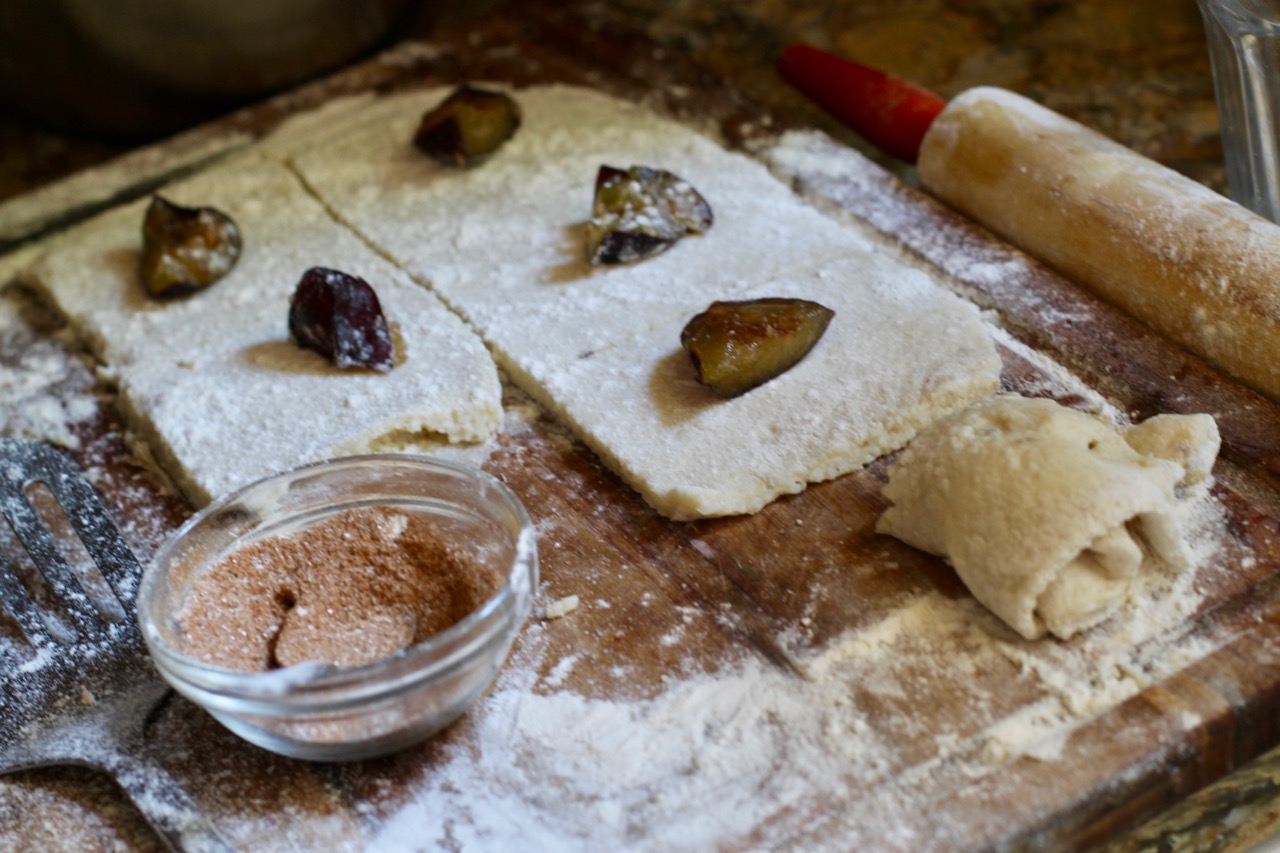
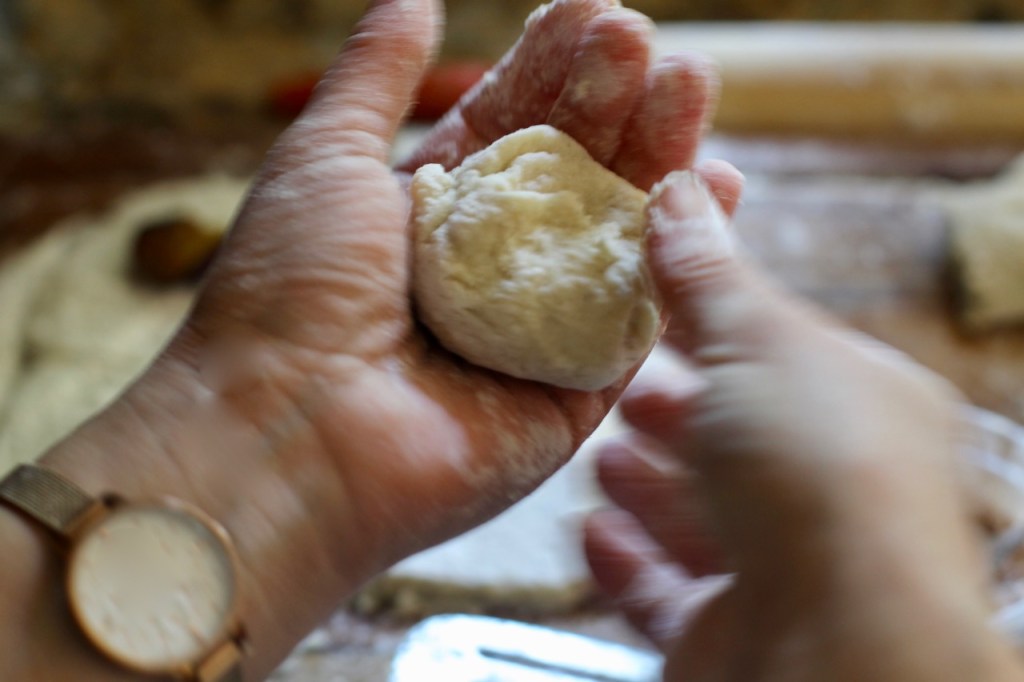
Assemble the dumplings. Place one of the dough squares into your palm. Put a plum piece along with the cinnamon sugar in the dough. Fold corner by corner gently tucking the stuffing inside and then roll it to make a ball. Do this with each square. Coat them in flour.

Making the nudlis. You can take the left over dough and start rolling long strips with them. Cut short little pieces off, coat in flour. You will cook them with the balls. If you don’t want to make these, use this left over dough to make more plum balls.

Cooking the plum balls. When the water starts boiling, you can drop the dumplings in the water one by one with a slotted spoon. Also, add the little gnocchi strips in this water. Try to gently stir them to prevent them from sticking to the bottom of the pot.

When the dumplings come to the surface, cook them for about another 5 minutes and remove them with a slotted spoon.

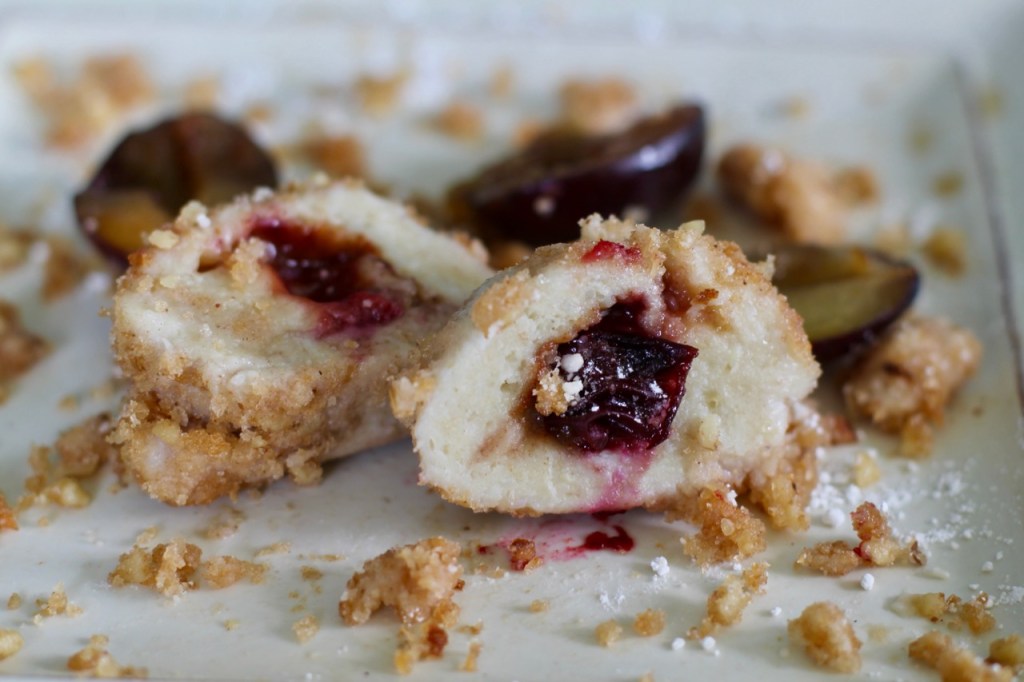
Coating the plum balls with bread crumbs. Put the dumplings into the bread crumb coating mixture that you prepared earlier and roll them around until they are well coated.

Serve warm with a little vanilla sugar or honey.

Oh and you might want to double up the recipe or triple …

enjoy! Jó étvágyat!

Photo and text by twincitiesherbs.com.

Rhubarb cobbler

Enjoy this true American deliciousness! The juicy base is both sweet and sour. These flavors nicely complement each other. It is covered with the perfectly crumpling, soft topping … Oh and it is begging for a bit of vanilla ice cream!

Cobbler is an American deep-dish fruit dessert. It became a favorite right after I took my first bite. Cobbler is simple yet it is bursting with rich flavor; there is something about it that surely grabs everyone’s attention.  You can make it with whatever fruit is available in the season. My mother-in-law made it with rhubarb and berries and that is how I keep making it. Foreigners often complain that Americans don’t have a cuisine of their own. Well this one is an American specialty for sure. 

I looked up the history of cobbler so I will try to summarize what I read.  Well, one is certain that it is a North American dessert. It seems like it was invented by the settlers from the Old World when they tried to make one of their amazing pies but they did not have all the tools and ingredients that was available back at home.  As an immigrant, I can relate to this experience.  

The word cobbler might come from the word ‘cobeler’ that meant wooden bowl.  They might have attempted to make a more simple version of a traditional pie recipe in a small wooden bowl by the fire.  Also, another meaning could come from the word cobbler, the person who mends shoes; kind of like how the dough is mended together like a patchwork. However, none of these speculations of the word’s origin is official.  

As I mentioned earlier, I like to make the cobbler with rhubarb, especially in the spring. It is the first fruit, oops I meant to say vegetable here. Yes people often think it is a fruit because of its fruity, sour taste but it is in fact a vegetable. I can’t believe I get excited about rhubarb but it is really the first new plant that shows up at the farmers market in the Midwest … and there is nothing else here for weeks. While it is not a fruit, it can be prepared with sugar to –kind of ‘cheating’- to pretend that it is a fruit.  I also like to add rhubarb because the sour flavor nicely offsets the sweetness of the berries.

Rhubarb is native to Siberia and has been around for thousands of years. It has been grown in Asia for its medicinal properties. With the big migration, it was adopted in Europe as well. The settlers brought it over to the United States in the 1700’s and was known as the pie plant. The whole plant except for the leaves are used. The stalks are used as food. The leaves contain oxalic acid and can be poisonous in larger quantities and are therefore not used.

This is a crowd pleaser! The only complaint I have ever heard was why I didn’t make more! I bring this dessert often to potlucks so I know a lot of people have eaten it. I really think cobbler is as good as pie is or even better. The trick is to get the best rhubarb and the sweetest berries you can find. You can grow them yourself or get them at the farmers’ market. This is really important as the main part of the cobbler is the fruits! Also, make sure you use the exact measurements! Remember, it is still kind of a pie recipe. Can’t just say I take a little bit of this and a little of that …

RECIPE

12 servings

This recipe is straight out of the cookbook Joy of Cooking.

Serving size: 8 people

INGREDIENTS
  • 1 lb rhubarb cut into 1/2 inch pieces (in the store get the thinner stalks)
  • 1 lb berries – I used blackberries and raspberries
  • ½ cup sugar or more only if your fruits are not sweet enough. Only use more if your berries are not sweet. 1/2 cup is plenty otherwise, trust me!
  • salt
  • 1 tsp dried ginger, 2 tsp fresh chopped ginger
  • 2 Tbsp flour or 1 Tbsp of corn starch
  • 1 1/3  cup all purpose white flour
  • 1 tsp baking powder
  • 2 Tbsp sugar
  • 5 Tbsp cold unsalted butter
  • 2/3 cup cream or 1/2 cup milk (honestly milk is fine too)
  • 1 lightly beaten egg for the top
  • extra sugar for the top
  • vanilla ice cream for serving

DIRECTIONS
  1. Preheat the oven to 375 F. 
  2. Have all the ingredients at room temperature except for the butter.
  3. Have ready an oven proof baking dish that is about 2 quarts large in volume and 2 inches deep (ex 11 x 4 x 2 inch).  
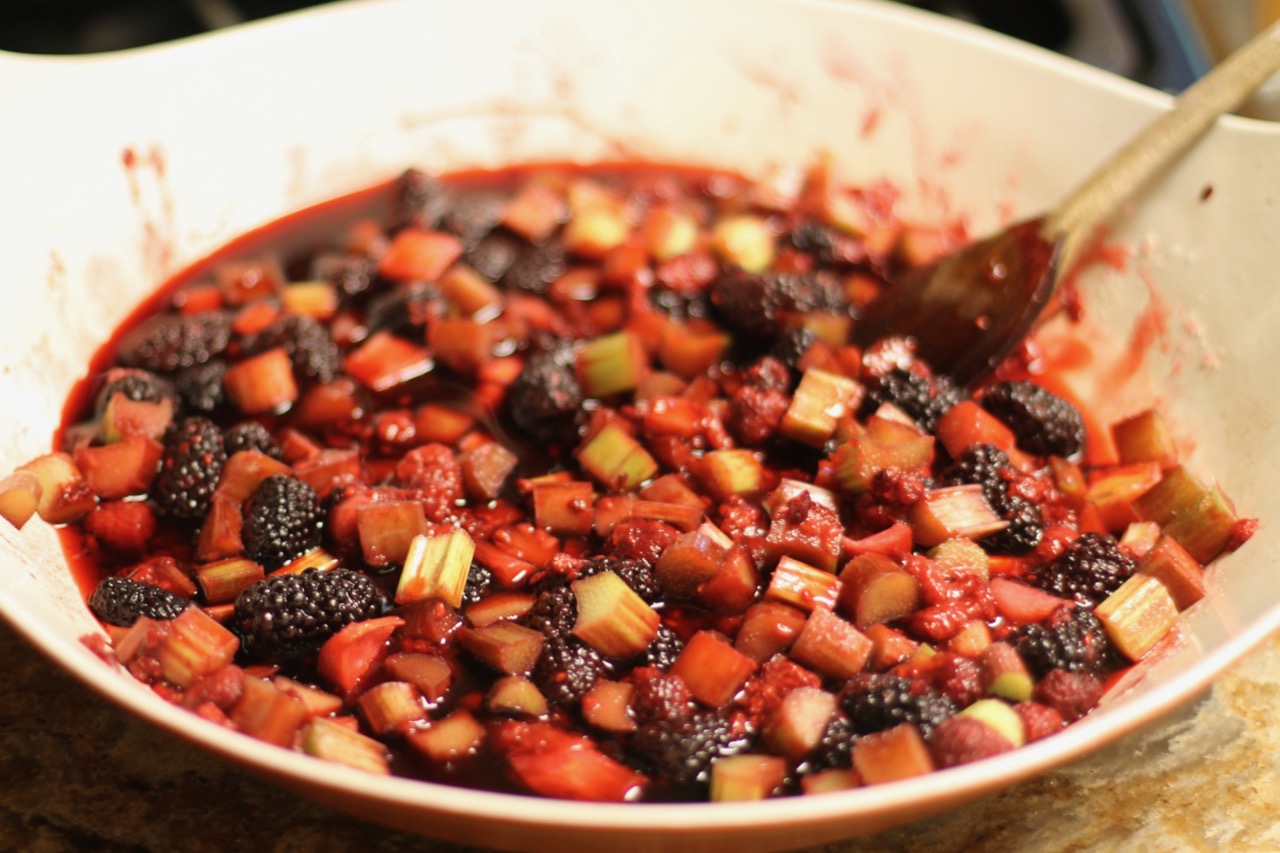
  4. Take fruits and the rhubarb out of the freezer if they are frozen, let them defrost. Wash rhubarb stalks and cut them into 1/2-1 inch long. If they are wide, you will have to cut them in half as well. Place the rhubarb and the berries in the dish. Add pinch of salt, ginger, flour or cornstarch and sugar. Mix. Set aside and wait for at least 15 minutes or at least until rhubarb exudes some juice.
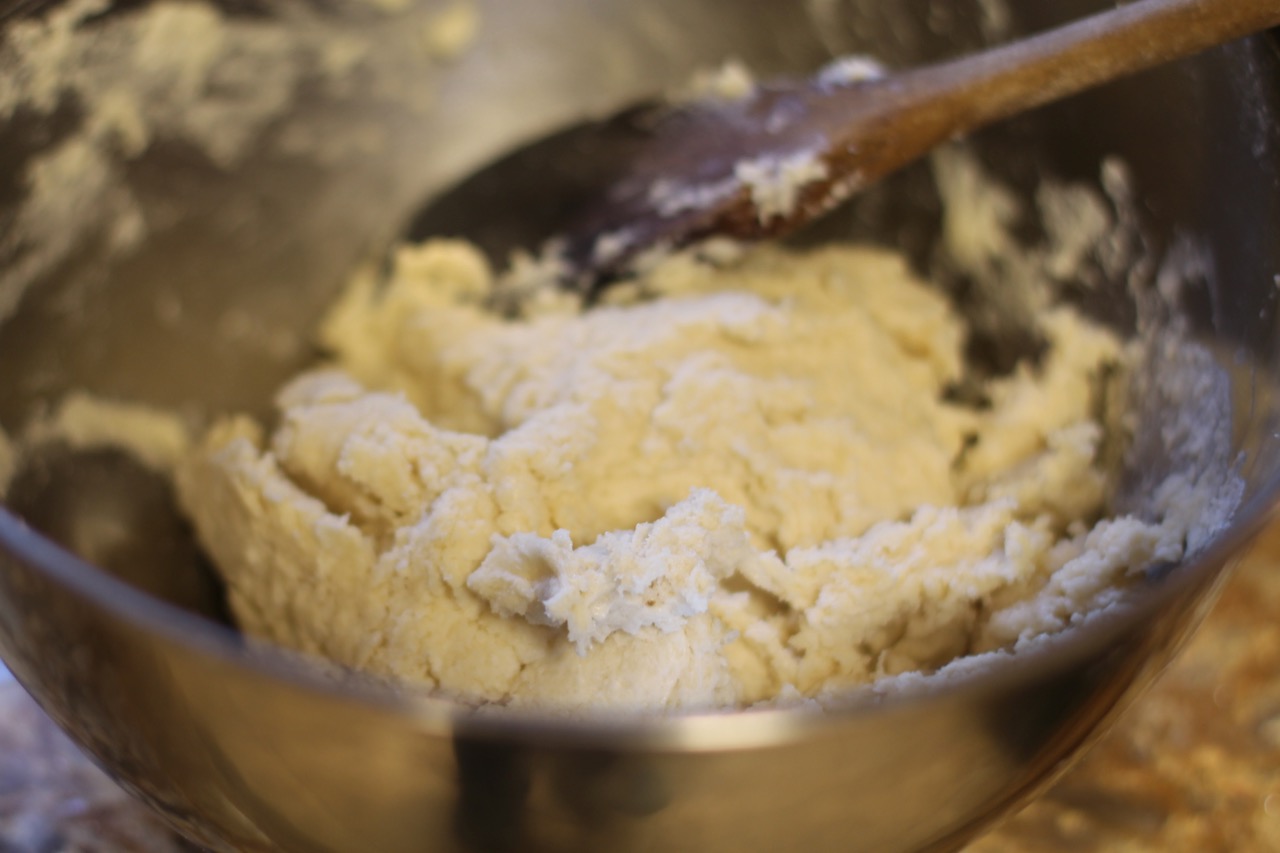
  5. In a large bowl, combine the flour with the baking powder, pinch of salt and sugar. Add the butter with the flour mixture. This is such a satisfying experience for me to do by hand but if you prefer you can use your food processor for this step.  Add the cream or milk stirring with a wooden spoon until the dough comes together. Gently need the dough in the bowl 5-10 times if needed, turning and pressing any loose pieces into the dough.
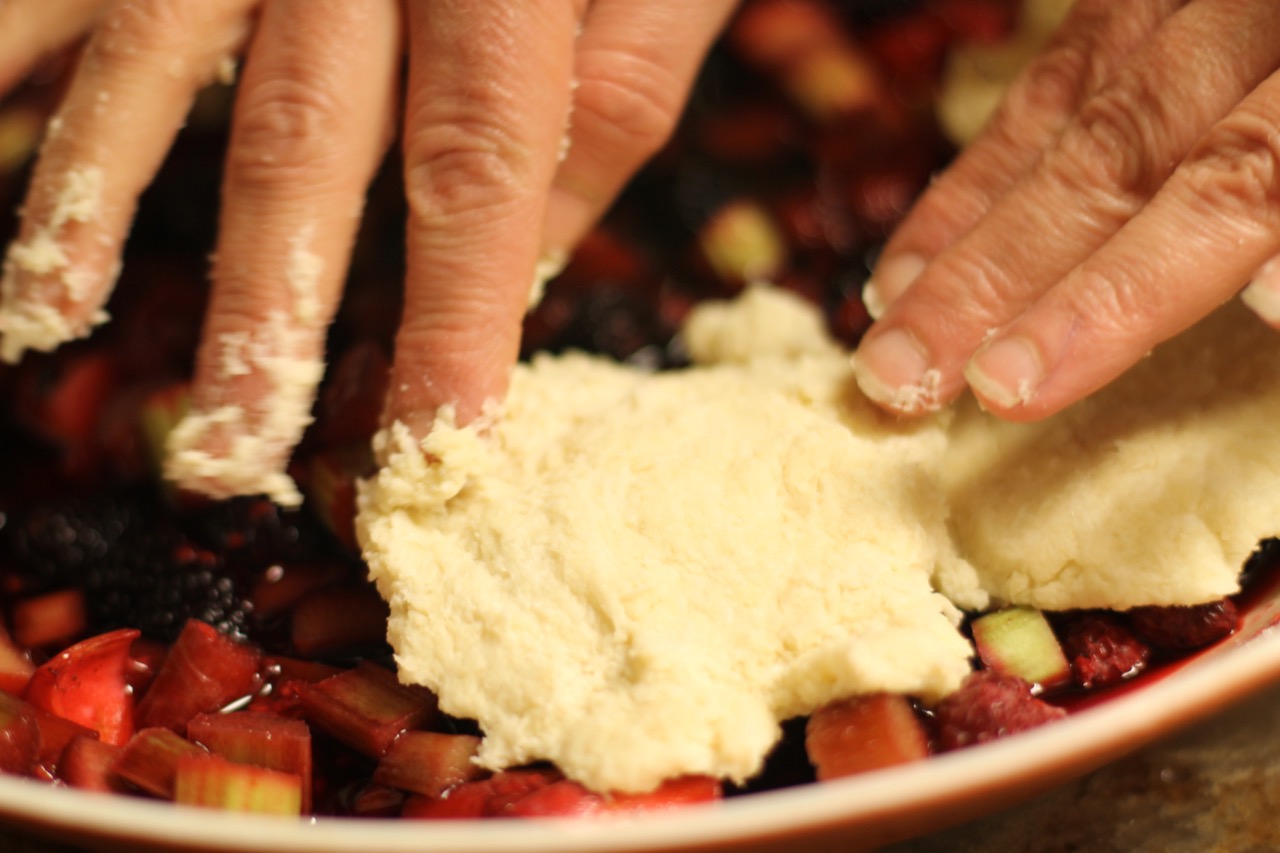
  6. Now we will make a patchwork. Divide the dough into 8 parts and flatten each piece between your two hands about 1/4 inch thick. Place this piece on top of the fruit mix. Keep doing this until you have used up all the dough and the fruits are completely covered.  The dough should be workable but not sticky. If the dough becomes too sticky and hard to work with, put it into the fridge for about 10 minutes to become the proper consistency. This can happen in the summer when it is warm outside.
  7. Lightly brush the top of the dough with the lightly beaten eggs and sprinkle with a little sugar. 
  8. Put the cobbler in the oven and bake for about 35 – 40 minutes or until the top is golden brown and the berries are bubbling. 
  9. Let stand at room temperature for at least 15 minutes before serving. 
  10. You can serve the cobbler with vanilla ice cream if you wish.

enjoy!

Sources

  1. Irma S. Rombauer: Joy of Cooking
  2. Paul Pitchford: Healing with Whole Foods
  3. http://www.etymonline.com/word/cobbler

Text and photos by Twincitiesherbs.