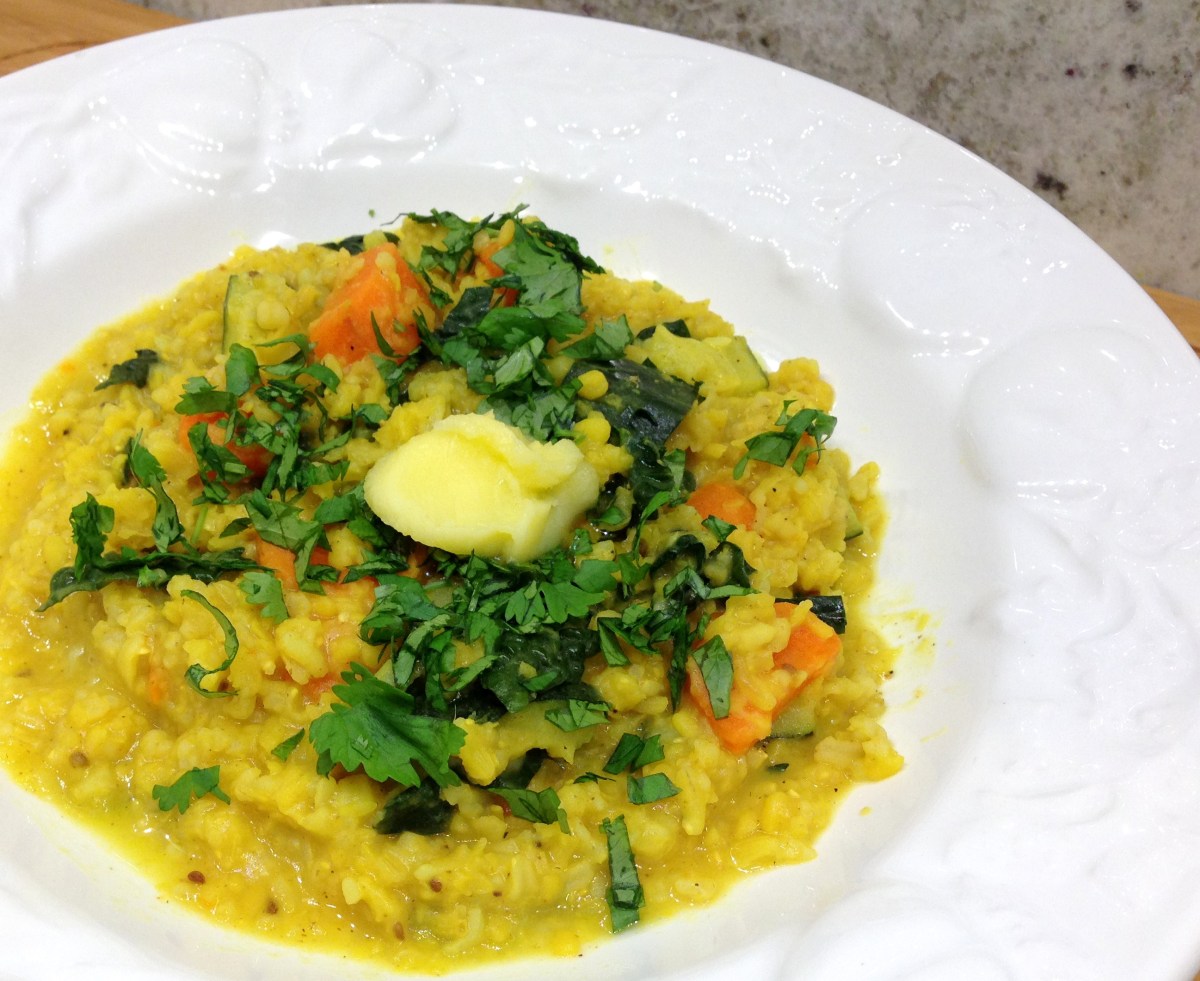
Kitchari recipe

Kitchari! A nourishing vegetarian dish to make in the winter or the summer … whenever you are looking for something easy to digest.

Now that the holidays are over, our bodies want to have a little break from all the rich, heavy foods. However, spring isn’t here yet so we can’t eat all the lovely seasonal vegetables. In fact, spring is nowhere in site, just the past week it was -40F here in the Midwest. Even if the prediction of the groundhog is correct, spring won’t start until April here. Many people start dieting now, removing nourishing foods from their diet but most fail because it is just too early.  So what can we do?  

I like to turn to the ancient Ayurveda cooking, in other words Indian cuisine! Most people associate Indian foods with something exotic. Yes, some of their dishes can be foreign to us, but their nourishing dish, the Kitchari can be made any time, anywhere and surely by anybody.  Really, Indians make it on a regular basis, serve it during holidays with the rich foods to help their digestion and even give it to sick people to recover from an illness. It is an inexpensive dish that millions eat on a daily basis in India. I asked my Ayurveda teacher if we could eat it during the cold season. She said yes even when it is -40F – just add the warming spices like ginger, cumin, and hot pepper. You can serve local vegetables like carrots, spinach, kale, cauliflower, onions etc. Of course, it would go nicely with some Indian rice and roti. 

This is a very healthy dish. Usually, Ayurveda practitioners advice their clients to eat kitchari if they have any acute or chronic issues. It just does amazing things… The three spices turmeric, cumin, coriander are used along with the mung beans. The kitchari diet should last for 1 week when one is only allowed to eat kitchari, rice, grains and vegetables. Of course all the fried foods, fried vegetables, paneer have to be left out. Mung beans are used but if you can get the yellow split moong beans, they are even better as they are easier to digest.

Recipe

Kitchari Ingredients
  • 2 tsp of ghee (I use home-made)
  • 1 tsp turmeric powder
  • 1 tsp of coriander powder
  • 1/2 tsp of cumin powder
  • 1 tsp of whole cumin seeds
  • 1 cup of split mung dal (yellow) – soak for at least 4 hours
  • ½ tsp salt
  • about 4 cups of water or chicken stock
  • 1 inch of fresh minced ginger root, finally chopped
  • black pepper
  • cilantro to taste
  • yogurt
  • lemon
Indian rice Ingredients
  • 1 cups of white Basmati rice
  • 2 cups of water or meat stock
  • 2 tsp ghee (homemade the best)
  • 1 tsp cumin seeds
  • little piece of cinnamon
  • pinch of  saffron (8-10 strings)
  • 1/2 tsp salt
  • ¼ tsp little turmeric

Preparations
  • Clean and soak mung beans overnight but soak at least for 2 hours.
  • Discard water and use fresh cold water to cook the beans. Cook for 1 hour.
  • Making the gravy. Saute the onions on medium high heat. When you smell the nice aroma of the onion, add the ginger, cumin seeds stir and cook for about 5 minutes.
  • Add the garlic and the powders (turmeric, cumin, coriander), stir for 1 minute.
  • Add 1/4 cup of cold stock or water. Stir.
  • Add 1 cup chopped tomato and cook for about 5-10 minutes until it becomes saucy.
  • Add chopped carrots and other vegetables.
  • Bring to a boil, turn down and cook for 30 minutes.
  • Add in the cooked mung beans and cook for 15 more minutes or until done.
  • Add salt and pepper to taste.
  • Serve with rice, roti, cilantro and lemon.

Indians cook the dish with the rice. I personally like to serve the rice on the side and prepare separate.

Enjoy!

Traditional Hungarian stuffed cabbage (töltött káposzta)

I don’t think it is an accident that stuffed cabbage is a Christmas dish.  You can surely serve it any time but it is the perfect dish for the holidays.

I smile every time I remember my daughter’s reaction. She was three years old when she saw stuffed cabbage on the Christmas table and screamed ‘YUCKY’.  However, after she tried it, she realized how delicious it was. Ever since then, she makes sure that it is on the Christmas menu every year.

Stuffed cabbage is a popular winter dish in Hungary even though our ancestors didn’t make it. It is a dish that was inspired by the Turks. They called it szárma from the Turkish word sarma. However, many of us today can’t imagine Christmas without it. My mom made it every year. 

I don’t think it is an accident that stuffed cabbage is a Christmas dish.  You can surely serve it any time of the year but it is the perfect dish for the holidays.  In the old days, families butchered their pigs and the meat was ready to be used by around this time. Also, there weren’t too many vegetables available except for a few like cabbages and onions. Not to mention that the dish can be kept in the cold for a couple of days. In fact, it tastes the best after a few days. This was an important consideration too. Christmas went on for days back in the old times. According to traditional customs, people were not allowed to work during the celebrations.

The recipe is not too difficult, though it is time-consuming. Just remember you won’t have to cook for 3 days afterwards! There are many variations of this recipe but this is how I make it. Please feel free to experiment with it.

What you need

Meat stock:
  • 1 -2 lb of beef bones (ox tail and beef bone)
  • 2-3 Tbsp of black pepper corn. I like to add a lot of peppercorns because they give a really nice flavor to the dish.
  • water
  • 4 bay leaves
  • 3 carrots
  • 2 parsnips
  • 1 large onions
  • few cloves of garlic
  • 2 celery stalk or 1 medium sized celery root
For the cabbage rolls:
  • high quality oil (lard, sunflower seed oil)
  • 1 1/4 lb of ground pork (can be half beef)
  • oil
  • 1 larger onion, chopped
  • 2 slices of bacon, sliced (optional)
  • 2 cloves garlic, crushed
  • 2 lb of sauerkraut, drained, divided
  • few strings fresh thyme or 1 tsp dried thyme
  • 1 cup of uncooked rice, cleaned
  • 1 cup of cold water to cook the rice in
  • 1-2 heads of large Savoy cabbage or green cabbage or sour cabbage leaves (about 18 – 20 leaves)
  • marjoram
  • 2 tsp sweet Hungarian paprika (make sure it is authentic)
  • 1 egg
  • sour cream
  • freshly ground black pepper and salt to taste
  • Hot pepper flakes or Erös Pista to taste
  • smoked meat like kielbasa, sausages (optional)
Preparation

Meat stuffing


Meat stock.

Place the onion, beef bones, pepper corns, garlic, carrots, parsnips, bay leaves , celery in a large pot. Add enough water to cover everything. Bring to a boil, turn the heat down and slowly cook for 2- 4 hours covered. Set aside. (Omit if you already have it).

Making the dish.

Preparing the base of the dish. Sauté the onion in oil on medium high heat for 10 minutes or until translucent. Add bacon if you desire and cook for 5 more minute or until the bacon looks crisp. Add paprika, stir for 1 minute. Add a little cold liquid (have it ready) and stir. Add 1 lb of the sour kraut. Mix. Set aside.

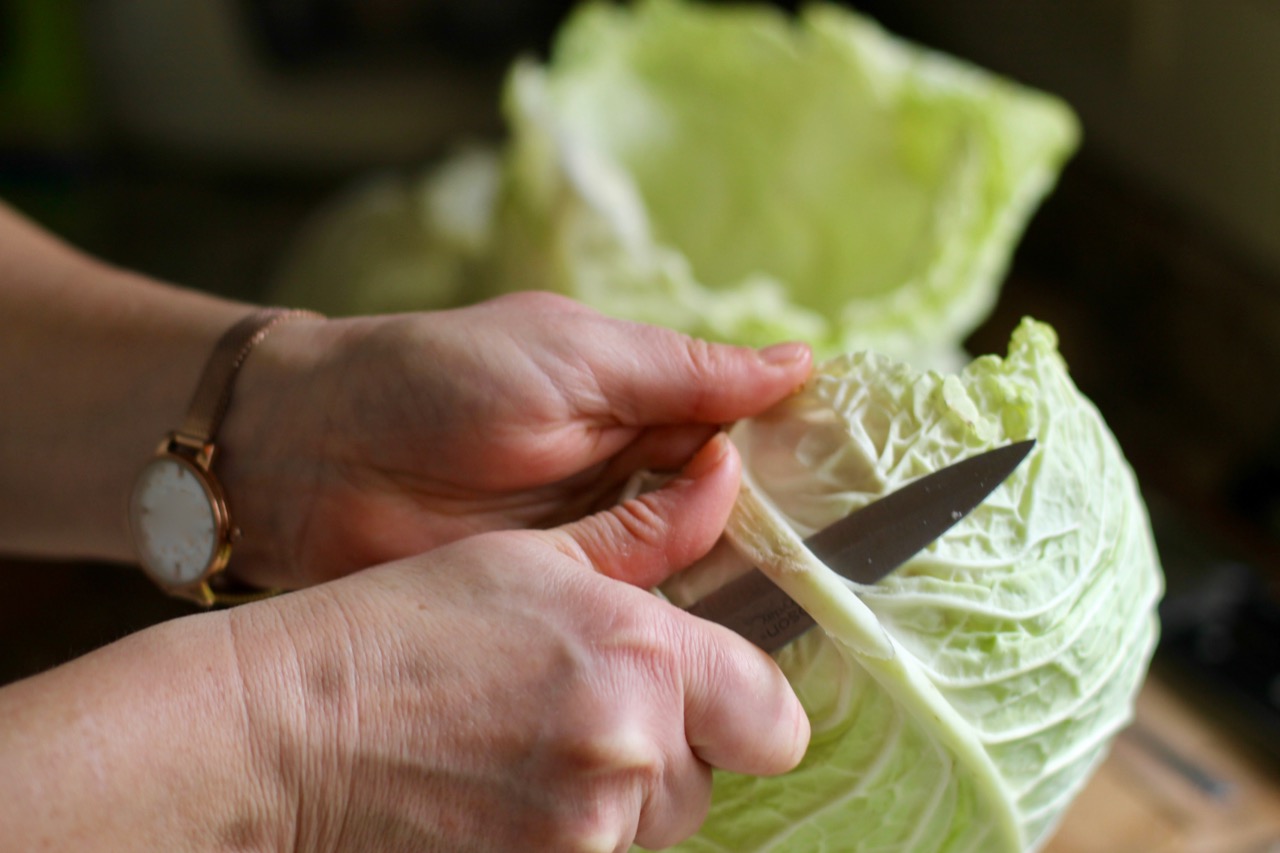
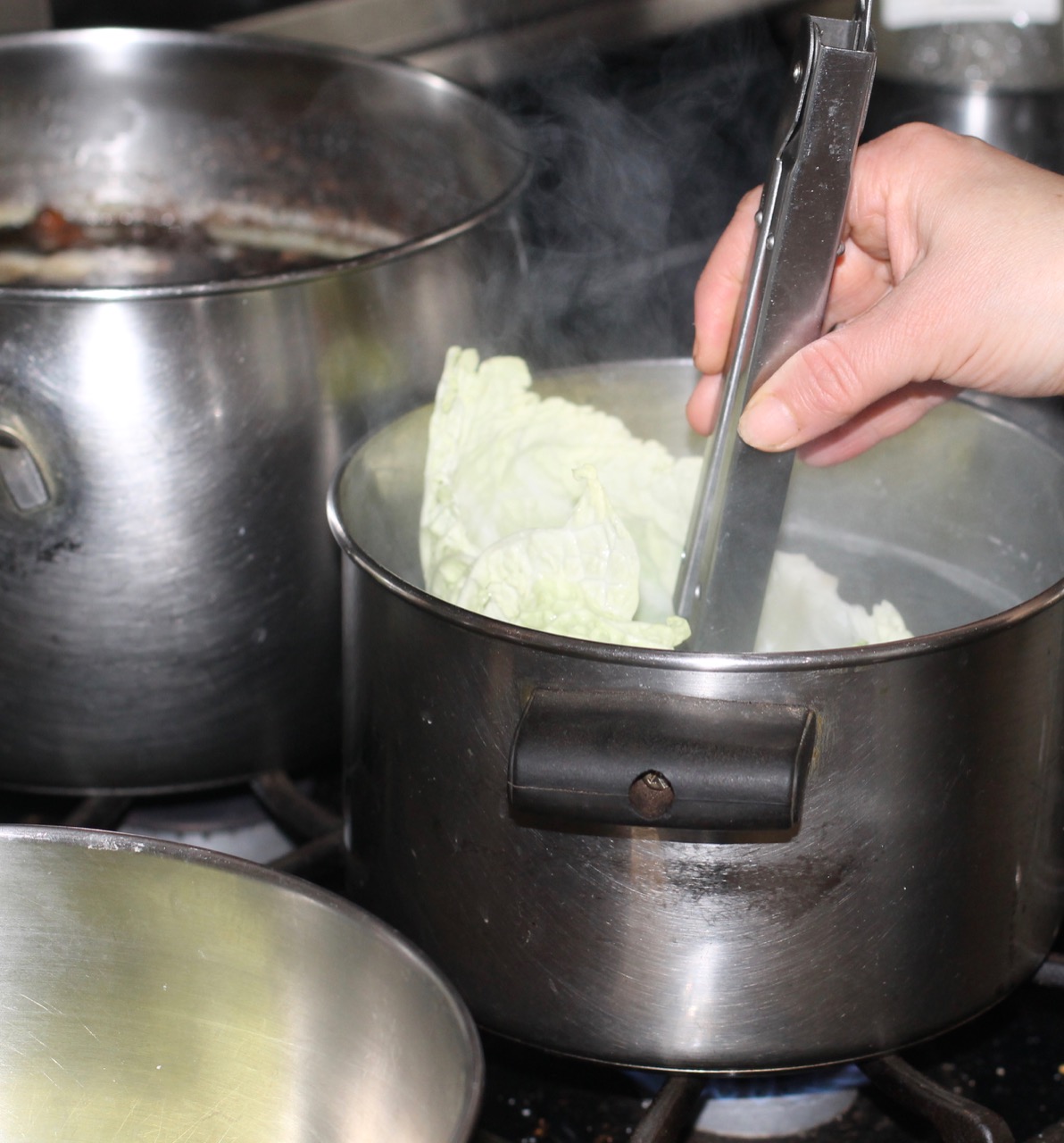
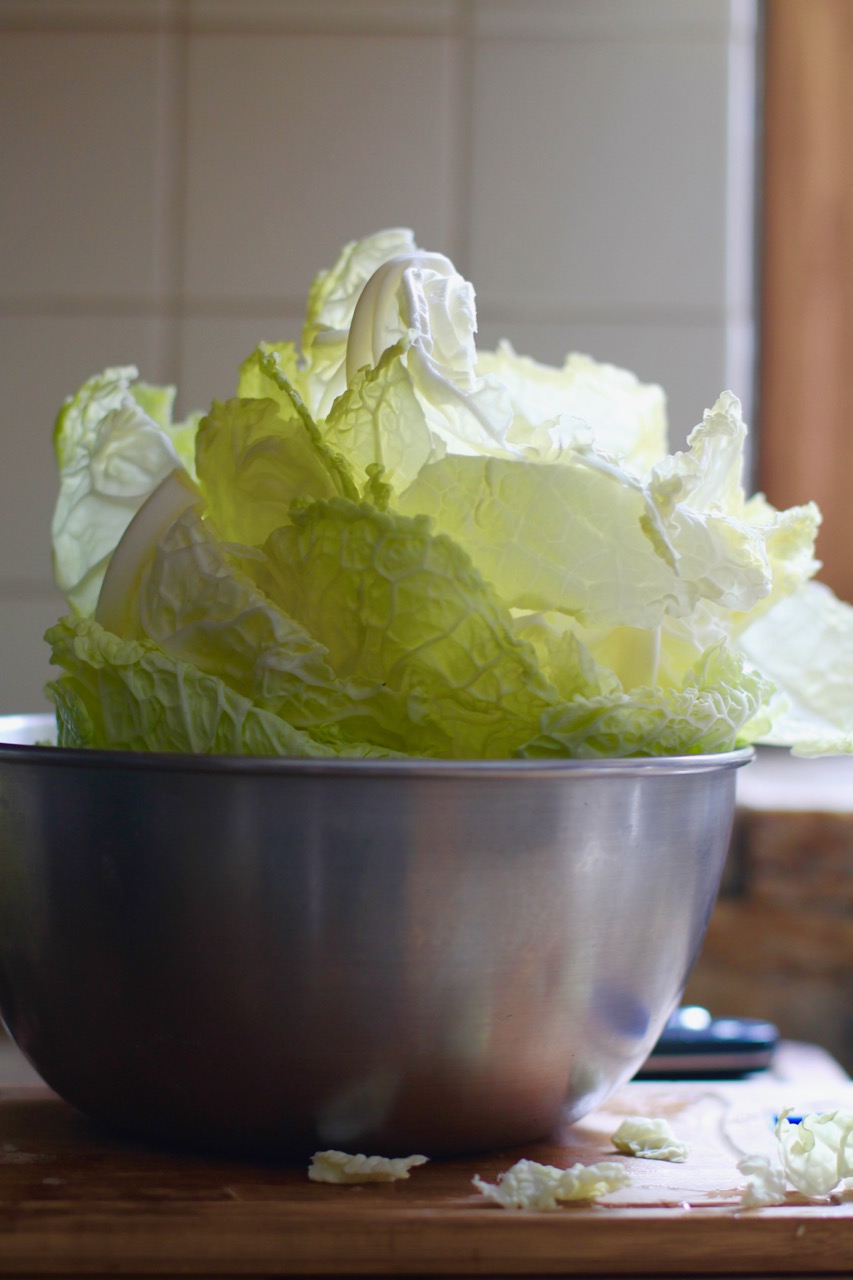
Preparing the cabbage leaves. Fill a larger pot with cold water and start boiling it. This will be used to soften the leaves. Take the leaves off the cabbage gently one by one. When the water boils, add the leaves in the boiling water one at a time for a few minutes. Here we are parboiling the cabbage leaves so make sure they get semi soft but not mushy. (Omit if you have sour cabbage leaves). 

Preparing the rice. Bring 1 cup of rice in 1 cup of cold water to a boil. Turn the heat down to low heat and cook uncovered for 10 minutes. Set aside.

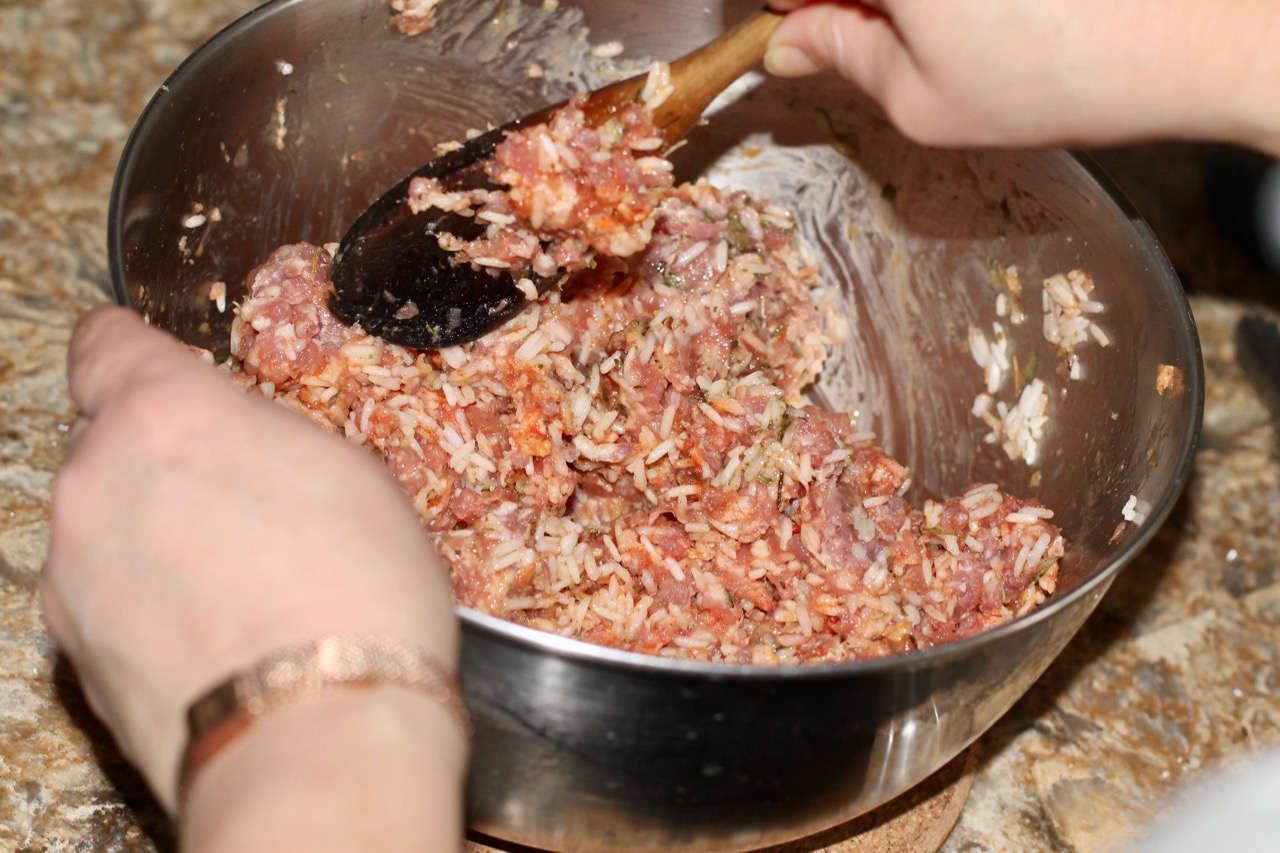
Preparing the stuffing. In a medium sized dish, mix the cooked rice from earlier, crushed garlic cloves, marjoram, 1 egg and the meat together. Set aside.

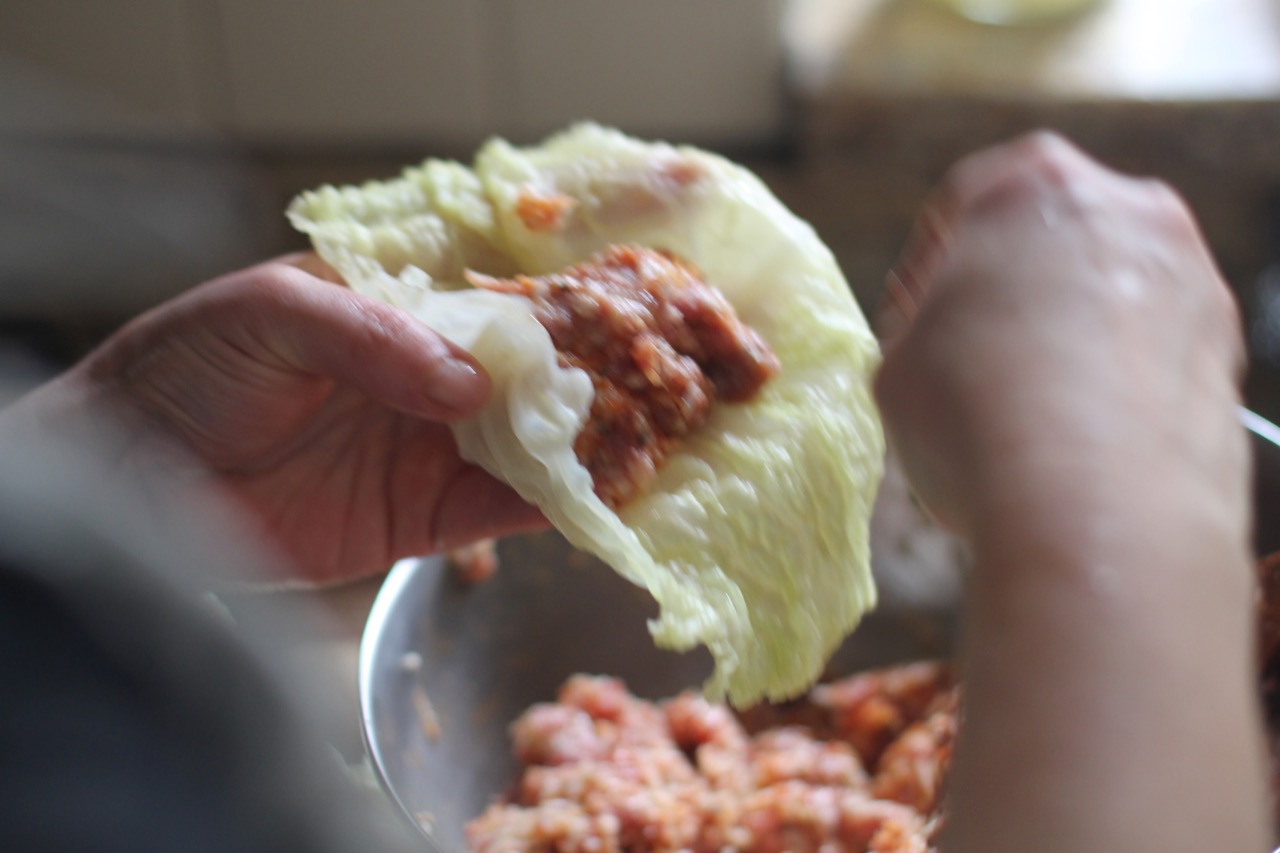
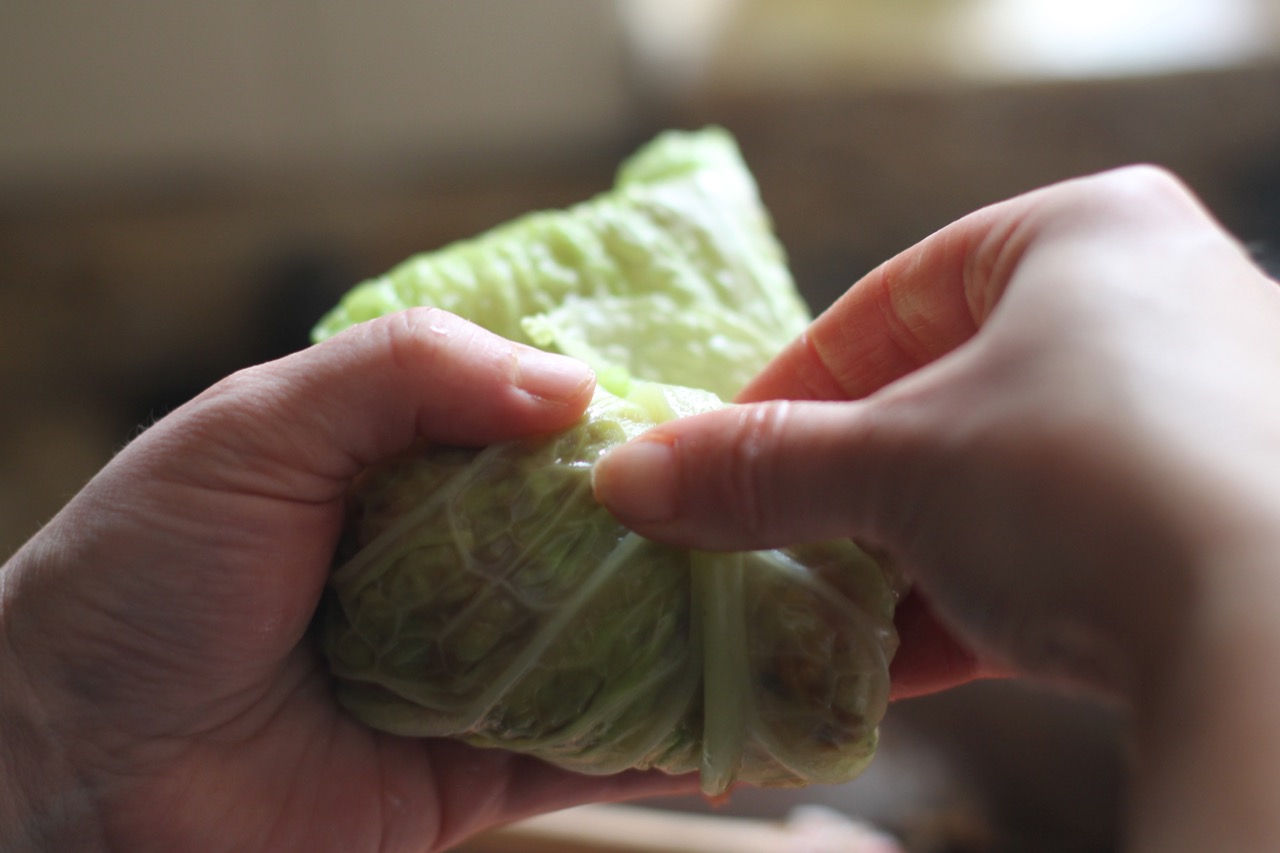
Assembling the stuffed cabbages. Fill the cabbage leaves in the middle with about 1 heaping tablespoon of stuffing or more if leaf is bigger and fold them on all four sides so the stuffing is tucked inside the leaves nicely. Be careful you don’t fold them too tight because the mixture will expand a little. You can close the leaves with a toothpick if you want but it is really not necessary.  This may sound like a difficult task but really what you do here is you tuck the filling inside the leaves and fold each side onto the stuffing so it is nested inside the leaves. Please, see the pictures for clarification above.

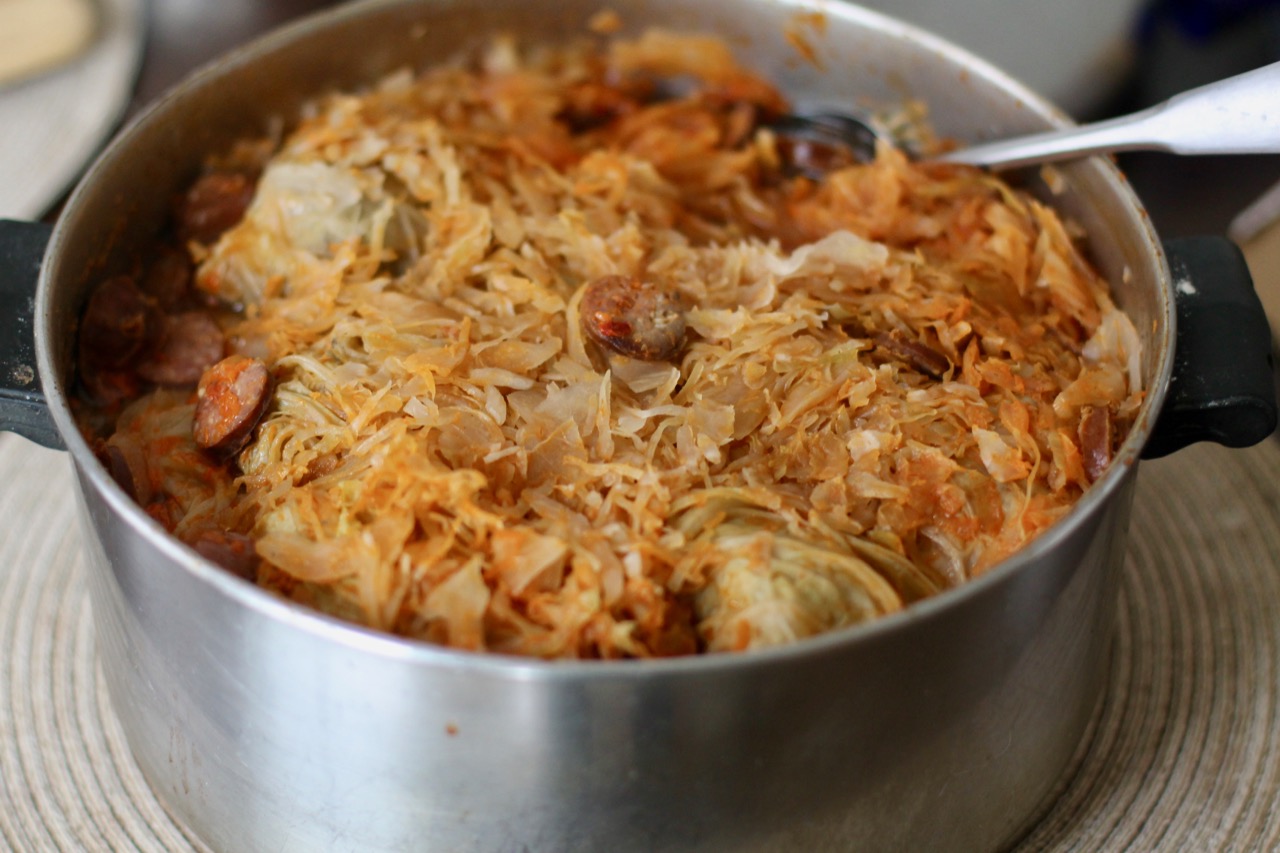
Place the assembled cabbages on top of the prepared sour kraut mixture from earlier one by one, fitting each leaf snug next to each other. Place the remaining 1 lb sour-kraut on top of the stuffed cabbages. 

Pour the meat stock over the stuffed cabbage leaves. Make sure the liquid covers everything in the pot. Bring to a boil and turn the heat down. Cook on very low heat slowly covered for 1 ½-2  hours or until the cabbage and the stuffing are cooked.

Add salt and pepper to taste.

Serve the stuffed cabbages on top of the sauerkraut along with sour cream, sliced kielbasa and hot red pepper flakes or Erös paprika.

Merry Christmas! Enjoy!  Jó étvágyat!

Text, photos, recipe by twincitiesherbs.