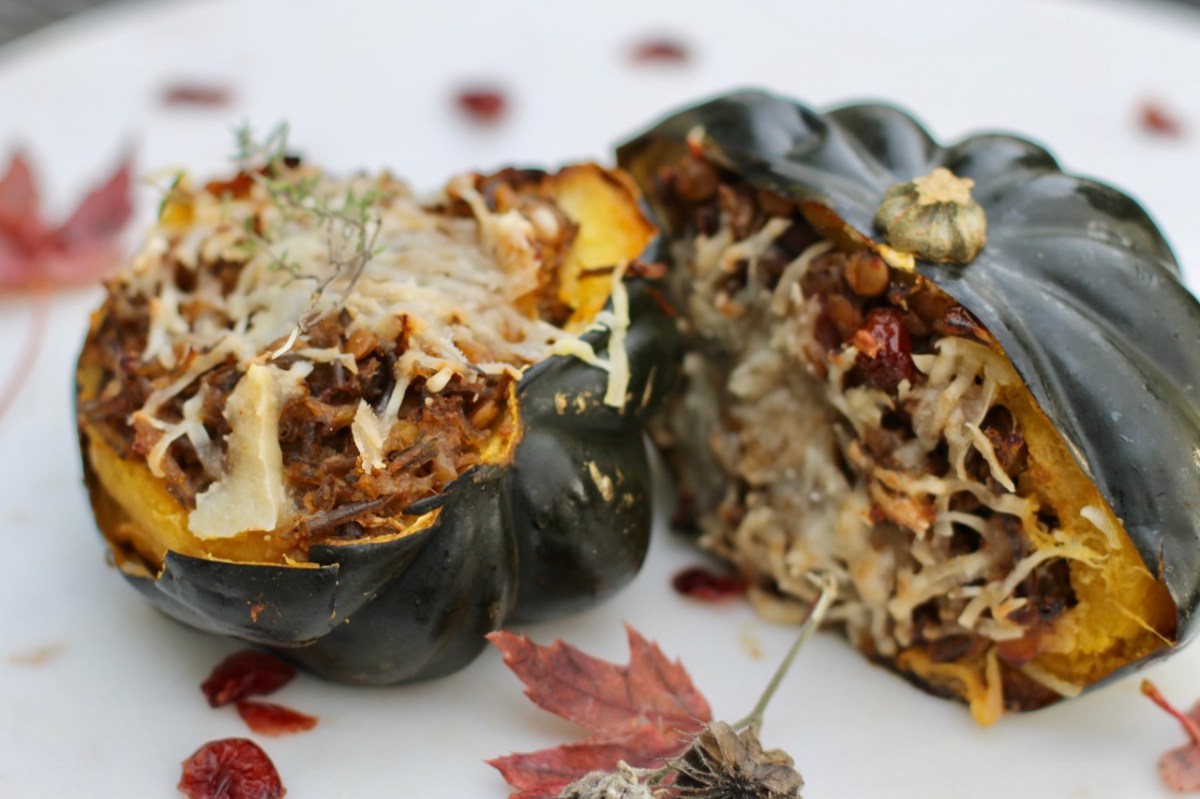
Stuffed squash with lentils, cranberries and wild rice (a Midwestern twist)

I love this savory dish … it has a lot of the quintessential foods that I enjoy eating in the fall. The tasty squash is filled with wild rice, lentils and cranberries and mixed with the melted cheese. It is wonderfully aromatic and tasty.
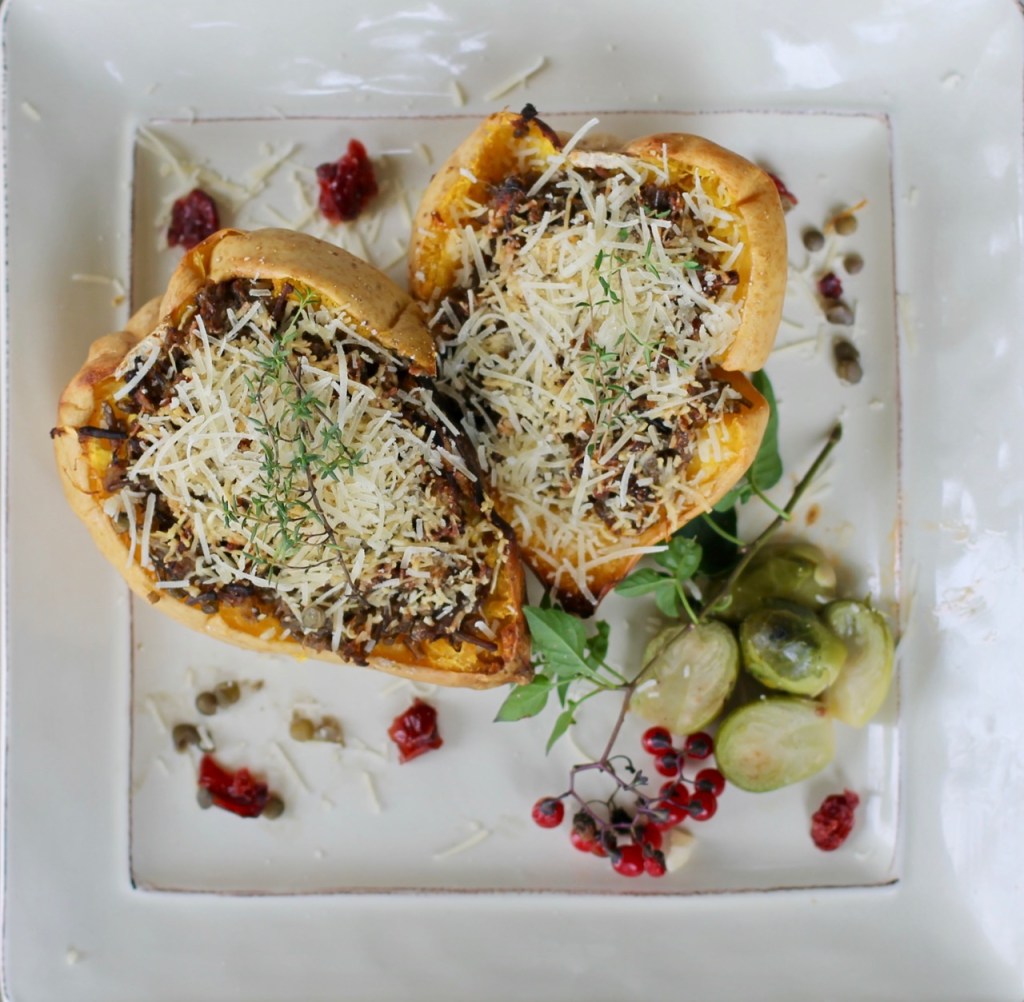
Squash is one of the main foods in the fall. We are so lucky to have all these different varieties available in the US. They are sweet and have a neutral flavor that make them ideal to go along with fall dishes.

Squashes are native to the Mexico region and may have been around for 10,000 years. Their flesh is usually used for cooking. They tend to be high in natural sugars, carbohydrates and vitamin A. In general, they all are mildly sweet, have a luscious nutty flavor and have a creamy texture. However, each variety comes with a unique characteristics and with different vitamin and mineral contents. Ancient Chinese Medicine considers them to be highly nourishing and warming for the digestive system with anti-inflammatory properties.

If we talk about squash, we have to mention its seeds as they are equally valuable for health. They are rich in heart friendly dietary fiber, unsaturated fatty acids, and in addition, protein, minerals, and vitamins. They contain tryptophan that is responsible for increased motor decision speed and blood sugar regulating effect. The seeds are also used for remedying intestinal worm problems. They can be roasted in the oven on low heat at 250 F.

RECIPE

Serves 4 people

Ingredients

  • 2 medium sized squash – (Choose squash that has a firm outer shell with a scoop friendly inside like acorn, delicata, carnival, sweet dumpling).
  • 1 cup of uncooked wild rice (Wild harvested preferred).
  • 3 cups of stock (vegetable or chicken)
  • 1/3 cup of shallots, finally chopped
  • vegetable oil (sunflower)
  • handful of earthy mushrooms (crimini, shiitake, portabello)
  • 1 celery stalk
  • 1 slice bacon (optional)
  • couple of fresh thyme sprigs or 1 tsp dried thyme
  • 1/4 cup of uncooked lentils
  • 1/4 dried cranberries or raisins
  • 2 Tbsp of chopped pecans
  • 100 g or 4 oz of feta cheese
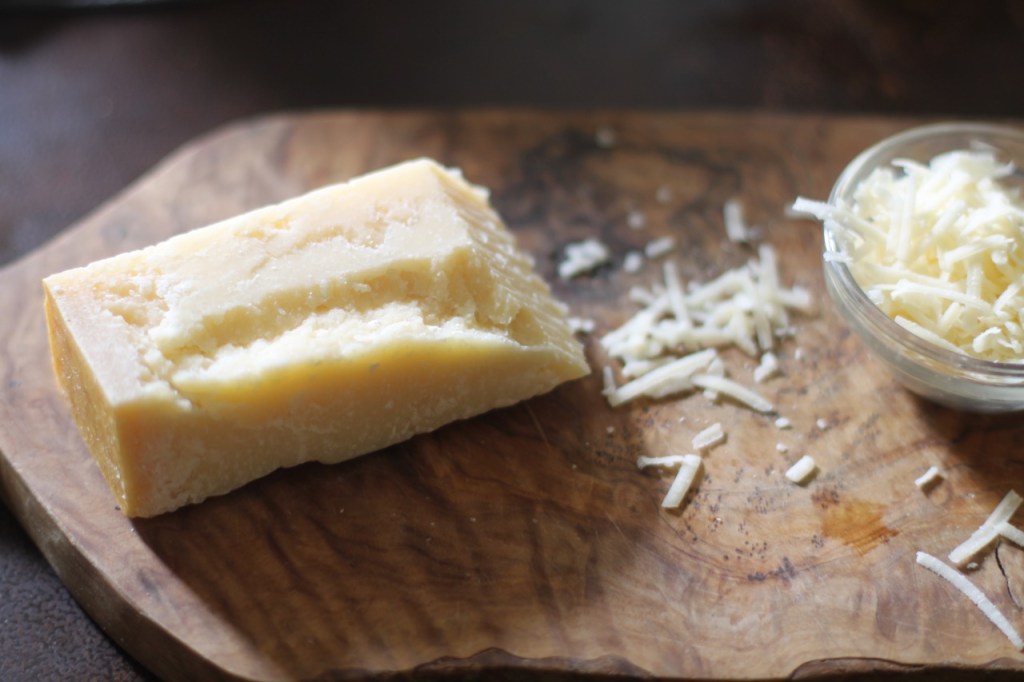
  • 1/2 cup of hard cheese like Gruyere or Parmesan cheese (more for the top)
  • salt and pepper to taste
  • crushed red hot pepper to taste
  • little freshly ground nutmeg

Preparation

  • Turn oven on to 375 F (190 C). Bake cleaned squash on a baking sheet for 40 – 60 minutes or until you can easily put the blade of a knife through the flesh of the squash. When done cut in half and scoop out the seeds. The seeds can be saved and roasted.
  • Clean and soak lentils for an hour. Place lentils in a medium pot, add 3 cups of water, thyme spring and bay leaves. Cook for about 45 – 60 minutes or until they are done, soft but not mushy. When done let it sit in its steam for 15 minutes. Add salt to taste.
  • Heat the oil on medium high heat. Sauté the shallots for 5 minutes. Then add the sliced bacon, sliced celery for -10 more minutes, stir frequently. Add 1 cup of wild rice, 3 cups of stock, sliced mushrooms, thyme and bring to a boil. Stir. Simmer over low heat with lid partially closed for a 35 – 55 minutes until the water is absorbed and the rice is fluffy and tender.
  • If using regular rice, cook rice separate, follow the cooking directions for the rice of your choice. Prepare the vegetables as written above. When ready combine.
  • In a bowl mix the lentils and the rice mixture. Add the feta crumbles and the hard graded cheese. Add the salt, pepper, hot red pepper and freshly graded nutmeg to taste. Mix. Also you can sprinkle salt, nutmeg and pepper inside the squash. Put the stuffing in the inside of the squash. Sprinkle the top with cheese and bake them in the oven for about 20 – 30 minutes or until the tops are golden brown.
  • Serve with other fall vegetables like brussel sprouts, beets, cranberry sauce etc.

enjoy!

Sources

Recipe, text and photo by twincitiesherb.com.
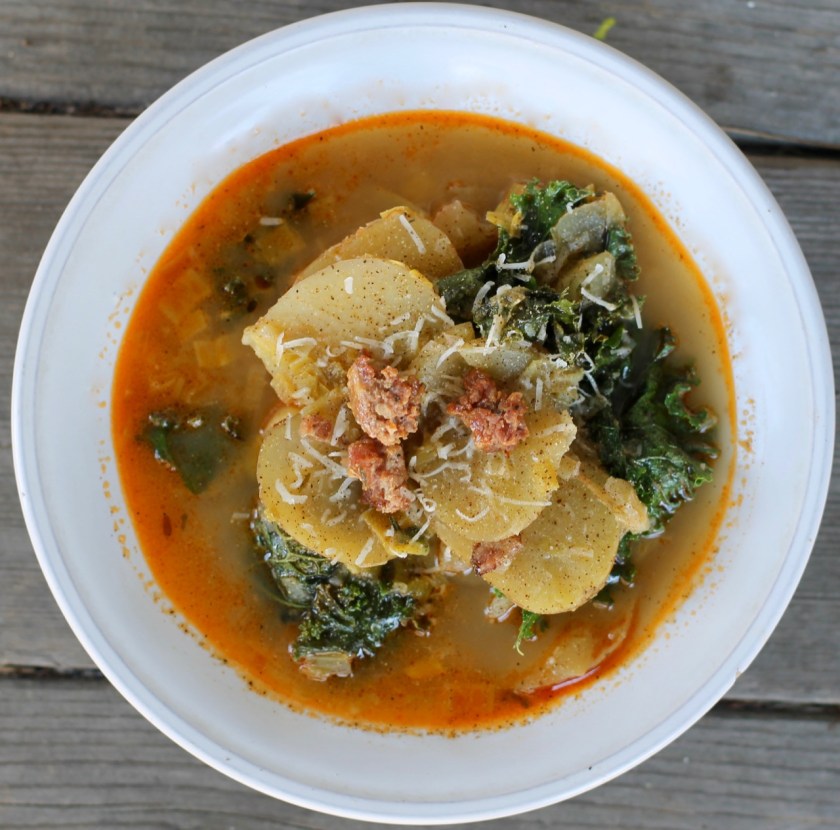
Potato leek soup with kale

The combination of the leeks, potatoes and kale is magical. The synergy of all these vegetables creates the soup’s unique flavor. The pungent leeks pair nicely with the neutral potatoes and the bitter kale brings all the ingredients together. It can be served with or without sausages. This simple tasty soup quickly became a family favorite and the recipe stayed in our recipe box.

Leeks (allium porrum) have been used for thousands of years but have been kind of forgotten in the United States. They belong to the allium family like onions and garlic and are considered to be very good for health. They are mild but have a unique flavor.

The leeks are paired with potatoes (solarium tuberasum). The healthy potatoes are native to the Andes in South America and help the digestion, lubricate the intestines and nourish the kidneys.

Out of all these vegetables, kale (Brassica oleracea) gives the most interesting flavor to the soup. It is a unique hardy cold-weather green that grows from the fall until the early spring. It gets sweeter with a touch of frost. It is a valuable vegetable in the fall and the winter especially because there isn’t much else growing. It is more warming with a slight bitter pungent flavor and benefits the stomach and the lungs.

TIPS

  • Never bring the soup to a full, rolling boil! Turn soup down right when it starts bubbling but before it starts to boil. Cook slowly for a half hour.
  • Add enough liquid to barely cover the vegetables. A few vegetables can even be ‘peaking’ out. Once the soup is done, you can add more liquids.
  • These are my personal discoveries. I keep getting excellent results every time I cook the soup this way or don’t get if I don’t follow these suggestions.
  • Russet or Yukon potatoes? I can’t decide which type of potato I like more. The Russet potatoes are softer and are milder in flavor and supposedly is preferred for this soup traditionally. The Yukon potatoes holds their shape better and have more flavor. Your choice!

RECIPE

Serves 4 people

INGREDIENTS

  • 8 medium sized Russet or Yukon potatoes (about 1.5-2 pounds)
  • 3 medium sized leeks, peeled and sliced
  • butter or home-made ghee (I prefer ghee because it doesn’t burn easily like butter).
  • 2 large slices of bacon or to taste (optional)
  • stock (vegetable or chicken)
  • 1 Italian sausage (optional)
  • 1 tsp paprika powder
  • 1/2 tsp of fennel seeds
  • 1-3 thyme sprigs
  • 2 dried bay leaves
  • couple of stems of kale to taste (I used 5)
  • 1/2-1 cup of cream
  • salt and freshly ground pepper
  • crushed hot red pepper flakes to taste
  • Parmesan cheese

DIRECTIONS

  • Wash and slice up leeks. Slice leeks thin with a sharp knife. Use more the white part (cook the greenish part in the stock or discard). Put the sliced leeks in a bowl of cold water for 1/2 hour. This will get all the dirt out of the leeks. Clean well. Strain the liquid using a colander or pat dry.
  • If you decide to keep the peel on the potatoes, clean and soak potatoes in some cold water for 1/2 hour. Scrub off any dirt. If you decide to peel potatoes, you can skip this step. Slice the potatoes thin.
  • Sauté leek slices in some butter or ghee for 5-10 minutes or until you can smell the aroma of the leeks. Add 1 tsp of paprika and fennel seeds to activate for 1 minute and stir. Add 1/4 tsp cold water, stir.
  • Fry up some sliced bacon if you decide to use it.
  • Add potatoes and bacon to the leeks. Pour in the stock enough to barely cover the vegetables. Add the thyme and bay leaves. Start heating the soup carefully until it starts gently boiling but not rapidly boiling. Quickly, turn the heat down and slowly cook for 30 minutes covered or until the potatoes are cooked.
  • Meanwhile cook the sausage for 15 minutes in a little oil. Add to the soup at the end.
  • Clean and take stems off the kale. Cut the leaves up into bite sizes.
  • When soup is done, add the kale. It doesn’t need to cook any longer.
  • Add cream, salt, black pepper, hot red pepper flakes.
  • Serve with a little Parmesan cheese.

enjoy!

Sources

Paul Pitchford: Healing with Whole Foods

Recipe, photo and text by twincitiesherbs.com.
Poached pears and pear autumn drink

You get two for one with this recipe! There are the fabulous poached pears and also you get to enjoy its delicious liquid as a tea. They can be served for the holidays to delight your guests. You can also serve them any time when you need a little boost in the fall. As a practitioner of Chinese Medicine, I like creating individualized teas for people but it is also gratifying to come up with fun seasonal teas as well. This fall drink is no exception.

The sugar is caramelized, the warming spices are gently infused and the sweet pears are added at the end for poaching. The end products are the firm poached pears that can accompany any fall dish and this wonderful light drink that warms your body and soul. You can surprise your guests for Thanksgiving dinner with these delicious treats!

The sweet and juicy pears are also valuable for health. They are cooling and slightly acidic. They help the lungs by moving stagnation and keeping them moist during the dry season. They are high in fiber that is very much needed in the fall. Pears are also good source of antioxidants, minerals like copper, iron, potassium, manganese, magnesium and vitamins A, B, and C.

Recipe

INGREDIENTS

  • 2 Qt of cold water
  • 3-4 larger firm but ripe pears (Bosc, Bartlett). You can poach more pears in this liquid. You can leave the stems attached if they have stems.
  • 1/8 -1/4 cup of sugar
  • 1 Tbsp Mulling spice (please see below)
  • zest of lemon peel
  • 3 slices of an orange (optional)
  • pinch of salt
  • maple syrup or caramel sauce, optional

Method

  • Place 2 Qt water along with the sugar in a medium size pot. Bring to a boil, this will caramelize the sugar.
  • Turn the heat down and simmer the spices for 10 minutes. I chose cinnamon, all spice, orange peel, ginger, cloves, cardamom. It is a good idea to set a timer, time is important here. Please see the recipe below.
  • Meanwhile wash the pears. You can peel them and cut the bottoms of the pears off or just leave them as they are.
  • Turn off heat completely and add the pears into the pot. Keep them in the steam for about 5 – 10 minutes. The pears will poach in the steam. You want your pears to be soft but not mushy.
  • Serve the poached pears with dinner or own its own as a dessert with maple syrup or caramel sauce. Keep the liquid for a delicious warming drink.

Mulling spice

  • 1 tsp cinnamon chips
  • 1 tsp allspice berries
  • 3 pieces of cloves
  • 1 Tbsp dried orange peel
  • 7  cardamom seeds
  • 1/2 tsp of dried ginger root (cut and sifted) or 1 tsp fresh ginger root

enjoy!

Recipe, photo and text by twincitiesherbs.com.
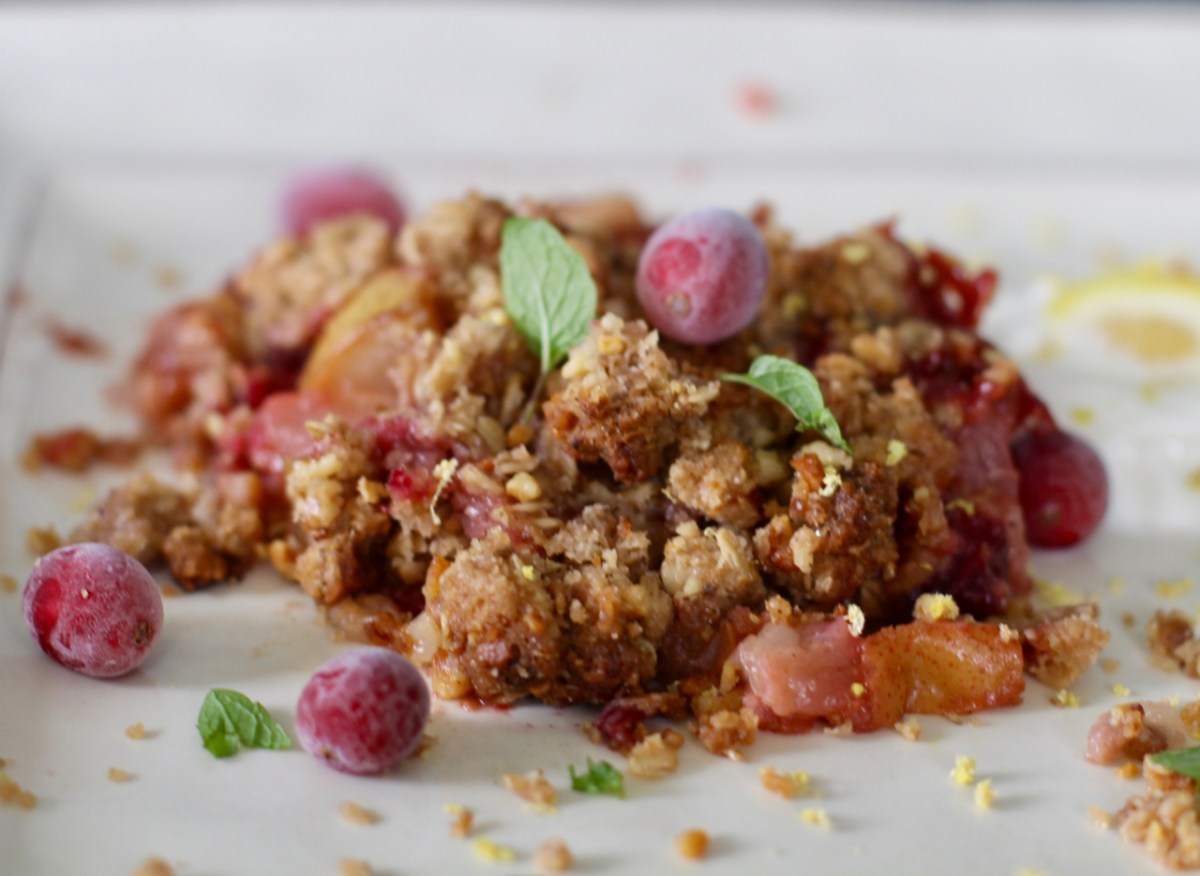
Cranberry pear crisp

This is such an exciting time for cooking in the Midwest. Fall’s abundance in vegetables and fruits is such a blessing for any cook. All the gorgeous fall colors are just dazzling. I had a hard time deciding what to post, there is so much to choose from. I guess they call this time of year the harvest season for a reason. So I decided to make something fun. How does a cranberry pear crisp sound?
I really like how this recipe turned out. The sweet buttery pears work well with the sourness of the bitter cranberries and all this is topped with the crunchy oatmeal topping. You can serve it with a little heavy cream or ice cream!

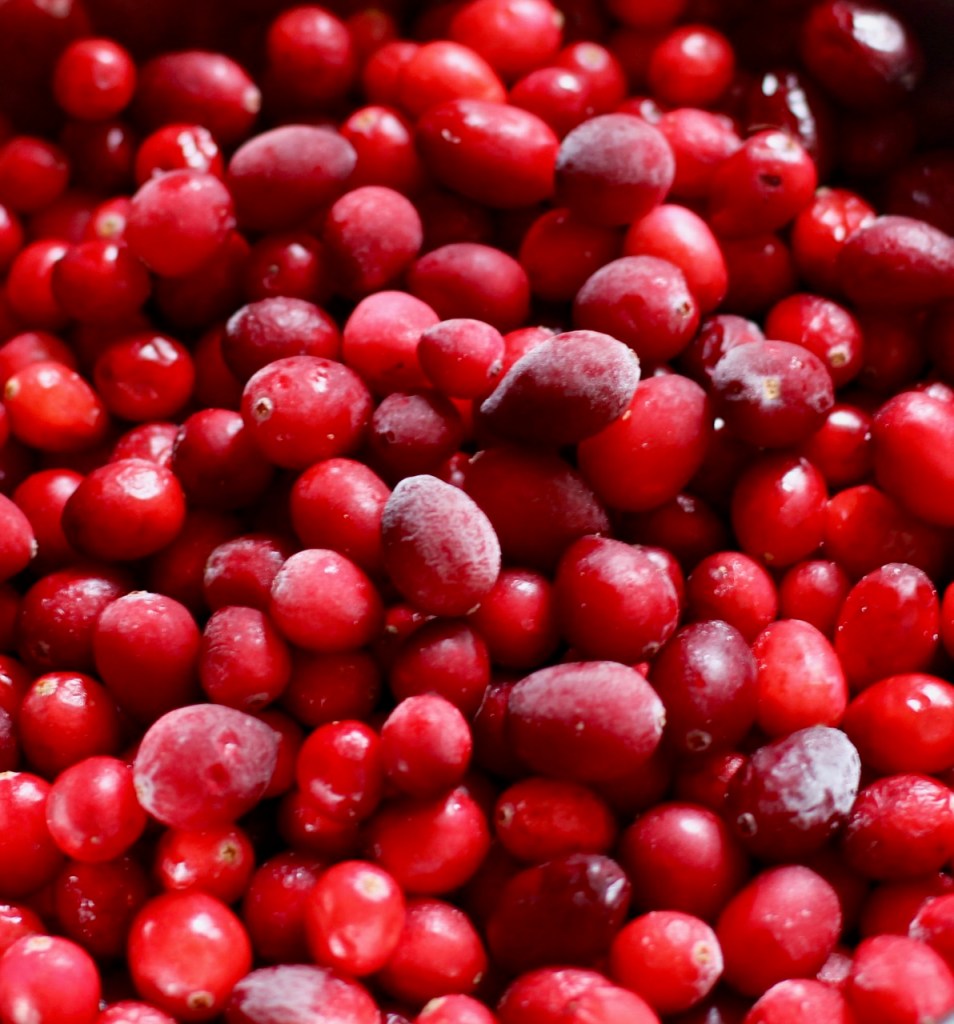
Cranberries are not just for the holidays! Most people associate cranberries with Thanksgiving or maybe Christmas because it is red like Santa’s coat. I have served cranberries after Thanksgiving and I was reminded that it was not Thanksgiving time. However, many creative chefs use cranberries for cooking and baking because they are so unique and healthy. These berries are more sour but are also bitter at the same time. It is usually hard to find fruits with bitter flavor. I personally like to add it to other sweet fruits to make the sweet dishes more exciting.

The refreshing tangy cranberries have been used as food and medicine for a long time. Cranberries are native to North America, the Pequot Indians of Cape Cod called them ibimi, bitter fruit. Native Indians used them for preserving meat. Later, the Natives shared them with the Pilgrims who started making sweet sauces. Cranberries are incredibly valuable for health as they are rich in vitamin C, fiber, flavanoids, phenols and many substances that give protection against tooth decay and infections.

One more interesting fact. Cranberries have an open space inside the middle that allows them to float on top of the water. This interesting adaptation allows them to get away from not being sweet and not having to rely on animals to spread their seeds to survive. In addition, the Native Americans believed the cranberries nourish and protect the kidneys and the bladder.

The sweet and juicy pears are also valuable for health. They are cooling and slightly acidic. They help the lungs by moving stagnation and keeping them moist during the dry season. They are high in fiber that is very much needed in the fall. Pears are also good source of antioxidants, minerals like copper, iron, potassium, manganese, magnesium and vitamins A, B, and C.

RECIPE

INGREDIENTS FOR THE TOPPING

  • 1 cup of old fashioned rolled oats
  • 1/2 cup of white flour
  • 1 stick (8 tbsp) of butter, melted
  • 2 tbsp-1/4 cup of brown sugar + 2 tbsp for the top
  • 1/8 tsp salt
  • zest of 1 lemon (optional)
  • 1 tsp apple pie spice or 1/2 tsp cinnamon + 1/4 tsp nutmeg + 1/4 cloves+ little mace or 1 tsp cinnamon
  • 1/2 cup of chopped pecans or walnuts + more for serving
  • heavy cream or ice cream for serving

INGREDIENTS FOR THE FRUITS

  • 5-6 ripe but firm pears (I used Bartlett)
  • 2 cups of fresh organic cranberries
  • 1/4 – 1/2 cup of brown sugar (I think 1/4 cup was plenty but if you have a sweet tooth or the pears are not very sweet, use 1/2 cup of sugar)
  • 2 Tbsp flour or 1 Tbsp corn starch
  • 1 lemon’s juice (use the lemon from earlier)
  • 1/8 tsp salt
  • 2 Tbsp orange peel (optional)
  • 1 tsp apple pie spice or 1/2 tsp cinnamon + 1/4 tsp nutmeg + 1/4 cloves+ little mace or 1 tsp cinnamon
  • 1 Tbsp graded fresh ginger or 1.5 tsp dried ginger (cut and sifted)
  • 2 Tbsp whiskey (optional)

METHOD

  • Preheat oven to 375 F. Have baking rack in the lower third of the oven.
  • Take a stick of butter out of the refrigerator.
  • Wash cranberries. Discard any unripe ones. In a smaller bowl add the cranberries, 1/4- 1/2 cup of sugar, lemon juice, orange peel. Let this mixture sit until cranberries give off some juice. You can add whiskey if you wish. Set aside.
  • Make topping. Cream the melted butter with the sugar. Add oats, flour, cinnamon, 1/8 tsp nutmeg, salt, lemon zest. Mix well. Fold in the nuts by hand. Let it sit for an hour. Set aside.
  • Wash, core and cut up pears into small cubes. You can peel them if the skin is tough, otherwise if they are soft no need to peel them. Set aside.
  • Assemble the fruit base. In a bigger bowl, mix 1 tsp apple spice, salt, flour or cornstarch, orange peel, pears, ginger and cranberry mixture with its juice (prepared earlier) together. Put it into a 2 Qt size baking dish.
  • Put topping on the top. Sprinkle top with some sugar (optional). I also graded a little nutmeg on the top.
  • Bake for 30 minutes or until the top has a nice orange color.
  • Serve with heavy cream or ice cream. Add some extra nuts if you wish.

enjoy!

Picture and text by Twincitiesherbs.

Source

https://www.fooducate.com/community/post/Cranberries-Sour-or-Bitter%3F/58314899-7934-4AC8-4ECE-ACFECC9CD4A1

https://www.nantucketconservation.org/properties/cranberries

https://www.nutrition-and-you.com/pears.html

https://www.seriouseats.com/2014/11/what-to-do-with-cranberries.html

Eating with the fall season

AUTUMN

As the fall season is arriving, I feel like a little squirrel trying to get ready for the colder months: eating the colorful fruits and vegetables, preserving foods, making last minute repairs and just mentally getting ready. By now we are aware that the summer is gone and a new season is coming with all its beauty and challenges. It was the Autumn Equinox a couple of days ago, when the days and nights were equal and from now on the days are going to get shorter and colder as well.

Autumn is a very special and unpredictable season. Every year, I marvel the beautiful vibrant colors of Autumn, the leaves on the trees and the vegetables on the table. It is the ending of a cycle and we know that all those leaves will turn into something new in the spring. Robert Frost’s poem sums up the Autumn season for me beautifully.

Nothing Gold Can Stay

Nature’s first green is gold,
Her hardest hue to hold.
Her early leaf’s a flower;
But only so an hour.
Then leaf subsides to leaf.
So Eden sank to grief,
So dawn goes down to day.
Nothing gold can stay. 

When I walk through the forest in the fall, I feel so peaceful. This is a time of tranquility when we start turning inward, a great time for spirituality. In the absence of creating new things, we can now focus on the importance of our existence, our spirituality. In Chinese Medicine, ” Metal symbolizes the spirit that brings meaning and purpose to existence”. We can support our Metal element and this spiritual process with foods as well.

Element: Metal

Organs: Lungs, Large Intestines, nose

Sense: smell

Color: white

Taste: pungent

Supporting flavors: sour, astringent, bitter, salty

Emotion: grief, sadness

Evil: phlegm

Spirit:

In Ancient Chinese Medicine, the fall season belongs to the Metal element. Like every element has corresponding Western organs, the Metal element’s organs are the Lungs, the Large intestines and ultimately the Skin. If you experience problems during this season for instance having frequent colds/flus, dryness, skin problems, excessive mucus, try to pay attention to your eating habits as well. If the metal element is strong, the Qi, the life force will circulated easier and can help our body stay health.

“Everything in nature contracts and moves its essence inward and downward. Leaves and fruit fall, seeds dry, the sap of trees goes into the roots”. Bitter and salty foods in moderation help support this energy movement. Bitter foods are dark green leafy vegetables like kale, spinach. Salty foods are seaweed, salt.

Let’s look at the nature of the Lungs. The Lungs like to be moist and warm. Moistening foods can help the Lungs stay healthy (spinach, barley, millet, pears, apples, almonds, eggs, home-made soy products, seaweed, flax seed and a little salt). Of course, the warming foods of the season are important for the Lungs as well (squashes, carrots, parsnips). In addition, the Metal element is associated with the color white and supporting foods like leeks and white onion are important.

As I mentioned earlier, this season is also associated with the Large intestine so it is wise to include fiber rich foods for the colon … and yes … in addition this is the season of letting go … letting go of things that no longer serve us physically and mentally. Beneficial foods are pulp of fruits, indigestible portion of foods, the bran of grains, cell walls of vegetables.

The flavor related to the Metal element is pungent. The pungent flavor is both protective, dispersing and cleansing for the Lungs and the Colon, exactly what they need now. To stay healthy, the stuck energy in the Lungs and Colon need to be dispersed. Pungent foods include all white vegetables, onions, garlic, hot peppers, chilies, cabbage, turnip, ginger, horseradish, cinnamon and nutmeg.

In addition to pungent foods, it is also recommended to eat sour foods in moderation to balance out the Metal element of the body. Sour foods are lemon, vinegar, sourdough, leeks, aduki beans and fermented foods. You can add some pickles or kimchi to your meals.

In addition, golden-orange vegetables have protective benefits for the Lungs and the Colon as they are rich in beta-carotenes (provitamin A) content. These foods include carrots, winter squashes, pumpkins, broccoli, kale, turnip, mustard green.

Let’s remember this is the Harvest season! “We must be aware of its abundant yet contracting nature” that can be accomplished by eating more heartier and astringent foods. Astringent foods for the fall are cranberries, cinnamon, cloves, nutmeg, rosemary, turnip, potatoes, chestnuts, walnuts, pears, apples, spinach, burdock root, buckwheat, millet, buttermilk, whey, kale, chard, lavender, rose, grapes and many types of beans and lentils including black, mung and aduki beans, tur dal, urad dal etc.

To attune to the fall season, we need to make some changes in our eating and cooking habits. So we have grown all the foods that will be used now but we have to be thinking of the weather getting colder too. Also, we need to pay more attention to cooking now as more complex dishes are needed compared to the summer quick foods. Cook with less water at a lower heat for a longer period of time. It is getting colder so try to eat more heartier soups and warming dishes instead of the salads.

If you are looking for dishes to make during the fall season, please, click on the fall ‘keyword’ on the right and you should get all my fall recipes.

Sources

Written by twincitiesherbs.com.

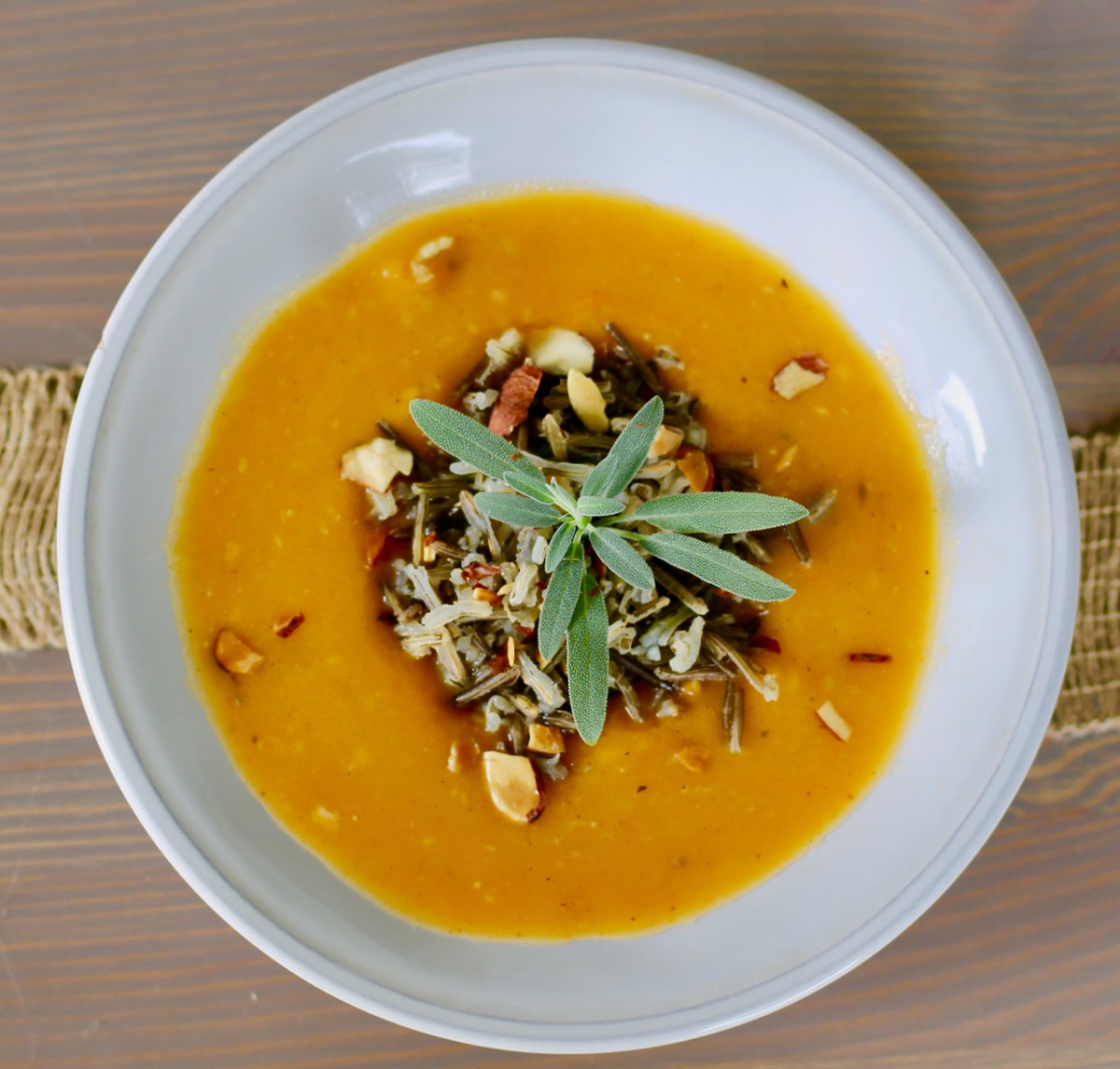
Butternut squash soup with a Midwestern flare

As the fall season is arriving, I feel like a little squirrel trying to get ready for the colder months: eating the great variety of fruits and vegetables, storing up foods, making last minute repairs and just mentally getting ready. By now we are aware that summer is gone and a new season is coming with all its beauty and challenges. It was the Autumnal Equinox a couple of days ago, when the days and nights are equal and from now on the days are going to get shorter and colder as well.

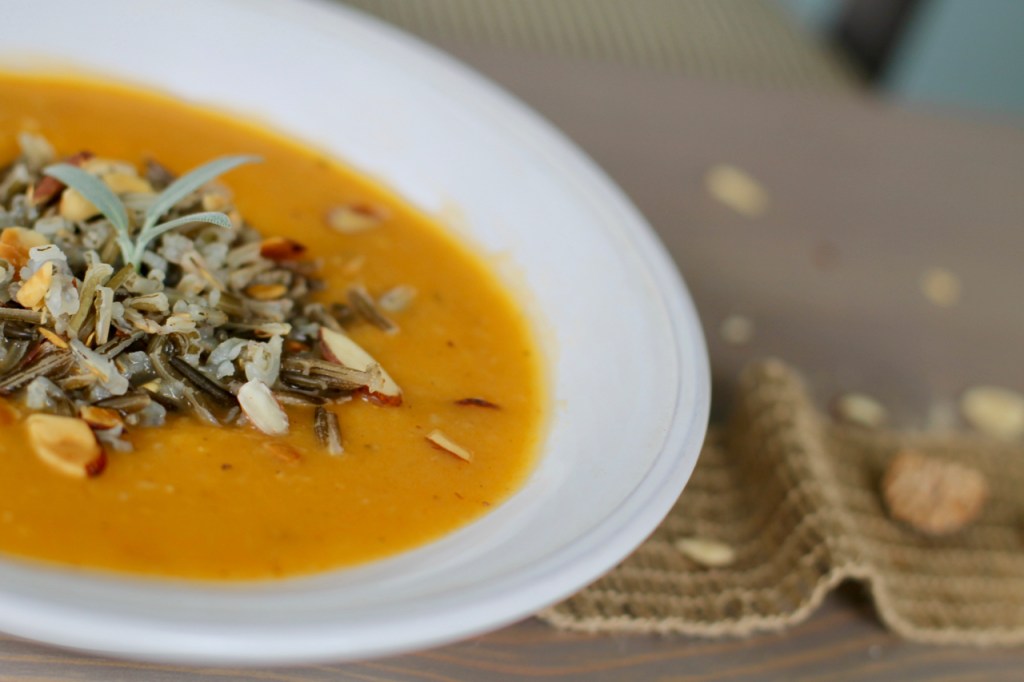
Warm up to the fall with this delicious squash soup. My recipe is made with a little Midwestern twist. I added wild rice, a Midwestern staple but it can be served with some hearty bread like rye bread instead. I enjoy squashes in all shapes and forms. Many of us think of squashes when we hear the word fall cooking so I will start off my fall recipe collection with a squash dish.

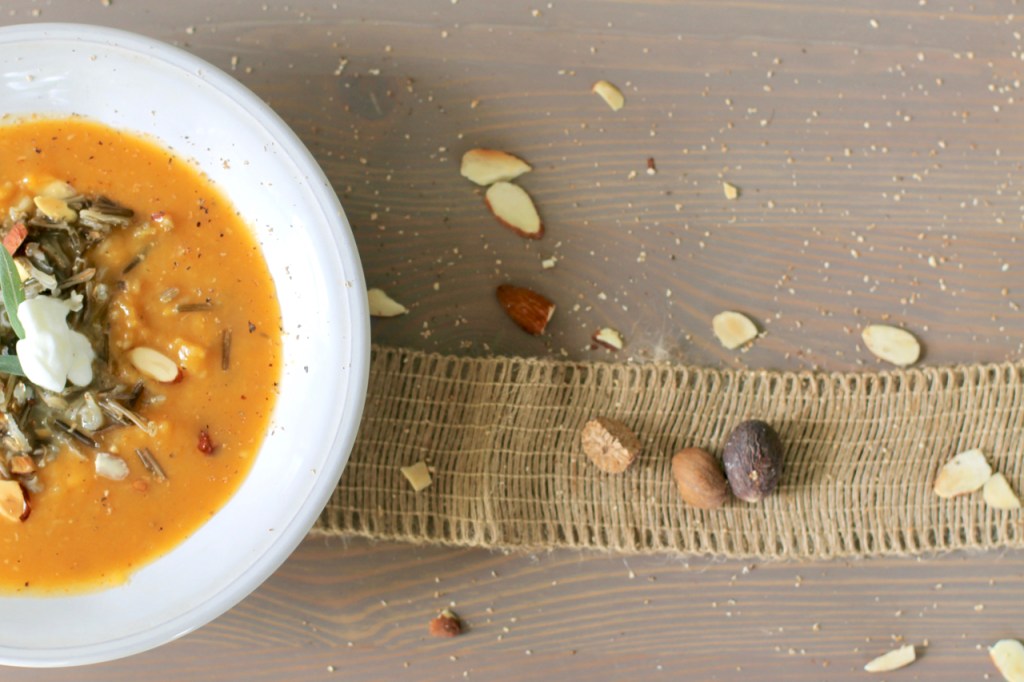
The warming sweet butternut squash is simmered with the white onion, garlic, potatoes and is balanced with the bitter celery root and the lovely pungent spices. At the end, it is topped with cream and the sweet almond slivers for a bit of crunchiness.

RECIPE

Ingredients

  • 1 medium sized butternut squash- about 3 lbs
  • 1 medium sized Russet potato, peeled and cut into cubes
  • 1 finally chopped large onion, white is the best
  • vegetable oil (sunflower)
  • 2 slices smoked bacon (optional)
  • 1 Tbsp fresh ginger, about 1 inch long
  • 1 tsp of sweet Hungarian paprika (make sure it is authentic)
  • 1 smaller celery root, peeled and chopped up into 4 pieces
  • 5 cup stock (vegetable or chicken)
  • 2 garlic cloves, crushed
  • 1/4 tsp freshly ground nutmeg
  • 1 thyme spring
  • 1 tsp salt or to taste
  • 1/4 cup heavy cream
  • freshly ground black pepper
  • red hot pepper to taste
  • 1 cup almond slivers
  • 1 cup uncooked wild rice or rye bread to serve

Directions

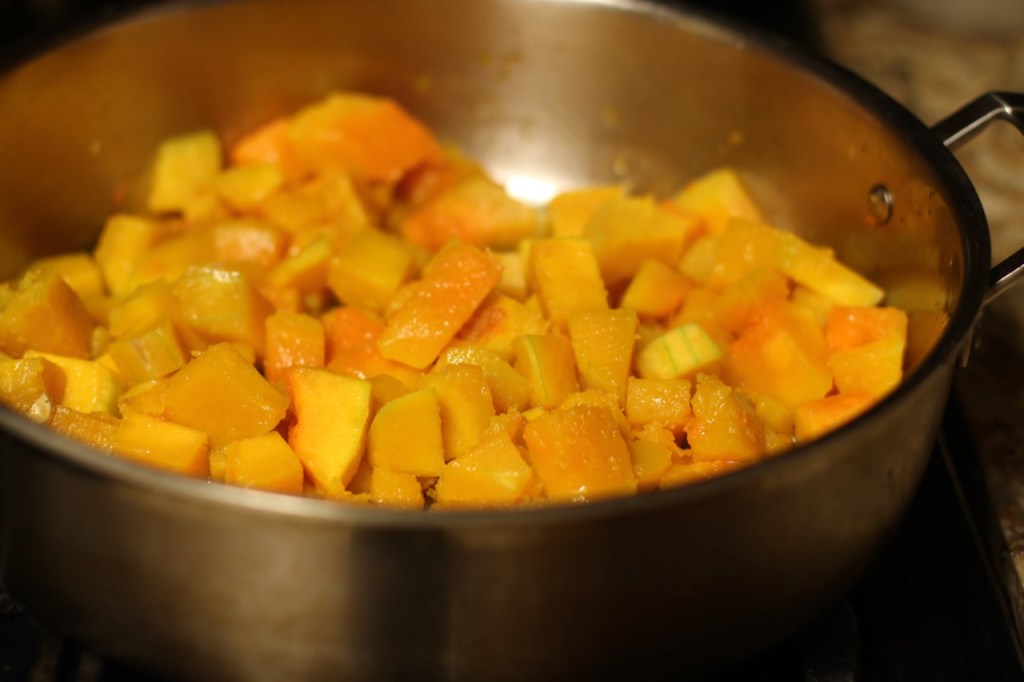
Preparing the squash. Peel and cut squash lengthwise, take out the seeds. Cut them into cubes. Warm up some oil on medium high heat and brown the cubes for a good 10-15 minutes.

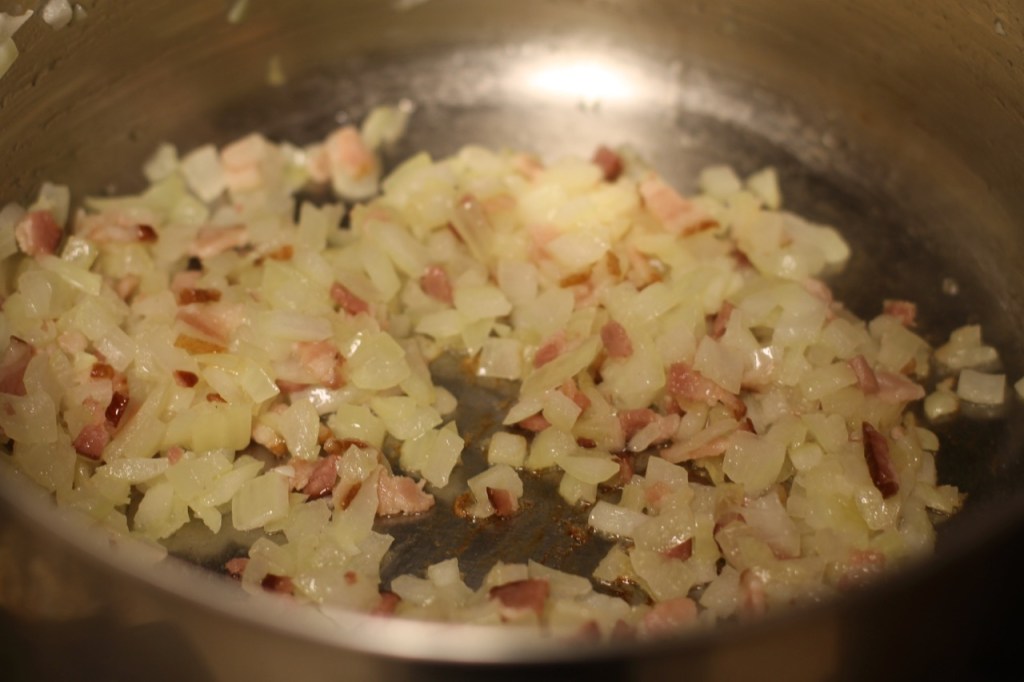
Make the soup base. Have 1/2 cup of cold water ready. Warm up the oil. Sauté the onion, and the bacon(optional). When translucent and you can smell the aroma of the the onions and the bacon, add the chopped ginger for a few minutes, stir. Add the crushed garlic and 1 tsp paprika, stir for 30 seconds to activate. Add the little cold water that you had set aside earlier, stir.

Put the browned squash, potatoes, thyme spring, the freshly ground nutmeg and the celery root in the pot. Add the stock, enough to cover by about 1 inch above everything and cook for 30 minutes.

Cooking the wild rice (optional). Cook 1 cup of wild rice with 3 cups of water, partially covered for about 20 minutes or until the rice is soft and crunchy.

Roast the almond slivers. Preheat the oven to 350 F. Lightly oil a baking sheet and spread the almond pieces evenly on the sheet. Bake for 5 minutes. Be careful not to burn it. Serve on top of the soup.

When ready, let the soup cool for about 10 – 20 minutes. Add the cream and black pepper. Stir.

If you want the soup to be a little chunky, set aside about 20% of the cooked squash pieces. Use a hand held blender and puree the rest of the soup. Make sure you blend the celery chunks. Transfer the whole pieces back to the rest of the pureed soup. (If you prefer a smooth soup, just puree everything).

Check to see if more salt, black pepper, red hot pepper are needed.

Serve with wild rice/bread and the almond slivers.

enjoy!

Recipe, photo and text by twincitiesherbs.com.

Plum gnocchi (szilvás gombóc)

Plum gnocchis bring back some very sweet childhood memories … delicious plums wrapped in soft, pillowy dough with a hint of bread crumbs spiced with a little sugary cinnamon. In Hungary, it is often served as a second dish after a heavier soup but it t can also be a dessert. Late summer is the time when plums are ready so I’m so excited to have them again.

Plum gnocchi is made in many countries of central Europe: in Italy (Gnocchi de susine), Hungary (szilvás gombóc), Croatia (Knedle sa sljivama), Austria (Zwetschkenknödel), Romania (Galuste cu prune), Slovenia (Slivovi cmoki), etc. Supposedly, it originated in the region of Trieste that has a colorful history being part of different countries. Trieste is in Italy today but was part of the Astro-Hungarian Empire for some time. Oh and all those other countries that Plum gnocchi is made have some affiliation to Hungary …

Gnocchi (pronounced nyow kee) is an Italian word that means knuckle or knots. Gnocchi is a mixture of flour and water and possibly many other ingredients including potatoes as well. So what nationality is Plum gnocchi? Today, people in any of those above mentioned countries would argue that it is theirs but please read on … If you know European history and how countries have changed, this recipe might reflect the ever changing times. Also, remember potatoes came from the new World …

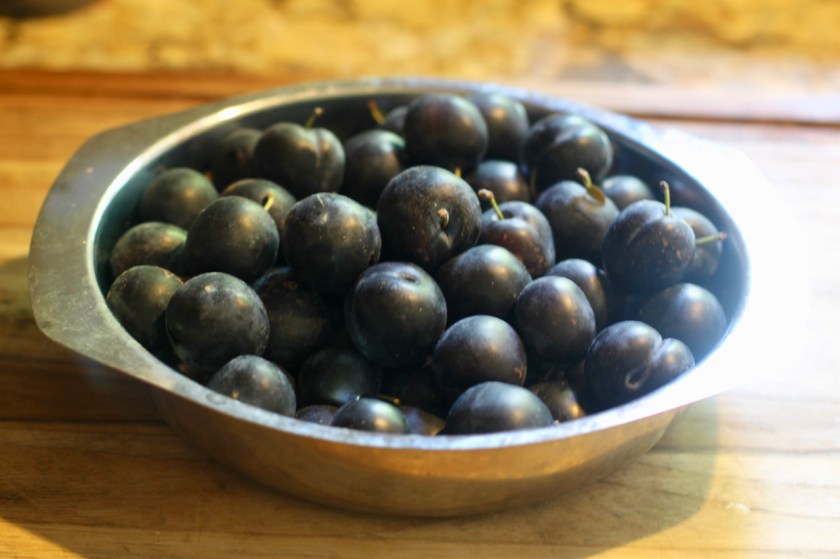
It doesn’t matter who invented it, indeed it is a fabulous dish with its main ingredient the plum. Plums are slightly cooling with a sweet and sour flavor, so it will need the pungent cinnamon! Try to get the Italian or the Hungarian purple plums but other sweet, great tasting plums will work too. In addition to its vitamin and mineral content, plums are also a great source of fiber. So take a bite of this intriguing history …

Enjoy Palotás music while you’re eating this dish…

RECIPE

Makes about 18 balls plus the little gnocchi pieces

INGREDIENTS

  • about 1 lb russet potatoes (4-5 potatoes
  • 2 cup flour or more depending on the dough
  • 1 Tbsp semolina flour (optional)
  • 1 egg
  • 1 Tbsp butter
  • 1/2 tsp salt
  • 10-18 sweet plums – depending on the size of your plums

coating

  • 1 cup bread crumbs
  • 1/2 cup of walnuts (finally chopped)
  • 5 Tbsp butter
  • 1 tsp apple spice (1/2 tsp ground cinnamon, 1/4 tsp clove, 1/8 nutmeg, 1/8 tsp mace)
  • 1 T sugar
  • pinch of salt
dough
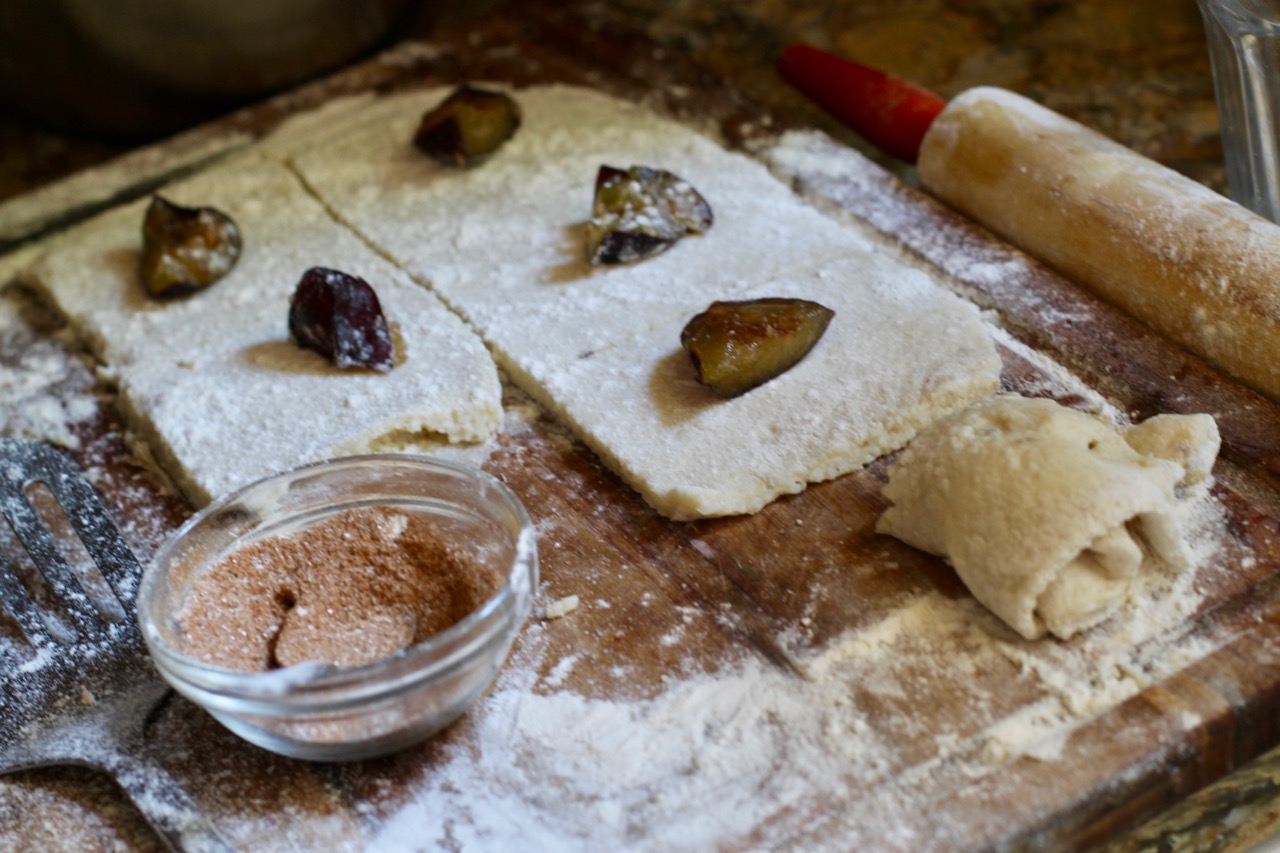
9 squares
add the plum and the cinnamon sugar

The little Gnocchi pieces (nudli)

DIRECTIONS

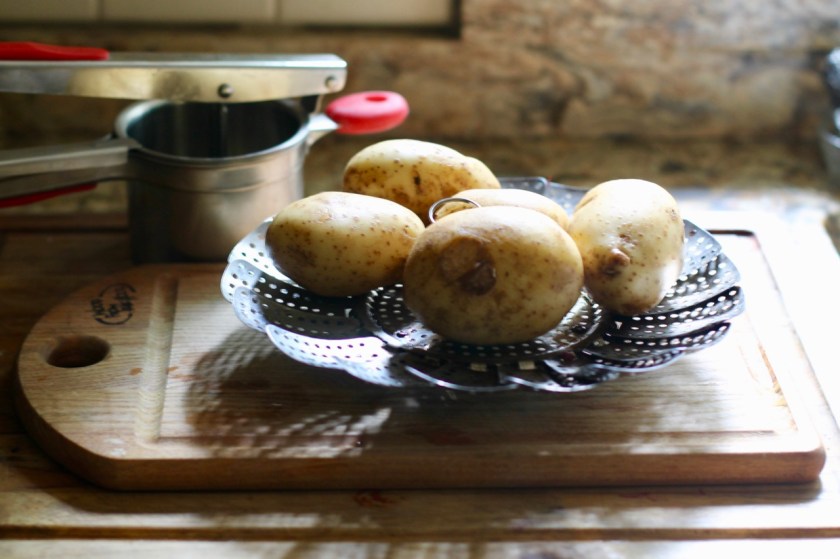
Place the potatoes with the skin on in a large pot. Add cold water to the pot, bring the water to boil. Turn heat down and continue cooking on medium low heat covered for about 45 – 60 minutes or until potatoes are tender. Peel them while they are still hot but you can handle. Mash the potatoes while they are warm. I like to place the potatoes onto a metal steamer with ‘feet’ so the vitamins and minerals don’t boil into the water and so they don’t soak up too much water. If the potatoes are too wet, the dough will need more flour and will be harder. (Please see picture below).

Puree the potatoes while they are still warm, I was able to do it as soon as the peels were taken off. I used a potato ricer. I put the potatoes through the larger holes of the ricer, then the smaller ones. It is worth investing in a potato ricer if you want a nice and soft dough. I also read that smaller holes on a cheese grader could work- if you don’t have a ricer.

Let the dough cool completely. Mix in the flour, salt, egg, 1 Tbsp of butter, potatoes and start kneading the dough to make a ball. Do not over do it. Make sure your potatoes are at room temperature. If they are warm they will take up too much flour. You can use the fridge for 5 minutes if needed.

Let the dough rest for 1 hour.

Meanwhile, prepare the plums. Wash them, cut them in half and take out the pits.

Melt the butter on low heat and add the crumbs stirring frequently for about 10 minutes or until the crumbs soak up the butter and become golden brown. Use lower heat so the butter doesn’t burn. Add the cinnamon, sugar and chopped walnuts. Mix. This will be used to coat the balls.

Also, mix the 3 Tbsp sugar, 1 tsp cinnamon and a pinch of salt for the stuffing.

Fill a 5 qt pot with about 3 qt water. Bring to a boil with a little a little salt.

After 1 hour, place the dough on a flat, floured surface and start stretching it to 1 cm thickness until it is a squarish shape. Roll out the dough on a lightly floured surface with a rolling pin. Cut out 9 squares. Don’t worry about getting the shape perfect because we will use the left overs for the mini gnocchis, in Hungarian nudlis.

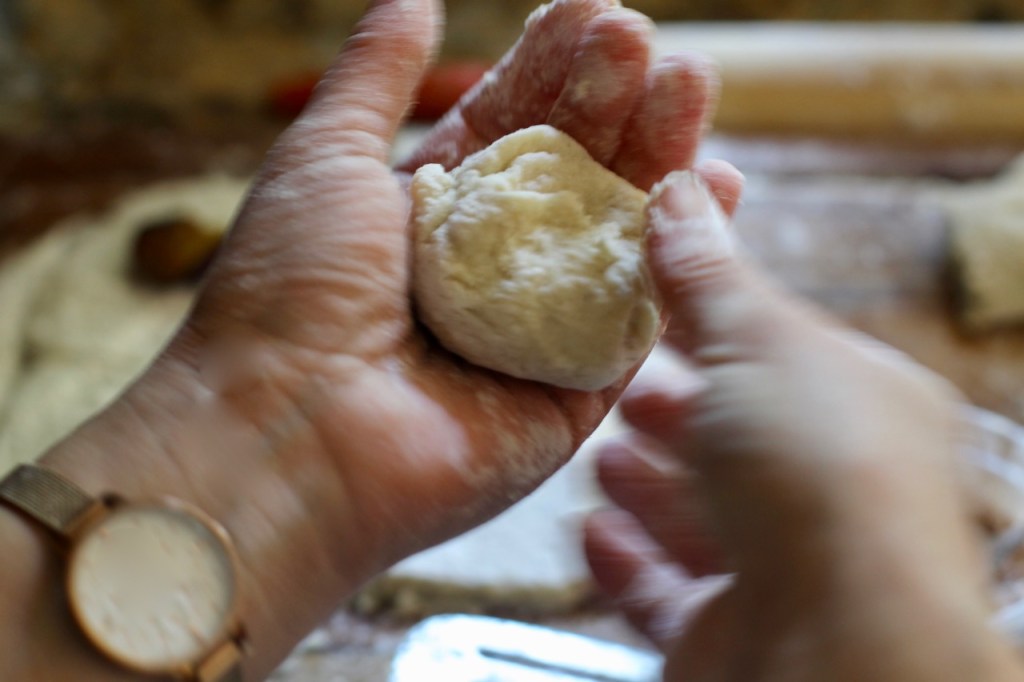
Assemble the dumplings. Place one of the dough squares into your palm. Put a plum piece along with the cinnamon sugar in the dough. Fold corner by corner gently tucking the stuffing inside and then roll it to make a ball. Do this with each square. Coat them in flour.

You can take half of the left over dough and start rolling long strips with them. Cut short little pieces off, coat in flour. Do this with the other half as well. You will cook them with the balls. If you don’t want to make these, use this left over dough to make more balls.

When the water starts boiling, you can drop the dumplings in the water one by one with a slotted spoon. Also, add the little gnocchi strips in this water. Try to gently stir them to prevent them from sticking to the bottom of the pot.

When the dumplings come to the surface, cook them for about another 5 minutes and remove them with a slotted spoon.

Put the dumplings into the coating mixture that you prepared earlier and roll them around until they are well coated.

Oh and you might want to double up the recipe or triple …

Serve warm with a little vanilla sugar or honey.

enjoy! Jó étvágyat!

Recipe, photo and text by twincitiesherbs.com.

Sorrel nettle stew (Sóska csalán fözelék)

Every year, I look forward to spring just so I can make this dish. The main ingredients are sorrel and nettle. The sorrel gives a pleasant lemony flavor and the nettles add the substance, texture and protein to the dish. It is a simple recipe to make, the hardest part is really to find the sorrel and the nettles. Our ancestors regularly ate them in the spring but today unfortunately they are seldom available in stores. My recipe is based on the Hungarian sorrel stew recipe (sóska fözelék) with the addition of the nettles. Years ago, I could not find any recipes that had nettles so I decided to experiment. In my opinion, the results are fantastic.

Before I post the recipe, I would like to talk about nettles and sorrel. Nettle is like the super food of the US and Europe. When I think of Nettles, two things come to my mind: nutritive tonic and the kidneys. It is very high in protein, vitamins, and minerals and makes a nutritious food for sure. With its sharp, tangy taste, sorrel adds zest to dishes. However, it is not just added for its flavor but it is also a nutritious goodness. Sorrel is a green leafy vegetable with packed with vitamins and minerals. No wonder our ancestors frequently included them in their diet.

RECIPE

INGREDIENT

  • 1 lb of washed sorrel or you can use spinach too but the dish will taste differently.
  • 1/4-1/2 lb washed nettles (the nettles should be fresh and stingy but they will not hurt your mouth after you cook them).
  • vegetable oil (I like sunflower)
  • 2 strips of bacon (optional)
  • 1 onion, finally chopped
  • 2 cloves of garlic, mashed
  • 1 tsp sweet Hungarian paprika (powder)
  • few springs of dill, chopped
  • about 2 cups cold water, vegetable or meat stock (preferably home-made)
  • 1/4 cup sour cream
  • 1 tsp salt or to taste
  • freshly ground pepper

PREPARATION

  • Saute the onions in some oil until translucent and can smell the wonderful aroma of the onion.
  • If desired add bacon and render until crisp.
  • Keeping the oil warm add the paprika and the garlic, mix for 1 minute and add cold water or stock.
  • Add sorrel and nettles.
  • Bring to a boil.
  • Turn the heat down and cook on low heat for about 15 minutes.
  • When done, take off heat and let the dish cool off.
  • Add salt, sour cream and black pepper.
  • Cream with an immersion blender. Here you are trying to create a sauce with a little texture.
  • Serve on mashed potatoes along with fried eggs or hard boiled eggs. Sprinkle dill on top.

enjoy! Jó étvágyat!

SOURCES

Hot and sour burdock soup

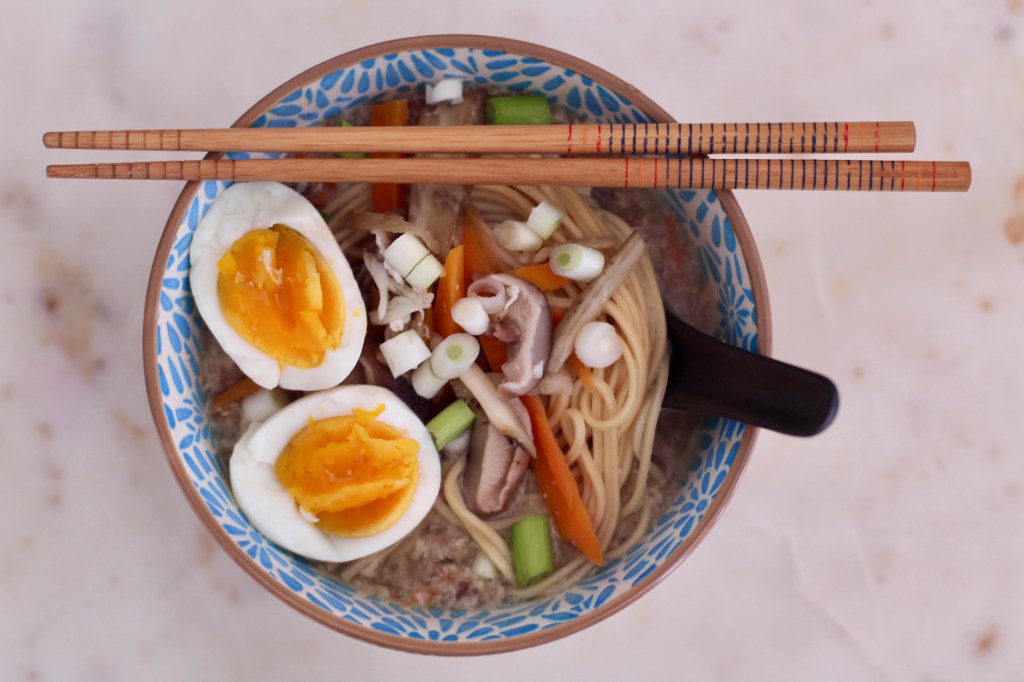
Spring is here! In the Midwest, one of the first edible foods in nature is Burdock root. A great way to include burdock in your diet is to make a soup with the roots. Asian cooks rave about their burdock soups that they make in the spring. I’m presenting a delicious burdock root soup here that is inspired by Rosaleedela Foret’sblog. There is really nothing exotic about this soup, all the ingredients can be found here in the US.

We tend to eat heavier foods during the winter months but our body is ready to embark on something lighter and easier to digest. As we transition from the winter into spring, it is important to pay attention to our Liver. Heavy foods consumed during the winter might be burdening our livers that can lead to some health problems in the spring, like fevers and tiredness. Our body tends to cleanse itself naturally as we eat less in the spring. In addition, it is nice to add some bitter plants that aids the liver to accomplish this process. Our ancestors ate a lot of bitters in the spring. One of these spring bitters is burdock.

The burdock’s earthy, heavier flavor pairs nicely with the carrot’s sweet and light flavor. In addition to the bitter flavor, the liver also needs the sour flavor for support. It gets the sour flavor from the vinegar. This soup is a big favorite in our family, yes even the kids like it. Perhaps, it is because of its interesting, well balanced flavors. In fact, it has all five flavors: sweet, salty, bitter, sour, and pungent!

The main ingredient in this recipe is burdock root. If you are familiar with burdock, you can harvest it yourself. Otherwise, it might be difficult to get at the stores. If you don’t have it in your backyard, it is available at farmers’ markets, health food stores or also from Harmony Valley in Veroqua, WI.

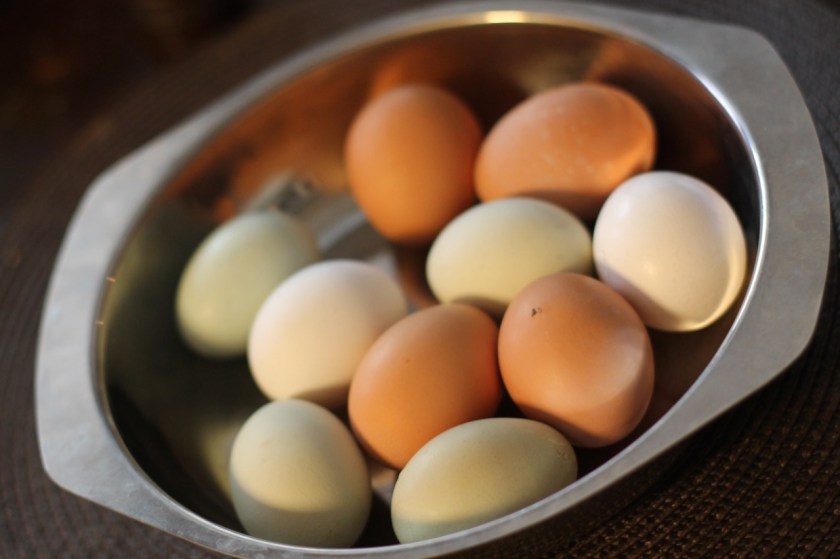
Instructions for boiling the eggs

Make sure the eggs are at room temperature. Eggs straight out of the fridge need to warm up otherwise the cooking time needs to be changed. You might have to experiment with the exact cooking time as there are many variables that can effect it. It should be somewhere between 7 and a half and 8 minutes for 1 egg and more for additional eggs. The eggs should be semi-hard on the outside and be ‘semi-runny’ in the middle.

RECIPE

4 servings

INGREDIENTS
  • 10 cups stock (vegetable or chicken, pork).
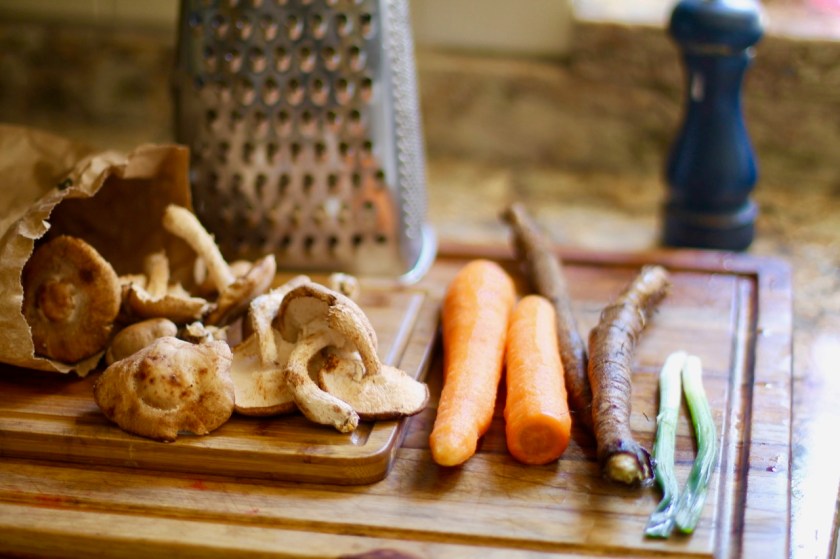
  • 2 cups burdock root, cut into match stick pieces
  • 2 carrots, peeled and cut into match stick pieces
  • 2 cloves of garlic, chopped
  • 1 Tbsp of ginger, minced
  • 1 cup mushrooms (like shiitake)
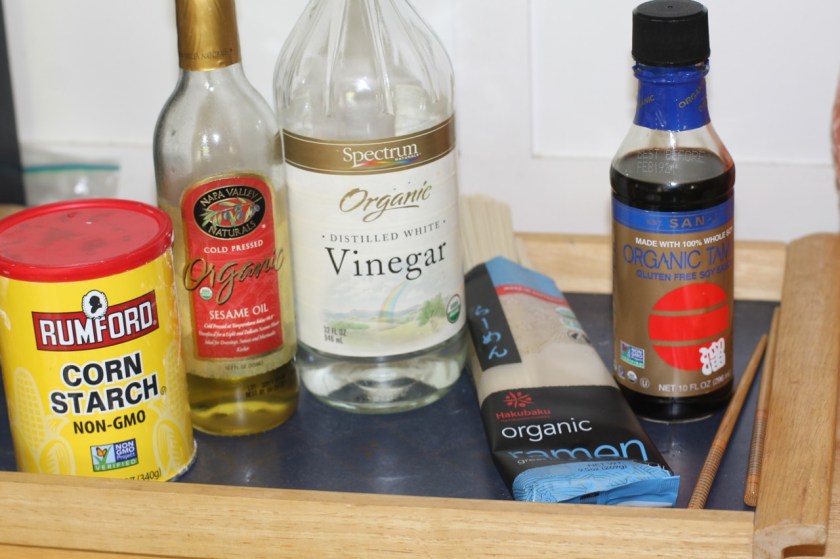
  • 3 Tbsp cornstarch + 4 Tbsp of water
  • 4 Tbsp of rice or white vinegar
  • 2 lightly beaten egg yolks
  • 1 Tbsp sesame oil
  • 1 bunch scallions, chopped
  • salt to taste
  • soy sauce
  • 4 hard boiled eggs
  • hot red pepper or sriracha sauce (optional)
  • 1 pkg ramen noodles (I used HakuBaku Organic Ramen )

METHODS
  1. Bring stock to a boil.
  2. Add carrots, burdock roots, mushrooms, crushed garlic and ginger. After it boils, turn it down to low medium heat and cook for about 5 minutes covered.
  3. In a smaller bowl mix vinegar, the cornstarch and water. Add it to the soup and continue to simmer while stirring until the mixture is thickened, about 2 to 3 minutes.
  4. Turn off the heat and stir egg yolk in gently. Add sesame oil, salt and hot red pepper. Mix.
  5. Make the hard boiled eggs. Make sure the eggs are at room temperature. Bring some water in a pot to a boil. Add the 4 eggs at room temperature. Boil them for about 8 minutes. Take them out and put them into cold water. Peel the shells. (Please see my note above).
  6. Cooking the ramen noodles. In a medium sized pot, bring cold water to a boil and cook the noodles. according to its cooking instructions. Strain and discard water.
  7. Serve in a deep bowl. Add ramen noodles and eggs. Garnish with scallions and add soy sauce to taste.

Enjoy!

Sources:

Text and photo by Twincitiesherbs.

Traditional Hungarian stuffed cabbage (töltött káposzta)

I don’t think it is an accident that stuffed cabbage is a Christmas dish.  You can surely serve it any time but it is the perfect dish for the holidays.

I smile every time I remember my daughter’s reaction. She was three years old when she saw stuffed cabbage on the Christmas table and screamed ‘YUCKY’.  However, after she tried it, she realized how delicious it was. Ever since then, she makes sure that it is on the Christmas menu.

Stuffed cabbage is a popular winter dish in Hungary even though our ancestors didn’t make it. It is a dish that was inspired by the Turks. They called it szárma from the Turkish word sarma. However, many of us today can’t imagine Christmas without it. My mom made it every year. 

I don’t think it is an accident that stuffed cabbage is a Christmas dish. You can surely serve it any time of the year but it is the perfect dish for the holidays.  In the old days, families butchered their pigs and the meat was ready to be used by around this time. Also, there weren’t too many vegetables available except for a few like cabbages and onions. Not to mention that the dish can be kept in the cold for a couple of days. In fact, it tastes the best after a few days. This was an important consideration, too. Christmas went on for days back in the old times. Also, according to traditional customs, people were not allowed to work during the celebrations.

The recipe is not too difficult, though it is time-consuming. Just remember you won’t have to cook for 3 days afterwards! There are many variations of this recipe but this is how I make it. Please feel free to experiment with it.

RECIPE

INGREDIENTS

Meat stock:
  • 1 -2 lb of beef bones (ox tail and beef bone)
  • 2-3 Tbsp of black pepper corn. I like to add a lot of peppercorns because they give a really nice flavor to the dish.
  • water
  • 4 bay leaves
  • 3 carrots
  • 2 parsnips
  • 1 large onions
  • few cloves garlic
  • 2 celery stalk or 1 medium sized celery root
For the cabbage rolls:
  • high quality oil (lard, sunflower seed oil)
  • 1 1/4 lb of ground pork (can be half beef)
  • oil
  • 1/4 cold water
  • 1 larger onion, chopped
  • 2 slices of bacon, sliced
  • 2 cloves garlic, crushed
  • 2 lb of sauerkraut, drained, divided
  • few strings fresh thyme or 1 tsp dried thyme
  • 1 cup of uncooked rice, cleaned
  • 1 cup of cold water to cook the rice in
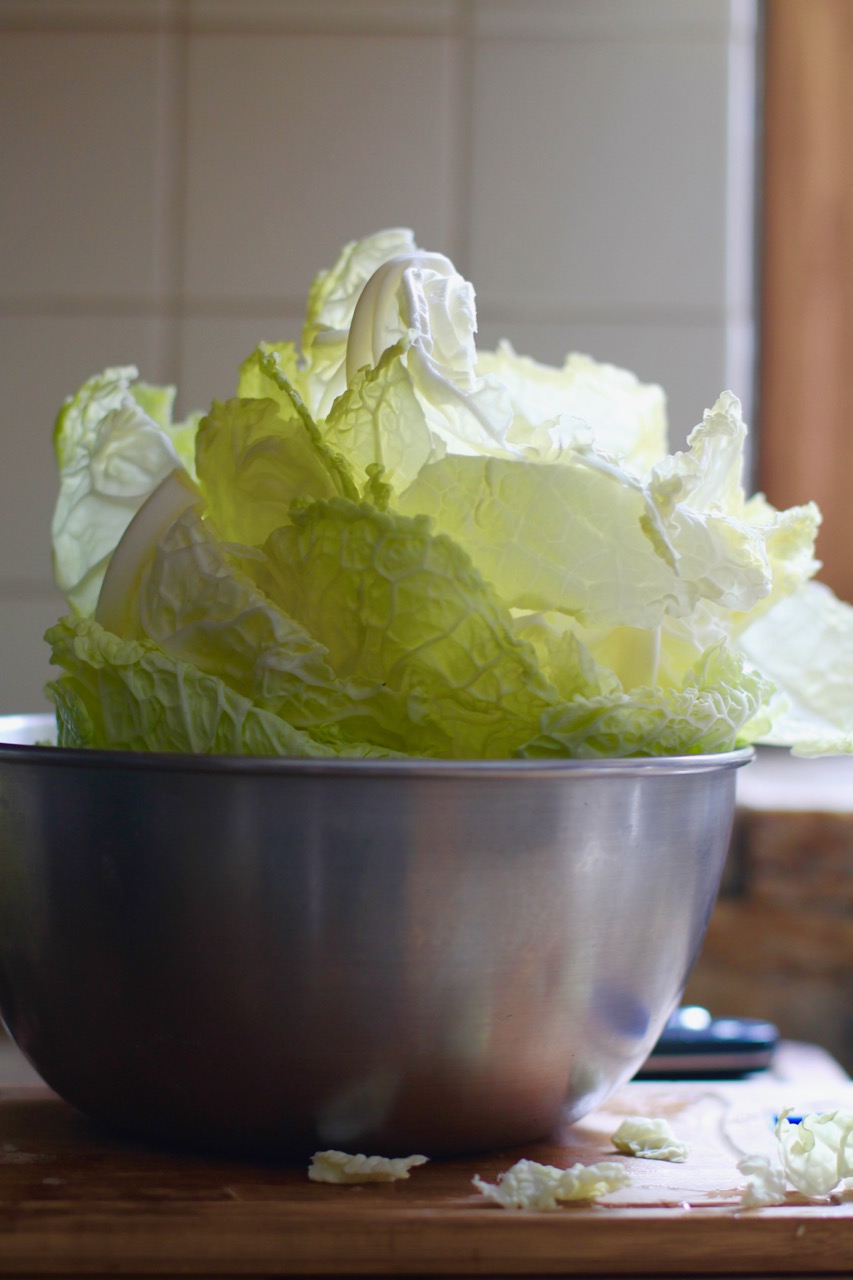
  • 1-2 heads of large Savoy cabbage or green cabbage or sour cabbage leaves (about 18 – 20 leaves)
  • marjoram
  • 2 tsp sweet Hungarian paprika (make sure it is authentic)
  • 1 egg
  • sour cream
  • freshly ground black pepper and salt to taste
  • Hot pepper flakes or Erös Pista to taste
  • smoked meat like kielbasa, sausages (optional)

METHODS

Meat stock

Place the onion, beef bones, pepper corns, garlic, carrots, parsnips, bay leaves , celery in a large pot. Add enough water to cover everything well. Bring to a boil, turn the heat down and slowly cook for 2- 4 hours covered. Set aside. (Omit if you already have it).


Making the dish

  1. Preparing the base of the dish. Sauté onion in oil on medium high heat for 5 minutes or until translucent. Add bacon and render for 5 more minutes. Add paprika and garlic, stir for 1 minute. Add 1/4 cup cold water (have it ready) and stir. Add 1 lb of the sour kraut. Mix. Set aside.
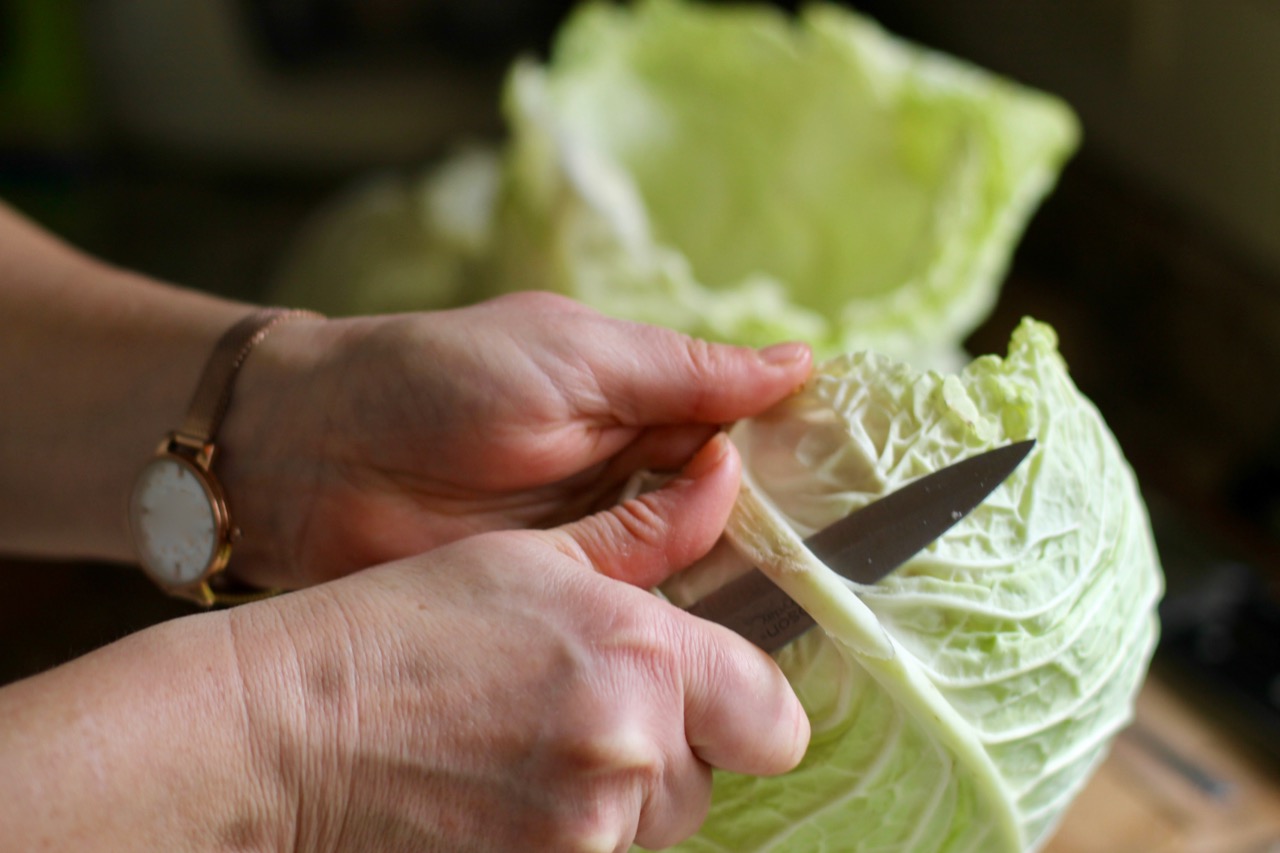
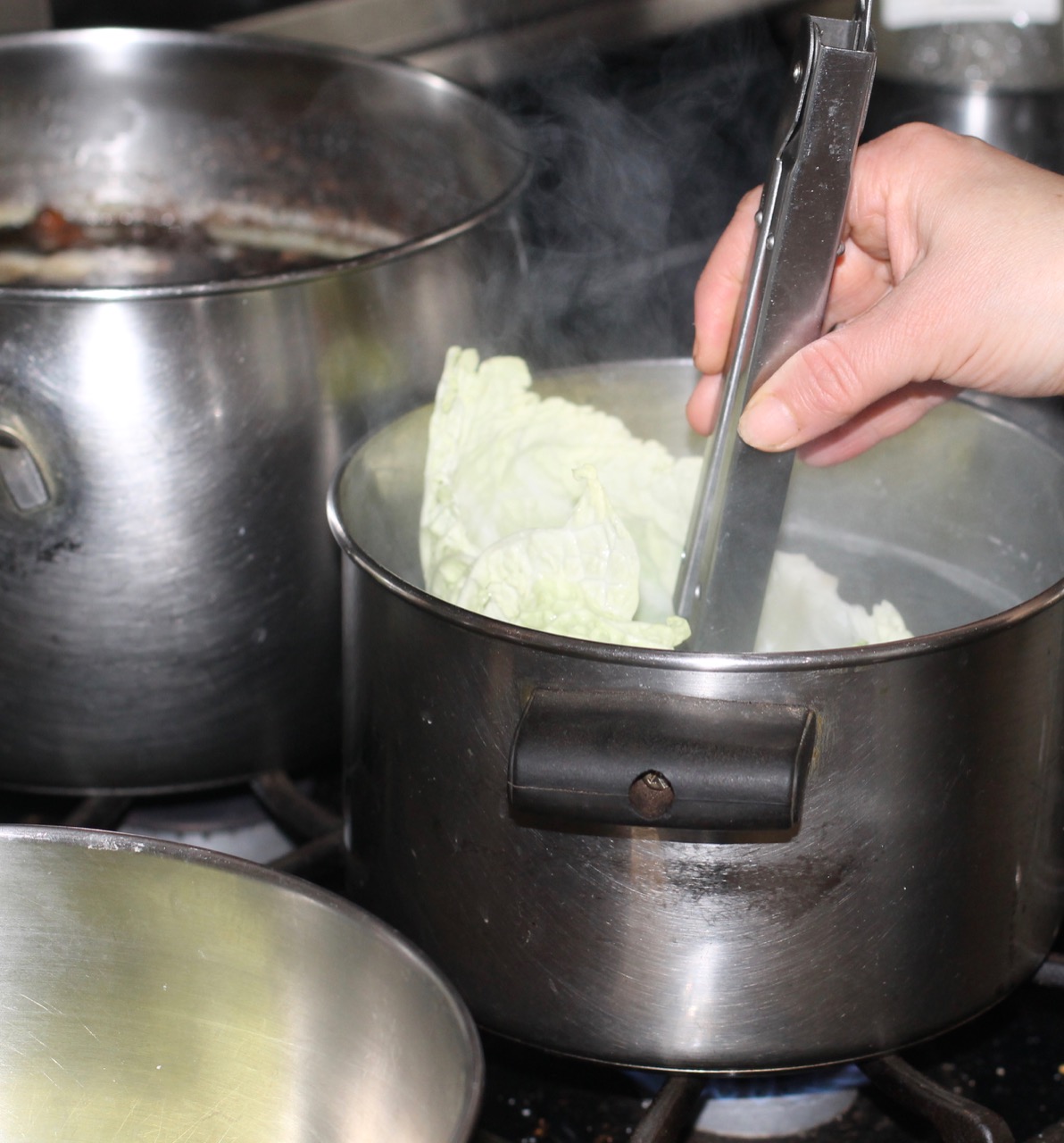
  2. Preparing the cabbage leaves. Fill a larger pot with cold water and start boiling it. This will be used to blench the leaves. Take the leaves off the cabbage gently one by one. When the water boils, add the leaves in the boiling water one at a time for a few minutes. Here we are parboiling the cabbage leaves quickly so make sure they get semi soft but not mushy. After taking the leaves out quickly immerse the leaves in cold water. Take them out and put them on a colander so the water can drain. (Omit if you have sour cabbage leaves). 
  3. Parboiling the rice. Bring 1 cup of rice in 1 cup of cold water to a boil. Turn the heat down and cook uncovered for 10 minutes. Set aside.
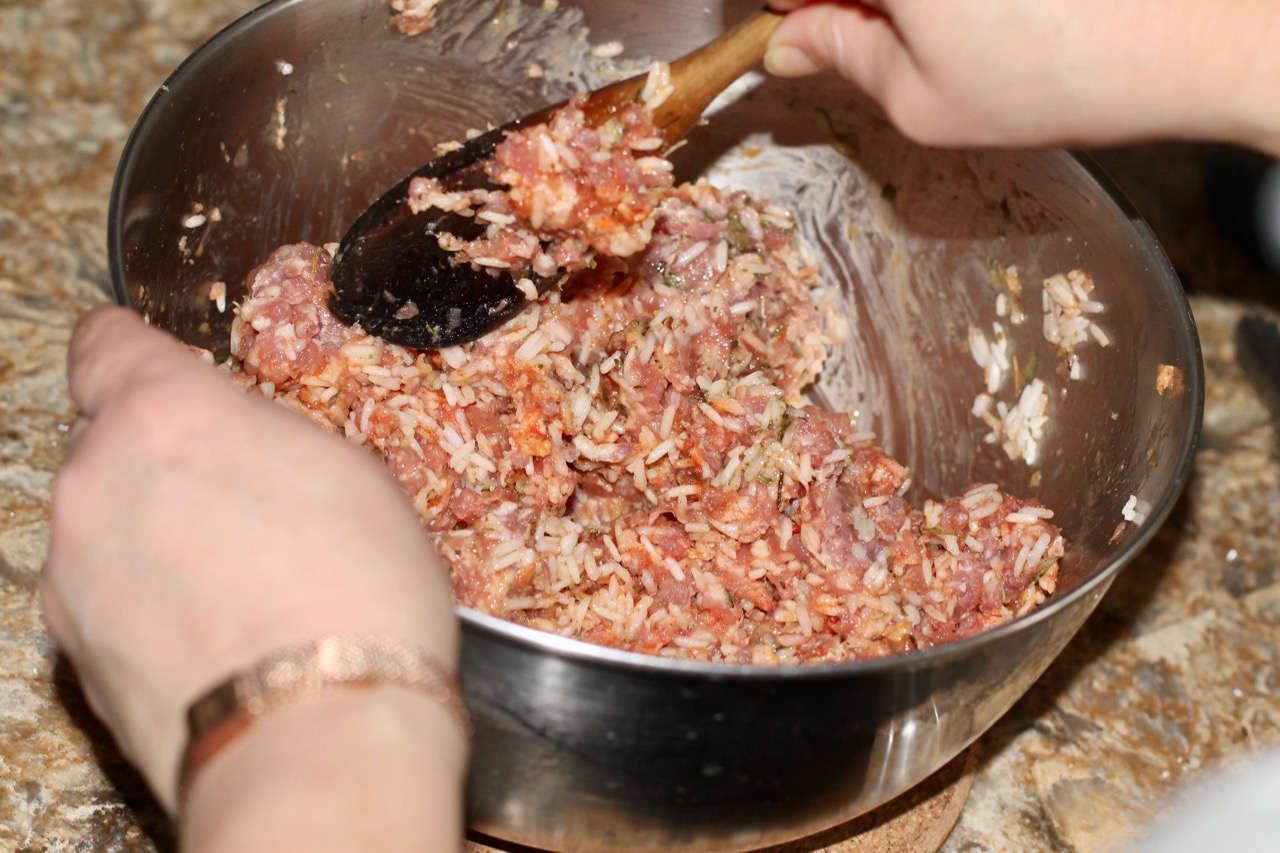
  4. Preparing the stuffing. In a larger dish, mix the cooked rice from earlier, crushed garlic cloves, marjoram, 1 egg and the meat together. Set aside.
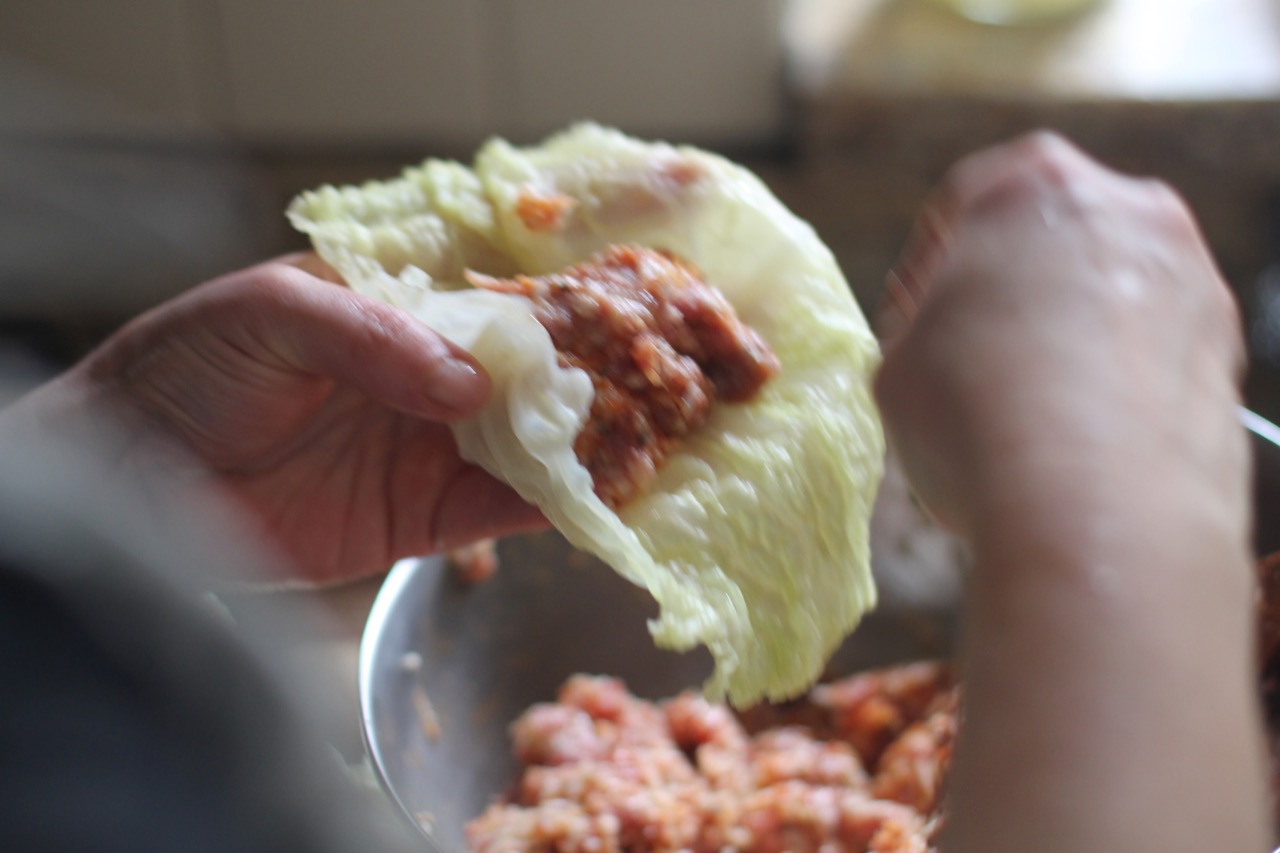
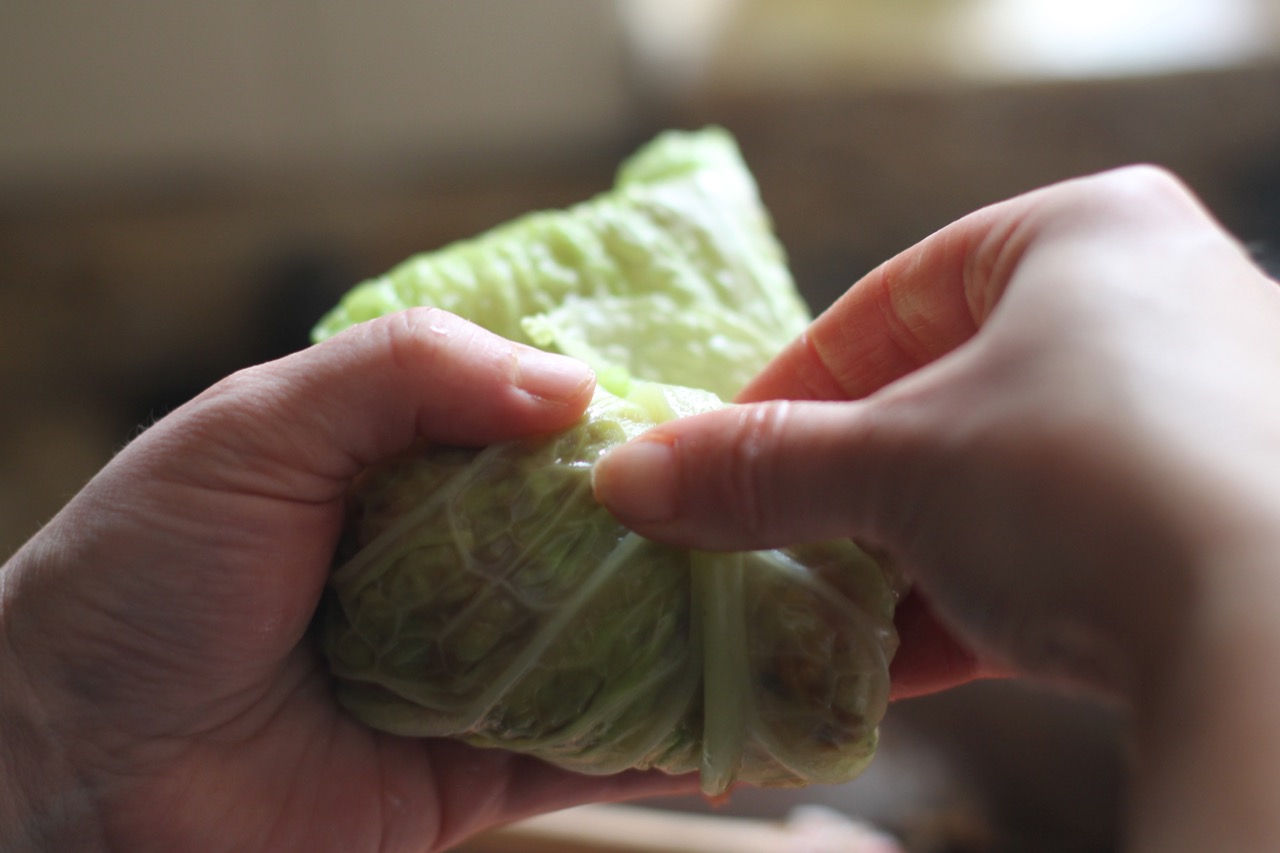
  5. Assembling the stuffed cabbages. Fill the cabbage leaves in the middle with about 1 heaping tablespoon of stuffing or more if leaf is bigger and fold them on all four sides so the stuffing is tucked inside the leaves nicely. Be careful you don’t fold them too tight because the mixture will expand a little. You can close the leaves with a toothpick if you want but it is really not necessary.  This may sound like a difficult task but really what you do here is you tuck the filling inside the leaves and fold each side onto the stuffing so it is nested inside the leaves. Please, see the pictures for clarification above.
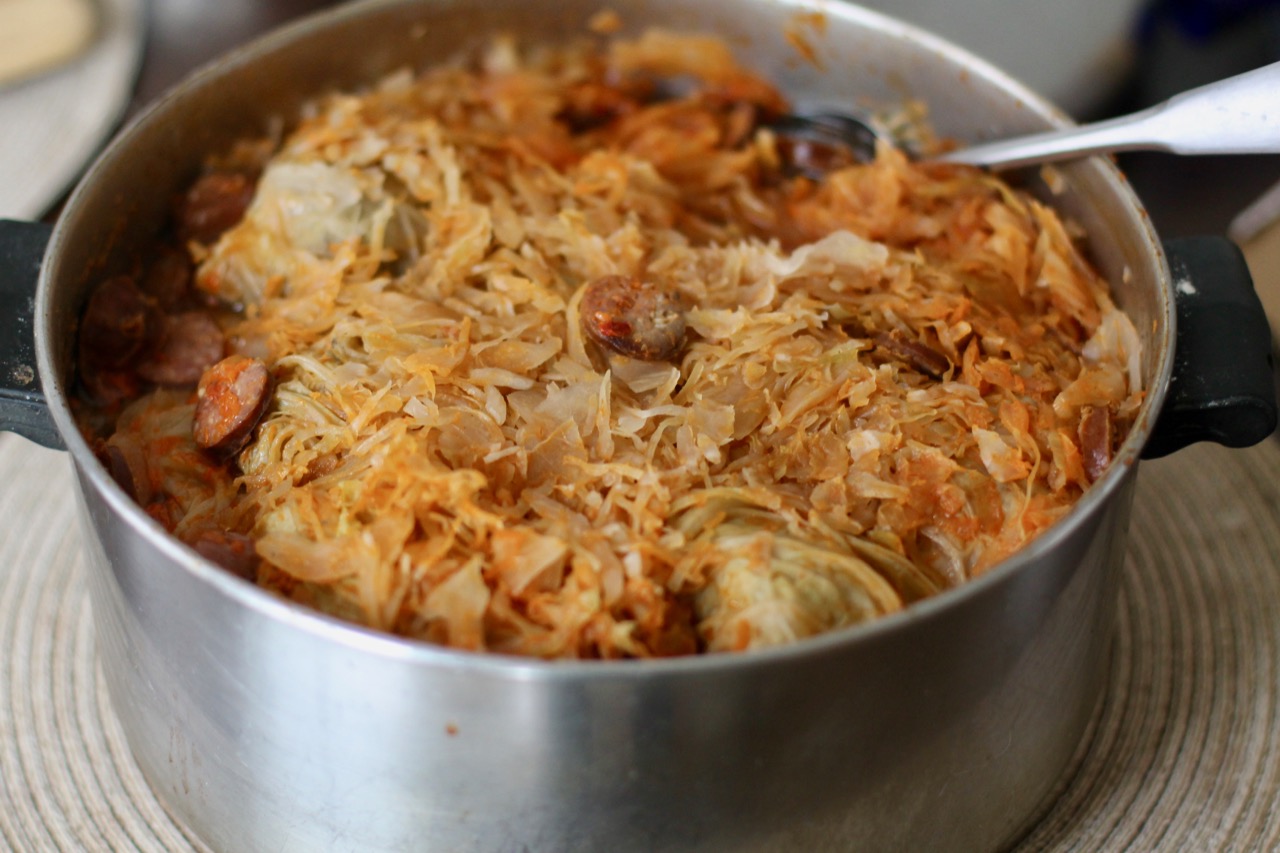
  6. Place the assembled cabbages on top of the prepared sour kraut mixture from earlier one by one, fitting each leaf snug next to each other. Place the remaining 1 lb sour-kraut on top of the stuffed cabbages. 
  7. Pour the meat stock over the stuffed cabbage leaves. Make sure the liquid covers everything in the pot. Bring to a boil and turn the heat down. Cook on very low heat slowly covered for 1 ½ – 2  hours or until the cabbage and the stuffing are cooked.
  8. Add salt and pepper to taste.
  9. Serve the stuffed cabbages on top of the sauerkraut along with sour cream, sliced kielbasa and hot red pepper flakes or Erös paprika.
  10. Add the meat if you wish.

Merry Christmas! Enjoy!  Jó étvágyat!

Text, photos and recipe by twincitiesherbs.