

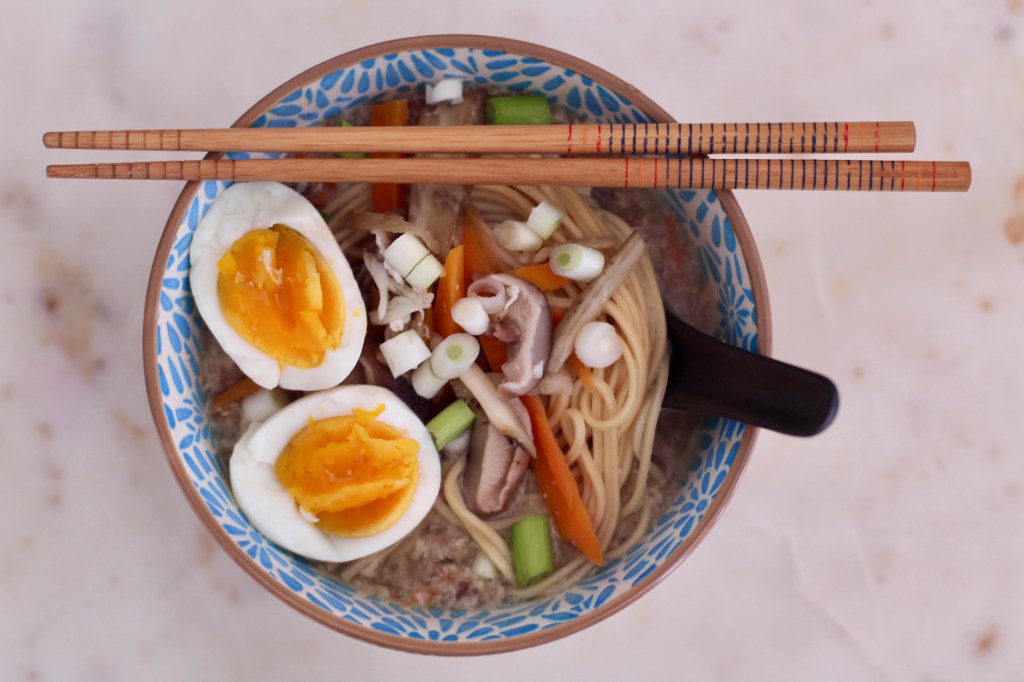
Spring is here! In the Midwest, one of the first edible foods in nature is Burdock root. A great way to include burdock in your diet is to make a soup with the roots. Asian cooks rave about their burdock soups that they make in the spring. I’m presenting a delicious burdock root soup here that is inspired by Rosaleedela Foret’s blog. There is really nothing exotic about this soup, all the ingredients can be found here in the US.
We tend to eat heavier foods during the winter months but our body is ready to embark on something lighter and easier to digest. As we transition from the winter into spring, it is important to pay attention to our Liver. Heavy foods consumed during the winter might be burdening our livers that can lead to some health problems in the spring, like fevers and tiredness. Our body tends to cleanse itself naturally in the spring. In addition, it is nice to add some bitter plants that aids the liver to accomplish this process. Our ancestors ate a lot of bitters in the spring. One of these spring bitters is burdock.
The burdock’s earthy, heavier flavor pairs nicely with the carrot’s sweet and light flavor. In addition to the bitter flavor, the liver also needs the sour flavor for support. It gets the sour flavor from the vinegar. This soup is a big favorite in our family, yes even the kids like it. Perhaps, it is because of its interesting, well balanced flavors. In fact, it has all five flavors: sweet, salty, bitter, sour, and pungent!
The main ingredient in this recipe is burdock root. If you are familiar with burdock, you can harvest it yourself. Otherwise, it might be difficult to get at the stores. If you don’t have it in your backyard, it is available at farmers’ markets, health food stores or also from Harmony Valley in Veroqua, WI.
Instructions for boiling the eggs
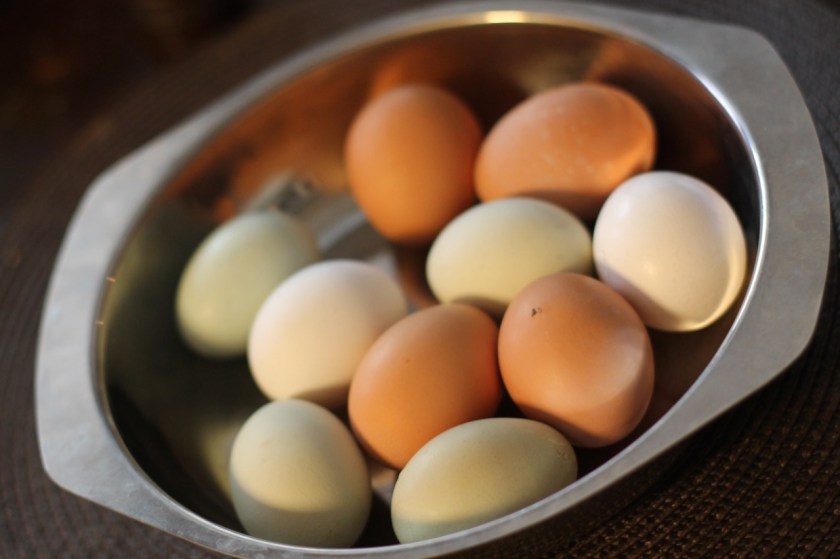
Make sure the eggs are at room temperature. Eggs straight out of the fridge need to warm up otherwise the cooking time needs to be changed. You might have to experiment with the exact cooking time as there are many variables that can effect it. It should be somewhere between 7 and a half and 8 minutes for 1 egg and more for additional eggs. The eggs should be semi-hard on the outside and be ‘semi-runny’ in the middle.
RECIPE
4 servings
INGREDIENTS
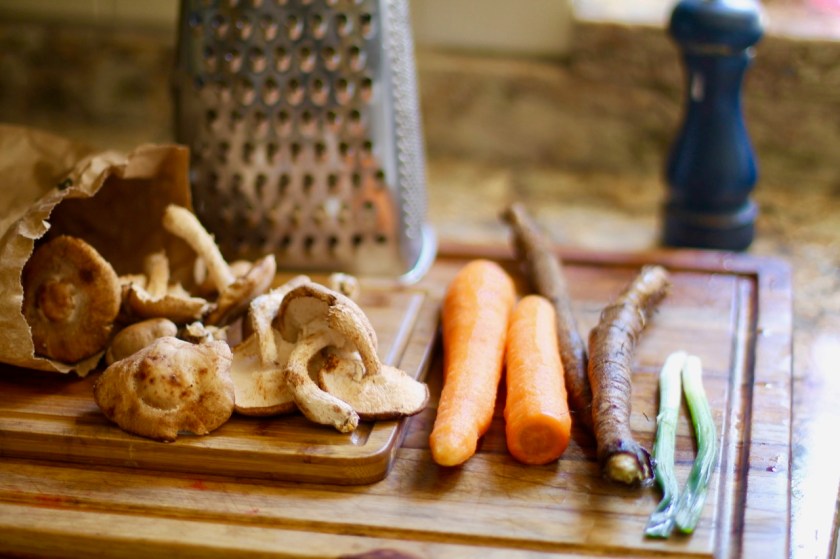

- 10 cups stock (vegetable or chicken, pork).
- 2 cups burdock root, cut into match stick pieces
- 2 carrots, peeled and cut into match stick pieces
- 2 cloves of garlic, chopped
- 1 Tbsp of ginger, minced
- 1 cup mushrooms (like shiitake)
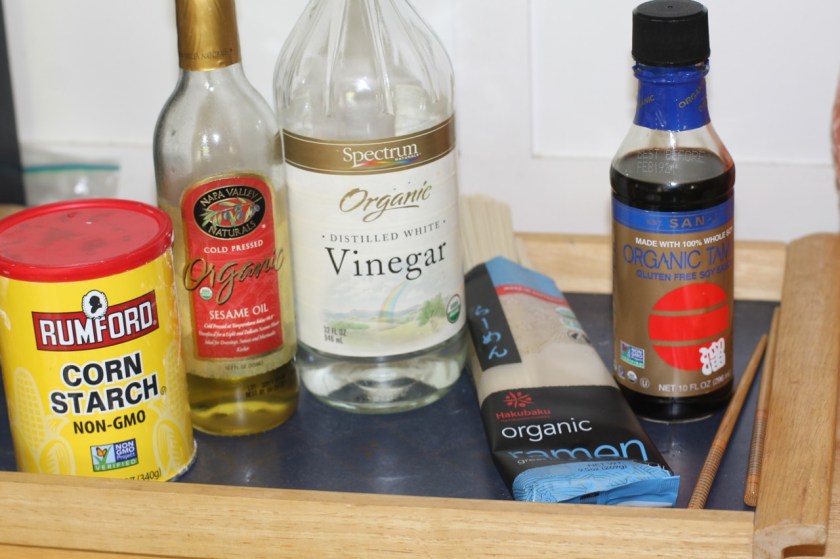
- 3 Tbsp cornstarch + 4 Tbsp of water
- 4 Tbsp of rice or white vinegar
- 2 lightly beaten egg yolks
- 1 Tbsp sesame oil
- 1 bunch scallions, chopped
- salt to taste
- soy sauce
- 4 hard boiled eggs
- hot red pepper or sriracha sauce (optional)
- 1 pkg ramen noodles (I used HakuBaku Organic Ramen )
METHODS
- Bring stock to a boil.
- Add carrots, burdock roots, mushrooms, crushed garlic and ginger. After it boils, turn it down to low medium heat and cook for about 5 minutes covered.
- In a smaller bowl mix vinegar, the cornstarch and water. Add it to the soup and continue to simmer while stirring until the mixture is thickened, about 2 to 3 minutes.
- Turn off the heat and stir egg yolk in gently. Add sesame oil, salt and hot red pepper. Mix.
- Make the hard boiled eggs. Make sure the eggs are at room temperature. Bring some water in a pot to a boil. Add the 4 eggs at room temperature. Boil them for about 8 minutes. Take them out and put them into cold water. Peel the shells. (Please see my note above).
- Cooking the ramen noodles. In a medium sized pot, bring cold water to a boil and cook the noodles. according to its cooking instructions. Strain and discard water.
- Serve in a deep bowl. Add ramen noodles and eggs. Garnish with scallions and add soy sauce to taste.
Enjoy!
Sources:
- Paul Pitchford. Healing Whole Foods.
- https://learningherbs.com/remedies-recipes/hot-and-sour-soup-recipe/
Text and photo by Twincitiesherbs.
 Twin Cities Herbs