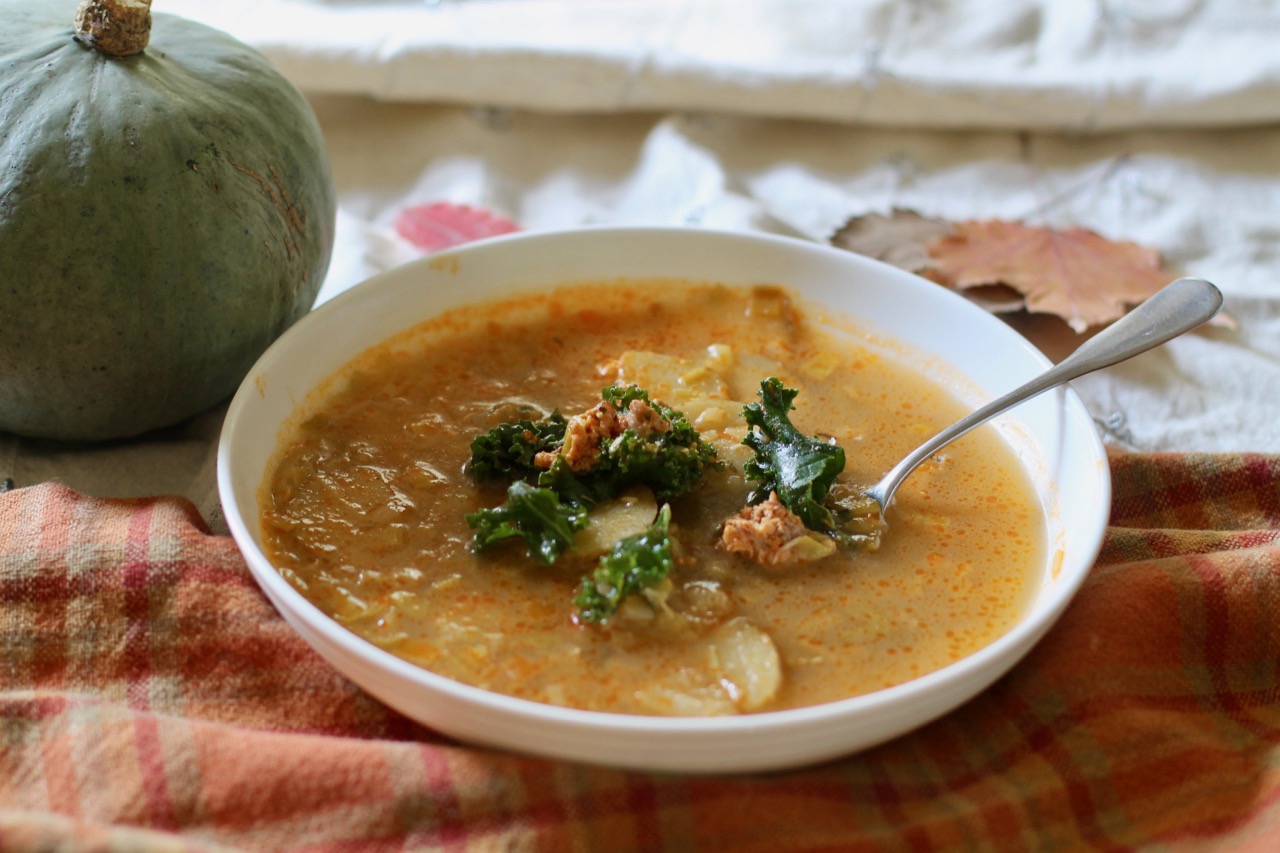
Potato soup with lovage

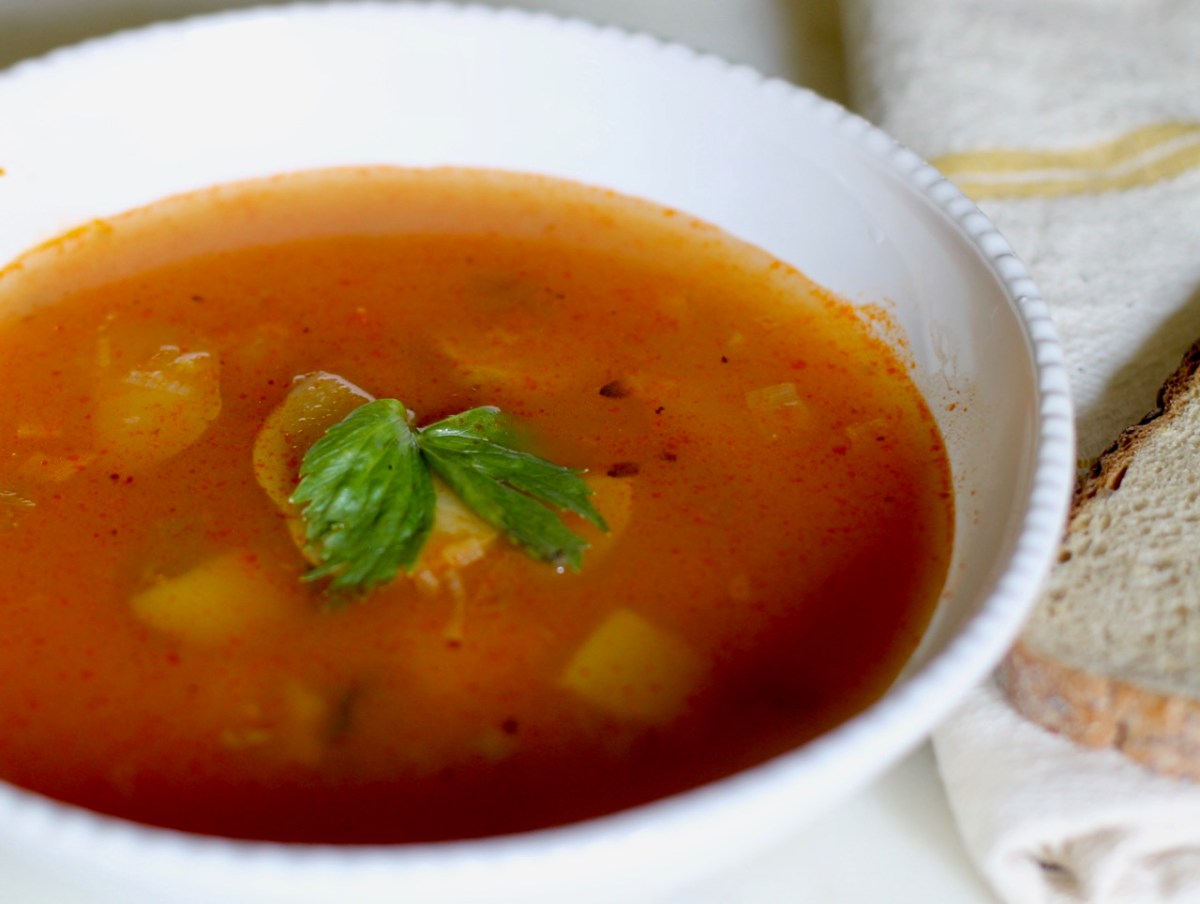
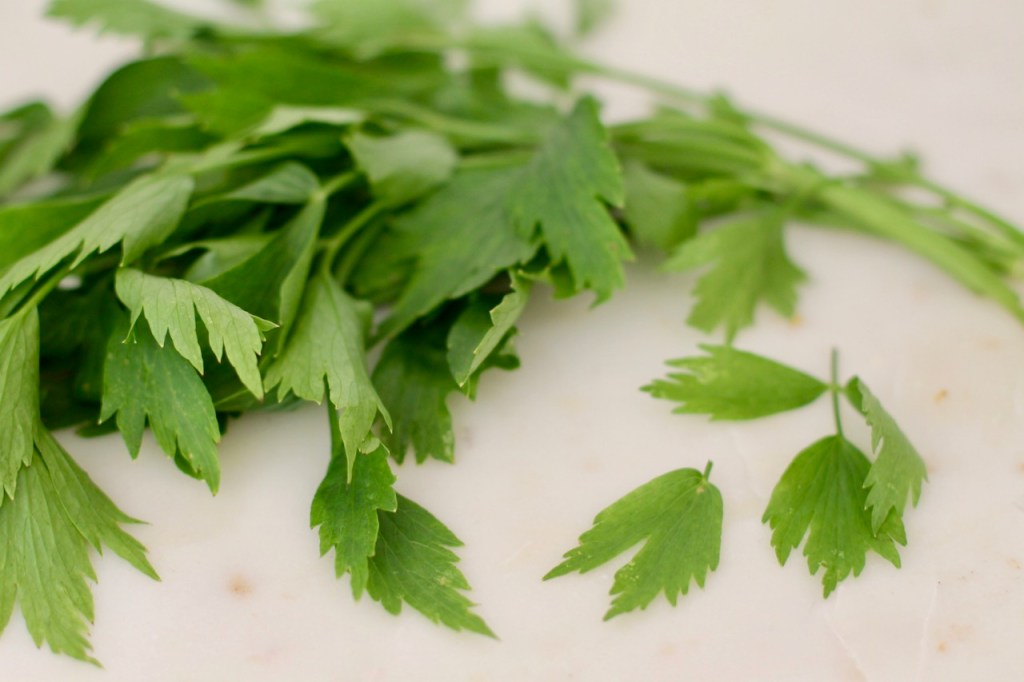
Lovage is an old European folk remedy but has been forgotten. I would like to bring some attention to this valuable plant with this recipe. In the old days, it was used like parsley is used today, it grew in the gardens of everyday folks. It has an unusual flavor, more like citrusy celery. I used my Potato leek soup recipe (source) but added lovage instead of kale at the end as lovage wonderfully enhances the flavor of the potatoes. Of course, it is a great plant to use to get the body ready for the colder months.

Lovage (Levisticum officinale) can be used for medicine and culinary purposes. It has been around for thousands of years. The Greek physician, Hippocrates (460 – 370 BC), made it popular by adding it into the culinary world. He did so after using it successfully during the epidemics of his time. Lovage offers numerous health benefits. It improves digestion, reduces arthritis, and helps with water retention in edema and the skin, among many others. It is definitely a big digestion remedy and it is even aphrodisiac. Lovage is a warming, sweet, bitter and aromatic plant. I have it growing in my garden right now, a small little shoot grew very quickly into a large plant.

RECIPE

Ingredients

  • 8 medium sized Russet or Yukon potatoes (about 1.5-2 pounds)
  • 3 medium sized leeks, peeled and sliced
  • 2 Tbsp butter
  • 2 large slices of bacon or to taste (optional)
  • stock (vegetable or chicken)
  • 1 tsp of sweet Hungarian paprika (make sure it is authentic)
  • 1/2 tsp of fennel seeds
  • 1-3 thyme springs
  • 2 dried bay leaves
  • handful of chopped up lovage
  • 1/2-1 cup of cream
  • salt and freshly ground pepper
  • crushed hot red pepper flakes to taste
  • Parmesan cheese to serve

Preparation

  • Wash and slice up leeks. Slice leeks thin with a sharp knife. Use more the white part (cook the greenish part in the stock or discard). Put the sliced leeks in a bowl of cold water for 1/2 hour. This will get all the dirt out of the leeks. Clean well. Strain the liquid using a colander or pat dry. 
  • If you decide to keep the peel on the potatoes, clean and soak potatoes in some cold water for 1/2 hour. Scrub off any dirt. If you decide to peel potatoes, you can skip this step and just peel and slice the potatoes thin.
  • Sauté leek slices in some butter for about 10 minutes or until you can smell the aroma of the leeks. Add 1 tsp of paprika and fennel seeds to activate for 1 minute and stir. Add 1/4 tsp cold water, stir. 
  • Fry up some sliced bacon if you decide to use it. 
  • Add potatoes and bacon to the leeks. Pour in the stock enough to barely cover the vegetables. Add the thyme and bay leaves. Start heating the soup carefully until it starts bubbling but not boiling. Quickly, turn the heat down and slowly cook for 1/2 hour. 
  • Clean and cut up lovage.
  • When soup is done, add the lovage. It doesn’t need to cook. 
  • Add cream, salt, black pepper, hot red pepper flakes.
  • Serve hot with a little Parmesan cheese.

enjoy!

Source

Matthew Wood. Eartwise Herbal

Text, photos and recipe by twincitiesherbs.com

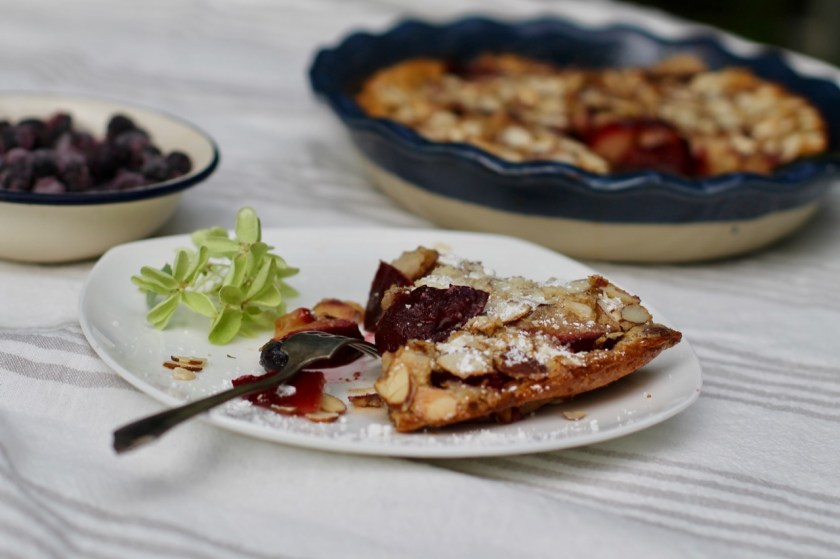
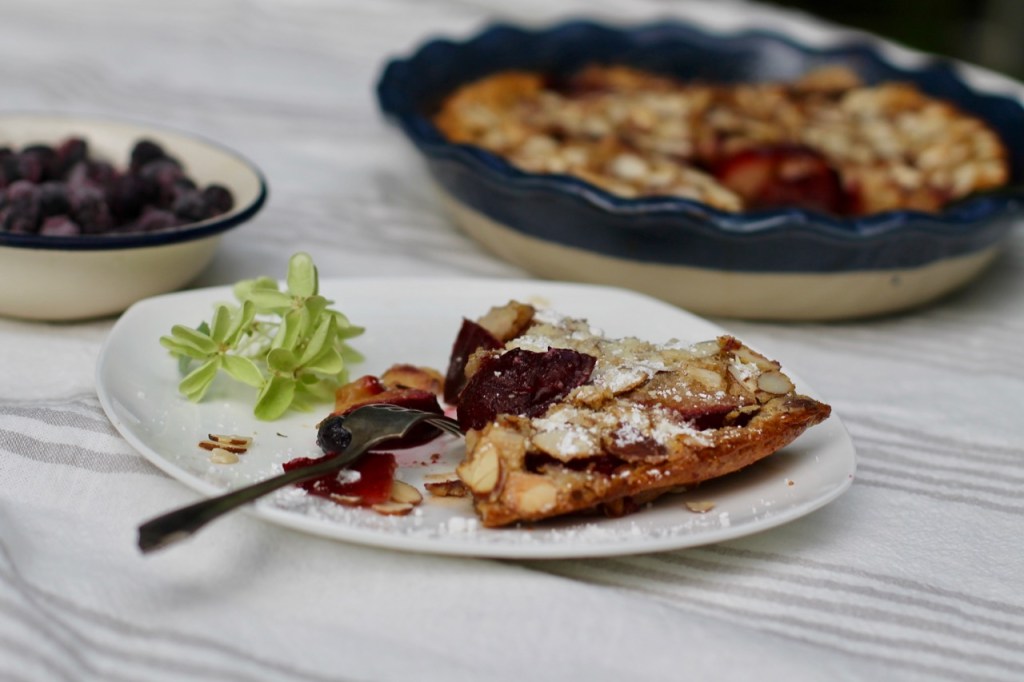
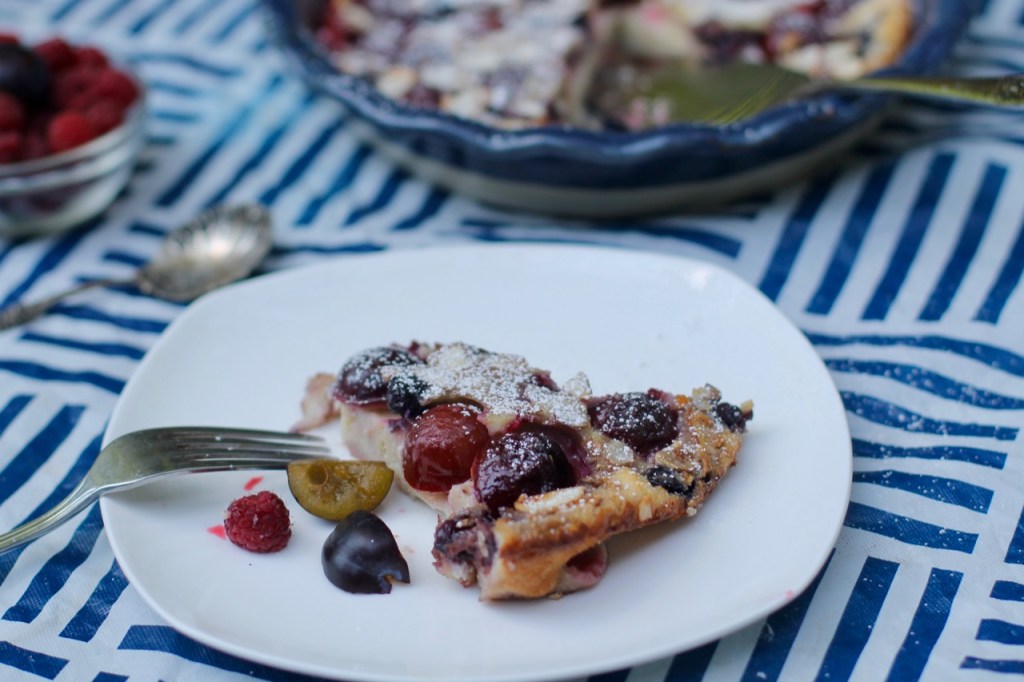
Plum Clafoutis (Flaugnarde)

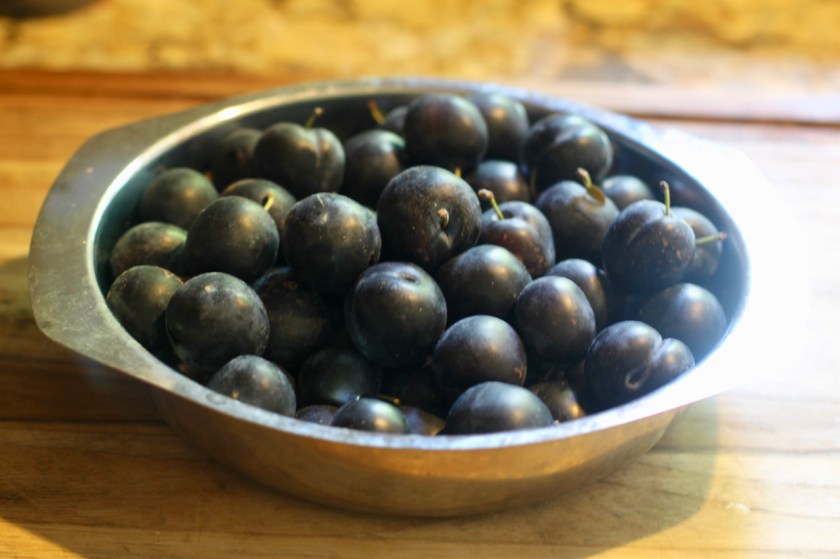
It is plum season in our neck of the woods (Midwest) right now. Whenever plums show up at the farmers’ market, I can feel the summer is about to come to an end. This is my last chance to indulge in summer fruits so please join me. Oh no not just with any dish … I’m going to say farewell to summer … with a French dish.

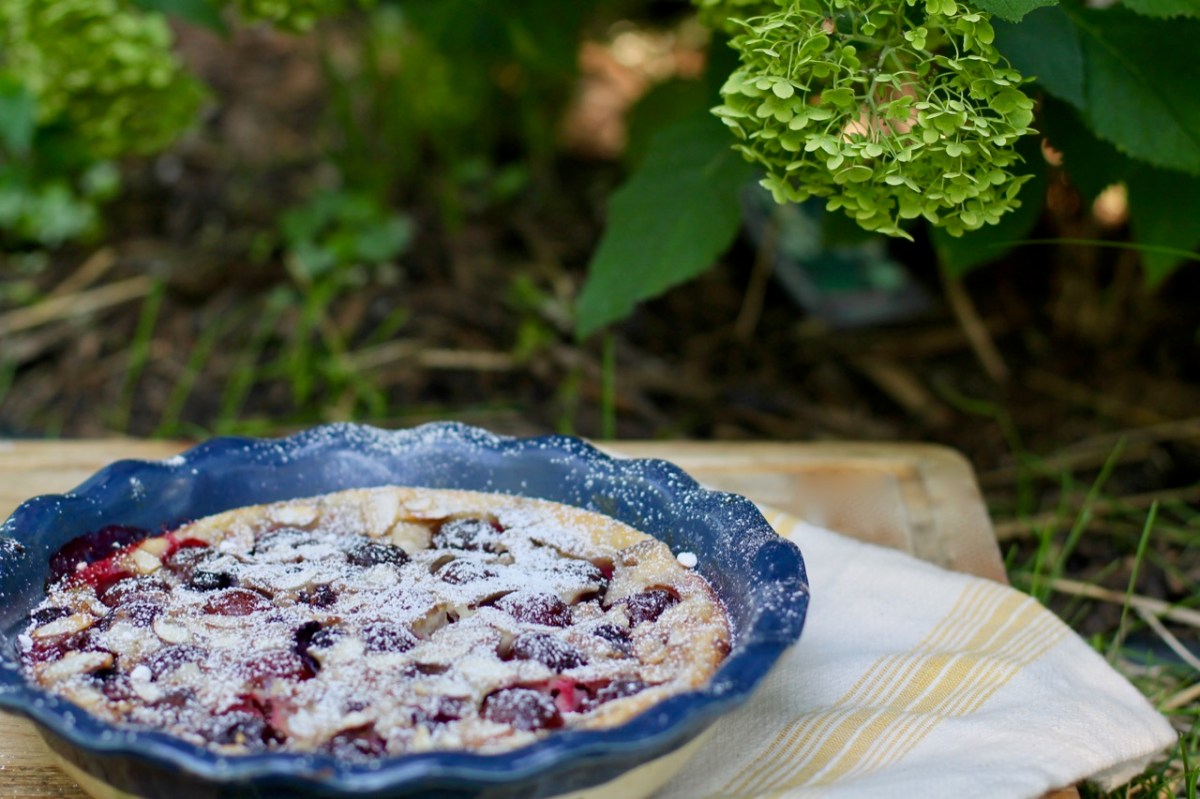
This is a fruity dish that is made with a thick flan like batter baked in a dish. Traditionally, it is made with cherries and is called cherry clafoutis or simply clafoutis in French but when made with any other harder fruits like plums, it is called flaugnarde. So technically, this dish is called flaugnarde. It was made in France first, more exactly in Limousine, in the central region of France.

Clafoutis is a simple rustic dish. It is not meant to be beautiful, delicate looking like what you expect a French dessert to be but it is more of a peasant food. So go ahead and pack your dish with the plums, berries and the batter, don’t need to worry about the appearance that much … Also, it is like a crepe just thicker and you should have all the main ingredients in your kitchen already … milk, flour, butter, eggs, sugar … and I think it is a lot tastier than crepes …

Sugar content. The recipe includes a range, 1 tablespoon to 1/2 cup depending on your taste. I suggest to use minimum 1 tablespoon for the fruit mixture and 1 tablespoon for th dough.

Please also check out my plum gnocchi recipe if interested in another plum dish.

RECIPE

Serves 4-6 people

INGREDIENTS

  • 1/8 tsp nutmeg for the plums + 1/8 tsp for the batter
  • 1/2 tsp cinnamon
  • 1/2 tsp dried ginger, cut and sifted or use 1 tsp fresh chopped ginger
  • 9 pieces of smaller plums, less if bigger, sliced
  • 1 cup sweet berries
  • 3 Tbsp cognac or brandy (optional)
  • 2 tablespoon -1/2 cup sugar
  • 2 Tbsp melted butter, divided
  • 3 eggs
  • 1 cup of milk
  • 1/4 cup cream (I have used kefir before too)
  • 2/3 cup of flour
  • 1 tbsp almond extract
  • handful of almond slivers
  • pinch of salt
  • powdered sugar for serving

METHOD

Preheat oven to 350 F. Place the rack in the middle of the oven.

For the batter, mix milk, cream or kefir, eggs, almond extract, salt, 1 Tbsp – sugar, cinnamon and 1 Tbsp melted butter and add the flour and continue mixing for another minute. Make sure there are no clumps left but do not overbeat. You can use a whisk, handheld mixer or blender. (Yep, kind of like a crepe mixture). Set aside for an hour if you have time.

Cut up the plums and take out the pits. (I leave the pits in). Put plums in a medium sized bowl. Pour 1 tablespoon sugar and the brandy (optional) on the plums. Give it a toss. Let plums macerate for about 10 minutes. Then add berries, cinnamon, nutmeg and ginger to the plums. Mix. Set aside.

Use a 10″ inch baking dish (like a quiche dish). You need a dish that has a larger surface area and will hold 6 cups of food. Pour in the melted butter and spread it evenly on the surface of the dish making sure that you coat the sides too.

Evenly spread the plum mixture from earlier on the buttered surface. (I added the marinate liquid, too).

Pour batter (from earlier) over the plum mixture and sprinkle the top with the shaved almonds.

Bake for 45 – 55 minutes or until cake is puffy and has a nice light brown color. An inserted tooth pick should come out clean but the middle should be soft. The texture of the baked clafoutis should be like a sturdy custard.

Let it sit for 15 minutes before serving.

When ready to serve, sprinkle powdered sugar on top. Serve warm.

It can be stored in the refrigerator covered for 24 hours but best eaten the same day.

enjoy! Bon appetite!

Recipe, photos, text by twincitiesherbs.

Eating with the Late summer season (no recipes)

INDIAN SUMMER

It can get a bit challenging to say goodbye to all the fun we had in the summer, canoeing down the creek, hopping on our bikes to get to our favorite ice cream shop or just spending endless hours outside in the warm weather. Yes indeed, it can get tricky for some of us to let go. But we have a few weeks to do it! Now we can enjoy the warm weather without the heat and maybe even the mosquitoes. It kind of feels like we are rocking on a sailboat on calm waters during a sunset. But at the same time it would be wise to start thinking ahead. Yep, there is that nip in the air in the morning … the cold weather will be coming!

This transition is considered to be a short season and has been recognized by many different cultures. In the United States, it is called Indian summer, in China, the Earth season and in Hungary, old women’s summer (vénasszonyok nyara). Seasonal transitions are important to be aware of as they can be challenging on our bodies. It is worth paying attention to, especially if you are prone to problems now like having excessive mucus, digestive problems, feeling of heaviness/edema, tiredness, metabolic problems, low self esteem or craving sweets.

The ancient Chinese have observed this short time period, the Earth season (Wu Xing, 地球), to be different from all the other four seasons. This is the time of stillness when everything seems to just stop. The heat of the summer is gone, our busy lives are finally slowing down and activity becomes effortless. It is associated with stability, patience and thoughtfulness. It is the time to stop and observe abundance around us and things we have created. As the days are getting shorter, we are moving from the time of abundance and expansion to focusing inward and cessation of abundance.

In Chinese Medicine, each season is associated with a natural element so the Indian Summer is paired with the Earth element. Also, each element has corresponding western organs. The western organs of the Earth element are the Spleen, Pancreas, Stomach and they control the muscles and mouth. (I capitalized the organs because in Chinese Medicine, it is more like an organ is considered to be the organ itself and in its energetic functions as well).

Let’s look at the nature of the Stomach and the Spleen/Pancreas. The Stomach likes to be be cool and moist. It starts breaking up the food it receives and passes it for further digestion. The Spleen and the Pancreas on the other hand, like to be warm and dry. Their main job is to further work on digestion and nourish the body. The Spleen has other functions including its role in the immune system that is important especially in the fall. The Pancreas releases digestive enzymes and also is involved with regulating the blood sugar.

Just like Mother Earth in nature, our Earth element is responsible for nourishing the body. Digestion is important all year around but especially during this time to ensure that we can ease into the cold months. There is a branch in Chinese medicine that believes the Earth element is the most important for good health. Yep this season is all about eating good, healthy food. Remember this is the Harvest season.

The flavor of the Earth element is sweet. These foods are meats, dairy, and complex carbohydrates including grains, vegetables and legumes. This flavor enters and nourishes the spleen/pancreas. It has a harmonizing effect on the body exactly what we need now. This flavor is great to have any time of the year but especially important right now. However, the sweet flavor also has a tendency to cause dampness and to slow down the body; therefore, pungent flavored foods like onions, ginger are also recommended at this time. (Just on the side, exercise has similar effects).

Choosing your sweet foods wisely is also important. I should mention that the sweet flavor should not be overdone especially by individuals who tend to gain weight and retain water easily. This is also true for the pungent spices, they should be consumed in moderation to make sure that heat does not stay trapped in the body. Definitely practice moderation. Of course, over-processed foods should be avoided.

All the vegetables that grow right now are great. If you go to the farmers’ market you will see eggplants, beets, cabbage, celery, chard, cucumber, lettuce, potatoes, mushrooms, squash, sweet potatoes, yam, bitter melon. Fruits are apples, tomatoes, pears, grapes, plums. Nuts are walnuts, sunflower seeds, almonds, chestnuts, sesame seeds.

To harmonize with this season, it is wise to make changes to our cooking style. The emphasis should be on moderation and creating simple, harmonizing dishes with ingredients that attune with the Earth element: round, mildly sweet, yellow or golden in color. Feel free to use herbs that help digestion like dill, oregano, ginger, anise, caraway seeds, cumin, fennel seeds, lavage etc. Also, try to avoid foods that are complicated with too many ingredients or are heavy, greasy and too spicy. In other words, we need to help our digestion so we can move into the new season effortlessly. Also, it is nice to start including more warming foods in our diet like winter squashes.

If you are looking for dishes to make during the Indian Summer time period, please, click on the Indian Summer ‘keyword’ on the right and you should get all my recipes or see a few from last year below.

Plum gnocchi

Turkish stuffed eggplants

Vegetarian moussaka

Spaghetti squash stew

Maroccan eggplant stew with garbanzo beans

SOURCES

  • Paul Pitchford: Healing with Whole Foods
  • Art: Sailing by the shore by Leonid Afremov

Text by twincitiesherbs.com

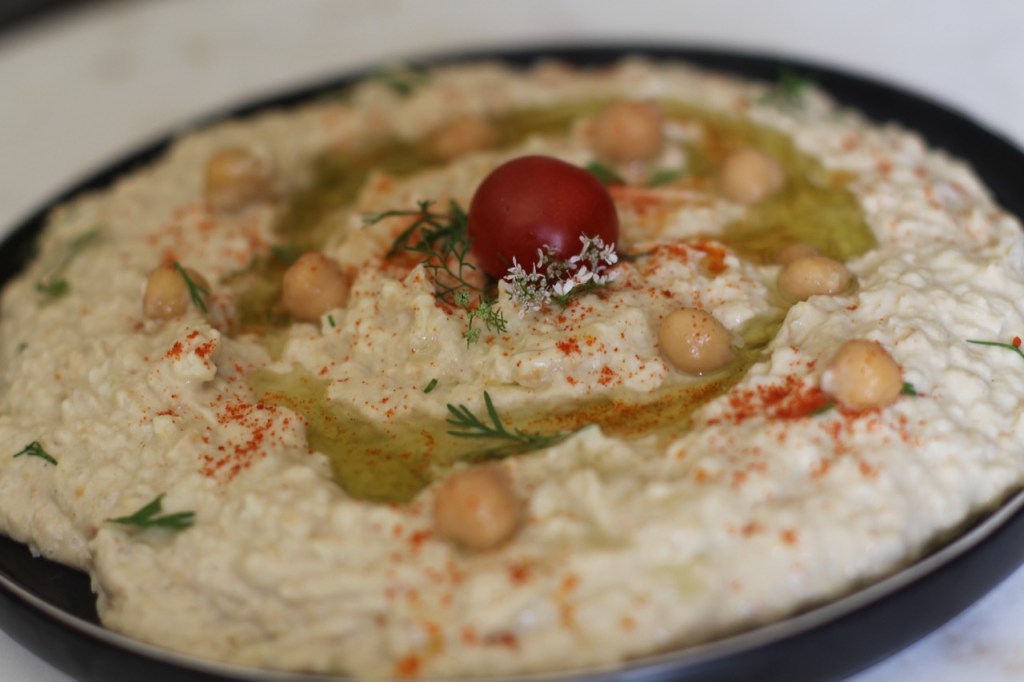
Middle Eastern hummus recipe with pita bread

Why blog about a dish that so many people already know how to make? I wasn’t really planning on posting this recipe but people have been commenting that this is the best hummus they have ever had. I do have a few secrets that make this hummus so good. So here they go …

If you have been following my blog you can probably guess easily … the most important one is … to cook the chickpeas for 3 hours or less for pressure cookers, of course. This is a must IMO if you are looking for that special flavor. You can use canned beans but you will not get the same results. My other secret is to use lots of tahini. Recipes usually call for a few tablespoons … no I use a 1/2 cup and you get this wonderfully nutty sesame flavor. Oh and of course the seasoning is important too. I use cumin, coriander, paprika and garlic.

For those of you who are not familiar with hummus, it is a delicious chickpea based paste from the Middle East. It is made with mashing the chickpeas and adding tahini, olive oil, lemon juice and spices. It can be served as an appetizer, a dip or with other dishes.

RECIPE

Ingredients

  • 1 cup of uncooked chickpeas or 2 1/4 cooked (14 oz can)
  • 1 onion
  • 1/2 cup tahini
  • juice of 1 lemon
  • 2 Tbsp olive oil + more for serving
  • 1 clove garlic
  • 1 tsp salt
  • 1 tsp cumin powder
  • 1 tsp coriander
  • 5 Tbsp liquid from the cooked beans or more
  • smoked paprika powder for serving
  • sumac for serving
  • olive oil for serving

Directions

Clean and soak the chickpeas overnight but at least for 8 hours. Drain liquid. Add fresh cold water with baking soda and cook for 3 hours, less if using a pressure cooker, of course. Take off foam at the end.

Chop onions by hand or in a food processor of your choice.

Add the beans and puree.

Add all the rest of the ingredients: tahini, lemon juice, garlic, salt, cumin, coriander, liquid from the beans, olive oil. Mix until all ingredients are well blended. Hummus should be a nice paste in consistency.

Additional suggestions: Add more salt, garlic and liquid from the beans if needed. If your tahini was dried out, you will need to add a few tablespoon of the cooking liquid for sure.

Drizzle generous amount of olive oil on the top. Sprinkle the smoked paprika and chopped sumac (optional) on the top.

Serve with bread.

enjoy!

Text, recipe, photo by twincitiesherbs.

Chinese bitter melon soup

Bitter melon is not called bitter melon for nothing … yes it is very bitter … but if you take out the seeds, it won’t be bothersome. Besides life needs a little bitterness so you can better appreciate the good things – right?!? Big smiley face. It is also very healthy and makes delicious dishes. This interesting plant is hugely popular all over Asia particularly in India and China. My recipe this week is the delicious Chinese Bitter Melon soup. No worries there are no exotic ingredients … you just need garlic and ginger for seasoning. The recipe is from the following source.

Bitter melon (Momordica charantia) originated in India and became popular in China in the 14th century. It is now used all over Asia. It is a bitter plant that is also sour. According to Chinese Medicine, its bitterness makes it great for the Fire element in the summer (cooling) and detoxifies the liver and its sourness supports the liver ( Wood element). It also improves digestion. In Ayurveda, it is considered a great pitta pacifying remedy that is immensely valuable for the hot months. Western research has found it to be beneficial for the prevention/treatment of many problems including diabetes, cancer, infections, skin problems, dysmenorrhea, immune system, autoimmune diseases, and colds/flus. (If you have any of these problems, please see a practitioner first though).

Today, we often don’t get enough bitter flavor in our diet but it is important for good overall health. Chefs use sweet flavored foods to balance out the bitter flavor. In this recipe, mainly the carrots, chayote squash and potatoes do this job. If you don’t like or don’t have all these vegetables, feel free to use any sweet vegetables you have on hand and/or think would work well together. For instance, we don’t have winter squashes yet so I used zucchini instead. Of course, the pungent ginger and garlic are essential to balance out the bitter flavor as well and the bitter flavor will be barely noticable. Honestly, this is such a nice tasting soup!

Where can we get bitter melon in the United States? They are easily available at Asian grocery stores and are sold by Asian farmers at farmers’ markets. You might be able to get them at smaller grocery stores too.

Please note that the soup on the picture does not have chicken. I also added lemon grass because I have it in my garden and has a nice flavor.

RECIPE

Ingredients

  • .25-.0.5 lb of chicken thighs or breasts (skinless)
  • bitter melon, handful
  • 1 chayote squash or zucchini or any squash
  • 4 regular carrots, cut into small chunks
  • 2 Roma tomatoes, quartered
  • 2 small potatoes, cut into small chunks
  • 2 stalks celery , sliced
  • 3 cloves garlic, crushed
  • 1 small chunk ginger, about 2 tablespoons chopped
  • chicken broth
  • salt to taste

Directions

  • Make the chicken stock. Omit if using store bought.
  • Cut bitter melon in half and scoop out the seeds with a spoon. Discard seeds. (They come out easily).
  • Meanwhile peel and chop the ginger and the garlic. Peel the potatoes if you wish. Cube the tomatoes and the potatoes. Clean and slice the squash, carrots, celery. When ready slice the bitter melon.
  • Cut the chicken up into small pieces.
  • Put all ingredients in a medium sized pot, cover well with chicken stock and cook covered for about 45 minutes or until vegetables are soft. I added the zucchini in the last 20 minutes.
  • Serve hot.

enjoy!

Photo and text by twincitiesherbs.com

Sources

Fluffy red currant meringue cake

This delicious German dessert quickly became a favorite in my family. The tasty base is topped with the delicate meringue and the red currants. The tangy red currants are available right now and are bursting with flavor. Of course, you can add as much sugar as you like or as little as you like … that is the beauty of making your own cake. Please feel free to experiment.

RECIPE

Ingredients

base

  • 2 cup (30 dkg) flour
  • 2 tsp baking powder
  • 2 sticks (25 dkg) butter
  • 1 tsp vanilla extract
  • 1/4- 1 cup of sugar (I used 1/4 cup)
  • 5 egg yolks
  • 1/4 cup almond flour, optional
  • pinch of salt

topping

  • 2 1/4 cup red currants without stems
  • 5 egg whites
  • 1/4-1 cup sugar ( I used 1/2 cup)
  • handful of breadcrumbs
  • pinch of salt

Directions

  • Preheat oven to 350 F. Butter a 9″ round dish (2 1/2″ deep). Sprinkle some flour on the bottom.
  • In a medium sized bowl, sift baking soda into the flour. Cut the butter into the flour.
  • Add the yolks one by one. Mix well.
  • Add the sugar and vanilla extract, almond flour, mix.
  • Spread the dough evenly on the bottom of the pre- buttered form.
  • Let it rest for 1 hour if you can.
  • Bake for 30 minutes.
  • Turn the oven down to 340 F.
  • Beat the egg whites until hard. Mix in the sugar and salt. Gently mix in the currants and the breadcrumbs.
  • Pour on top of the baked cake base.
  • Bake for 15 more minutes at 340 F and then turn heat down to 300 F. Bake for 15 more minutes.
  • Let the cake sit for a few hours before serving.
  • Decorate the top with fresh currants, optional.
  • Serve at room temperature maybe with a little vanilla ice cream.

enjoy!

Text, recipe and photo by twincitiesherbs.com.

Kohlrabi salad with cheese and thyme

Kohlrabi has such an interesting flavor but I have never thought of making a salad with it … until I found this recipe. The kohlrabi is drizzled with some olive oil and lemon juice and is paired with the savory cheese and thyme and voila! … a delicious salad is made!

If you like kohlrabi, you might be interested in my kohlrabi soup recipe. Please click here.

RECIPE

Serves 2 people

Ingredients

  • 1 kohlrabi (green, purple or white)
  • handful of hard goats’ cheese or sheep’s’ cheese or any stronger flavored hard cheese
  • juice of 1 lemon
  • extra virgin olive oil
  • sea salt and freshly ground black pepper to taste
  • a few springs of fresh thyme, chopped

Directions

  • Peel the kohlrabi. Shave it on a grader.
  • Shave the cheese on the grader as well. I like to crumple some of the cheese to cover the kohlrabi and put some shaved pieces on the top. The amount is something like a handful.
  • Pour on the lemon juice and drizzle on some olive oil.
  • Add salt and freshly graded black pepper corn.
  • Add the chopped thyme.
  • Mix and serve.

enjoy!

Picture and text by twincitiesherbs.

SOURCE

https://wordpress.com/read/blogs/25505546/posts/18306

Text and photo by twincitiesherbs.com.

Hungarian summer bean soup with dill

I love summer. It looks like there are so many vegetables finally ready to eat. I enjoy rhubarb too but there was not much else here in the Midwest for quite a while and now all of the sudden we have so many more to choose from. So ended up picking yellow beans for this week.

I’m presenting a simple Hungarian yellow bean soup recipe that many Hungarians know how to make but I added my little twist to it. I like reading about foods and experimenting with them. So I was reading that Hungarian cuisine was a little bit different when Hungarians lived in Asia. Over the years they lost some of the ingredients and picked up new ones. So I had the idea why not add chickpeas and curry to this bean soup. Who knows maybe our ancestors made the soup like this back wherever they came from ?!?

The sweet yellow bean is nutritious and is high in fiber but really is not the most exciting vegetable. The real flavor IMO comes from the seasoning especially from the dill. Dill is a unique sweet plant that gives the zesty, tangy flavor with slightly bitter undertones. It helps digestion and calms the mind. Also, adding the sour cream or yogurt is a must at the end … and then you get a pleasant sweet and sour soup.

As I have mentioned I added chickpeas to the dish. If you look at a chickpea, you can see it resembles the heart and is considered to be beneficial for the heart. It is a good source of iron and unsaturated fats.

I often make this soup more of an entree by adding an egg or other protein. It is very filling this way, for sure. I just put the soup in a jar and take it with me in the summer. It is an instant lunch on the go for me. Oh yes and I get the stares from Hungarians … what is that dish?!? … lol.

RECIPE

Serves 4 people

This is my recipe so please don’t publish without proper citation.

Ingredients

  • 1 lb of yellow beans
  • oil (vegetable, lard)
  • 1 medium size onion, chopped
  • 1 tsp of sweet Hungarian paprika (make sure it is authentic)
  • 1 tsp curry powder
  • 1 chopped large tomato
  • vegetable or meat stock (I used pea shells)
  • 3 carrots, thinly sliced
  • 1 zucchini, optional
  • 1-3 bay leaves
  • 1 yellow pepper, optional
  • handful of dill, chopped
  • 2 Tbsp white vinegar
  • 1 cup dried or 1 can of chickpeas (14 oz)
  • salt and black pepper
  • red pepper to taste
  • sour cream or yogurt to garnish

Directions

  • Clean and soak the chickpeas overnight or for at least 8 hours. Remove the soaking liquid and discard. Add fresh cold water and cook for 3 hours. A pressure cooker would greatly reduce the cooking time. (Omit if using canned chickpeas).
  • Making the soup base: Saute the onion in some oil for 5 minutes or until translucent. Add garlic, paprika and curry powder, mix and after 1 minute add the chopped tomato. Mix and cook for about 5- 10 minutes or until tomato has cooked into a sauce.
  • Wash the yellow beans. Cut the ends off on both sides and discard. Cut them up into 1 inch pieces. Clean and cut the carrots. Oh and I almost forgot I like to put in zucchini too. So wash and cut zucchini into about 1 inch pieces.
  • Add the cut up yellow beans, carrot slices, bay leaves, zucchini and the stock. I like to add a yellow pepper for flavoring or at least its seed house. Cook for about 30 -45 minutes or until the beans are soft. Remove the pepper and bay leaves.
  • Add the cooked or canned chickpeas with its liquid and the white vinegar.
  • Salt and pepper to taste. Add the red chili pepper if desired.
  • Serve hot with chopped dill and sour cream/yogurt.

enjoy!

Recipe, text and photos by twincitiesherbs.com

Blueberry lemonade with basil

Are you looking for something more interesting than a simple lemonade? Check out this fabulous drink with its unexpected twist … the sweet berries and the refreshing lemons are mixed with fragrant basil leaves … ahhh just the perfect drink for the summer…

Last summer, when we were on vacation, I ventured into getting a drink called blueberry lemonade with basil. I had never heard of this drink before but it sounded interesting so I ended up ordering it … and it was a pleasant surprise, something I had never had before. So I tried to recreate it at home and here is what I came up with.

Recipe

Ingredients

  • juice and the peel/rind of 1 fresh lemon juice
  • 1 cup of fresh blueberries, frozen is fine (blackberries or raspberries would work too)
  • handful of torn fresh basil leaves
  • 1-3 tablespoons granulated sugar or honey (depending on your taste)
  • 3 cups of water, I used carbonated water
  • Ice for serving (optional)

Directions

  • In a pitcher, combine all the ingredients together ex the ice and lemon slices for serving.
  • Let it stand overnight or at least for a few hours in the refrigerator.
  • Strain off the large pieces.
  • If you wish, serve with fresh basil leaves, blueberries, lemon slices and ice.

enjoy!

Photo, text and recipe by twincitiesherbs.com

Zucchini frittata with basil (frittata di zucchine)

We just celebrated the Summer Solstice so summer is definitely here. Zucchini is one of the first summer vegetables that appears at the farmers’ market. Fritatta is a popular Italian dish and also is my favorite way to prepare zucchini. Italians often make it for ‘lunch on the go’ because it tastes good as it is … it does not have to be reheated and is an interesting and unique dish. If you have eggs, cheese, onions, zucchini and olive oil you can make zucchini fritatta. The secret is in the preparation.

So let’s look at those secrets … no worries it is not a difficult dish to make. The main secret is to cook it slowly. It is kind of a ‘slow food’ meaning that it is cooked slowly on low heat starting in cold olive oil. This was rather a hard concept for me at first because I always heat the oil before I put onions in a pot … but once you taste the dish, you will understand. Also, it prevents the olive oil from burning- I’m guessing. Another secret is to not dry it out so basically don’t over-cook the eggs. And that is about it other than the usual, use good ingredients.

The recipe is from Marcella Hazan’s cookbook Essentials of Classic Italian Cooking.

So let’s look at why we should incorporate zucchini in our summer diet. The watery zucchini is cooling and refreshing and is great to overcome the summer heat. It has a tender texture with a slightly sweet flavor and pairs nice with something a little more robust like eggs and cheese. It is also packed with nutrients and is rich in calcium, magnesium, iron, vitamin B and C.

Oh and I can’t forget about the basil, the other main ingredient. It is in the mint family along with the other remarkable Mediterranean herbs like oregano, mint, rosemary. It is not an accident that Mediterranean chefs use basil on a regular basis. The aromatic basil is used in cooking for making food taste better and has numerous health benefits. For more information on basil, please check out this article.

RECIPE

Ingredients

  • 1/4 cup cold pressed olive oil, divided
  • 1 large onion (1 cup), finally chopped
  • 2 slices bacon, chopped (optional)
  • 2-3 medium sized zucchini, sliced
  • 5 large eggs, whisked
  • 1 Tbsp dried oregano
  • a handful of fresh basil leaves
  • 2/3 cup freshly graded Parmesan cheese
  • salt and black pepper to taste
  • 2 Tbsp butter

Directions

Put half of the cold oil, and the onion in a large pan. Turn heat onto low heat, (not simmer) and cover. Cook until the onion wilts and becomes greatly diminished in bulk for about 40 minutes. Then uncover and continue cooking until the onion gets a nice golden brown color. I turn the heat a notch up here. This is going to be a lengthy process but it is an important part of the dish.

Meanwhile, prepare the zucchini. Scrub and wash off any dirt. Cut off both ends. Slice them thin.

When the onion is nice and golden brown, add salt and the sliced zucchini. You can put the chopped bacon in here if you plan on using it. Turn heat up to medium high and cook them until they are softened and have a light nut brown color. Stir frequently.

Making the frittata. Add the butter and cook for 5 minutes on medium high heat. Add the whisked eggs, torn-up basil, freshly ground black pepper and the cheese. Cook carefully until the eggs have set and thickened and the bottom has a light brown color (not burnt) and only the top is runny. Turn the broiler on. I use the low broiler for 3 minutes.

I served it with pesto and tomato salad.

Serve warm.

enjoy!

Source

Photo, text by twincitiesherbs.com.