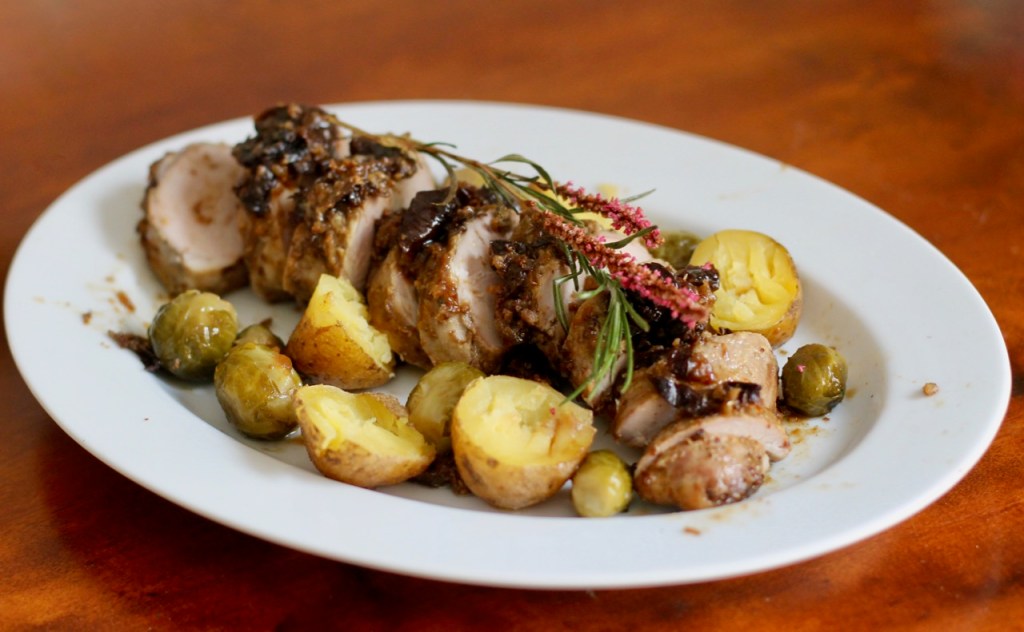
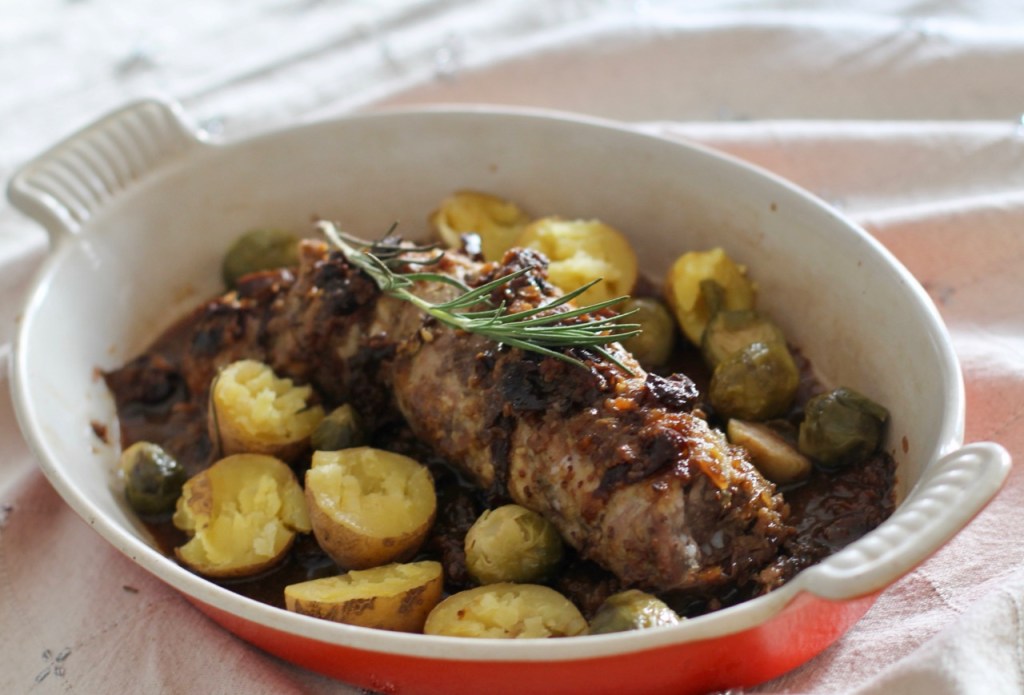
It is December now and I am already missing the plums from this summer. Then I happened upon this recipe (source of the recipe) … a dish with pork baked in prune sauce! I like to prepare meats with fruits and the prunes work nicely with the pork here. Oh and that savory aroma of the prunes cooking with the shallots!!! … I decided that I will be making this recipe for Christmas Eve. I believe it would be perfect for this busy night. It can be marinated ahead of time and then just has to be cooked on the 24th … and after eating this dish I might have visions of sugar plums dancing in my head…
I enjoy simple meals that have an interesting flavor and this dish does just that. The pork is first marinated in a mustardy sauce and further baked in a savory plum sauce to perfection. The moist pork works nicely with the sweet prunes along with pungent spices and results in a unique sweet and savory flavor. Of course, it needs to be served with some nice wine or grape drink.
I made a few minor changes to the original recipe. I added a little red hot pepper, of course it is optional but for me, some spiciness was missing. I felt that the sweet pork along with the sweet sauce needed a touch of spiciness to balance the dish out. Not sure if it is authentic but this was more to satisfy my personal taste.
Also, I served this dish with brussel sprouts in addition to the potatoes. I served brussel sprouts but any other bitter green leafy vegetable like kale, lettuce would work well. Also, the recipe calls for 2 cups of chicken stock. You can do half white wine and half chicken stock if you wish.
If you can’t find tenderloin or just don’t want to spend so much money, sirloin is a nice alternative. Sirloin, a different part of the pork, is not as tender, will require longer cooking time and more cooking liquid. (I cooked it for 15 minutes longer and added an extra 1/4 cup of chicken stock). Honestly, they both taste nice though. Of course, if you want to impress your guests, or just treat yourself to something special, the tenderloin is more superior in flavor so go for the tenderloin!
A few words about the pork. It is sweet and salty. According to Ancient Chinese Medicine, pork is great for the fall and the winter as it is moistening. In fact, pork is moistening for the lungs, kidneys, and the spleen-pancreas. In Europe, it is a popular meat during the cold months especially during Christmas time.
Recipe
INGREDIENTS
1 pork tenderloin (approx. 1.25 pounds) or sirloin 2 TBSP brown sugar 1 TBSP Dijon mustard 4 tsp extra virgin olive oil, divided 2 cloves of garlic, minced + 4 whole cloves, peeled and slightly smashed 3 tsp fresh thyme, chopped (or 1 tsp dry) 1/2 tsp salt 1/4 tsp pepper 10 dried plums (prunes), chopped in half 2 smaller shallots or 1 bigger one, peeled and thinly chopped 2 cups chicken or pork broth or 1 cup of chicken/pork stock 1 cup of white wine 1 TBSP red wine vinegar fresh parsley
DIRECTION
Marinade: In a small bowl mix sugar, Dijon mustard, 2 tsp olive oil, thyme, salt, pepper and 2 cloves of garlic. Put the mixture on the tenderloin, evenly spreading it all over the pork. You can put the pork in a zip lock bag or a marinating dish with a lid. Let it marinate in the refrigerator for 4-6 hours.
Preheat the oven to 375 F (190 C). Take the pork mixture out of the fridge and let it come to room temperature.
Prune sauce: In a pan with oven proof handles, gently heat 2 tsp of olive oil, add shallots and stir. Cook until it start becoming soft and you can smell its aroma – about 3-5 minutes. Add the chopped prunes and 4 cloves of garlic. Stir.
After 1 minute add the chicken stock, vinegar and hot pepper (optional). Cook for 5- 10 minutes. Now if I may, I would like to invite you to stop for a few seconds and smell the aroma of the shallots, the garlic and the prunes cooking together, it is amazing …
Place the pork in the middle of the pan and bake in the pre-heated oven for 15 minutes. Cook for an additional 20 – 25 minutes basting 2-3 times or until the meat is 160 F.
When meat’s temperature reached 160F, take the pan out of the oven and cover. Let it rest here for 10 minutes before you start slicing them.
Serve sliced with potatoes, brussel sprouts and some wine. Drizzle the sauce on the top.
Apple pie is a special American dessert. I have always wanted to make it ever since I took the first bite of my mother-in-laws home-made pie like 25 years ago but I was somehow afraid of making it. I even gifted a pie form for my husband’s birthday 15 years ago to make sure that I make it. Ok so a few years ago I ventured into making one from a recipe I found online. I thought all apple pie recipes were the same … hmmm not true it didn’t turn out good, in fact it was terrible. Then, I found Martha Stewart’s pie recipe … and it was a huge success. I felt such a great accomplishment after I made it. Here I have the full proof Martha’s apple pie recipe so you don’t have to hunt for a good one.
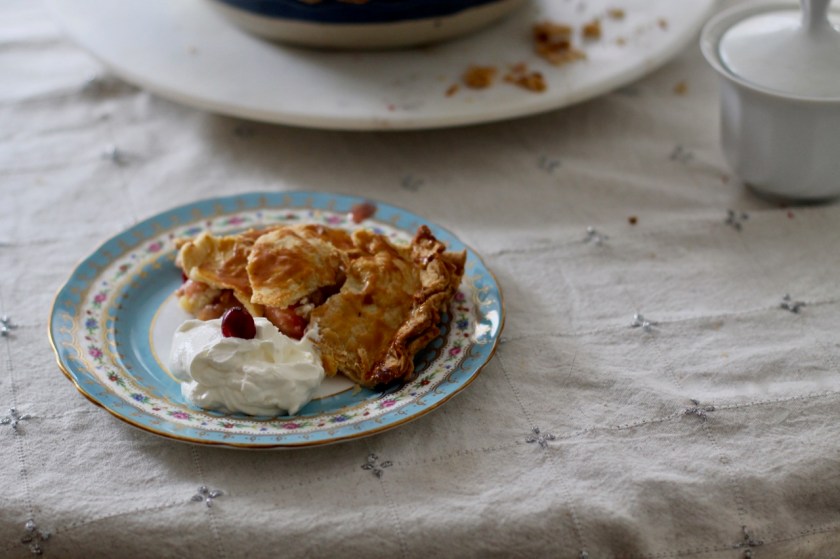
The apple pie is an important part of the Thanksgiving dinner for many people. The delicious savory apple filling is wrapped in a flaky buttery crust and is served with whipped cream. I used Martha Stewart’s basic apple pie recipe and added cranberries. I think the tart and sour cranberries elevate the pie to another level. If you prefer to leave out the cranberries, add an extra apple to the filling so instead of using 6 apples and 1 cup of cranberries, use 7 apples.
According to Martha Steart, there are three basic rules for making a fabulous apple pie: Use the best ingredients, keep the dough cold and when you handle the dough less is more. Have fun making the pie, it is so worth it!
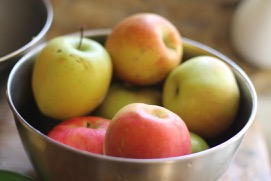
As Martha Stewart says you should get the best ingredients for your pie in other words your pie will be only as tasty as the ingredients are. The most important part of the pie at least as far as taste goes is the apples. When I go to the farmers’ market to get my baking apples, they always give me a mixture of apples. In fact, the lady at my favorite stand always gives 7-8 different apples. So how do you select the right apples?
Basically you want baking apples that are firm and keep their shapes while baking. The best apple for this is the Granny smith. If you like your pie more tart you can just use this variety. OK I know some people want more of a sweet apple pie. There are many other apple varieties that would make the pie sweeter like Cortland, Braeburn, Regent, Harlson. And I always like to add one very sweet one like Fuji, Honey crisp. Once you decide on the type, make sure they are also tasty. It is hard to describe but they should have a zesty flavor. When you try it you know what I mean! Sorry to say but supermarket apples often don’t have this. I personally like to get local apples for this purpose.
The other important part of a good pie is the crust. Of course keeping the surface cold is extremely important … but so is the quality of the flour you use. I would stay away from low quality flours that need to be enriched and have other additives in them. I buy only organic flour that fits this criteria. I used Bob’s Red Mill flour in this recipe but King Arthur’s flour is good too.
The third most important ingredient would be the shortening. The shortening is also crucial for a successful pie crust. Often people use butter flavored sysco shortening because it gives nice results. Well it is a good choice but I am not a fan because it is not that good for health. It is better to get a nice high quality butter or better yet lard if you have access to it. My mother-in-law always made her pies with lard and she honestly made the best pies.
Pie is a cold weather dessert. It is made starting September when the weather gets cold in the Northern hemisphere because it needs to be cold when handling the dough. The work area needs to be cold when you are working the dough to get the scrumptious flaky buttery crust. The pros use special board to work on that keeps the dough cold. If you don’t have these special tools, no worries. I just open the kitchen window and let the kitchen cool off a bit. It seems to be working fine.
Try to become familiar with the recipe. This is more of a challenging recipe as there are are many steps and specific instructions. I think the video (see below) is very helpful to watch for technique although the video is sometimes a little too cautious. For instance, you can handle the dough by hand. The recipe of the video and the one I’m presenting here are not exactly the same. Make sure you follow the recipe here to stay constant. The recipe is from her cook book, Martha Stewart Cooking School.
Ingredients
Crust
2 1/2 cups of unbleached all purpose flour (leveled with a knife)
1 tsp sugar
1 tsp salt
2 sticks of cold unsalted butter in 1/2 inch pieces
5-7 Tbsp of icy cold water
For the filling
6 baking bigger sized apples at room temperature (Granny smith, Cortland, Empire ) (about 2-2.5 pounds) (Martha uses 3 pounds of apples)
1 cup fresh cranberries, optional. Replace with another Granny smith if not used.
juice of 1 lemon or orange (Martha uses lemon juice)
1 Tbsp orange peel (optional)
1 tsp cinnamon or 1 tsp apple pie spice
If you use cranberries, use 3/4-1 cup of sugar. If not using cranberries, use 1/2-3/4 cup sugar. + Little more for the top.
2 Tbsp corn starch or 1/4 cup flour
1/2 tsp dried ginger (ground) or omit is not using cranberries
Put 1/2 cup of water in the freezer or you can use ice cubes in water. This will be used for the dough in the next step.
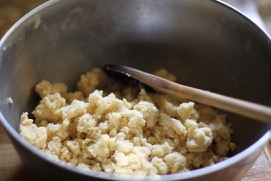
Making the dough. Mix flour with the sugar and the salt. Cut the cold butter into the flour with your finger tips, pastry cutter, knives or a food processor. If you are using a food processor, pulse for 10 seconds at a time, paying special attention not to over-process the dough. Stop when coarse crumbs form. The mixture should have pieces ranging from coarse crumbs to the size of small peas. Take water out of the freezer. Add 5 Tbsp of ice water slowly, 1 Tbsp at a time and mix until dough just holds together when pinched. Add more water only if needed. The mixture should retain a crumbly texture at his point; it should not be sticky. Again do not over-pulse the dough. If you are not using a food processor, you do not have to worry about over-processing that much, you’ll be most likely ready to stop. Do pay a close attention though what the dough should be like.
the crumbly dough
Shaping and chilling the dough. After making the dough, now it will be divided into two parts. Make sure the dough has all the loose pieces incorporated. Wrap each piece tightly with a plastic wrap and refrigerate at least for 1 hour or overnight. You can make this the day before and keep it in the fridge. This will help the crust to be flaky.
the dough wrapped in plastic
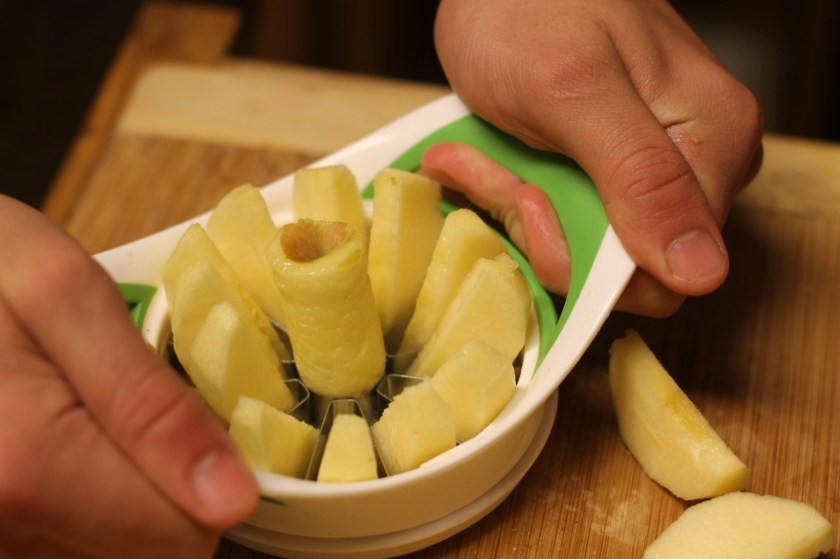
Preparing the filling. Wash, peel, core, and cut apples into 1/2 inch-thick slices. I like to use a mixture of baking apples for a more interesting flavor. I used 4 granny smith, 2 Cortland and 1 sweeter honey crisp apple. Add the orange/lemon juice and coat the apples well. Don’t add anything else to the apples until ready to assemble the pie. When ready add 1 cup of cranberries to get a more interesting flavor or add another apple instead. Then add everything else and mix. I happen to have an apple corer gadget. I have to say it was helpful for coring the apples but if you don’t have one, you don’t need to rush out to get one.
Assembling the pie. Your working area is supposed to be cold for this part. I just open the kitchen window while I’m doing this step and it should be cold enough.
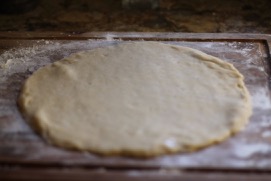
Take the dough out of the fridge. On a lightly floured surface, roll out one disk of dough until 1/8 inch thick. I check the diameter by putting the bowl above the dough. I just eye it to see if the dough is large enough in diameter to cover the bowl. The finished dough should be about 13 inch big in diameter.
The chilled dough
Roll the dough around the rolling pin and unroll it over a 9 inch glass plate, pressing gently to fit into pan. Fill it with the apple mixture from above. Roll the other disk of dough in the same manner.
rolled out dough
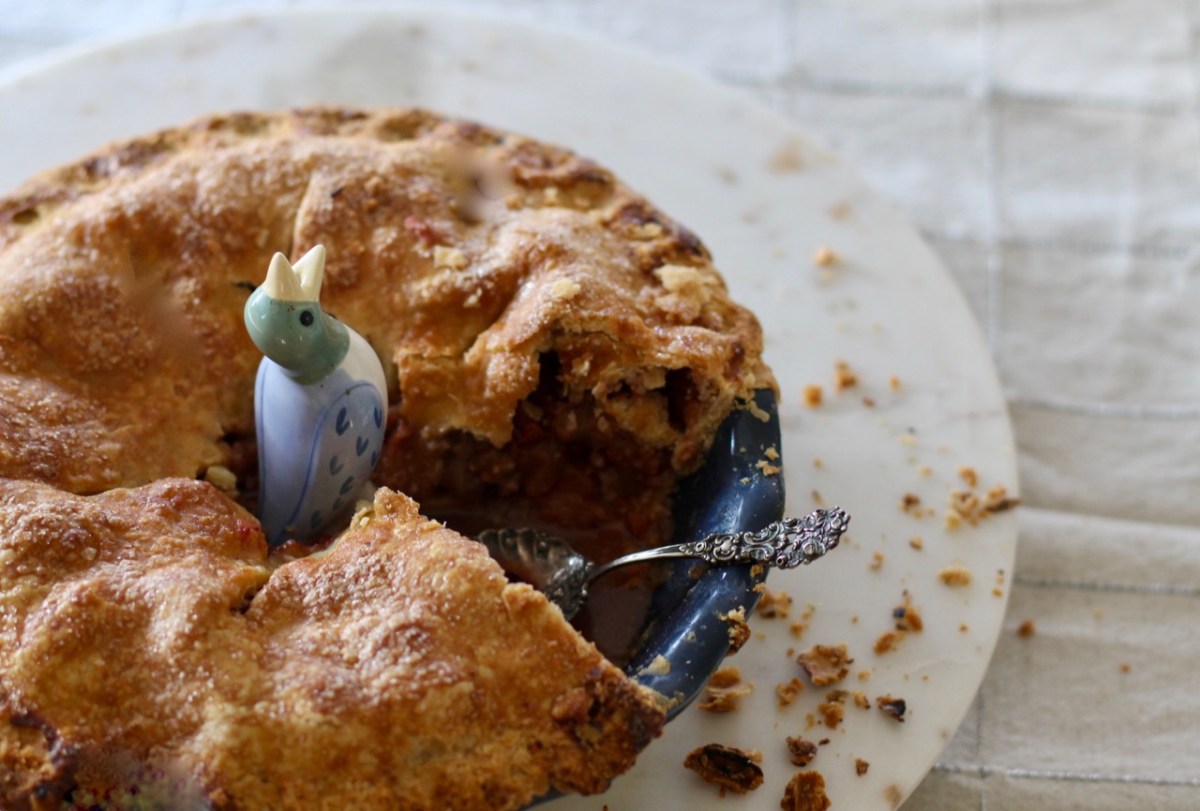
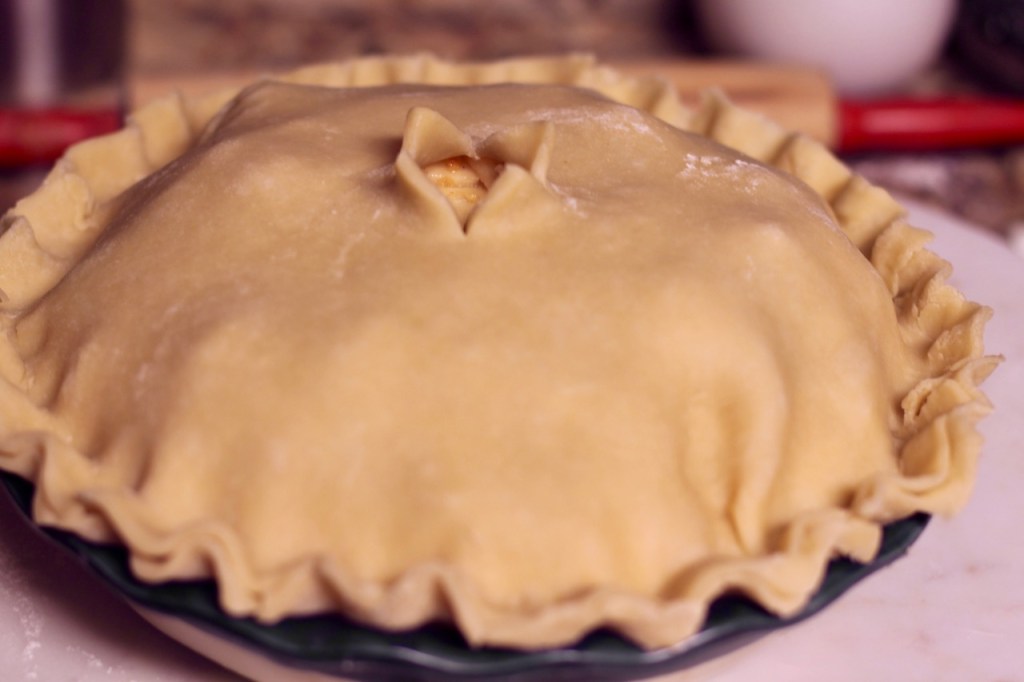
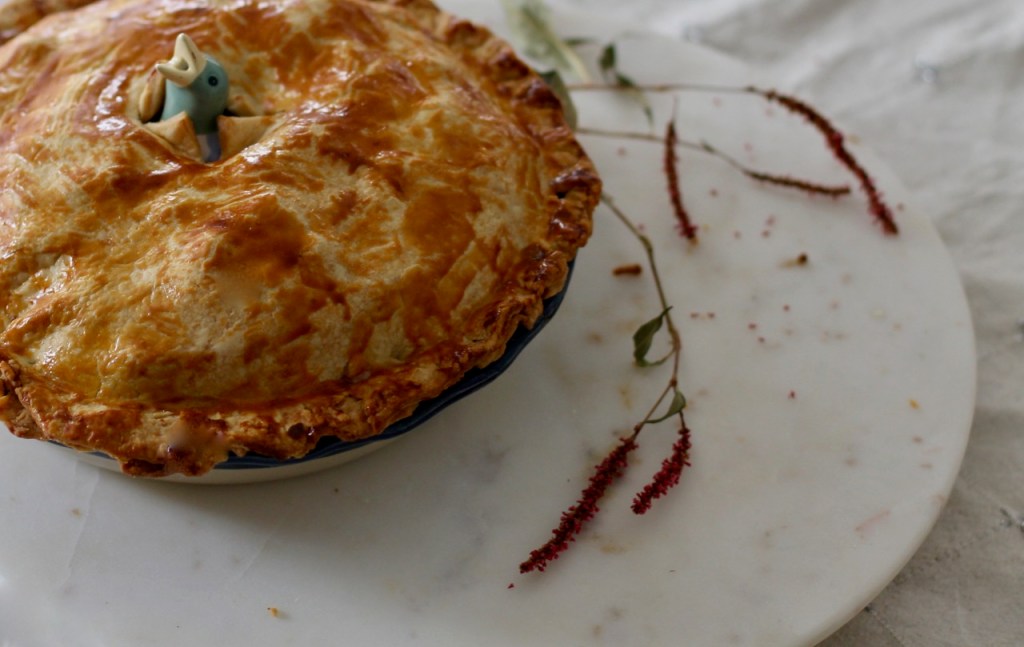
Drape over the bottom part. Use kitchen shears to trim overhang of both crusts to 1 inch. Press edges to seal. Fold overhang under and crimp edges: With thumb and index finger of your other hand, gently press dough against index finger of other hand. Continue around pie. Make several 3 inch slits in the top crust. This will allow the liquid to evaporate. I have a special clay bird that does this job. If you use the clay bird, you will not have to do this. If using the bird, cut 3 small slits in the middle of the pie, making an opening for the bird. Gently place the bird in and try to wiggle it around the apples. You can find these birds (see picture) at Williams Sonoma in the US -if anybody is interested.
Refrigerate the pie for 20 minutes. Preheat oven to 400 F.
Finishing the crust for baking. Whisk egg yolk and cream in a bowl; brush over the top of crust. Sprinkle the top with sugar.
Baking the pie. Place pie in preheated oven. Put a baking pan underneath to catch any liquid that escapes during the baking. Bake for 10 minutes. Reduce heat to 375 F. Continue baking until top and bottom crust are golden brown and juices are bubbling in the center for 70 to 85 minutes. Check on the pie after 1 hr and see if it is getting brown too quickly and needs to be covered with aluminum foil.
When ready, take the pie out and let it cool on a wire rack for at least 4 hours before serving. If you are not eating it all the same day, leave it on the counter loosely covered. Do not store in the refrigerator, the dough will get soggy.
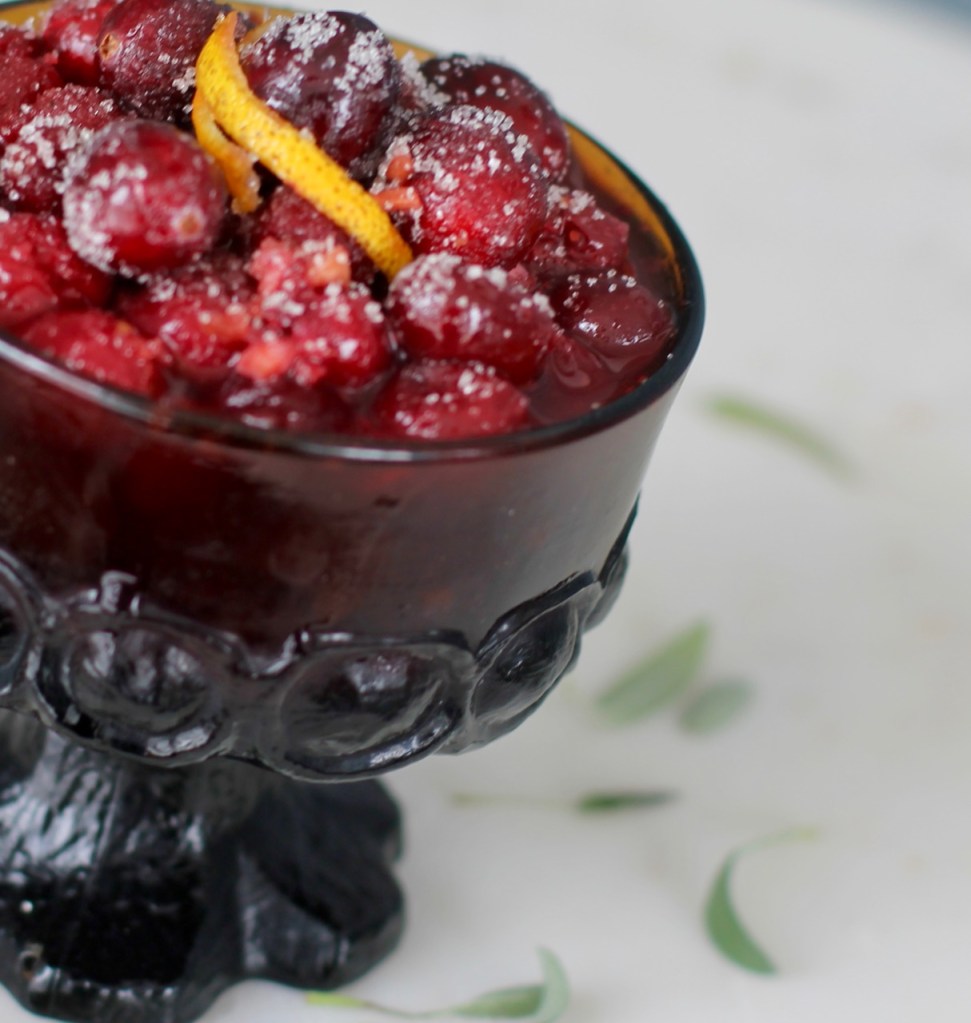
According to my mother-in-law, a good cranberry sauce should have whole cranberries and a nice sauce, so as to not be mushy or dry. I created this cranberry sauce keeping this in mind. It is gently infused with oranges and pungent spices and is slowly baked in the oven. In addition, the alcohol will elevate it to another level that gives an unexpected kick to the sauce. It will go nicely with any savory fall or winter dishes. You don’t have to wait until Thanksgiving, go ahead and you can try it now!
I really like how this cranberry sauce turned out. Here is my little story… As a foreigner I did not grow up eating cranberries so I have been relying on the Joy of Cooking cookbook for the recipe. I was contemplating whether to make some changes to the basic recipe or just let the cranberries be what they are and enjoy their true taste.
I started experimenting. First, I put the oranges to the test. Why add oranges, another bitter fruit?!? OK orange peels are bitter but are also sweet. I found that the sweet oranges paired nicely with the sour cranberries. Perhaps because their common denominator is the bitterness ?!?
In the culinary world, it is well known that pungent spices offset the sour flavors so I also added cinnamon, ginger, nutmeg, allspice. They bring a little warmth to the sauce, too. In addition, the allspice gave a nice citrusy flavor. They balanced out the sauce nicely and resulted in a pleasant sweet and sour dish. Again, I can’t imagine the sauce without them.
Oh and the sugar! Most recipes use sugar for cranberry sauce; after all it is a sour dish and sweet can offset sourness. I have nothing against sugar if used well in a dish, meaning it does not overpower the foods that it is added to. I am excited to say that I was able to reduce the sugar a bit in this recipe just by adding the seasonings. Not bad ehhh …
There is more! I used to cook the sauce in a pot that yielded a rather mushy appearance. It did not bother me, I did not even realize I did not cook the cranberries properly. To make sure the cranberries stayed whole, my mother-in-law used to prick each berry one by one with a needle so they didn’t burst open in the pot. I have recently learnt from a chef that slowly cooking them in the oven would give very nice results and the berries stay whole. I would like to mention that of course cranberries carefully made in a pot can stay whole as well.
I think my recipe made the cranberries more suitable to eat with savory foods, it has a pleasant flavor without overpowering the cranberries. You can keep it in the refrigerator for at least 1 week. The flavors come together while the sauce sits in the fridge. Hope you will enjoy it! Of course, there are many other techniques to cook cranberries that yield beautiful results too.
Cranberry sauce recipe
Serves 2-3 people.
Ingredients
1 cup of fresh cranberries (frozen is fine just make sure they are fully defrosted)
heaping 1.5 Tbsp brown sugar
1 tsp dried ginger (cut and sifted) or 2 tsp fresh ginger (chopped)
1 orange (chopped up peel and the juice) Chop up the orange peel into very small pieces it tastes great in the sauce or 2 Tbsp dried orange peel and 1/3 cup of orange juice
If you don’t have orange juice you can use 1/3 cup of other juices or even water and maybe even a little orange essence
1 cinnamon stick
3 pieces of all spice berries
1/8 tsp freshly ground nutmeg
few pink pepper corns
1 Tbsp of spirit of your choice: whiskey, fruit brandy (optional)
touch of freshly ground black pepper and salt to be added at the end
Directions
Wash cranberries, discard any with blemishes. Combine all ingredient in a baking/glass dish and wait until cranberries start releasing their liquid for about a half an hour. Set oven to 250 F and slowly bake for about two hours. Cranberries are ready when nicely cooked but not raw or mushy.
When done take the dish out of the oven and remove the larger spice pieces (cinnamon, allspice, pepper corn).
Add the salt and the pepper.
Serve at room temperature.
You can triple this recipe for Thanksgiving for 9- 10 people.
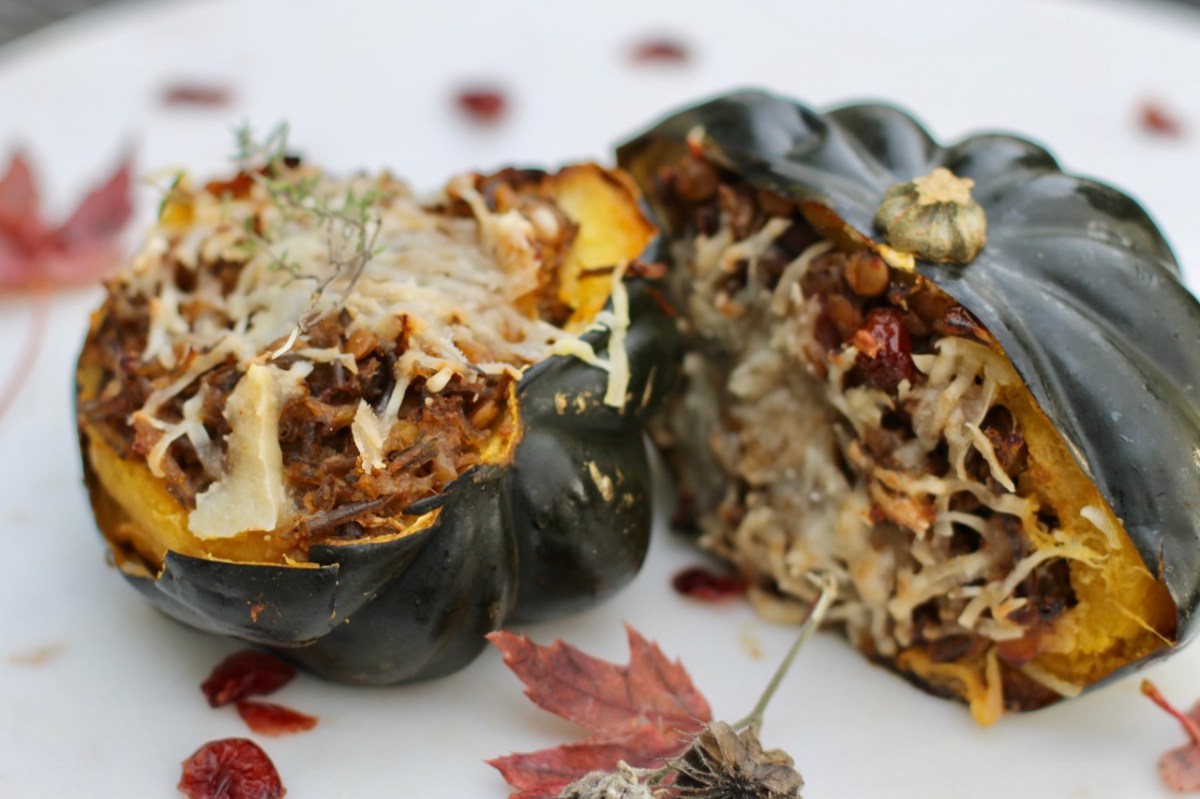
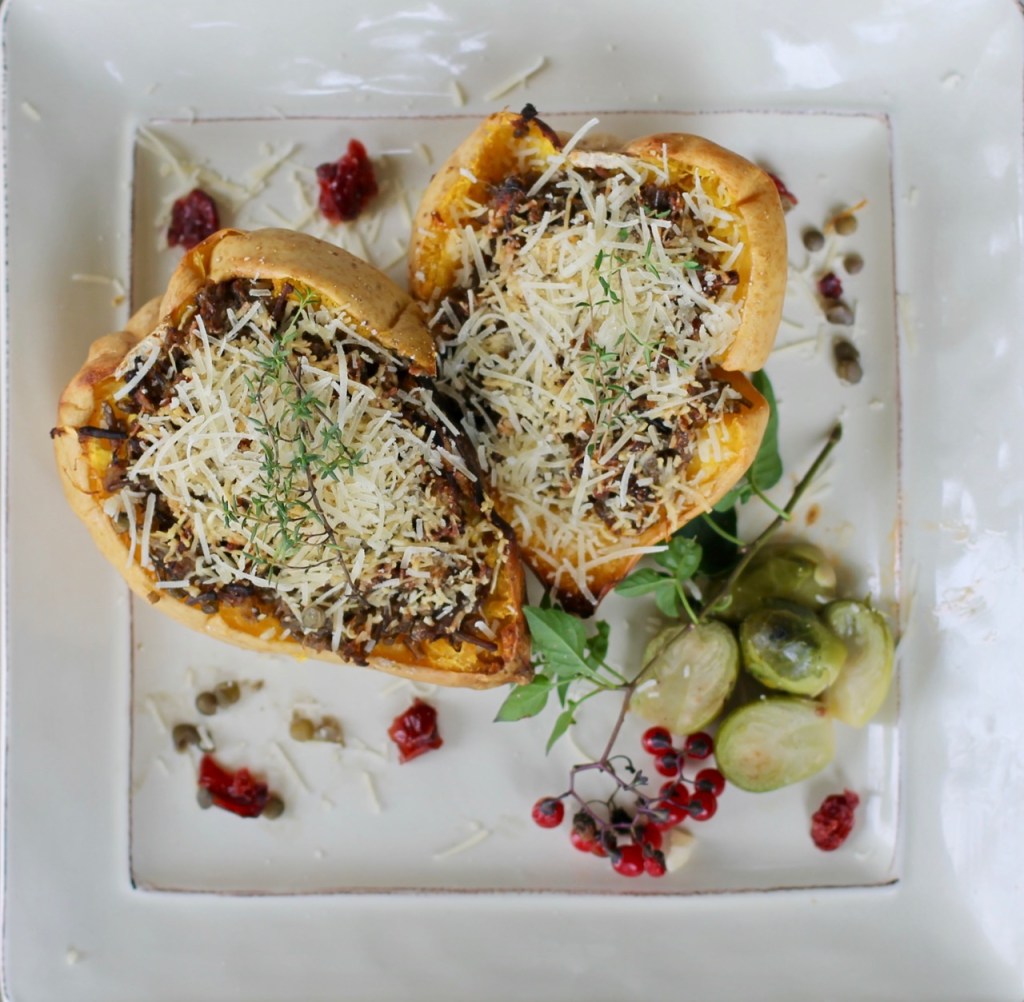
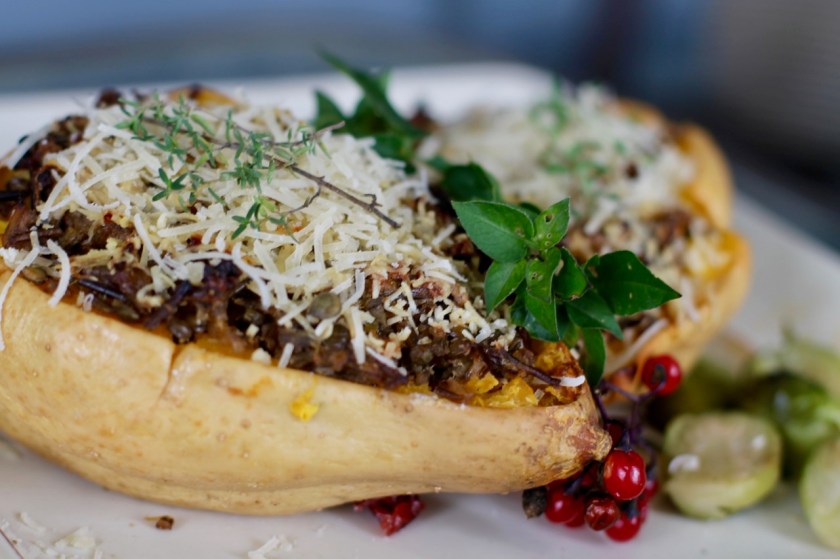
I love this savory dish … it has a lot of the quintessential foods that I enjoy eating in the fall. The tasty squash is filled with wild rice, lentils and cranberries and mixed with the melted cheese. It is wonderfully aromatic and tasty.
Squash is one of the main foods in the fall. We are so lucky to have all these different varieties available in the US. They are sweet and have a neutral flavor that make them ideal to go along with fall dishes.
Squashes are native to the Mexico region and may have been around for 10,000 years. Their flesh is usually used for cooking. They tend to be high in natural sugars, carbohydrates and vitamin A. In general, they all are mildly sweet, have a luscious nutty flavor and have a creamy texture. However, each variety comes with a unique characteristics and with different vitamin and mineral contents. Ancient Chinese Medicine considers them to be highly nourishing and warming for the digestive system with anti-inflammatory properties.
If we talk about squash, we have to mention its seeds as they are equally valuable for health. They are rich in heart friendly dietary fiber, unsaturated fatty acids, and in addition, protein, minerals, and vitamins. They contain tryptophan that is responsible for increased motor decision speed and blood sugar regulating effect. The seeds are also used for remedying intestinal worm problems. They can be roasted in the oven on low heat at 250 F.
RECIPE
Serves 4 people
Ingredients
2 medium sized squash – (Choose squash that has a firm outer shell with a scoop friendly inside like acorn, delicata, carnival, sweet dumpling).
1 cup of uncooked wild rice (Wild harvested preferred).
3 cups of stock (vegetable or chicken)
1/3 cup of shallots, finally chopped
vegetable oil (sunflower)
handful of earthy mushrooms (crimini, shiitake, portabello)
1 celery stalk
1 slice bacon (optional)
couple of fresh thyme sprigs or 1 tsp dried thyme
1/4 cup of uncooked lentils
1/4 dried cranberries or raisins
2 Tbsp of chopped pecans
100 g or 4 oz of feta cheese
1/2 cup of hard cheese like Gruyere or Parmesan cheese (more for the top)
salt and pepper to taste
crushed red hot pepper to taste
little freshly ground nutmeg
Preparation
Turn oven on to 375 F (190 C). Bake cleaned squash on a baking sheet for 40 – 60 minutes or until you can easily put the blade of a knife through the flesh of the squash. When done cut in half and scoop out the seeds. The seeds can be saved and roasted.
Clean and soak lentils for an hour. Place lentils in a medium pot, add 3 cups of water, thyme spring and bay leaves. Cook for about 45 – 60 minutes or until they are done, soft but not mushy. When done let it sit in its steam for 15 minutes. Add salt to taste.
Heat the oil on medium high heat. Sauté the shallots for 5 minutes. Then add the sliced bacon, sliced celery for -10 more minutes, stir frequently. Add 1 cup of wild rice, 3 cups of stock, sliced mushrooms, thyme and bring to a boil. Stir. Simmer over low heat with lid partially closed for a 35 – 55 minutes until the water is absorbed and the rice is fluffy and tender.
If using regular rice, cook rice separate, follow the cooking directions for the rice of your choice. Prepare the vegetables as written above. When ready combine.
In a bowl mix the lentils and the rice mixture. Add the feta crumbles and the hard graded cheese. Add the salt, pepper, hot red pepper and freshly graded nutmeg to taste. Mix. Also you can sprinkle salt, nutmeg and pepper inside the squash. Put the stuffing in the inside of the squash. Sprinkle the top with cheese and bake them in the oven for about 20 – 30 minutes or until the tops are golden brown.
Serve with other fall vegetables like brussel sprouts, beets, cranberry sauce etc.
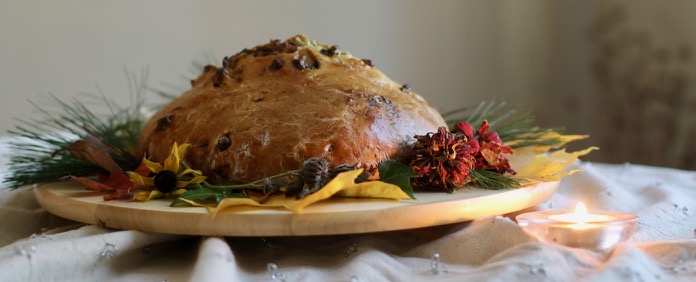
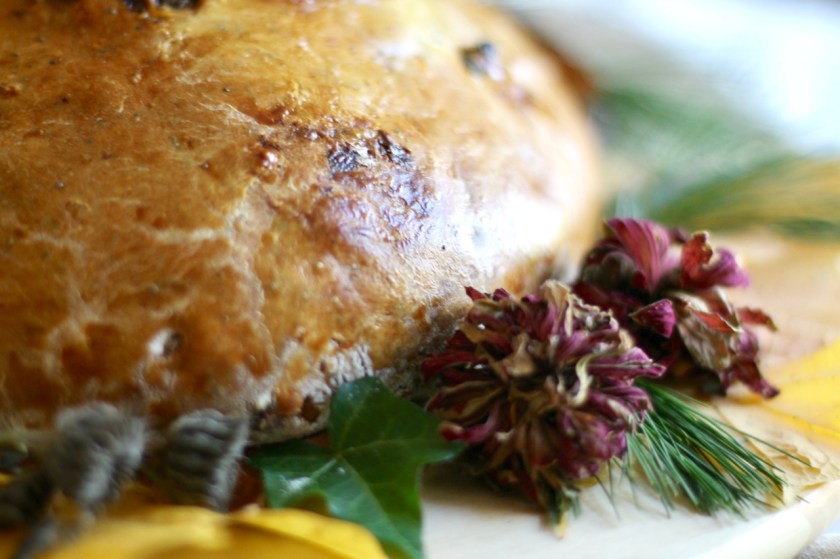
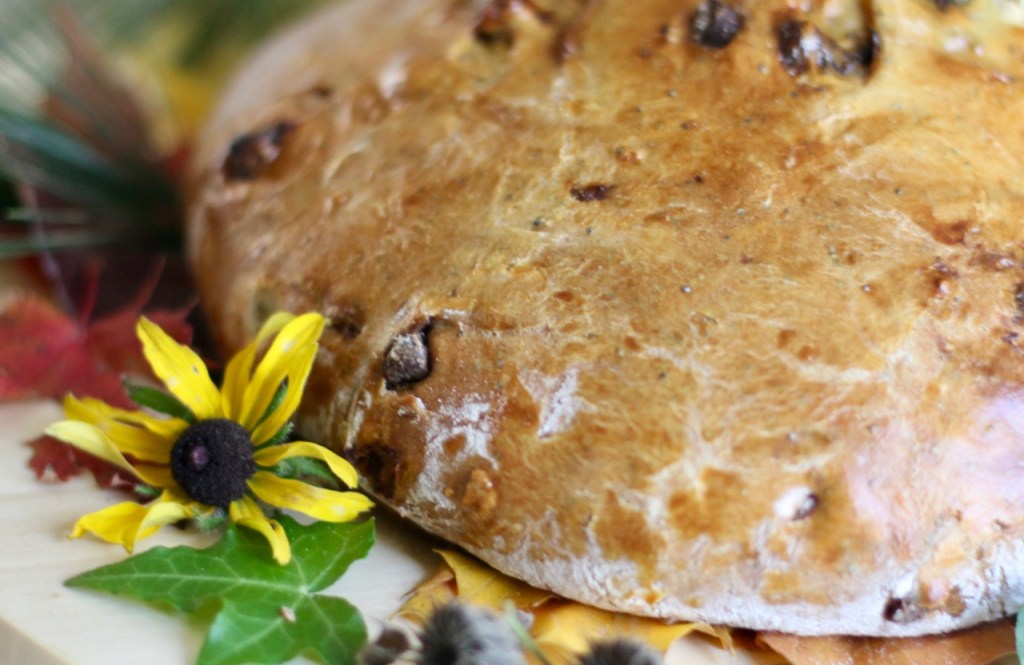
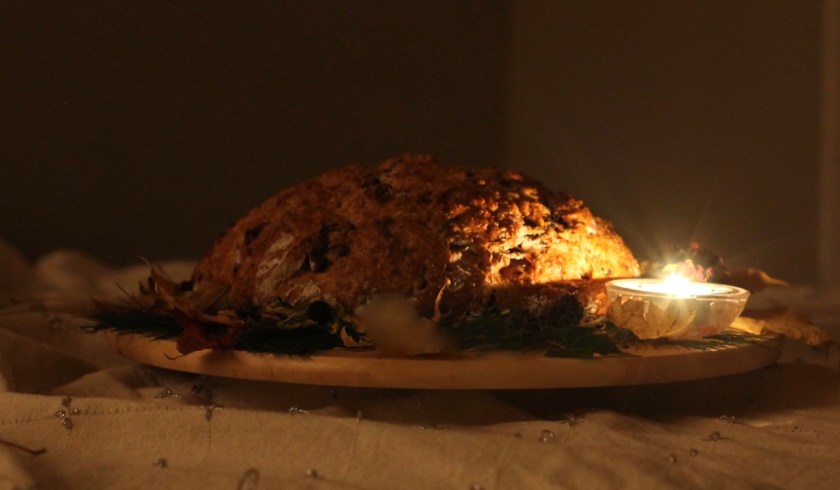
In honor of Halloween, I would like to post a recipe for a special treat called barmbrack (bairín breac). It is kind of the ancestor of the store bought Halloween candies that kids get at night when they go out trick or treating.
Halloween originated from the beautiful ancient Celtic festival called Samhain (pronounced sow-een). It means end of summer and is the celebration of the Celtic new year. Samhain divides the end of the harvest season and the beginning of the new year, the dark and the light. Also, they believed that on this day the division between the old (deceased people) and the new (living people) is the thinnest and we get to the souls of our ancestors the closest. It is a mysterious celebration that other cultures observe as well like in Diwali or Mexican Day of the dead.
People offer food for the spirits that appear on Earth during this time period. Barmbrack is the food that is given on Samhain to make sure that the spirits don’t play tricks on us. Everybody in the family gets a slice and then they offer some to the spirits. People also went out to sing songs and told scary stories on this night and received food in exchange.
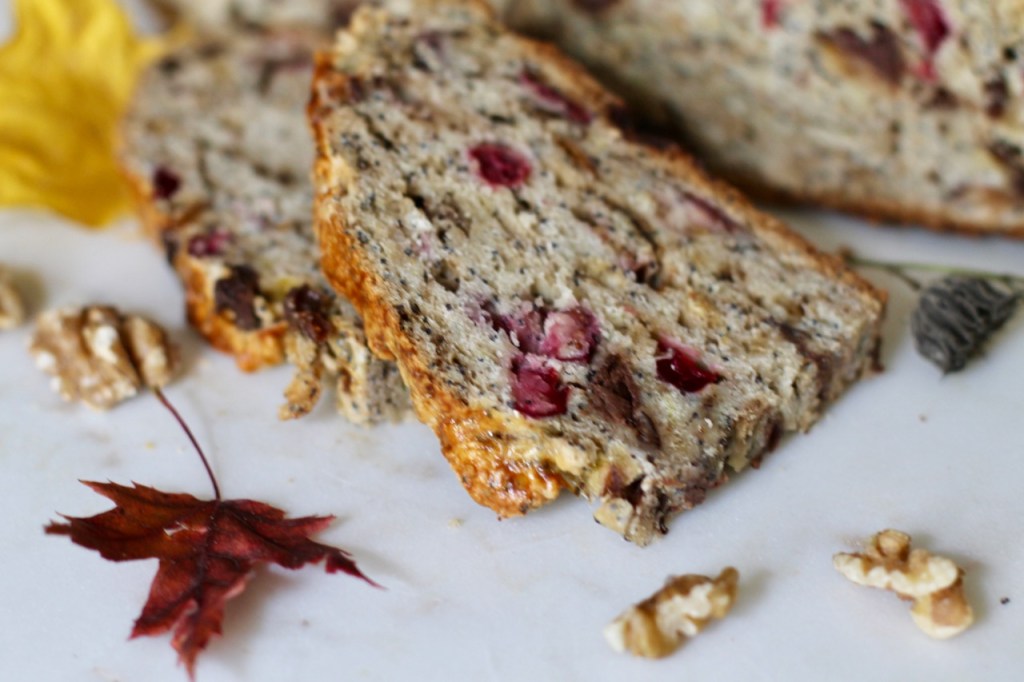
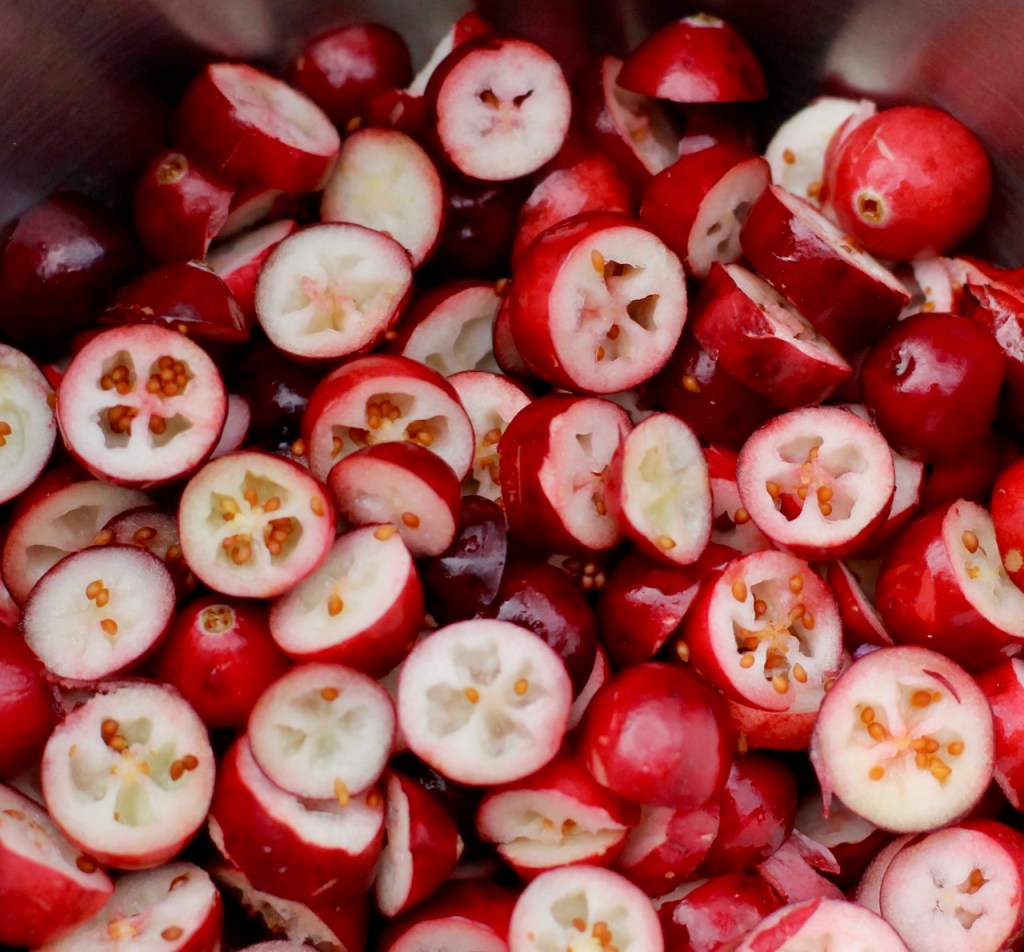
This is a simple Irish soda bread with the addition of fruits, nuts, seeds and I also added chocolate chips to bring out those sweet memories. You can add whatever you wish, whatever grows around you. I used fresh cranberries because they are available here right now but traditionally crab apples were used. Otherwise, I tried to keep the recipe to its original form. The Irish also soak the dried fruits in a strong brew of tea for the night but at least for one hour. I really enjoyed this moist sweet bread, there was a surprise in every bite … sometimes cranberries or raisins or prunes or cherries but the most special treat was the bite with the chocolate chips …
Recipe
Ingredients
Directions
4 to 4 1/2 cup flour
5 tbsp sugar (1 tbsp if apples are used instead of cranberries)
1 mug strong English tea (double strength)
1 tsp salt
1.5 tsp baking soda
4 tbsp butter
1 cup dried fruits ( I used currants, cherries, prunes)
1/2 tsp cinnamon, 1/4 nutmeg, 1/4 cloves
1 cup sliced fresh cranberries or shaved apples
5 Tbsp poppy seed
hand-full of roughly chopped nuts of your choice – traditionally hazelnuts were used.
1 large egg, lightly beaten
2 cup buttermilk
2 Tbsp of a spirit of your choice (I used whiskey) – (optional)
1/4-1/2 cup chocolate chips
Make a strong English tea. Pour it on the dried fruits and leave it on overnight but for at least 1 hour.
Wash and slice the fresh cranberries. Put the slices in a small bowl and put in the sugar, whiskey and the spices (cinnamon, nutmeg, cloves). If you use apples instead of cranberries, use 1 Tbsp sugar only! Let it stand until it releases its liquid.
Set oven to 375 F.
Measure out the 4 cups of flour, add the baking soda, salt. Whisk together. Work in the butter with hand, knives or electrical mixer. Mix in the poppy seeds.
Squeeze the liquid out the dried fruits.
Mix in the dried fruits, the cranberries( with the liquid), nuts, chocolate chips. Mix well.
Make a well in the middle, add eggs, buttermilk and mix. Add more flour if needed.
Put dough on lightly floured surface and shape it into a ball shape.
Put it in a lightly oiled baking sheet and bake for 30 minutes.
Check to see if it is done. The blade of a knife should come out clean.
Let it cool for half hour before serving. Serve at room temperature.
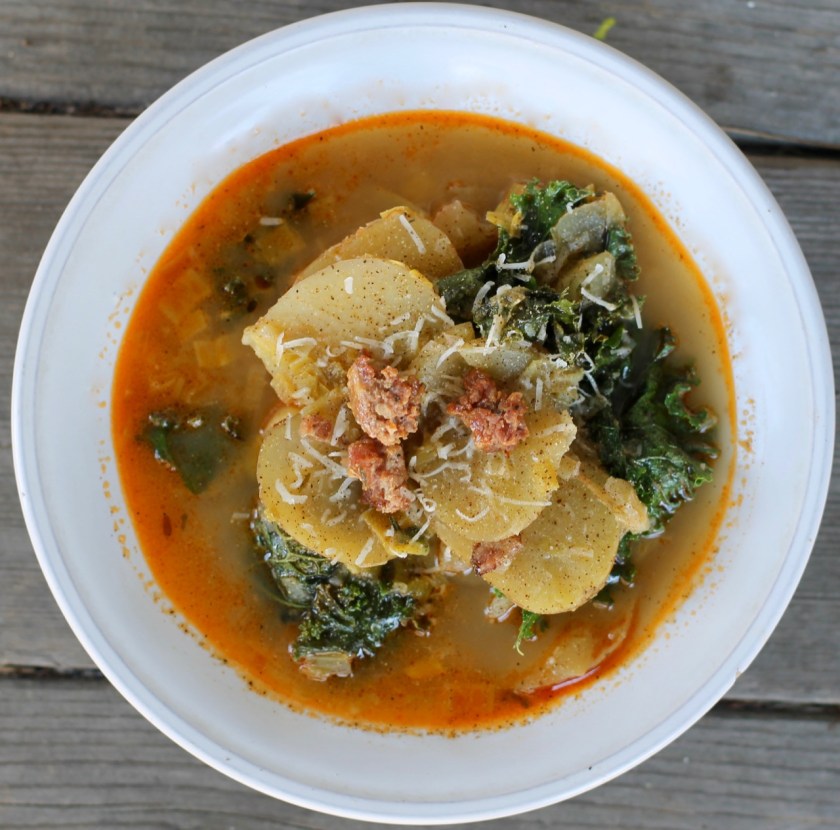
The combination of the leeks, potatoes and kale is magical. The synergy of all these vegetables creates the soup’s unique flavor. The pungent leeks pair nicely with the neutral potatoes and the bitter kale brings all the ingredients together. It can be served with or without sausages. This simple tasty soup quickly became a family favorite and the recipe stayed in our recipe box.
Leeks (allium porrum) have been used for thousands of years but have been kind of forgotten in the United States. They belong to the allium family like onions and garlic and are considered to be very good for health. They are mild but have a unique flavor.
The leeks are paired with potatoes (solarium tuberasum). The healthy potatoes are native to the Andes in South America and help the digestion, lubricate the intestines and nourish the kidneys.
Out of all these vegetables, kale (Brassica oleracea) gives the most interesting flavor to the soup. It is a unique hardy cold-weather green that grows from the fall until the early spring. It gets sweeter with a touch of frost. It is a valuable vegetable in the fall and the winter especially because there isn’t much else growing. It is more warming with a slight bitter pungent flavor and benefits the stomach and the lungs.
TIPS
Never bring the soup to a full, rolling boil! Turn soup down right when it starts bubbling but before it starts to boil. Cook slowly for a half hour.
Add enough liquid to barely cover the vegetables. A few vegetables can even be ‘peaking’ out. Once the soup is done, you can add more liquids.
These are my personal discoveries. I keep getting excellent results every time I cook the soup this way or don’t get if I don’t follow these suggestions.
Russet or Yukon potatoes? I can’t decide which type of potato I like more. The Russet potatoes are softer and are milder in flavor and supposedly is preferred for this soup traditionally. The Yukon potatoes holds their shape better and have more flavor. Your choice!
RECIPE
Serves 4 people
INGREDIENTS
8 medium sized Russet or Yukon potatoes (about 1.5-2 pounds)
3 medium sized leeks, peeled and sliced
butter or home-made ghee (I prefer ghee because it doesn’t burn easily like butter).
2 large slices of bacon or to taste (optional)
stock (vegetable or chicken)
1 Italian sausage (optional)
1 tsp paprika powder
1/2 tsp of fennel seeds
1-3 thyme sprigs
2 dried bay leaves
couple of stems of kale to taste (I used 5)
1/2-1 cup of cream
salt and freshly ground pepper
crushed hot red pepper flakes to taste
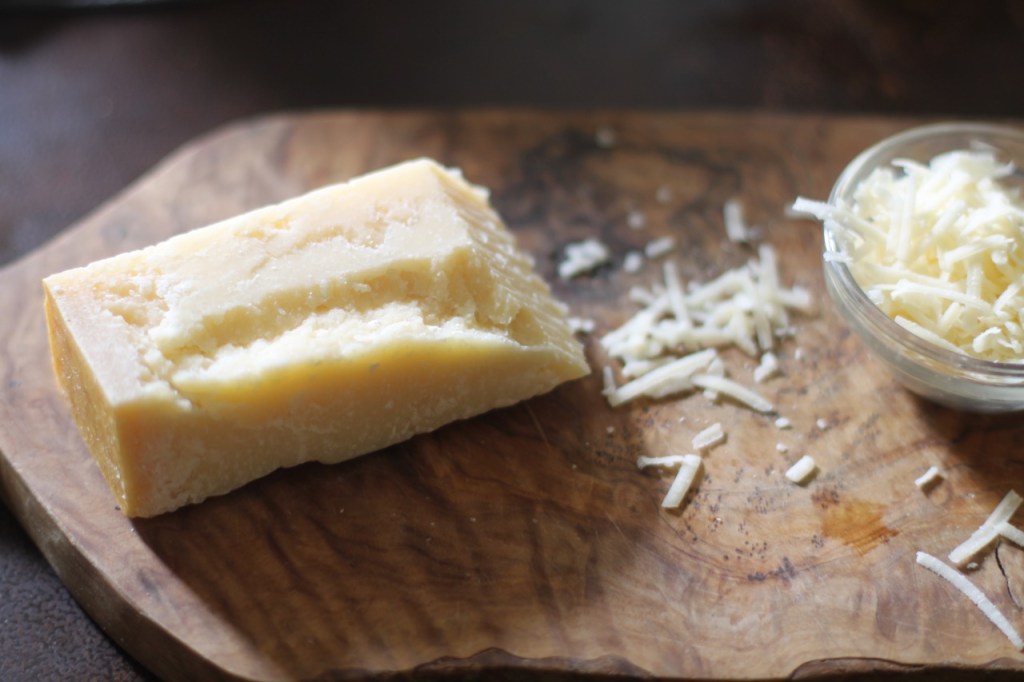
Parmesan cheese
DIRECTIONS
Wash and slice up leeks. Slice leeks thin with a sharp knife. Use more the white part (cook the greenish part in the stock or discard). Put the sliced leeks in a bowl of cold water for 1/2 hour. This will get all the dirt out of the leeks. Clean well. Strain the liquid using a colander or pat dry.
If you decide to keep the peel on the potatoes, clean and soak potatoes in some cold water for 1/2 hour. Scrub off any dirt. If you decide to peel potatoes, you can skip this step. Slice the potatoes thin.
Sauté leek slices in some butter or ghee for 5-10 minutes or until you can smell the aroma of the leeks. Add 1 tsp of paprika and fennel seeds to activate for 1 minute and stir. Add 1/4 tsp cold water, stir.
Fry up some sliced bacon if you decide to use it.
Add potatoes and bacon to the leeks. Pour in the stock enough to barely cover the vegetables. Add the thyme and bay leaves. Start heating the soup carefully until it starts gently boiling but not rapidly boiling. Quickly, turn the heat down and slowly cook for 30 minutes covered or until the potatoes are cooked.
Meanwhile cook the sausage for 15 minutes in a little oil. Add to the soup at the end.
Clean and take stems off the kale. Cut the leaves up into bite sizes.
When soup is done, add the kale. It doesn’t need to cook any longer.
Add cream, salt, black pepper, hot red pepper flakes.
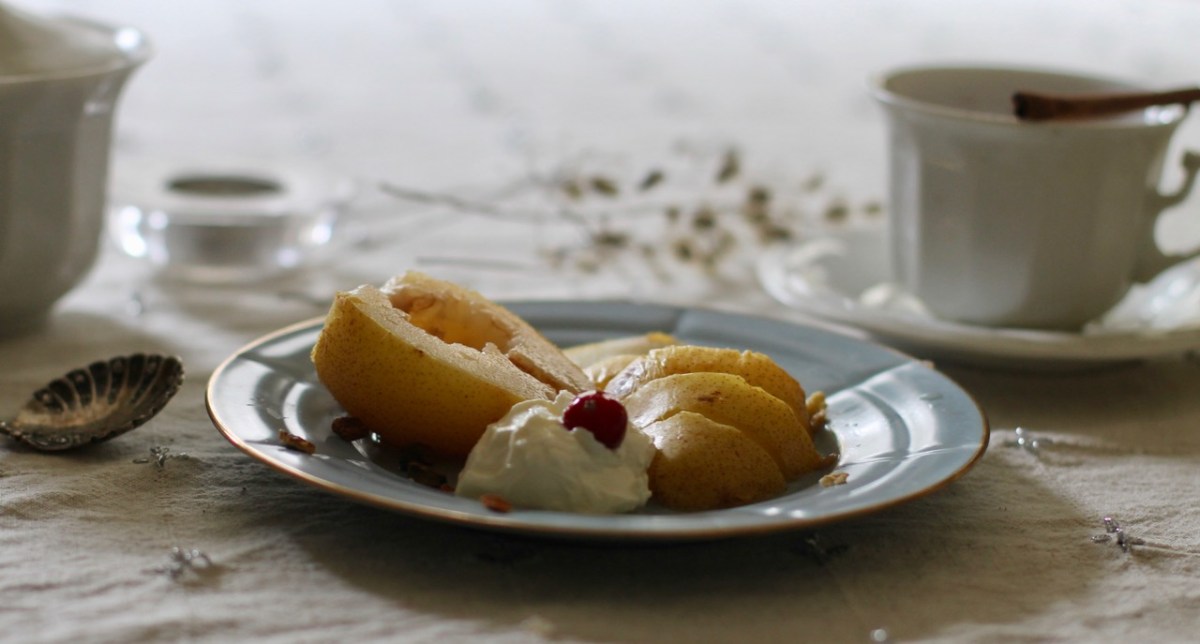
You get two for one with this recipe! There are the fabulous poached pears and also you get to enjoy its delicious liquid as a tea. They can be served for the holidays to delight your guests. You can also serve them any time when you need a little boost in the fall. As a practitioner of Chinese Medicine, I like creating individualized teas for people but it is also gratifying to come up with fun seasonal teas as well. This fall drink is no exception.
The sugar is caramelized, the warming spices are gently infused and the sweet pears are added at the end for poaching. The end products are the firm poached pears that can accompany any fall dish and this wonderful light drink that warms your body and soul. You can surprise your guests for Thanksgiving dinner with these delicious treats!
The sweet and juicy pears are also valuable for health. They are cooling and slightly acidic. They help the lungs by moving stagnation and keeping them moist during the dry season. They are high in fiber that is very much needed in the fall. Pears are also good source of antioxidants, minerals like copper, iron, potassium, manganese, magnesium and vitamins A, B, and C.
Recipe
INGREDIENTS
2 Qt of cold water
3-4 larger firm but ripe pears (Bosc, Bartlett). You can poach more pears in this liquid. You can leave the stems attached if they have stems.
1/8 -1/4 cup of sugar
1 Tbsp Mulling spice (please see below)
zest of lemon peel
3 slices of an orange (optional)
pinch of salt
maple syrup or caramel sauce, optional
Method
Place 2 Qt water along with the sugar in a medium size pot. Bring to a boil, this will caramelize the sugar.
Turn the heat down and simmer the spices for 10 minutes. I chose cinnamon, all spice, orange peel, ginger, cloves, cardamom. It is a good idea to set a timer, time is important here. Please see the recipe below.
Meanwhile wash the pears. You can peel them and cut the bottoms of the pears off or just leave them as they are.
Turn off heat completely and add the pears into the pot. Keep them in the steam for about 5 – 10 minutes. The pears will poach in the steam. You want your pears to be soft but not mushy.
Serve the poached pears with dinner or own its own as a dessert with maple syrup or caramel sauce. Keep the liquid for a delicious warming drink.
Mulling spice
1 tsp cinnamon chips
1 tsp allspice berries
3 pieces of cloves
1 Tbsp dried orange peel
7 cardamom seeds
1/2 tsp of dried ginger root (cut and sifted) or 1 tsp fresh ginger root
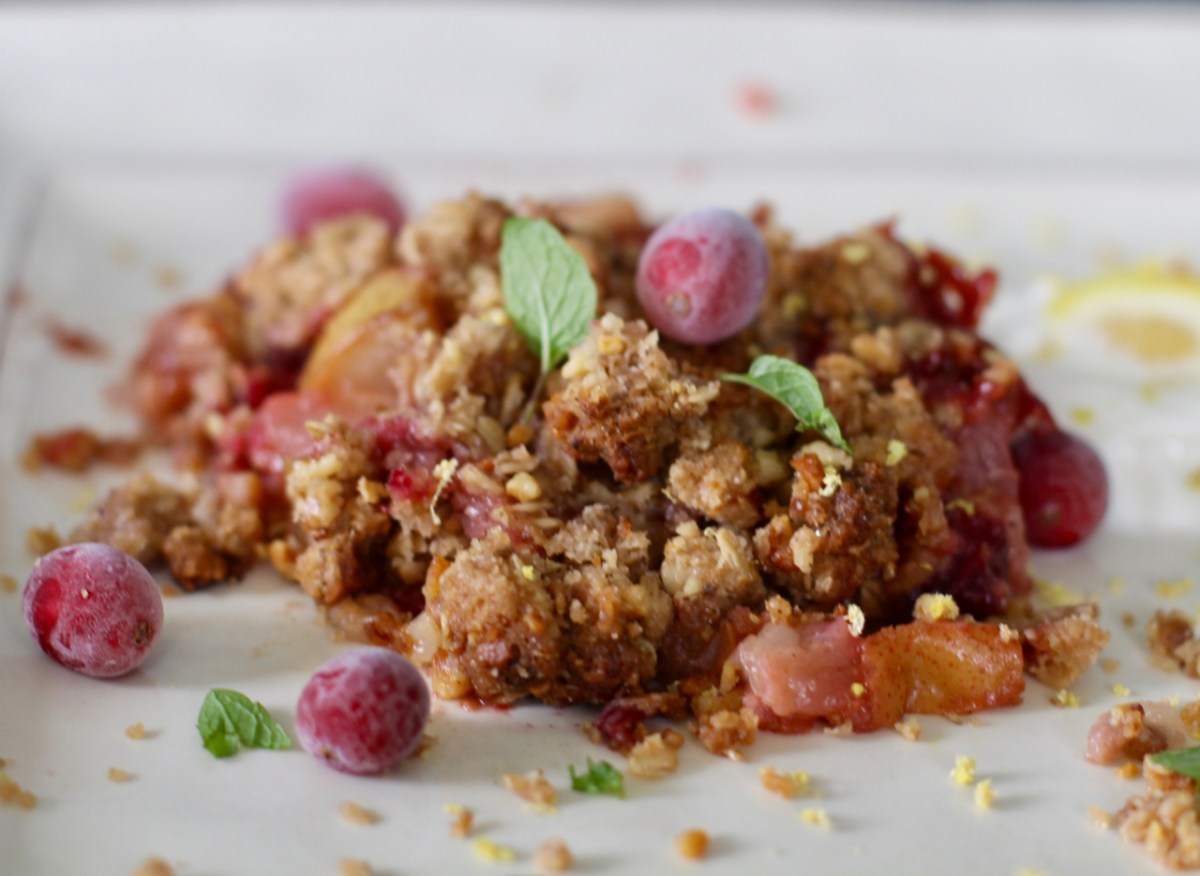
This is such an exciting time for cooking in the Midwest. Fall’s abundance in vegetables and fruits is such a blessing for any cook. All the gorgeous fall colors are just dazzling. I had a hard time deciding what to post, there is so much to choose from. I guess they call this time of year the harvest season for a reason. So I decided to make something fun. How does a cranberry pear crisp sound?
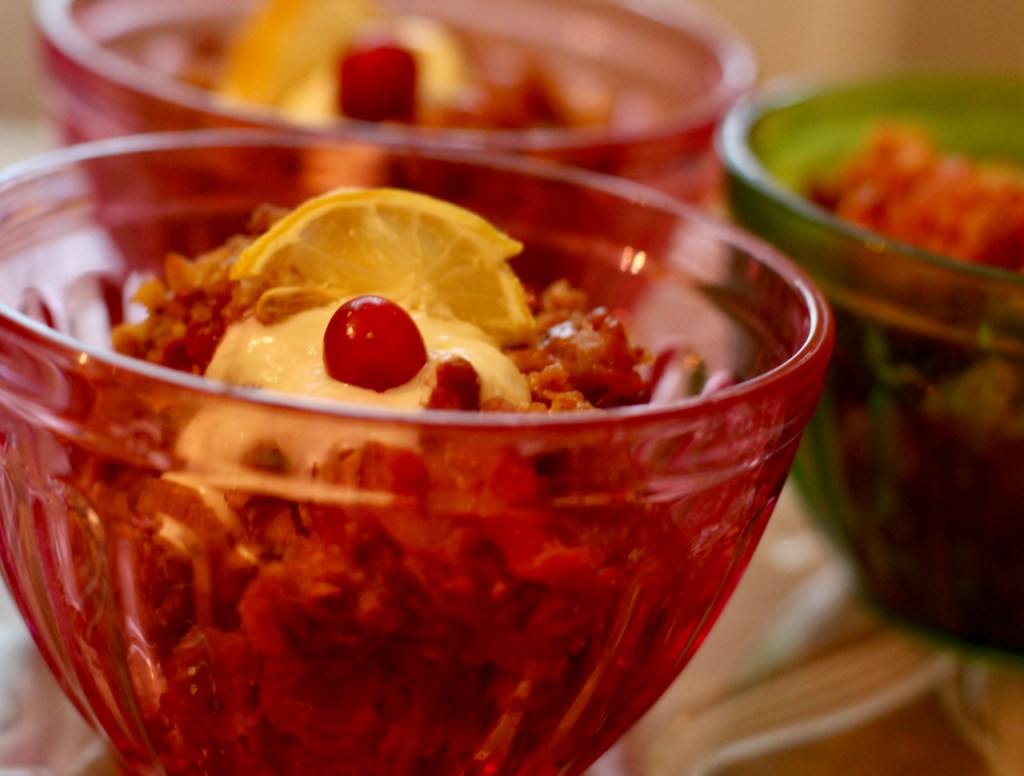
I really like how this recipe turned out. The sweet buttery pears work well with the sourness of the bitter cranberries and all this is topped with the crunchy oatmeal topping. You can serve it with a little heavy cream or ice cream!
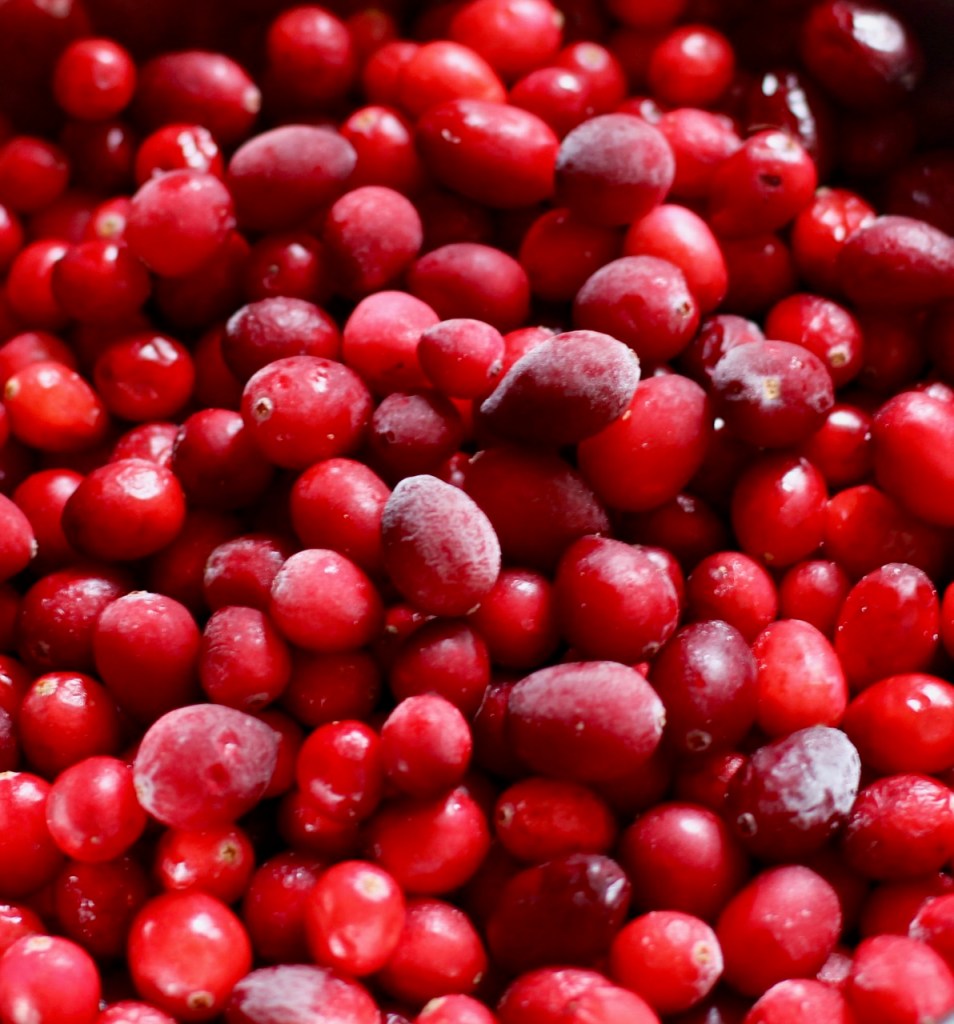
Cranberries are not just for the holidays! Most people associate cranberries with Thanksgiving or maybe Christmas because it is red like Santa’s coat. I have served cranberries after Thanksgiving and I was reminded that it was not Thanksgiving time. However, many creative chefs use cranberries for cooking and baking because they are so unique and healthy. These berries are more sour but are also bitter at the same time. It is usually hard to find fruits with bitter flavor. I personally like to add it to other sweet fruits to make the sweet dishes more exciting.
The refreshing tangy cranberries have been used as food and medicine for a long time. Cranberries are native to North America, the Pequot Indians of Cape Cod called them ibimi, bitter fruit. Native Indians used them for preserving meat. Later, the Natives shared them with the Pilgrims who started making sweet sauces. Cranberries are incredibly valuable for health as they are rich in vitamin C, fiber, flavanoids, phenols and many substances that give protection against tooth decay and infections.
One more interesting fact. Cranberries have an open space inside the middle that allows them to float on top of the water. This interesting adaptation allows them to get away from not being sweet and not having to rely on animals to spread their seeds to survive. In addition, the Native Americans believed the cranberries nourish and protect the kidneys and the bladder.
The sweet and juicy pears are also valuable for health. They are cooling and slightly acidic. They help the lungs by moving stagnation and keeping them moist during the dry season. They are high in fiber that is very much needed in the fall. Pears are also good source of antioxidants, minerals like copper, iron, potassium, manganese, magnesium and vitamins A, B, and C.
RECIPE
INGREDIENTS FOR THE TOPPING
1 cup of old fashioned rolled oats
1/2 cup of white flour
1 stick (8 tbsp) of butter, melted
2 tbsp-1/4 cup of brown sugar + 2 tbsp for the top
1/8 tsp salt
zest of 1 lemon (optional)
1 tsp apple pie spice or 1/2 tsp cinnamon + 1/4 tsp nutmeg + 1/4 cloves+ little mace or 1 tsp cinnamon
1/2 cup of chopped pecans or walnuts + more for serving
heavy cream or ice cream for serving
INGREDIENTS FOR THE FRUITS
5-6 ripe but firm pears (I used Bartlett)
2 cups of fresh organic cranberries
1/4 – 1/2 cup of brown sugar (I think 1/4 cup was plenty but if you have a sweet tooth or the pears are not very sweet, use 1/2 cup of sugar)
2 Tbsp flour or 1 Tbsp corn starch
1 lemon’s juice (use the lemon from earlier)
1/8 tsp salt
2 Tbsp orange peel (optional)
1 tsp apple pie spice or 1/2 tsp cinnamon + 1/4 tsp nutmeg + 1/4 cloves+ little mace or 1 tsp cinnamon
1 Tbsp graded fresh ginger or 1.5 tsp dried ginger (cut and sifted)
2 Tbsp whiskey (optional)
METHOD
Preheat oven to 375 F. Have baking rack in the lower third of the oven.
Take a stick of butter out of the refrigerator.
Wash cranberries. Discard any unripe ones. In a smaller bowl add the cranberries, 1/4- 1/2 cup of sugar, lemon juice, orange peel. Let this mixture sit until cranberries give off some juice. You can add whiskey if you wish. Set aside.
Make topping. Cream the melted butter with the sugar. Add oats, flour, cinnamon, 1/8 tsp nutmeg, salt, lemon zest. Mix well. Fold in the nuts by hand. Let it sit for an hour. Set aside.
Wash, core and cut up pears into small cubes. You can peel them if the skin is tough, otherwise if they are soft no need to peel them. Set aside.
Assemble the fruit base. In a bigger bowl, mix 1 tsp apple spice, salt, flour or cornstarch, orange peel, pears, ginger and cranberry mixture with its juice (prepared earlier) together. Put it into a 2 Qt size baking dish.
Put topping on the top. Sprinkle top with some sugar (optional). I also graded a little nutmeg on the top.
Bake for 30 minutes or until the top has a nice orange color.
Serve with heavy cream or ice cream. Add some extra nuts if you wish.
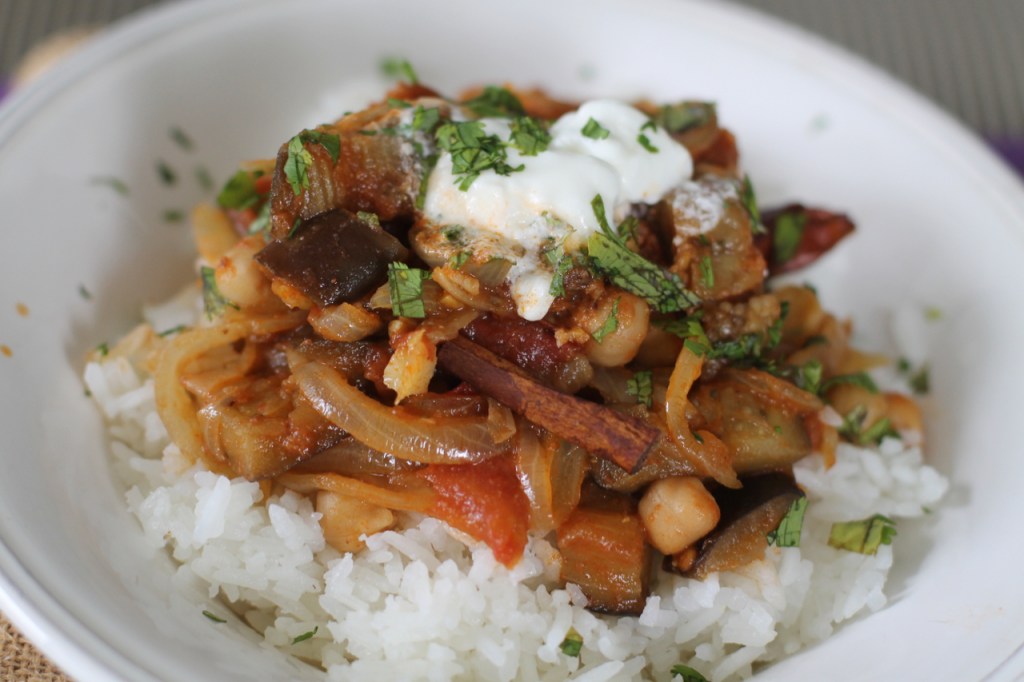
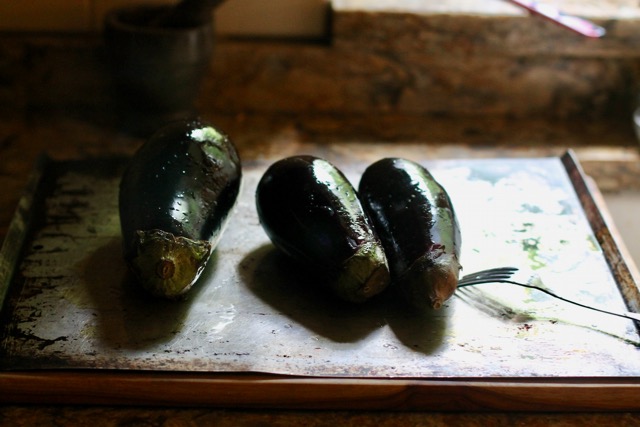
Enjoy this delicious and easy vegetarian eggplant dish. The eggplants are browned and cooked with some tomatoes, pungent spices, onions, and garbanzo beans. They are then served with rice or couscous and yogurt sauce. I also added sweet mama squash that complemented the dish nicely and made it more suitable for this ‘going from the summer into the fall’ time period. With the warming spices and the baked squash, it will be a great meal for this time of year. Not only that it suits the weather but it is delicious … honestly my family can’t get enough of it. I might have to go back to the farmers’ market tomorrow to get more eggplants.
Garbanzo beans. Soak overnight and discard the soaking liquid. Add enough cold water to cover the beans. The water should be about 1 inch above the beans. Cook the beans for 3 hours. (You can use a pressure cooker, just adjust the time). They need to be cooked slowly for a long time until they are nice and soft. They can take up liquid after they are cooked so add more water if needed. Add 1 tsp salt when done.
Preparing the eggplants. Wash and cut eggplants into cubes. Salt them and put them into a colander for 30 minutes to let the liquid drain. Pat dry.
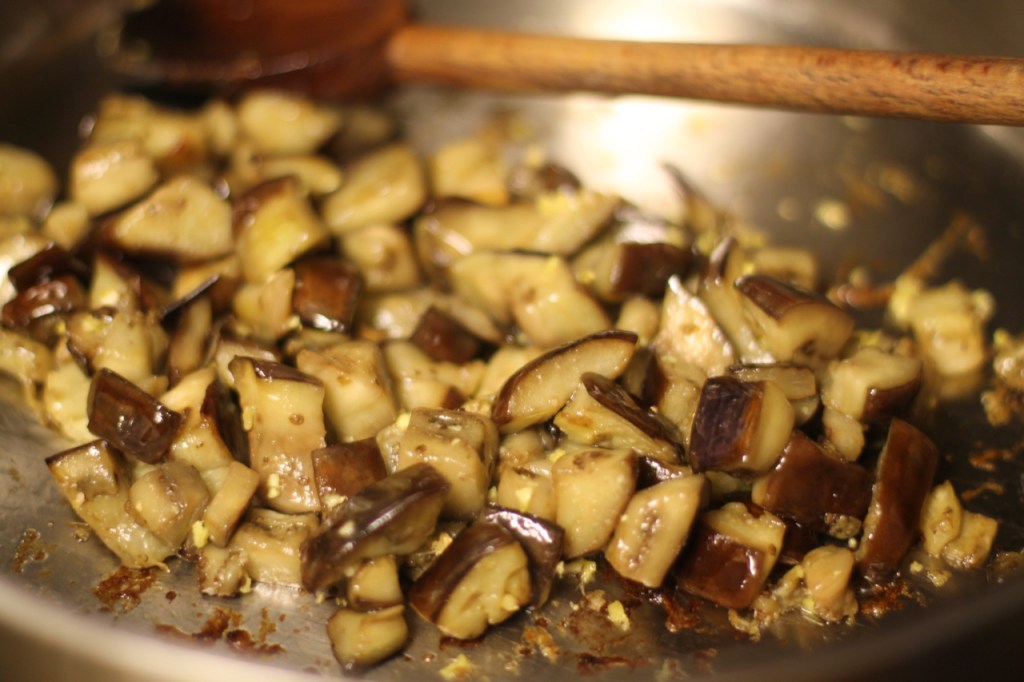
Frying the eggplants. In a wide skillet, on medium low heat, slowly brown the eggplants in some olive oil for about 20- 30 minutes or until soft. They will not cook any more so make sure they are soft and well cooked before you add it to the sauce. Stir frequently. Make sure they don’t burn. Set aside.
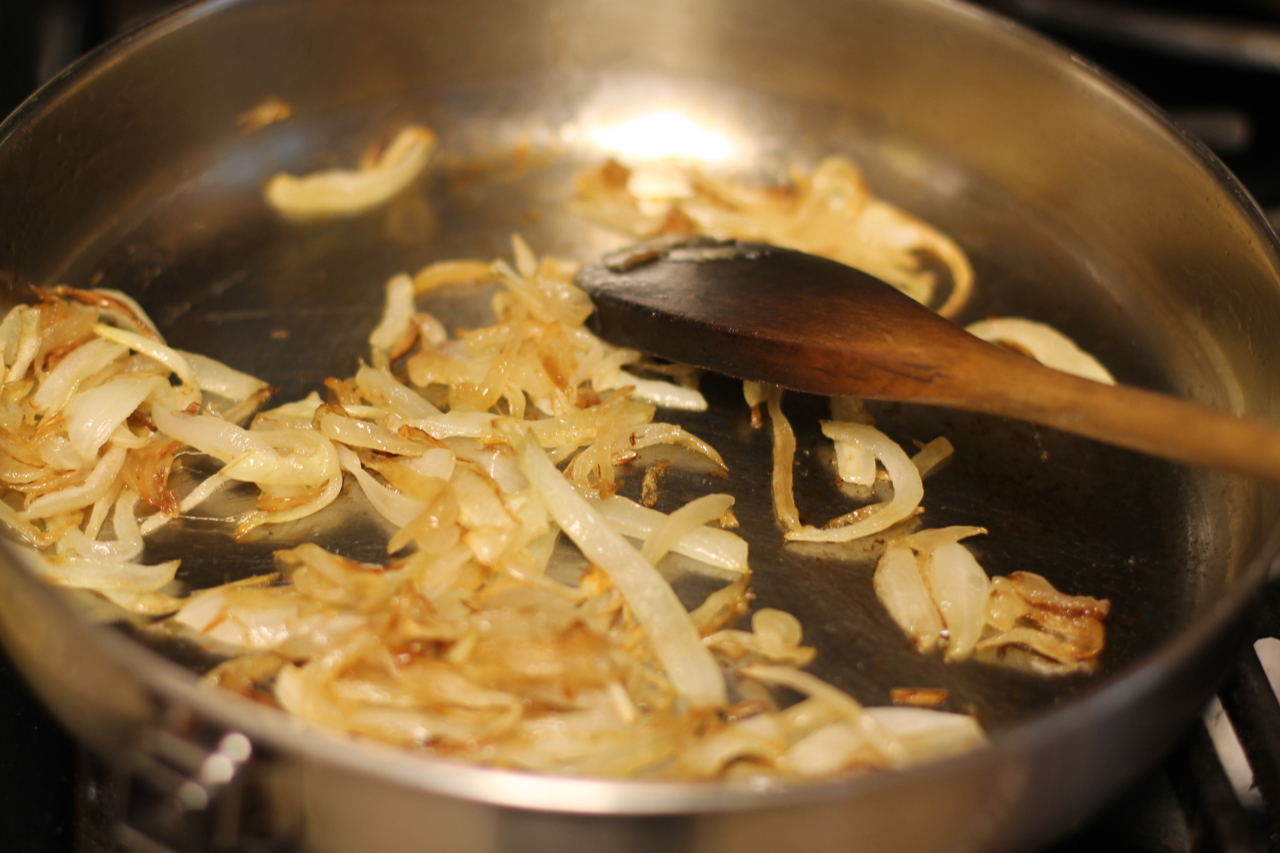
Caramelize the onions. Brown the sliced onions in a separate dish in oil with care, it takes about 30 minutes. Stir frequently. Set aside.
Making the sauce. Crumple the saffron between your thumb and index finger and add hot liquid, stir well (optional). Otherwise you can just put whole saffron strains in the dish. Set aside. On medium high heat warm up 1 Tbsp oil and add the ginger for 5 minutes. Then add the paprika, cumin, garlic and stir for 1 minute to activate the spices. Add the chopped tomatoes and stir well. You can add a little water here too. Cook the tomatoes for about 5 minutes until they have become ‘saucy’. Add the saffron, cinnamon stick, freshly graded nutmeg and hot pepper. Bring to a boil and turn down the heat. Cook for 10 minutes on low medium heat. Add a little water if needed. Add the browned onions, eggplants and garbanzo beans from earlier. Cook for 5 more minutes covered. Let the dish sit for 15 minutes so the flavors can come together. Take out the cinnamon stick and the hot pepper pieces. Add salt and pepper or anything else that needs to be adjusted.
Serve with cilantro, rice or couscous and yogurt sauce. I also added some baked sweet mama squash slivers and they nicely complemented each other.
As the fall season is arriving, I feel like a little squirrel trying to get ready for the colder months: eating the great variety of fruits and vegetables, storing up foods, making last minute repairs and just mentally getting ready. By now we are aware that summer is gone and a new season is coming with all its beauty and challenges. It was the Autumnal Equinox a couple of days ago, when the days and nights are equal and from now on the days are going to get shorter and colder as well.
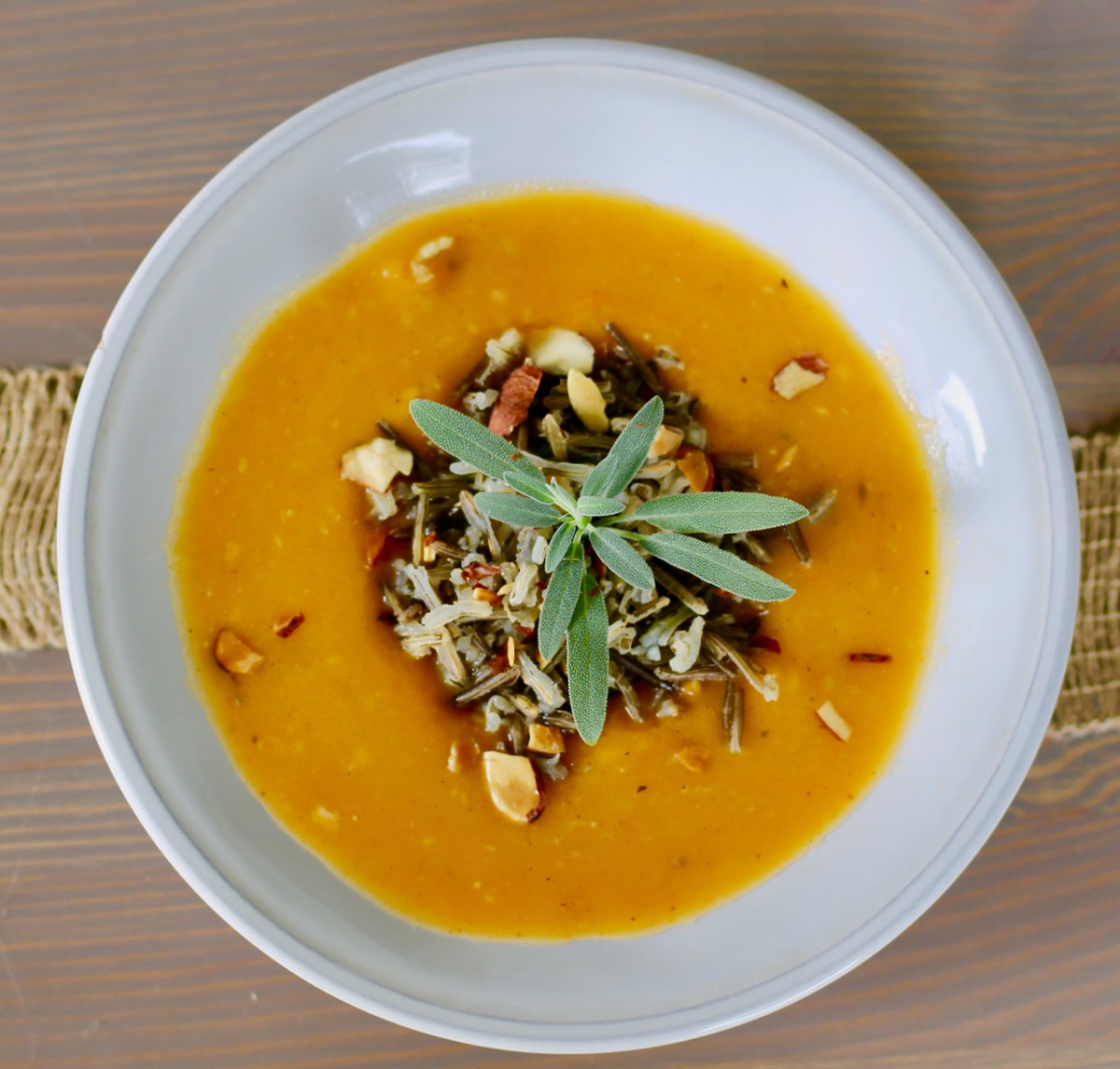
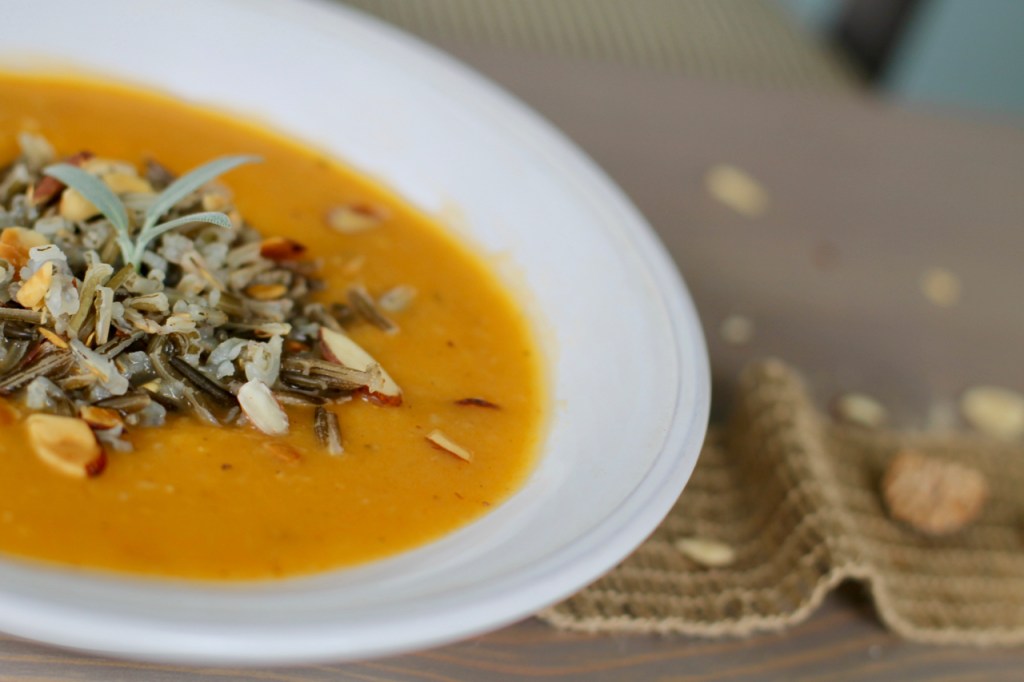
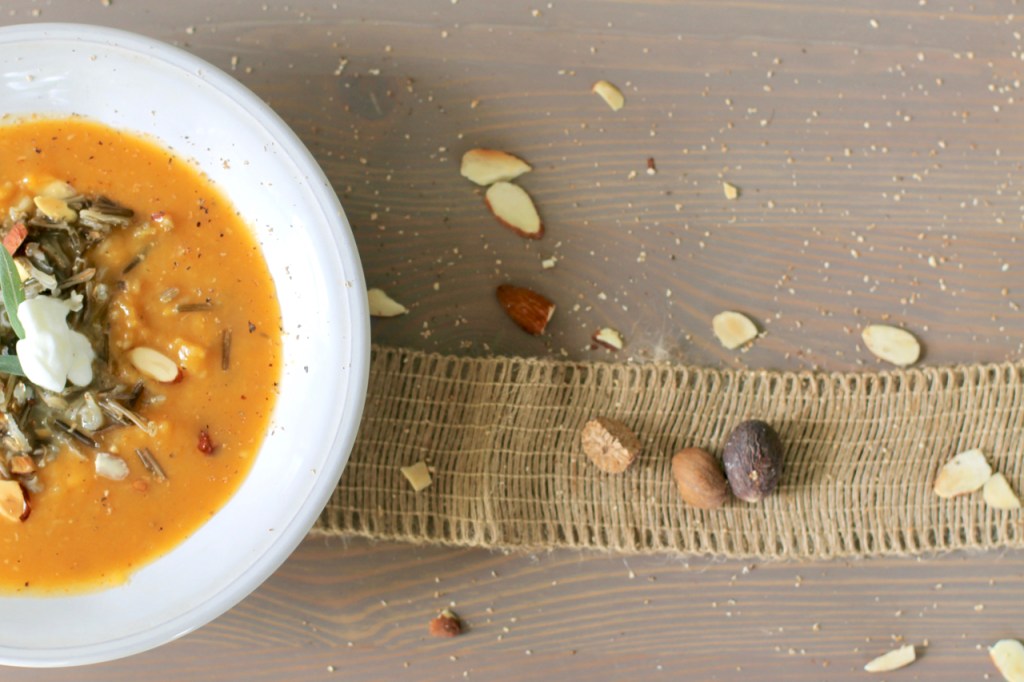
Warm up to the fall with this delicious squash soup. My recipe is made with a little Midwestern twist. I added wild rice, a Midwestern staple but it can be served with some hearty bread like rye bread instead. I enjoy squashes in all shapes and forms. Many of us think of squashes when we hear the word fall cooking so I will start off my fall recipe collection with a squash dish.
The warming sweet butternut squash is simmered with the white onion, garlic, potatoes and is balanced with the bitter celery root and the lovely pungent spices. At the end, it is topped with cream and the sweet almond slivers for a bit of crunchiness.
RECIPE
Ingredients
1 medium sized butternut squash- about 3 lbs
1 medium sized Russet potato, peeled and cut into cubes
1 finally chopped large onion, white is the best
vegetable oil (sunflower)
2 slices smoked bacon (optional)
1 Tbsp fresh ginger, about 1 inch long
1 tsp of sweet Hungarian paprika (make sure it is authentic)
1 smaller celery root, peeled and chopped up into 4 pieces
5 cup stock (vegetable or chicken)
2 garlic cloves, crushed
1/4 tsp freshly ground nutmeg
1 thyme spring
1 tsp salt or to taste
1/4 cup heavy cream
freshly ground black pepper
red hot pepper to taste
1 cup almond slivers
1 cup uncooked wild rice or rye bread to serve
Directions
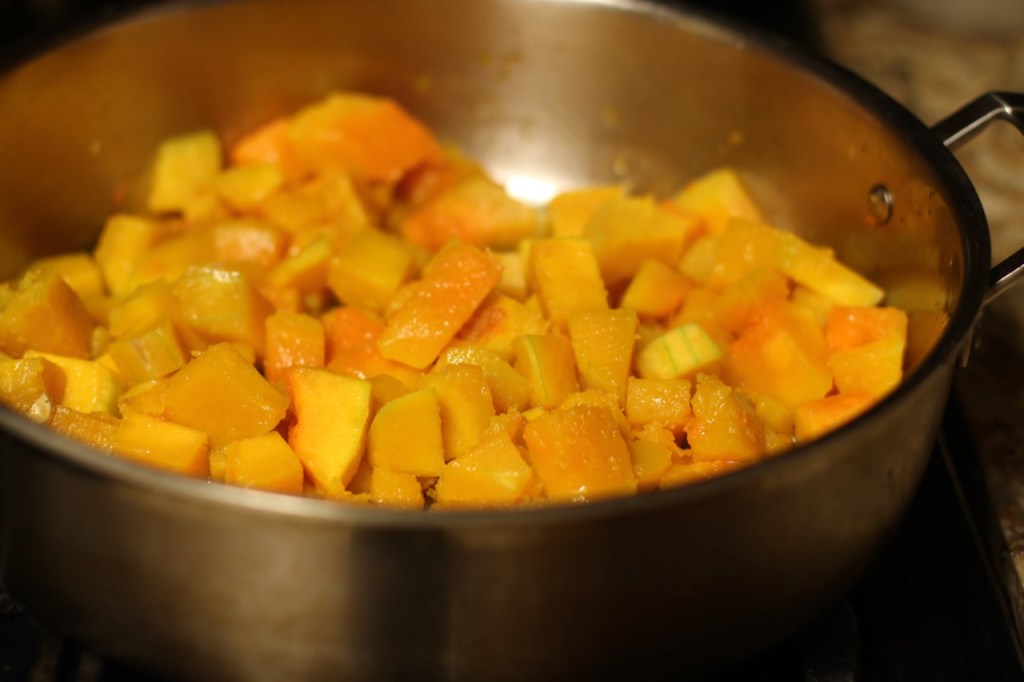
Preparing the squash. Peel and cut squash lengthwise, take out the seeds. Cut them into cubes. Warm up some oil on medium high heat and brown the cubes for a good 10-15 minutes.
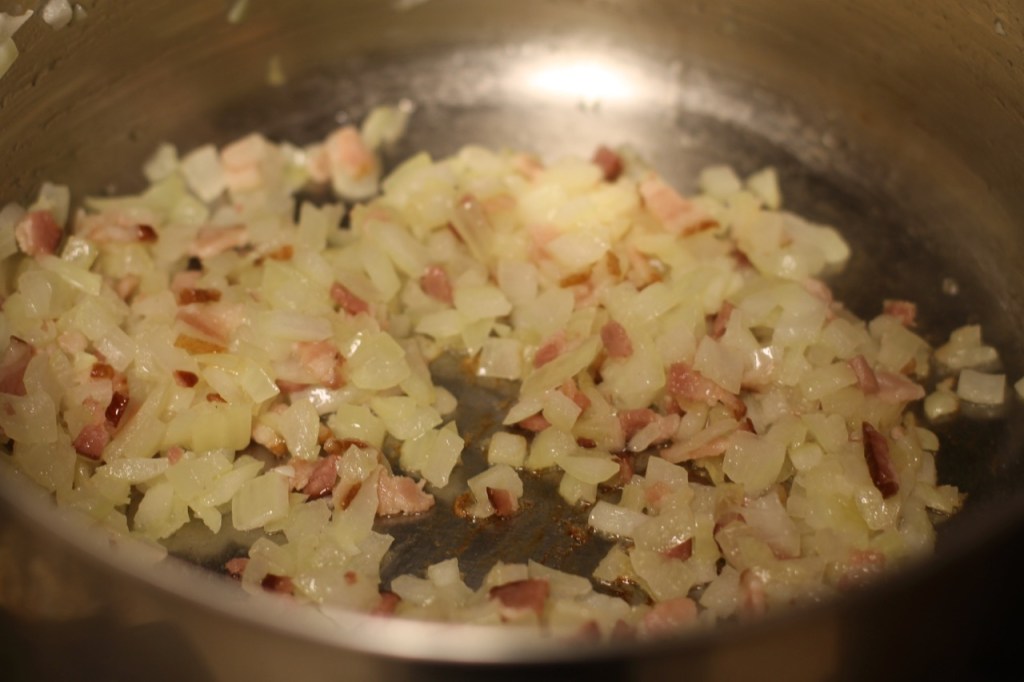
Make the soup base. Have 1/2 cup of cold water ready. Warm up the oil. Sauté the onion, and the bacon(optional). When translucent and you can smell the aroma of the the onions and the bacon, add the chopped ginger for a few minutes, stir. Add the crushed garlic and 1 tsp paprika, stir for 30 seconds to activate. Add the little cold water that you had set aside earlier, stir.
Put the browned squash, potatoes, thyme spring, the freshly ground nutmeg and the celery root in the pot. Add the stock, enough to cover by about 1 inch above everything and cook for 30 minutes.
Cooking the wild rice (optional). Cook 1 cup of wild rice with 3 cups of water, partially covered for about 20 minutes or until the rice is soft and crunchy.
Roast the almond slivers. Preheat the oven to 350 F. Lightly oil a baking sheet and spread the almond pieces evenly on the sheet. Bake for 5 minutes. Be careful not to burn it. Serve on top of the soup.
When ready, let the soup cool for about 10 – 20 minutes. Add the cream and black pepper. Stir.
If you want the soup to be a little chunky, set aside about 20% of the cooked squash pieces. Use a hand held blender and puree the rest of the soup. Make sure you blend the celery chunks. Transfer the whole pieces back to the rest of the pureed soup. (If you prefer a smooth soup, just puree everything).
Check to see if more salt, black pepper, red hot pepper are needed.
Serve with wild rice/bread and the almond slivers.











 Twin Cities Herbs