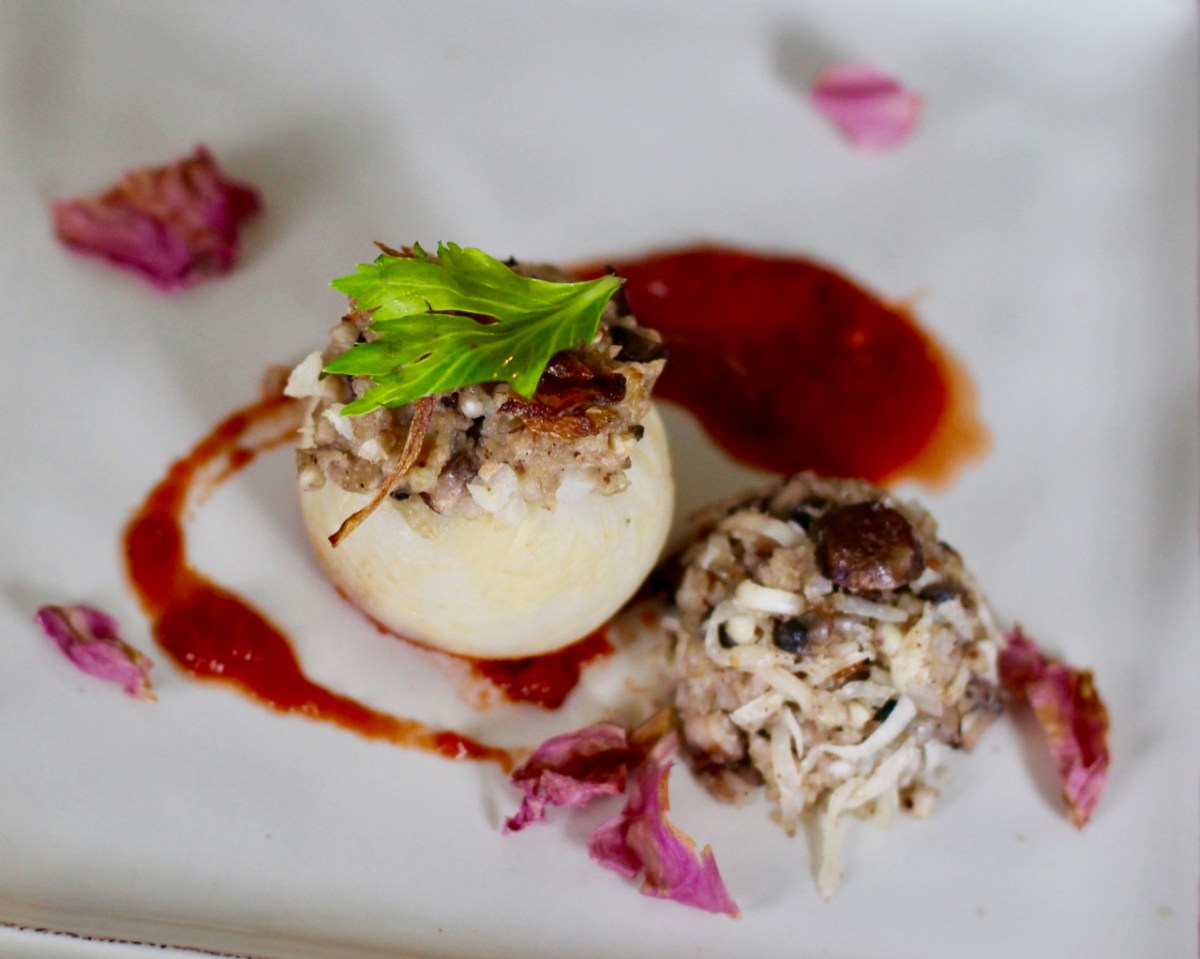
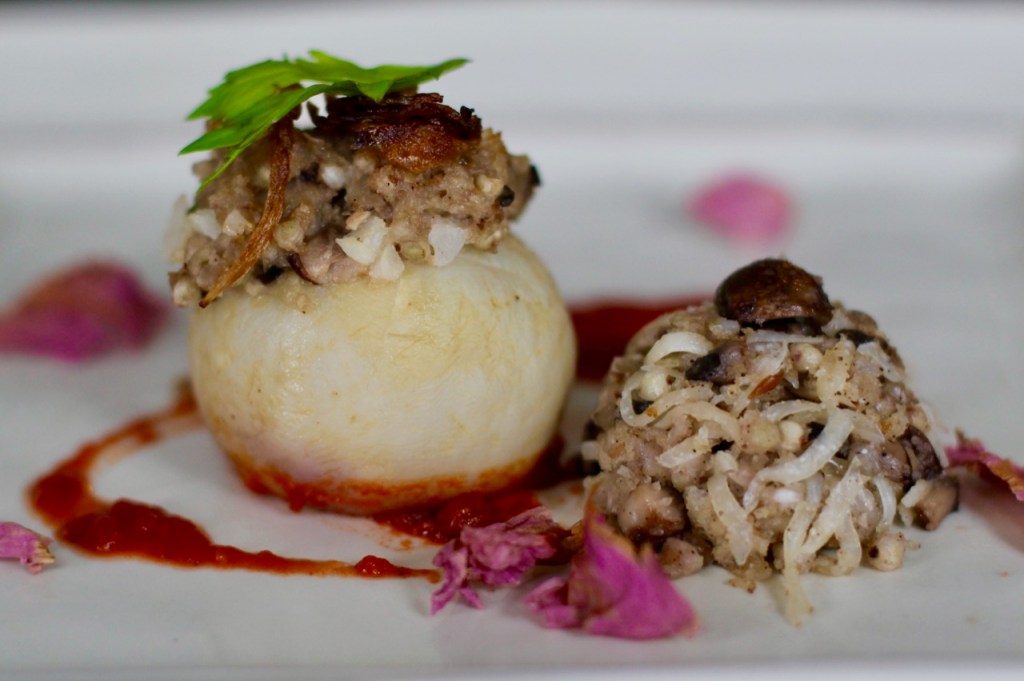
Stuffed turnip (Фаршированная репа)

Happy New Year, Everyone!

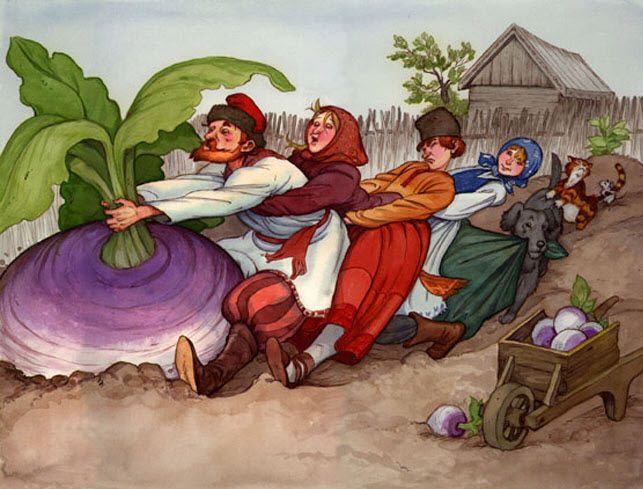
Hope you all had a lovely Holiday and got to eat lots of delicious food. Now I feel that it would be nice to eat something refreshing, more cleansing though … and turnip is a tasty vegetable that could be used. I always think of the Russian folk tale, The Giant Turnip when I hear the name, turnip. In fact, turnip is an important staple in the Northern countries like Russia. So let’s go to Russia and get their famous recipe for stuffed turnip.
This is a very simple dish at its best. The main ingredients are the nutty buckwheat, the earthy mushrooms and the pungent turnips that mainly create this special dish. There are no exotic ingredients or spices. Honestly, I only used thyme, salt and pepper to flavor.

I got this recipe from a website called http://www.Russianrecipebook.com but I made some minor changes. I cooked the buckwheat in stock instead of just water. In addition, when cooking, you need to be careful with the turnips as they cook fast. They need to be boiled for only about 10-12 minutes to get the right consistency. Otherwise, it is a very easy and quick recipe. This dish is more like the everyday people’s food.

Wonder if we had cooked tasty dishes like this in my Russian classes, I would speak Russian now …
Turnips have been used in folk medicine for thousands of years. A cold climate loving vegetable, it is native to Northern Europe and is still popular today. Turnips have many beneficial properties. They are great source of vitamins, minerals, anti-oxidants and fiber and may be used among others for indigestion, detoxification, diabetes, jaundice. In Chinese Medicine, they have a neutral thermal nature and have pungent, sweet and bitter flavor at the same time. They are considered to be useful for their dispersing abilities in lung ailments; however, this quality is only available in its raw form. They are also used for improving circulation and remove damp conditions in the body. The green top is also valuable.
RECIPE

Serves about 2-4 people. – I cooked 1 cup of raw buckwheat to have some on the side (adjust other ingredients accordingly).

Ingredients

  • 4 smaller-sized turnips or less if bigger
  • 8 oz fresh mushrooms, chopped (I used crimini)
  • 1/4 cup uncooked buckwheat (1/2 cup of cooked buckwheat)
  • 1/2 cup of bone or vegetable broth or water
  • 1/8 cup shallots or half of a small onion, finely chopped
  • 2 tablespoons chopped parsley 
  • 1/4 cup grated cheese (mozzarella, provolone, cheddar, or Parmesan for extra flavor)
  • 3 tablespoons bread crumbs
  • Salt and pepper to taste
  • Vegetable oil and/or butter
  • 1 tsp fresh or 1/2 tsp dried thyme (optional)

Directions

Preparing the buckwheat

  • Clean buckwheat kernels and soak for a couple hours.
  • In a medium sized pot, start boiling the stock or water. Add the buckwheat to the boiling liquid and cook for about 10 – 15 minutes or until they are soft but not mushy. Add salt and pepper to taste. Set aide.

Preparing the turnips

  • Clean well and peel the turnips. Boil them for about 10 – 12 minutes or until they are just soft enough to scoop out the insides. The bigger ones will take more time. This is the most difficult part of the recipe. You really need to keep an eye on those turnips, they should be slightly cooked. Try not to overcook them. When done, take out turnips and let them cool. You can put them in cold water.
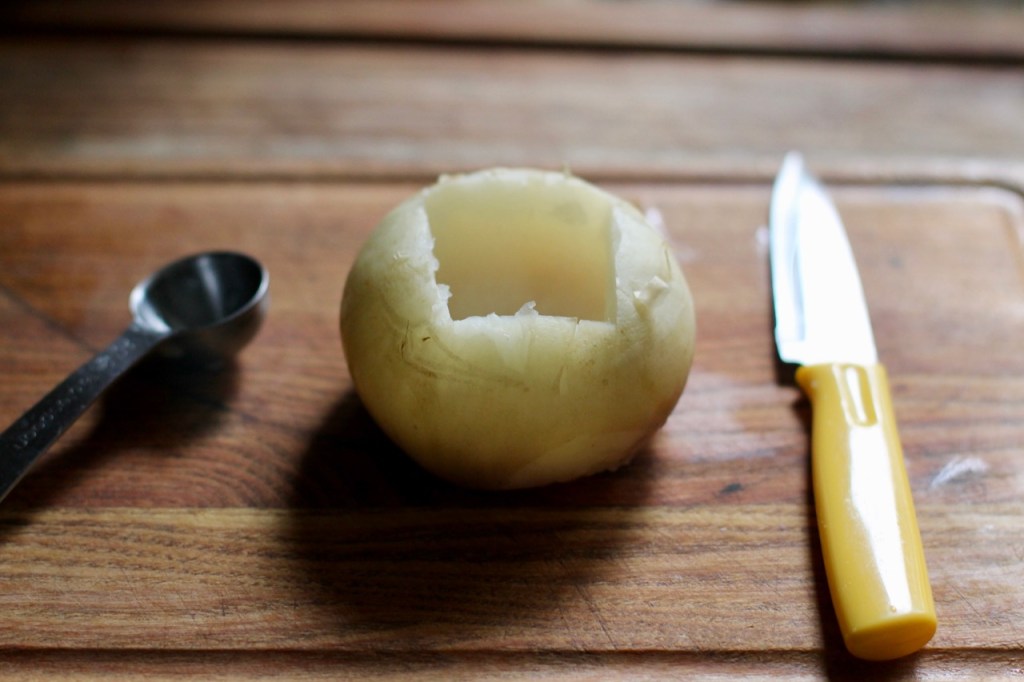
  • Cut off enough of the bottoms to create a flat surface that will allow them to stand upright on a baking sheet. Save the cut portion. With a spoon and/or a small knife, scoop some of the flesh out of the top end to form a cup. Save the scooped flesh as well, they are so tasty. (You can scoop the inside of the turnip out with a watermelon scooper or a measuring spoon).

Preparing the stuffing.

  • Sautee the onions or shallots in some oil for about 5 minutes. Meanwhile thoroughly clean the mushrooms and chop them up. Add them to the onions and continue to sauté them for about 10 more minutes or longer for some wild mushrooms and then let them cool.
  • Add the cooked buckwheat, bread crumbs, grated cheese and the saved chopped turnip pieces. Mix well. I would like to invite you to take a bite of the stuffing, try to see if you like how it turned out.

Stuffing the turnips

  • Preheat oven to 375°F.
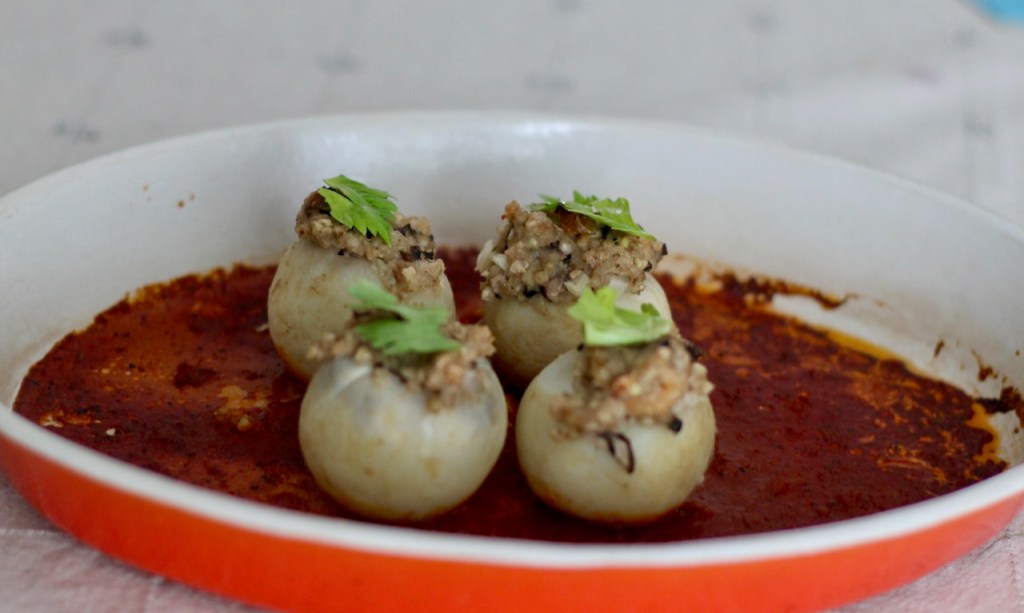
  • On a well-greased baking sheet, arrange the turnips in an upright position with the scooped-out wider portions facing up (like cups). (I used tomato sauce for the bottom of the pan). Fill the turnips with stuffing. Ideally the stuffing should be above the surface of the turnips, although this will depend on the size of the turnips, and the amount of stuffing.
  • Put a small piece of butter on top of each turnip and bake in the pre-heated oven for about 20 minutes, until the turnips are heated through and crusty on top. The turnips should not be raw but nicely baked. If it is still raw, just bake it a little longer.

Mushroom sauce recipe

Ingredients

  • 4 ounces of mushrooms
  • 1 tsp fresh thyme or 1/2 tsp dried thyme
  • 3/4 tsp dried sage or 2 fresh leaves
  • 1/4 tsp of dried rosemary crushed or 1 fresh spring
  • 1 Tbsp oil
  • 1 cup of stock
  • 1/4 cup of creme

Directions

  • While the stuffed turnip is baking, prepare the mushroom sauce. In a saucepan, warm oil over medium heat, add rosemary for 1 minute. Add mushrooms and cook until they release their liquid and mushrooms are well browned. Stir frequently. Add thyme, sage and let cook for one minute. Add stock, stir, and let simmer for 10 minutes and reduce heat to low.
  • Transfer half of gravy to a blender and puree until completely smooth. Add pureed mushrooms back into mushroom mixture and stir. See if you like the consistency. If not thick enough, puree a little more of the mixture.

Serve turnips hot, with sour cream and mushroom sauce. Decorate with parsley. I also made additional stuffing to serve on the side.

Enjoy!
Source

Photos and text by twincitiesherbs.com.

Marinated pork with prunes

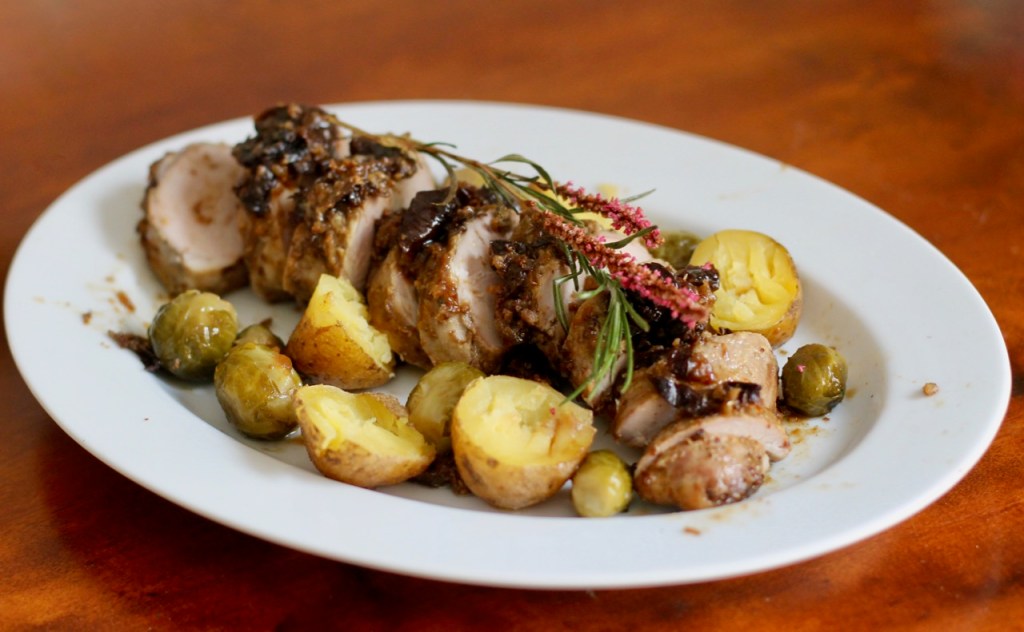
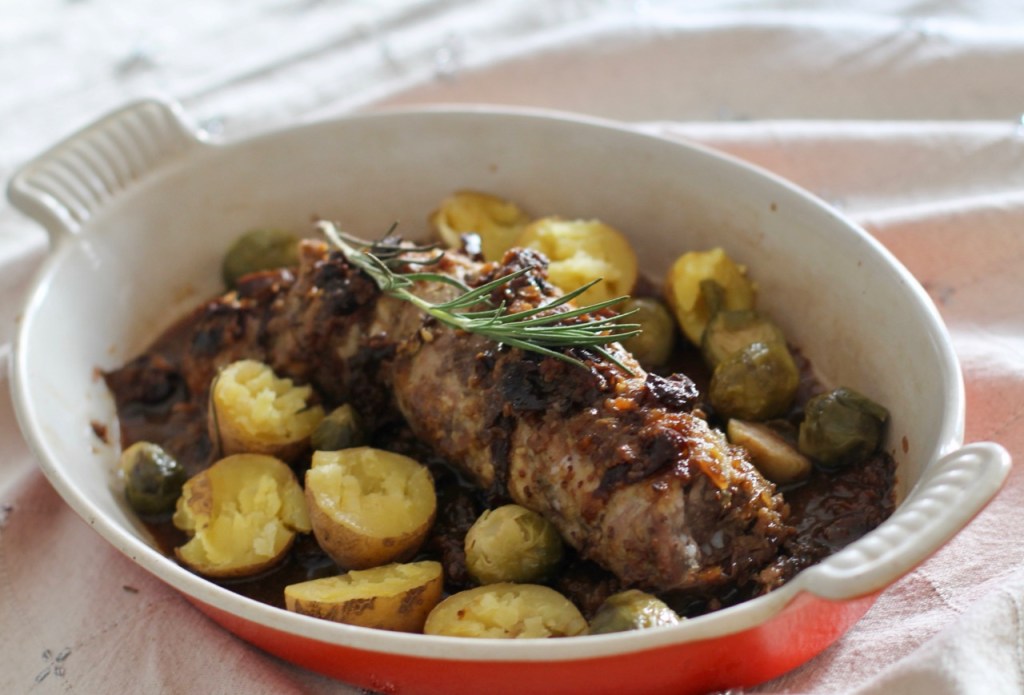
It is December now and I am already missing the plums from this summer. Then I happened upon this recipe (source of the recipe) … a dish with pork baked in prune sauce! I really like to prepare meats with fruits and the prunes work nicely with the pork here. Oh and that savory aroma of the prunes cooking with the shallots!!! … I decided that I will be making this recipe for Christmas Eve. I believe it would be perfect for this busy night. It can be marinated ahead of time and then just has to be cooked on the 24th … and after eating this dish I might have visions of sugar plums dancing in my head…

I really like simple meals that have an interesting flavor and this dish does just that. The pork is first marinated in a mustardy sauce and further baked in a savory plum sauce to perfection. The moist pork works nicely with the sweet prunes along with pungent spices and results in a unique sweet and savory flavor. Of course, it needs to be served with some nice wine or grape drink.

I made a few minor changes to the original recipe. I added a little red hot pepper, of course it is optional but for me, some spiciness was missing. I felt that the sweet pork along with the sweet sauce needed a touch of spiciness to balance the dish out. Not sure if it is authentic but this was more to satisfy my personal taste.

Also, I served this dish with brussel sprouts in addition to the potatoes. I served brussel sprouts but any other bitter green leafy vegetable like kale, lettuce would work well. Also, the recipe calls for 2 cups of chicken stock. You can do half white wine and half chicken stock if you wish.

If you can’t find tenderloin or just don’t want to spend so much money, sirloin is a nice alternative. Sirloin, a different part of the pork, is not as tender, will require longer cooking time and more cooking liquid. (I cooked it for 15 minutes longer and added an extra 1/4 cup of chicken stock). Honestly, they both taste nice though. Of course, if you want to impress your guests, or just treat yourself to something special, the tenderloin is more superior in flavor so go for the tenderloin!

A few words about the pork. It is sweet and salty. According to Ancient Chinese Medicine, pork is great for the fall and the winter as it is moistening. In fact, pork is moistening for the lungs, kidneys, and the spleen-pancreas. In Europe, it is a popular meat during the cold months especially during Christmas time.

Recipe

INGREDIENTS

1 pork tenderloin (approx. 1.25 pounds) or sirloin
2 TBSP brown sugar
1 TBSP Dijon mustard
4 tsp extra virgin olive oil, divided
2 cloves of garlic, minced + 4 whole cloves, peeled and slightly smashed
1 tsp fresh thyme, chopped (or 1/2 tsp dry)
1/2 tsp salt
1/4 tsp pepper
10 dried plums (prunes), chopped in half
2 smaller shallots or 1 bigger one, peeled and thinly chopped
2 cups chicken or pork broth or 1 cup of chicken/pork stock and 1 cup of white wine
1 TBSP red wine vinegar
fresh parsley

DIRECTION

Marinade: In a small bowl mix sugar, Dijon mustard, 2 tsp olive oil, thyme, sale, pepper and 2 cloves of garlic. Put the mixture on the tenderloin, evenly spreading it all over the pork. You can put the pork in a zip lock bag or a marinating dish with a lid. Let it marinate in the refrigerator for 4-6 hours.

Preheat the oven to 375 F (190 C). Take the pork mixture out of the fridge and let it come to room temperature.

Prune sauce: In a pan with oven proof handles, gently heat 2 tsp of olive oil, add shallots and stir. Cook until it start becoming soft and you can smell its aroma – about 5 minutes. Add the garlic, the chopped prunes and stir … Now if I may,
I would like to invite you to stop for a few seconds and smell the aroma of the shallots, the garlic and the prunes, it is amazing … after 1 minute add the chicken stock, vinegar and hot pepper (optional). Cook for 5- 10 minutes.

Place the pork in the middle of the pan. Put the pan into the pre-heated oven for 15 minutes. Cook for an additional 20 – 25 minutes basting 2-3 times or until the meat is 160 F.

When meat’s temperature reached 160F, take the pan out of the oven and cover. Let it rest here for 10 minutes before you start slicing them.

Serve sliced with potatoes, brussel sprouts and some wine. Drizzle the sauce on the top.

enjoy!

Sources

Stuffed squash with lentils, cranberries and wild rice (a Midwestern twist)

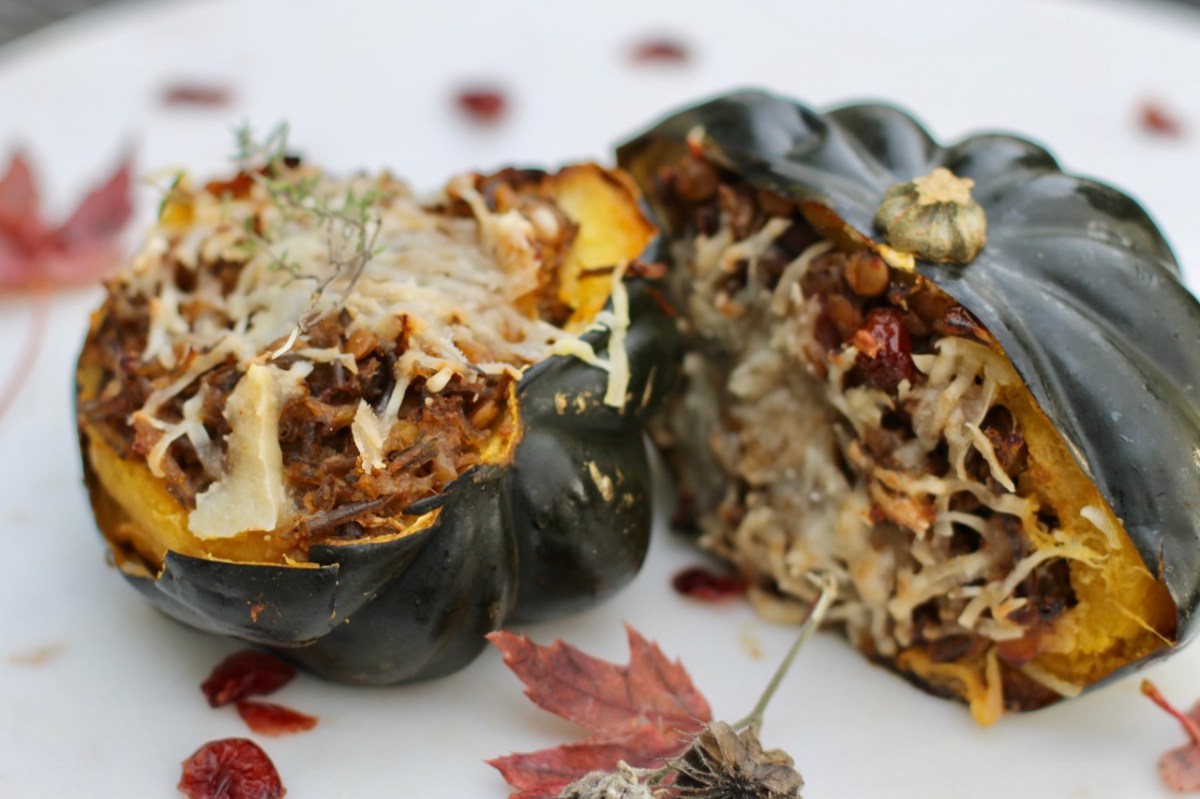
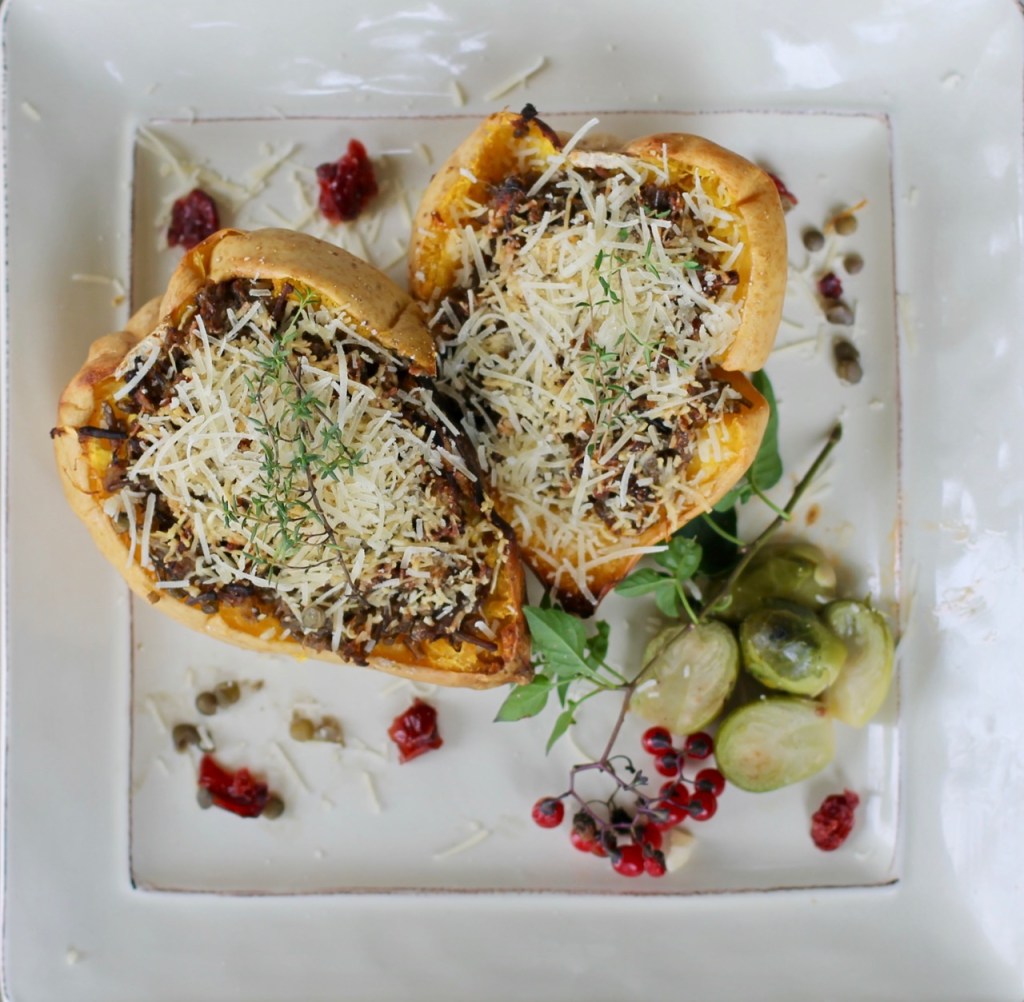
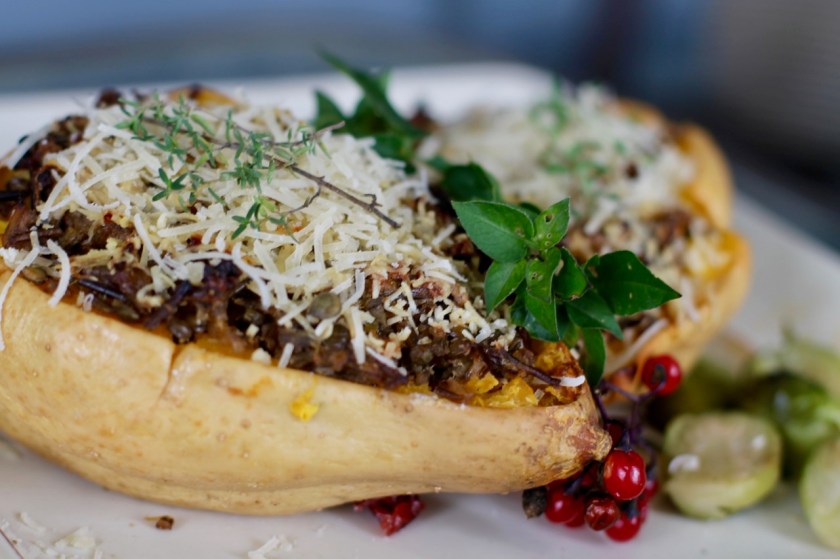
I love this savory dish … it has a lot of the quintessential foods that I enjoy eating in the fall. The tasty squash is filled with wild rice, lentils and cranberries and mixed with the melted cheese. It is wonderfully aromatic and tasty.

Squash is one of the main foods in the fall. We are so lucky to have all these different varieties available in the US. They are sweet and have a neutral flavor that make them ideal to go along with fall dishes.

Squashes are native to the Mexico region and may have been around for 10,000 years. Their flesh is usually used for cooking. They tend to be high in natural sugars, carbohydrates and vitamin A. In general, they all are mildly sweet, have a luscious nutty flavor and have a creamy texture. However, each variety comes with a unique characteristics and with different vitamin and mineral contents. Ancient Chinese Medicine considers them to be highly nourishing and warming for the digestive system with anti-inflammatory properties.

If we talk about squash, we have to mention its seeds as they are equally valuable for health. They are rich in heart friendly dietary fiber, unsaturated fatty acids, and in addition, protein, minerals, and vitamins. They contain tryptophan that is responsible for increased motor decision speed and blood sugar regulating effect. The seeds are also used for remedying intestinal worm problems. They can be roasted in the oven on low heat at 250 F.

RECIPE

Serves 4 people

Ingredients

  • 2 medium sized squash – (Choose squash that has a firm outer shell with a scoop friendly inside like acorn, delicata, carnival, sweet dumpling).
  • 1 cup of uncooked wild rice (Wild harvested preferred).
  • 3 cups of stock (vegetable or chicken)
  • 1/3 cup of shallots, finally chopped
  • vegetable oil (sunflower)
  • handful of earthy mushrooms (crimini, shiitake, portabello)
  • 1 celery stalk
  • 1 slice bacon (optional)
  • couple of fresh thyme sprigs or 1 tsp dried thyme
  • 1/4 cup of uncooked lentils
  • 1/4 dried cranberries or raisins
  • 2 Tbsp of chopped pecans
  • 100 g or 4 oz of feta cheese
  • 1/2 cup of hard cheese like Gruyere or Parmesan cheese (more for the top)
  • salt and pepper to taste
  • crushed red hot pepper to taste
  • little freshly ground nutmeg

Preparation

  • Turn oven on to 375 F (190 C). Bake cleaned squash on a baking sheet for 40 – 60 minutes or until you can easily put the blade of a knife through the flesh of the squash. When done cut in half and scoop out the seeds. The seeds can be saved and roasted.
  • Clean and soak lentils for an hour. Place lentils in a medium pot, add 3 cups of water, thyme spring and bay leaves. Cook for about 45 – 60 minutes or until they are done, soft but not mushy. When done let it sit in its steam for 15 minutes. Add salt to taste.
  • Heat the oil on medium high heat. Sauté the shallots for 5 minutes. Then add the sliced bacon, sliced celery for -10 more minutes, stir frequently. Add 1 cup of wild rice, 3 cups of stock, sliced mushrooms, thyme and bring to a boil. Stir. Simmer over low heat with lid partially closed for a 35 – 55 minutes until the water is absorbed and the rice is fluffy and tender.
  • If using regular rice, cook rice separate, follow the cooking directions for the rice of your choice. Prepare the vegetables as written above. When ready combine.
  • In a bowl mix the lentils and the rice mixture. Add the feta crumbles and the hard graded cheese. Add the salt, pepper, hot red pepper and freshly graded nutmeg to taste. Mix. Also you can sprinkle salt, nutmeg and pepper inside the squash. Put the stuffing in the inside of the squash. Sprinkle the top with cheese and bake them in the oven for about 20 – 30 minutes or until the tops are golden brown.
  • Serve with other fall vegetables like brussel sprouts, beets, cranberry sauce etc.

enjoy!

Sources

Recipe, text and photo by twincitiesherb.com.

Moroccan eggplant stew with garbanzo beans

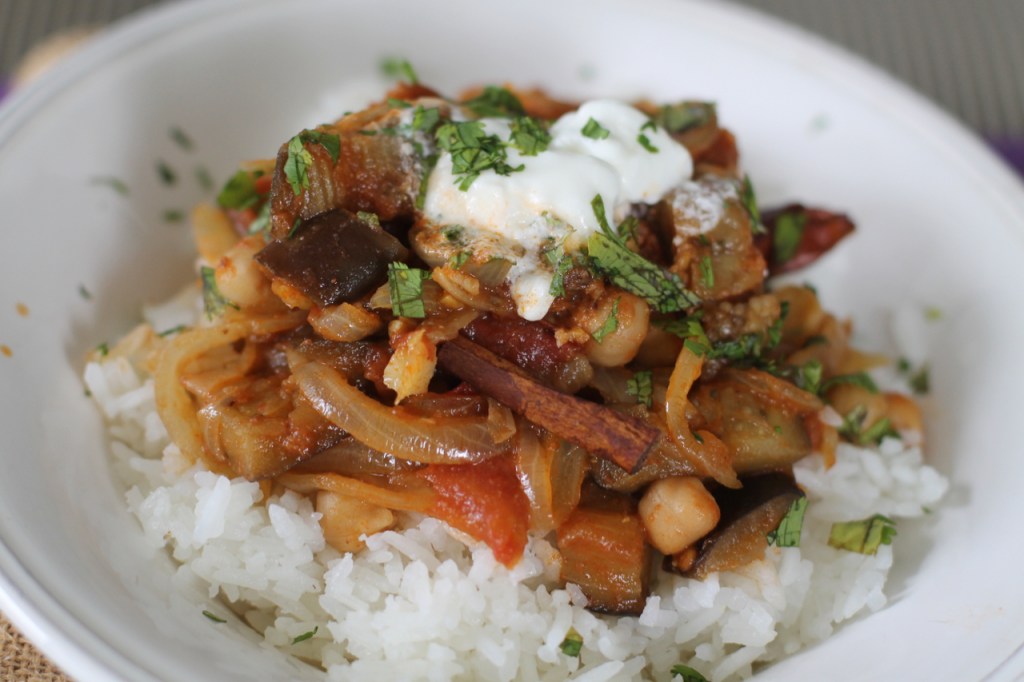
Enjoy this delicious and easy vegetarian eggplant dish. The eggplants are browned and cooked with some tomatoes, pungent spices, onions, and garbanzo beans. They are then served with rice or couscous and yogurt sauce. I also added sweet mama squash that complemented the dish nicely and made it more suitable for this ‘going from the summer into the fall’ time period. With the warming spices and the baked squash, it will be a great meal for this time of year. Not only that it suits the weather but it is delicious … honestly my family can’t get enough of it. I might have to go back to the farmers’ market tomorrow to get more eggplants.

RECIPE

Serves 4-5 people

Ingredients

  • 2 medium eggplants
  • olive oil
  • 2 large onions, sliced
  • 1 Tbsp graded fresh ginger
  • seasoning: 2 tsp paprika, 1 tsp cumin powder, 1 tsp coriander powder, 1/4 tsp nutmeg, 1 cinnamon stick,
  • pinch of saffron (optional)
  • 2 garlic cloves
  • 2 large tomatoes or 2 cups canned tomatoes
  • 1 cup dried garbanzo beans or 1 can (14 oz)
  • 1 dried hot pepper or to taste
  • salt and pepper
  • couscous or rice to serve
  • cilantro

Browning the eggplants
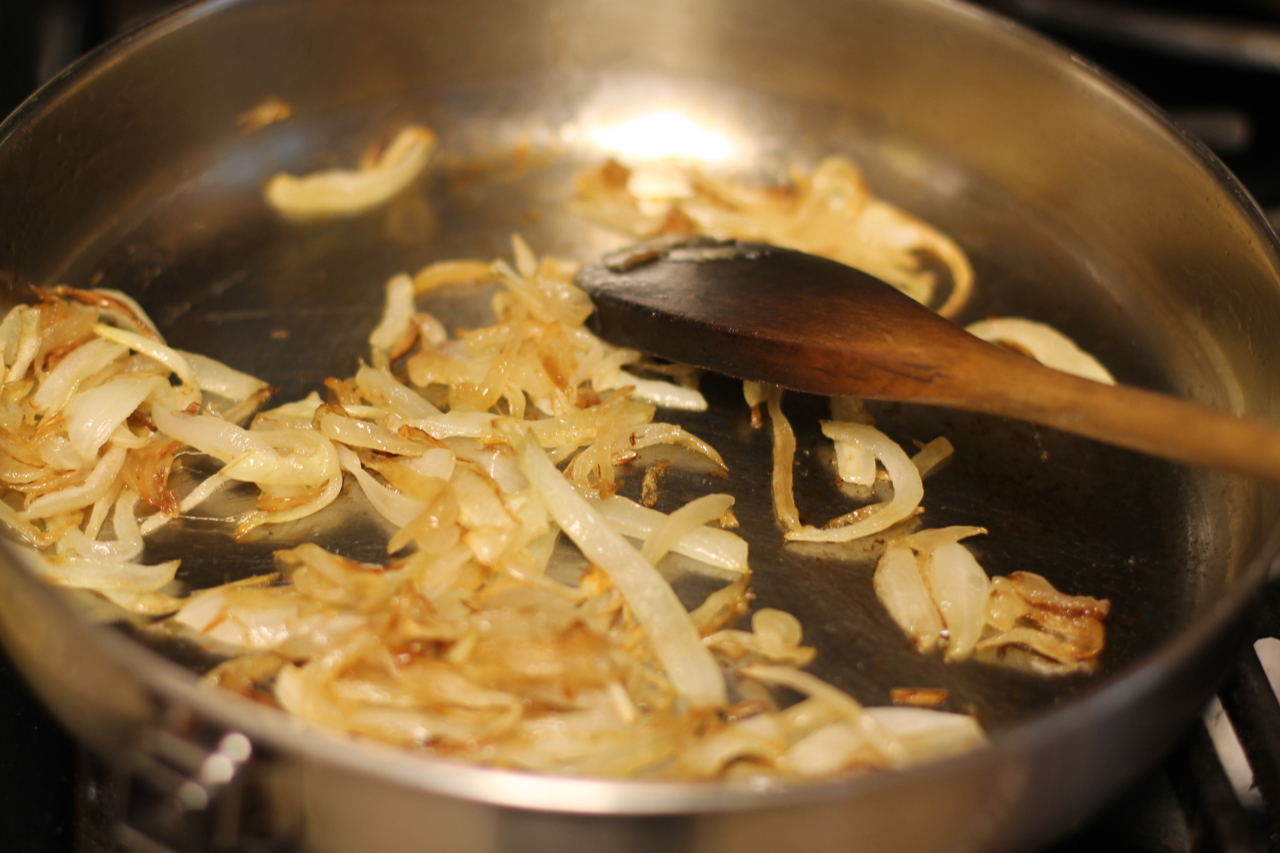
Browning the onions.

Directions

  • Garbanzo beans. Soak overnight and discard the soaking liquid. Add enough cold water to cover the beans. The water should be about 1 inch above the beans. Cook the beans for 3 hours. (You can use a pressure cooker, just adjust the time). They need to be cooked slowly for a long time until they are nice and soft. They can take up liquid after they are cooked so add more water if needed. Add 1 tsp salt when done.
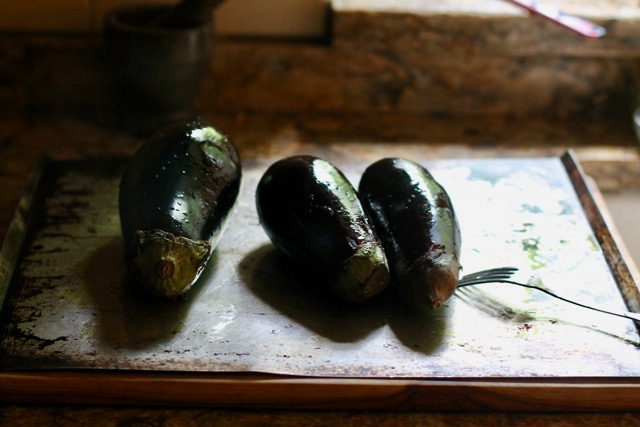
  • Preparing the eggplants. Wash and cut eggplants into cubes. Salt them and put them into a colander for 30 minutes to let the liquid drain. Pat dry.
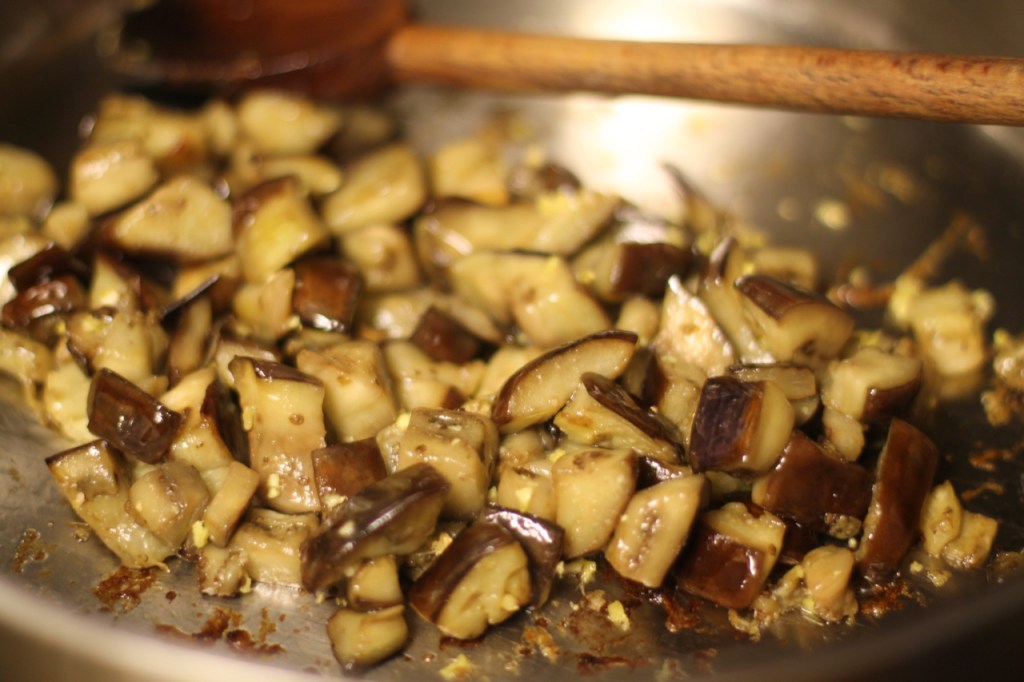
  • Frying the eggplants. In a wide skillet, on medium low heat, slowly brown the eggplants in some olive oil for about 20- 30 minutes or until soft. They will not cook any more so make sure they are soft and well cooked before you add it to the sauce. Stir frequently. Make sure they don’t burn. Set aside.
  • Caramelize the onions. Brown the sliced onions in a separate dish in oil with care, it takes about 30 minutes. Stir frequently. Set aside.
  • Making the sauce. Crumple the saffron between your thumb and index finger and add hot liquid, stir well (optional). Otherwise you can just put whole saffron strains in the dish. Set aside. On medium high heat warm up 1 Tbsp oil and add the ginger for 5 minutes. Then add the paprika, cumin, garlic and stir for 1 minute to activate the spices. Add the chopped tomatoes and stir well. You can add a little water here too. Cook the tomatoes for about 5 minutes until they have become ‘saucy’. Add the saffron, cinnamon stick, freshly graded nutmeg and hot pepper. Bring to a boil and turn down the heat. Cook for 10 minutes on low medium heat. Add a little water if needed. Add the browned onions, eggplants and garbanzo beans from earlier. Cook for 5 more minutes covered. Let the dish sit for 15 minutes so the flavors can come together. Take out the cinnamon stick and the hot pepper pieces. Add salt and pepper or anything else that needs to be adjusted.
  • Serve with cilantro, rice or couscous and yogurt sauce. I also added some baked sweet mama squash slivers and they nicely complemented each other.

enjoy!

Recipe, photo and text by twincitiesherbs.com.

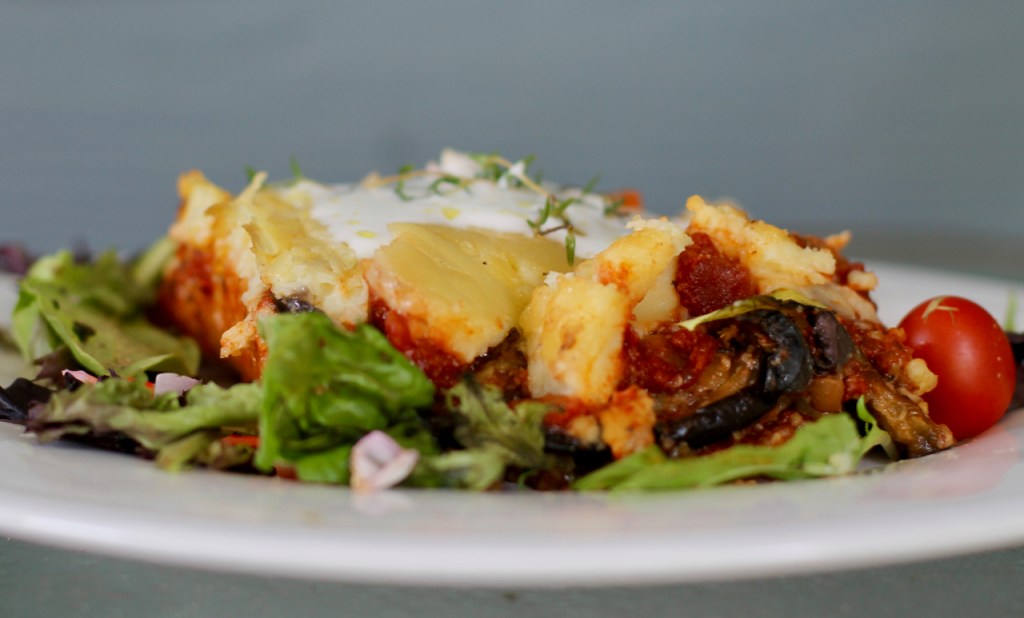
Vegetarian moussaka with polenta and lentils

I am excited to present my new recipe for a vegetarian moussaka. It is a vegetarian dish but is not only for vegetarians! I have to admit I was a bit nervous before I started experimenting but it was a fun challenge at the same time. I really like how nicely the soft polenta works with the mushrooms, the lentils and all the other ingredients. This recipe instantly became a family favorite as if it had been in the family for years!

We are going to venture into Europe again on our virtual journey. We think of Greece when we hear the word moussaka but most likely it originated somewhere in the Middle East. It is a popular dish across all the Balkan countries and can be easily made in the Midwest of the United States or anywhere. Well, I have to admit I have never been to Greece or the Middle East for that matter but have eaten traditional moussaka before… I can say moussaka is a very tasty dish!

When we were in Croatia last summer, we happened upon a fabulous vegetarian moussaka dish in Pula at the restaurant Konoba Bocaporta. It sounded really interesting so my husband and I both had to try it, while the kids ate something with seafood from the Mediterranean Sea. We don’t have the exact recipe, I was just inspired by this dish so I tried to recreate it here at home. I really like how it turned out.

The original recipe had polenta, eggplants and mushrooms in a vegan sauce. I am guessing the vegan sauce might have been made with cashews. I don’t have their recipe so for now I make it with Béchamel sauce and think it works well. The dish at the restaurant had polenta so instead of using potatoes that are usually used in moussaka dishes, I used polenta. I also did some research and found in fact polenta is often used traditionally.

This vegetarian moussaka is a complete vegetarian dish and all the ingredients seem to work well together. Often, when meat is taken out of a dish, the substance and the flavors are removed as well, so when I created this recipe, I tried to make sure that the substance and the flavors were both kept. The meat is replaced with the lentils, mushrooms and the cheese. Mushrooms are traditionally used with polenta and they complement each other nicely … and everything is pulled together with the fragrant spices of the region.

This recipe can easily be made gluten free. Instead of the Béchamel sauce use the yogurt sauce. This is a pretty authentic replacement as Croatians use a yogurt sauce for the top. Béchamel sauce is not Greek but is in fact French. The Béchamel sauce was added to Moussaka by the Greek chef Akis Petretzikis in the 1920’s when he was trying to Europeanize Greek cuisine. I actually use this yogurt sauce quite regularly to make simple lentil dishes but the Béchamel sauce is a nice treat for sure.

COOKING TIPS

  • Seasonings, seasoning and seasoning!!!! This dish needs a lot of seasoning and salt added. Don’t be alarmed when you see the amounts.
  • The smaller portobello mushrooms are nicer … they are easier to cook and will be tastier in the meal. The crimini mushrooms are very nice too.
  • Also I find the smaller/medium sized eggplants are easier to cut and are tastier in the dish as well.
  • This is not a quick dish, it takes a long time to make like any casserole dish but it is not difficult. It is usually made for occasions because of the complexity of the dish but you can treat yourself/family/friends to it anytime.

This is my version but please feel free to experiment and let me know what you did. If you post it, please reference this blog.

FUN FACT: One thing all the countries in the Balkan region agree on is that Moussaka is a fabulous dish.

I developed this recipe so if you would like to post it you will have to contact the author at twincitiesherbs.com.

RECIPE

Author: twincitiesherbs

Serves 4-6 people

INGREDIENTS

Quick overview of the ingredients as a group

LENTILS: 1 cup of uncooked lentils, oil, 1 large tomato, 3 cups of water, 3 cloves of garlic, 1/2 tsp paprika, 1 bay leaf, 2 tsp oregano, 1/4 tsp all spice, 1 cinnamon stick, 1 fresh thyme spring, 1 tsp salt and red pepper flakes (optional).

POLENTA: 1 cup of polenta, 3 cups of vegetable or chicken stock, 1 tsp salt, freshly ground black pepper, 1 thyme spring, 1 cup of graded hard cheese ( 1/2 cup of Gruyere, 1/2 cup of Parmesan cheese), 1 Tbsp butter or olive oil and 1/4 tsp freshly ground nutmeg

MUSHROOMS: Portobello mushrooms, oil, crushed garlic and 1 Tbsp balsamic vinegar.

EGGPLANTS: olive oil, 1 medium sized eggplants, 1/4 cup of tomatoes sauce, 2 cloves of garlic, 1 tsp oregano, salt and black pepper.

BÉCHAMEL SAUCE: 1/4 cup of butter, 1 /2 cup of flour, 2 cups of warm milk, 2 egg yolks, 1/4 tsp nutmeg, 1 tsp salt and ground pepper, 1 thyme spring, 1/2 cup hard cheese. Omit if using Yogurt sauce).

YOGURT SAUCE: Yogurt sauce in place of Béchamel sauce: 1.5 cups of yogurt, 1 tsp salt, 1 tbsp olive oil, 1 tsp cumin powder, 1 garlic clove, cucumber slices. (Omit if using Béchamel sauce).

DIRECTION

Preheat oven to 350 F.

Wash the polenta removing any foreign particles. Soak in cold water overnight.

Wash 1 cup of lentils and soak in cold water for a few hours hours.

Cooking the lentils. Remove soaking liquid. Discard. Add 3 cups of cold water. Cook covered for 1/2 hour or until lentils are soft. Turn off heat and let lentils stay in covered pot for about 15 minutes so they can soak up more liquid. Set aside.

Prepare the tomato sauce for the lentils. Chop up 1 large tomato. Warm up some oil, sauté the onion for 5 minutes or until translucent. Add 2 tsp oregano, fresh thyme springs, 1/2 tsp paprika, 1/4 tsp all spice and the crushed garlic. Stir well for 1 minute and quickly add the 1 chopped tomato. Cook for 5 minutes or until tomatoes become ‘saucy’. Bring to a boil and then turn down to medium heat and add the cinnamon stick. Cook for 10 more minutes covered on low medium heat. Set aside.

Cooking lentils. Drain the cooking water off the lentils. Discard. Combine the tomato sauce with lentils. Take out all the larger spice pieces. Set aside.

Preparing the eggplant. Slice the eggplants and pan fry them. Please, check my previous recipe for cooking Eggplant Parmesan for directions. (You can also bake the eggplants in the oven if you prefer). Set aside

Preparing the polenta. Discard soaking water. Bring 3 cups of stock to a boil. Add the drained polenta slowly while stirring constantly. Add 1 thyme spring and cook for about 20 minutes or until the polenta is creamy. Stir frequently because it can burn easily. When done add 1 Tbsp butter or olive oil, 1 tsp salt, cheese, thyme and stir. Set aside.

Preparing the mushrooms. Slice up mushrooms. Warm up some oil and sauté the mushrooms until soft on medium high heat. At the end, add a little crushed garlic and saute for 1 minute. Turn off heat and add freshly ground pepper and 1 Tbsp of balsamic vinegar. Stir. Set aside.

Preparing the Béchamel sauce. It is not too hard just follow the steps. I used a double boiler and a whisk. Warm up 1 stick of butter on low heat in the top portion of the double boiler, when melted increase the heat to medium high and add the flour slowly, stirring continuously. Then start adding the milk slowly, stirring after each addition to let the flour mixture soak up the milk. When you start seeing bubbles, it is done. Take off heat. Grade some nutmeg. Add 1/4 cup of Gruyere cheese, thyme, salt and 2 egg yolks. Mix well. Set aside.

Yogurt sauce in place of the Béchamel sauce. This recipe can easily be made gluten free if you you prefer. Instead of the Béchamel sauce use 3 cups of yogurt, 3 lightly beaten eggs, garlic, salt, freshly ground black pepper, 1/4 tsp nutmeg, 1/2-1 cup cheese. Follow instructions for Béchamel sauce.

Mix the polenta and the lentils.

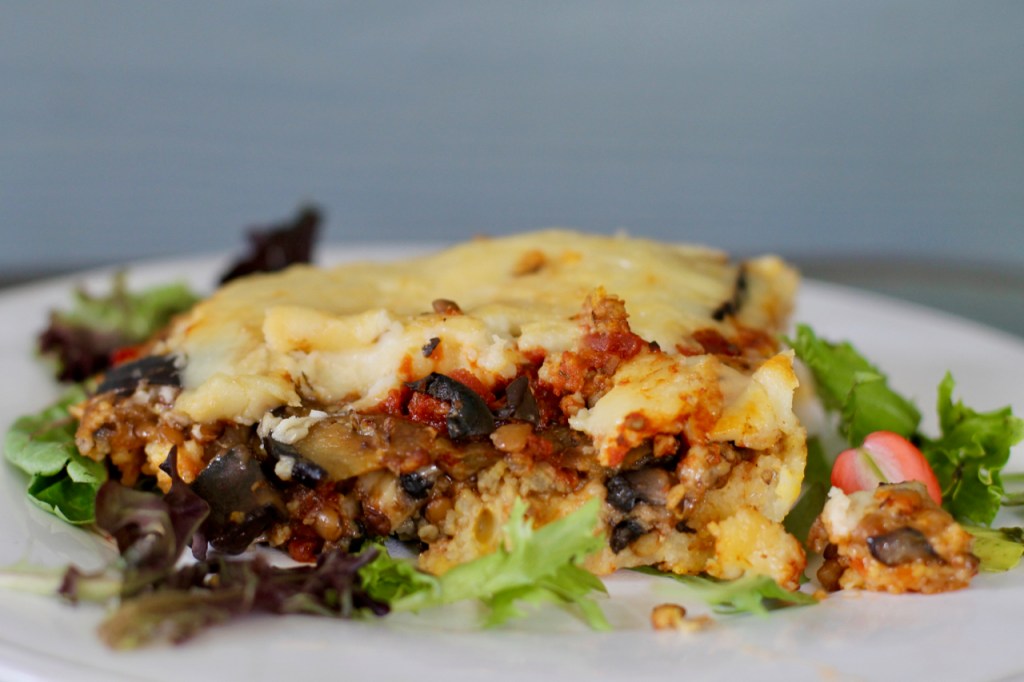
From here, everything is easy! Preheat oven to 350 F. I used a 2 QT size baking dish (8×11.5 x 2 in). Coat the bottom of the dish with a thin layer of tomato sauce. Start layering: polenta with the lentils, mushrooms, eggplants, the Béchamel sauce or the gluten free yogurt sauce and 1 cup Parmesan/Gruyere cheese on the top. Put the dish into the oven and bake for 45 minutes or until the top is golden brown.

Wait for at least 1 hour to let the flavors melt into each other. The dish should not be runny so you might have to wait longer until it sets.

Serve hot with yogurt, scallions, parsley.

enjoy!

Recipe, photo and text by Twincitiesherbs.

Turkish stuffed eggplants (vegetarian)

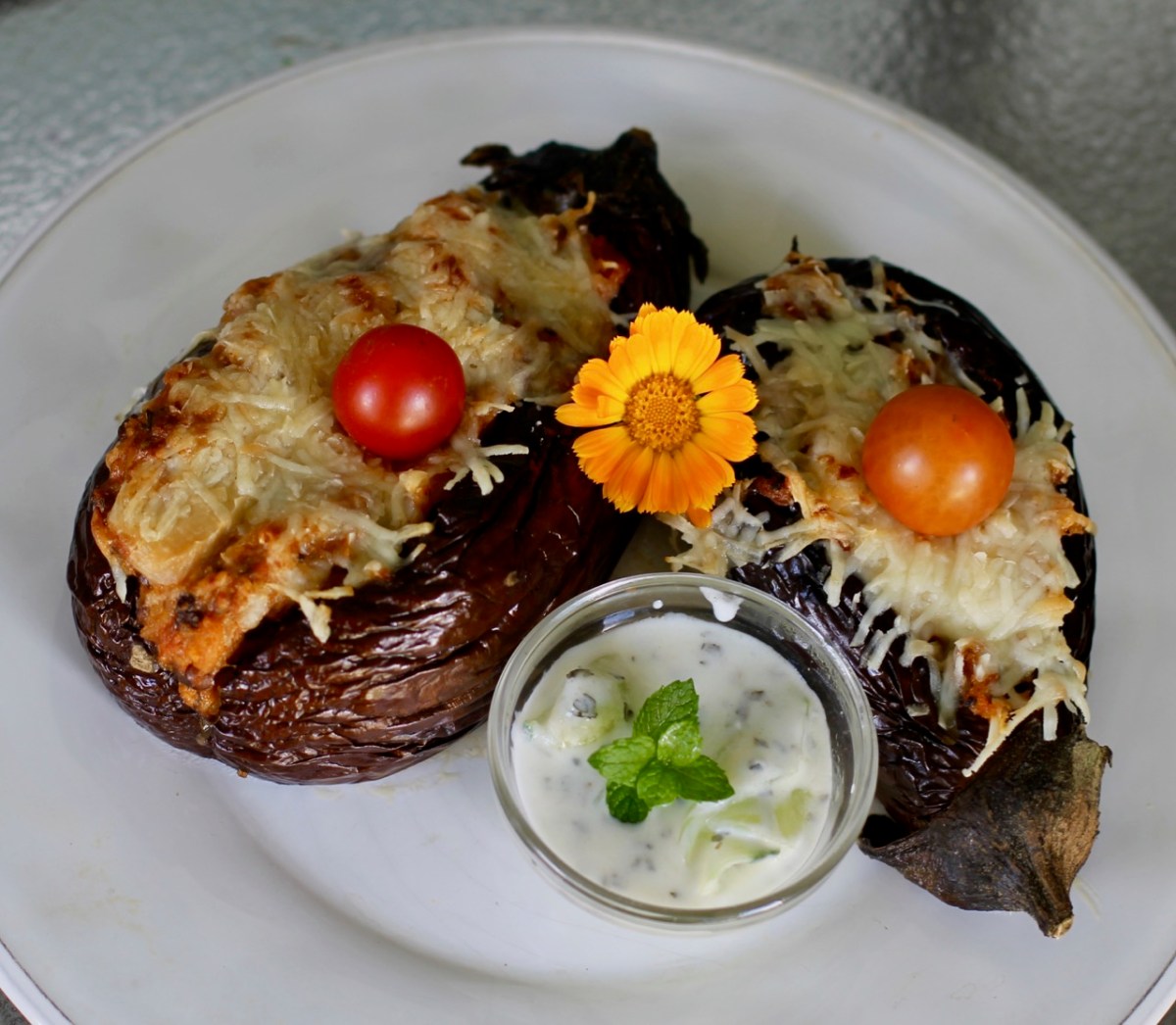
This is the vegetarian version of my previous recipe, the Turkish stuffed eggplants (karni yarik). I tried to keep the recipe’s Turkish authenticity but otherwise it is my creation. I replaced the meat with lentils, eggs and cheese and used oregano in the place of mint. I also used more tomatoes to keep the mixture moist. All these ingredients are used in Turkey and hope you will like it as much as I did. If you try it please let me know in the comment section how you liked it.

I can’t help but notice the abundance of goods at the farmers’ market. The tables are filled with all kinds of fruits and vegetables. In fact, it is the time of the year when they have the most varieties available. For today’s post I picked eggplant.  

We associate eggplants with the Middle East but it actually originated from India and has also been popular in other Asian countries for a long time. Today, it is used all over the world.  In Europe, it was a staple until potatoes arrived from the New World. The Turkish have certainly created many recipes with it and believe that they have the best eggplant dishes. The Spaniards had brought it over to the Americas in the 1600s. Eggplants have been used in the United States; however, earlier, people didn’t really know what to do with them. Many just used them for decorations only.

Eggplants come in all kinds of shapes and colors. Shapes can be round or more elongated and the colors can vary from white, green to purple.  In the United States, the rounder, purple, more oblong eggplant is usually available in stores. For this recipe, try to buy these medium sized, fat, purple eggplants that I have pictures of. Also, make sure they are about the same size because different sizes will vary their cooking times. Also they should be nice and firm.

Eggplants belong to the night shade family along with tomatoes and potatoes. It is a cooling bitter plant that is highly nutritious with vitamins A, B, C, K1, E and minerals manganese, magnesium, copper, potassium, calcium, iron, phosphorus, and zinc. An interesting fact is that we often believe that it is a vegetable but in fact it is a fruit. Also, it is thought to be aphrodisiac.

In addition to its nutritional values, people have been using eggplants for other health benefits too. Asians like to use them for their cooling property. It is good for digestion, particularly for stagnation and heat. It helps clear heat that gets trapped during the warmer months. This makes it a valuable plant now, during the Indian summer. In addition, its antioxidants can protect the liver from toxins.

It is also associated with fertility from its ability to unblock stagnation in the liver and the womb. In China, brides are supposed to posses 12 eggplant recipes before they got married. However, pregnant women are advised to limit the consumption of eggplants because of the possibility of miscarriage. 

List of my other eggplant dishes

Recipe

Ingredients

  • 1 cup of cooked rice (about half a cup raw)
  • about 1/4 cup of olive oil
  • 4 medium, equal sized purple eggplants. Try not to get different sizes because they need different cooking times.
  • 1 cup cooked lentils (about 1/2 cup uncooked)
  • 4 oz mushrooms, chopped (I used crimini).
  • 2 lightly beaten eggs
  • 1 finally chopped yellow onion
  • 1 finally chopped peppers (green, red, yellow-your choice)
  • 2 cloves of garlic
  • 1 Tbsp cumin
  • 1 Tbsp dried oregano
  • 1/2 tsp paprika powder
  • 1/4 tsp hot red pepper flakes
  • 1 tsp salt or to taste
  • 6 fresh plum tomatoes or other tomatoes (canned is fine too)
  • 1 cup hard cheese + more for the top
  • freshly ground black pepper to taste
  • 1/2 cup flat leafed parsley

Direction

  • Soak the lentils for a few hours if you have time.
  • Cook lentils.
  • Prepare rice with bay leaves. Use 1/2 cup of rice with 1 cup of water.
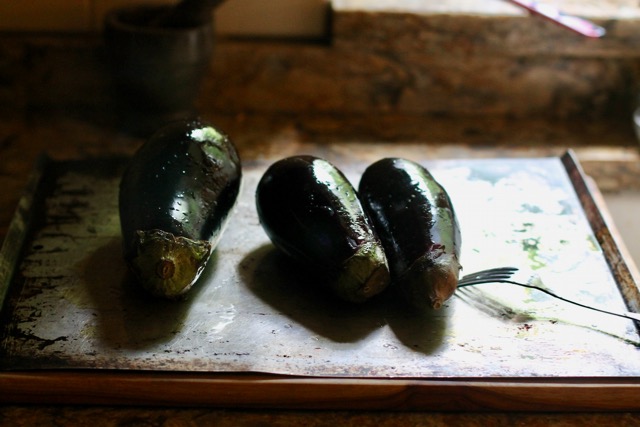
  • Bake eggplants. Preheat oven to 350 Fahrenheit. Wash eggplants and put them on an oiled baking sheet. Prick them with a fork in 6-8 places, half inch deep to prevent them from exploding in your oven. Coat them with some olive oil with a brush. Bake them for 45 – 60 minutes or until they are nice and soft, so you can put the blade of a knife through easily. You don’t want them to be hard but they shouldn’t collapse either. Once they start becoming soft, keep an eye on them. If you’re using larger eggplants, you will have to cut them in half lengthwise. Oil the top and proceed like you do with the smaller ones.
  • When ready take them out and let them cool..
  • Prepare the stuffing. Sauté the onion in the oil. When onions are soft but not brown, add the green pepper pieces and continue sautéing the for about 10 – 15 minutes. Add spices (oregano, cumin, paprika), crushed garlic and stir. Then add tomatoes. Cook for about 10 minutes or until tomatoes are well cooked and there is a nice sauce. Take off the heat.
  • Put mixture into a bowl. Add rice, lentils, eggs, salt, ground black pepper, hot pepper flakes and graded cheese (I used 1 cup). Mix.
  • Sauté mushrooms and add to the previous mixture. Mix.
  • Preheat oven to 400 Fahrenheit. Gently cut a slit in the middle down from the top of a whole eggplant making sure you don’t cut through the skin on the bottom. Take out the seeds. You can use the seeds to make babaganoush or just simply discard them.
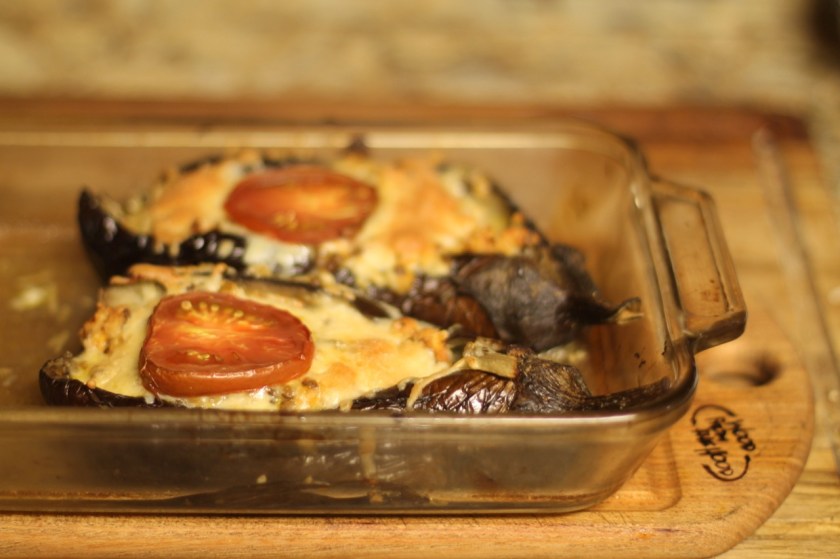
  • Just like its Turkish name, karni yarik, splitting belly suggests, stuff the inside of the eggplants, their bellies with the stuffing. You can put a little graded cheese and a thin slice of tomato on the top. Put eggplants in a baking dish. Pour boiling water into dish about 1 inch deep. Place dish into the oven and bake for 30 minutes. Take them out when top is brown. Let them cool.
  • Cut off the ends before serving them.
  • Serve warm with cucumber yogurt sauce.

Yogurt Sauce

Ingredients

  • 1 1/2 cups of yogurt
  • 1 longer English, slicing cucumber
  • 1/2 tsp salt
  • 2 cloves of garlic
  • 1 Tbsp of vinegar
  • 2 Tbsp of olive oil
  • 1 Tbsp of dried mint
  • fresh mint

Preparations

  • Peel and slice the cucumber. Place the slices in a bowl, salt and let it sit for 15 minutes. Salting is optional. Strain, squeeze out and discard the liquid.
  • In a separate bowl mix together all the other ingredients, stir well. Put in the cucumbers and gently stir mix them in.
  • Garnish with fresh mint. Serve with the eggplants.

enjoy!

Sources

  • Paul pitchford: Healing with Whole Foods
  • Sally Fallon: Nourished Traditions
  • Nancy Harmon Jenkin’s Mediterranean Diet cook book.  

Text, recipe and photo by twincitiesherbs.com.
Turkish stuffed eggplants with lamb (Karni Yarik)

I can’t help but notice the abundance of goods at the farmers’ market. The tables are filled with all kinds of fruits and vegetables. In fact, it is the time of the year when they have the most varieties available. For today’s post I picked eggplant.  

We associate eggplants with the Middle East but it actually originated from India and has also been popular in other Asian countries for a long time. Today, it is used all over the world.  In Europe, it was a staple until potatoes arrived from the New World. The Turkish have certainly created many recipes with it and believe that they have the best eggplant dishes.  The Spanards had brought it over to the Americas in the 1600′. Eggplants have been used in the United States; however, earlier, people didn’t really know what to do with them. Many just used them for decorations only.

Eggplants come in all kinds of shapes and colors. Shapes can be round or more elongated. The colors can vary from white, green to purple.  In the United States, the rounder, purple eggplant is usually available in stores. For this recipe, try to buy these smaller, medium sized, fat, purple eggplants that I have pictures of. Also, make sure they are about the same size because different sizes will vary their cooking times. Also they should be nice and firm.

Eggplants belong to the night shade family along with tomatoes and potatoes. Eggplant is a cooling bitter plant that is highly nutritious with vitamins A, B, C, K1, E and minerals manganese, magnesium, copper, potassium, calcium, iron, phosphorus, and zinc. An interesting fact is that we often believe that it is a vegetable but in fact it is a fruit. Also, it is thought to be aphrodisiac.

In addition to its nutritional values, people have been using eggplants for other health benefits too. Asians like to use them for their cooling property. It is good for digestion, particularly for stagnation and heat. It is beneficial in clearing heat that accumulates during the warmer months but it is still a valuable plant now, during the Indian summer as it can take out heat that may have been trapped in during the summer. In addition, its antioxidants can protect the liver from toxins.

Eggplants are also associated with fertility from their ability to unblock stagnation in the liver and the womb. In China, brides were supposed to have 12 eggplant recipes before they got married. By the same token, pregnant women are advised to limit the consumption of eggplants because of the possibility of miscarriage. 

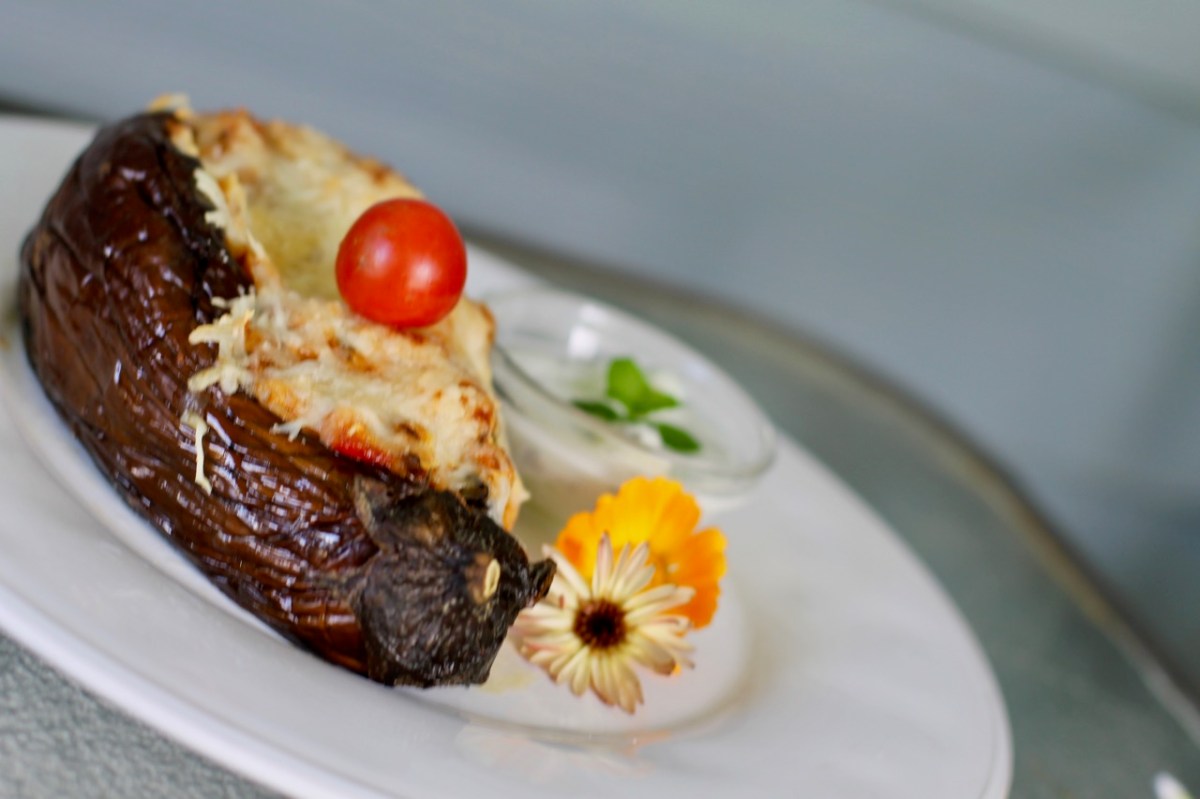
My recipe is the Turkish Karni Yarik that means ‘splitting belly’. If you look at the picture, this will make more sense. You basically stuff the inside, the belly of the eggplant. The warming lamb meat pairs nicely with the cooling eggplant with a hint of mint.  When I was in Turkey, I remember this dish was always on the menu and I really liked it. Please see my next post for its vegetarian version if it interests you.

RECIPE

Ingredients

  • 1 cup of rice (about half a cup raw)
  • 1/4 cup of olive oil
  • 4 medium, equal sized purple eggplants. Please see description above.
  • 1 lb of ground lamb
  • 1 finally chopped yellow onion
  • 1 finally chopped peppers (green, red, yellow-your choice)
  • 1 Tbsp cumin
  • 1 Tbsp dried peppermint (You might not have mint in your pantry. People usually use mint in teas and don’t cook with it. It can be found at the spice section of a grocery store or at herb stores).
  • 1/2 tsp Hungarian sweet paprika powder
  • 1/4 tsp of hot red pepper flakes
  • 1 tsp of salt or to taste
  • 3 fresh ripe plum tomatoes or canned
  • hand-full of hard cheese (optional)
  • freshly ground black pepper to taste
  • fresh mint to garnish
  • 1/2 cup of flat leafed parsley

Preparation

  • Cook 1/2 cup of rice in 1 cup of water. You can add bay leaves if you wish.
  • Bake eggplants. Preheat oven to 350 Fahrenheit. Wash eggplants and put them on an oiled baking sheet. Prick them with a fork in about 6-8 places, half inch deep to prevent them from exploding in your oven. Coat them with some olive oil with a brush. Bake them for 45-60 minutes or until they are nice and soft, so you can put the blade of a knife through easily. You don’t want them to be hard but they shouldn’t collapse either. Once they start becoming soft, keep an eye on them. If you’re using larger eggplants, you will have to cut them in half lengthwise. Oil the top and proceed like you do with the smaller ones.
  • When ready take them out and let them cool. Set aside.
  • Prepare the stuffing. Sauté the onion in the oil. When onions are soft but not brown, add peppers and continue sautéing for about 10-15 minutes. Add spices (mint, cumin, paprika), crushed garlic and then the tomatoes. Cook for about 10 minutes or until tomatoes are well cooked and there is a nice sauce.
  • In a separate pot, warm up some oil and sauté the lamb quickly for about 7-10 minutes. If lamb is not fatty enough, you might have to add more olive oil.
  • Take off heat. Put the stuffing mixture into a bowl. Add rice, lamb, meat, salt, pepper, parsley and hot pepper flakes. It is optional but I also added graded cheese (I used 1/2 cup). Mix. (The stuffing can be made a day ahead).
  • Preheat oven to 400 Fahrenheit. Gently cut a slit in the middle down from the top of a whole eggplant making sure you don’t cut through the skin. Take out the seeds. You can use the seeds to make babaganoush or just simply discard them. Just like its name suggests, stuff the inside of the eggplants, their bellies with the stuffing. You can put a little graded cheese and a thin slice of tomato on the top. Put eggplants in a baking dish. Pour boiling water into dish about 1 inch deep. Place dish into the oven and bake for 30 minutes.
  • Take them out of the oven when top is brown. Let them cool.
  • Cut off the ends before serving them.
  • Serve warm with cucumber yoghurt sauce.

Yoghurt sauce (cacik)

Ingredients

  • 1 1/2 cups of yoghurt
  • 1 longer English, slicing cucumber
  • 1/2 tsp salt
  • 2 cloves of garlic
  • 1 Tbsp of vinegar
  • 2 Tbsp of olive oil
  • 1 Tbsp of dried mint
  • fresh mint

Preparation

  • Peel and slice the cucmber. Place the slices in a bowl, salt and let it sit for 15 minutes. Strain, squeeze out and discard the liquid.
  • In a separate bowl mix together all the other ingredients, stir well. Put in the cucumbers and gently stir mix them in.
  • Garnish with fresh mint. Serve with the eggplants.

enjoy!

Sources

  • Paul pitchford: Healing with Whole Foods
  • Sally Fallon: Nourished Traditions
  • Nancy Harmon Jenkin’s Mediterranean Diet cook book.  

Text, recipe and photo by twincitiesherbs.com.
Hungarian spaghetti squash stew (tökfözelék)

Some like it white, some like it red … others use flour, some don’t … and could be served hot or cold …  Well, I like it red with flour and served hot. The red color comes from the paprika and the others should make sense. This is one of my favorite recipes and I believe it would make a nice transition into the late summer days as well.

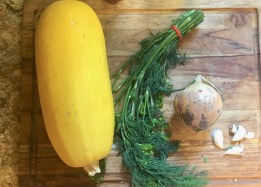
This dish is based on the Hungarian tökfözelék recipe. The sweet spaghetti squash definitely is the main ingredient. It is growing right now and would be perfect for the end of the summer. The other important ingredient that everybody uses regardless of other preferences is dill.

Dill is a unique sweet plant that gives the zesty, tangy flavor with slightly bitter undertones. It helps digestion and calms the mind. I like to balance the sweet flavor with pungent flavors, in this case, the onions and the garlic will do that. Of course, we also have the sour, acidic flavor from the vinegar and the Hungarian staple, sour cream. At the end, we add the salt to create this pleasant sweet and sour dish.

RECIPE

Ingredients

  • vegetable oil (sunflower)
  • 1 larger onion, chopped, or graded
  • 1 Tbsp flour
  • 1 tsp sweet Hungarian paprika powder
  • 1 garlic clove, crushed
  • 1/4 cup cold water
  • 1 smaller spaghetti squash (about 2 lb) (Not exactly what we use in Hungary but it is a perfect substitute).
  • 4 cups chicken stock or water
  • 4 dill springs, (about a hand-full)
  • sour cream
  • 1 tbsp white vinegar
  • salt and pepper to taste
  • red pepper flakes to taste

Preparation

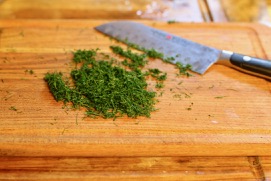
chopped dill

Using the large hole grater
grated squash

  • Prepare the spaghetti squash. Peel and grate through the larger holes of your cheese grater.
  • Soak in 2 tsp salt for 20 minutes. Squeeze water out. This step will make the squash less watery and taste better.
  • Chop the onion fine or you can grate too.
  • Have a 1/4 cup of cold water ready.
  • Sauté the onion with a pinch of salt in a little oil until translucent. When you can smell the aroma of the onion, add paprika powder and garlic, stir and after 1 minute add the cold water quickly that you set aside earlier. Stir.
  • Add the squash meat, stir and cover with water or stock.
  • Bring to a boil and then turn down to medium heat and cook covered for 30 minutes.
  • Also mix 1 Tbsp of flour with cold little water and add a little hot liquid from the dish. Whisk well and add it to the dish.
  • Bring the dish to a quick boil, cook for a few minutes and turn heat off.
  • Add vinegar, salt and pepper. Stir.
  • You can serve immediately but it will taste the best the next day.
  • Serve with chopped dill, a dab of sour cream and some protein (egg or beef dishes would go well). I served it with my Eggplant Parmesan dish. The bitter eggplants complemented this sweet and sour dish nicely.

Enjoy! Jó étvágyat!

Text, photos, recipe by twincitiesherbs.

Pesto

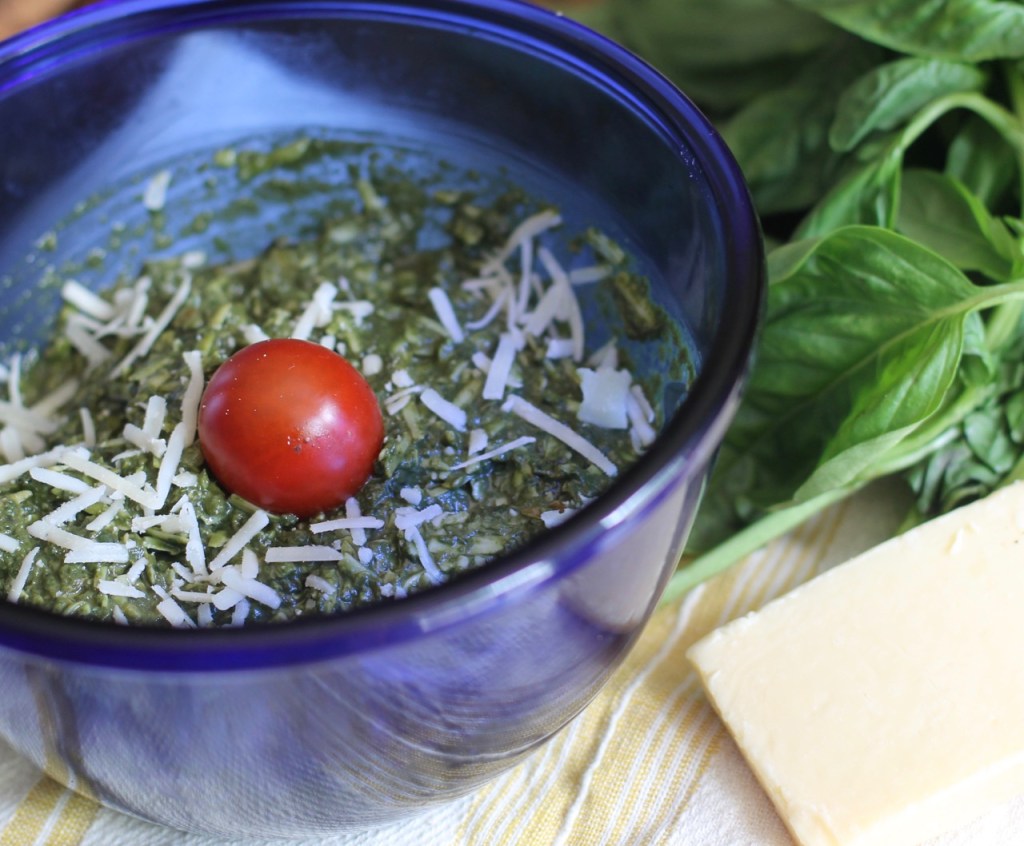
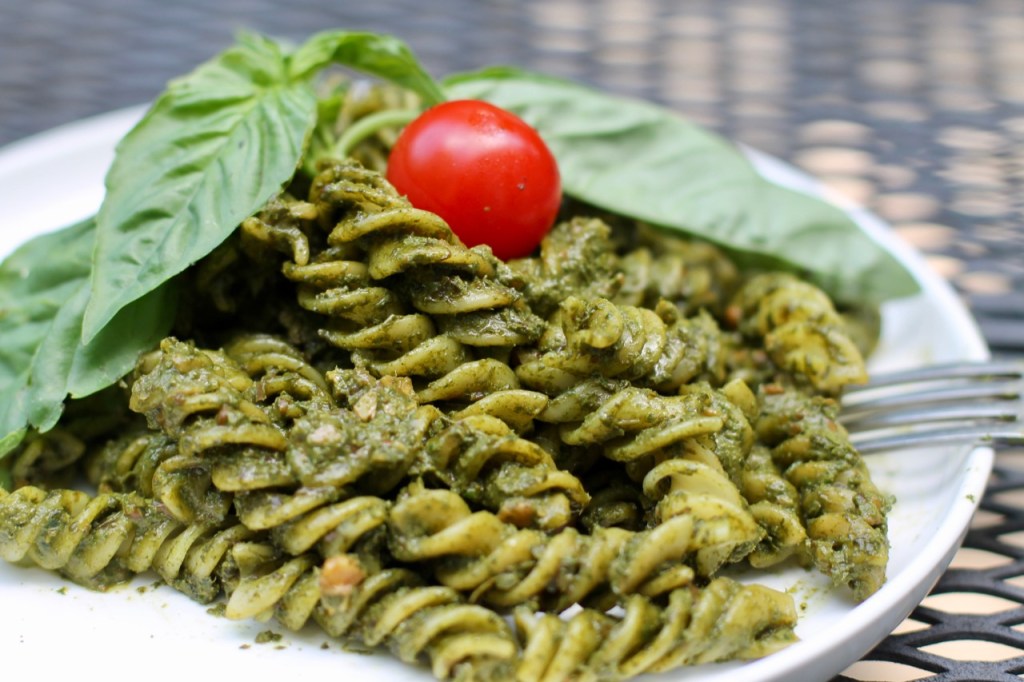
Pesto is a nice sauce to serve on pasta on a hot summer day. We just spent some time in the Mediterranean region where it was very hot. Pesto was great to eat during the day just to satisfy our quick hunger. I really like how the fragrant basil with all its ingredients olive oil, cheese, garlic, and pine nuts can create such a unique dish. Just make sure you use the best ingredients you can find!

Pesto is a unique and delicious sauce that originated in Genoa, Italy, around the 16th century. Originally, it was made in mortars and according to Genoese cooks, pesto can only be made in mortars. In fact, its name or its verb version ‘pestare’ means to pound and grind. Today, we have food processors that would be a fine replacement, just keep in mind that pesto is meant to be pounded and not so much chopped so in other words don’t over process it in the food processor and fold the cheese in at the end by hand.

Recipe

Ingredients

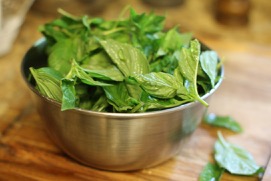
  • 4 cup tightly packed fresh basil
  • 1 cup fresh, cold pressed olive oil
  • 1/2 cup chopped up pine nuts (walnuts are fine too)
  • 4 garlic cloves
  • salt
  • 1 cup freshly grated parmi-giano-reggiano cheese
  • 4 Tbsp grated romano cheese (optional)
  • 1 pound of pasta (farfarelle or any pasta with a large surface area)

Directions

  • Take the leaves off of the stems and wash them well in cold water. Clip off the flowering tips and any brownish leaves if there are any. Put them in a colander and let the water drain off. By the time you have everything else ready the basil should be ready too.
  • Start boiling water for the pasta. Continue according to the package. Drain the liquid. Save 4 Tbsp cooking water for the pesto. Set aside.
  • Measure out all the ingredients.
  • Chop up the garlic with the blade of a sharp knife.
  • I do not have a mortar but I have a small food processor. The following directions are for a food processor. Put the basil in the food processor and process until chopped. (You are chopping at this stage). Add olive oil, pine nuts, chopped garlic, salt and chop quickly, gently just until they are nicely blended.
  • Transfer this mixture into a clean bowl. You will continue mixing in the cheese with a spoon by hand. (Please see explanation above).
  • When adding the pesto to the pasta, add 2-4 Tbsp of the reserved pasta water.
  • Serve with vegetables at room temperature.

enjoy!

Sources

Marcella Hazan: Essentials of Classical Italian Cooking

Native American black bean burger

Summer is here and burgers are great for summer grilling! The combination of black beans, wild rice and quinoa make a tasty American burger. Each one is native to the Americas and has a rich history. Usually I am not a big fan of food substitutes but I think this is very tasty. It seems like this burger even tricks my feisty, meat lover corgi too. Seriously, he just sits and stares at me, hoping to get a little.

The moist burgers are highly nutritious and easy to take on trips. Oh and those mushrooms are mouthwatering … Just remember, the beans and the quinoa need to be soaked ahead before you cook them. 

There is always a pot of beans soaking in traditional Latin American homes, a pot waiting to be cooked for the next meal. As soon as a meal is finished, the preparation for the next one starts. And they eat beans for almost every meal.

Why should the beans be soaked? Wouldn’t cooking them for a longer time be enough? Beans and quinoa are nutritious but they also contain particles that actually can cause problems if not removed.  These anti-nutrient particles such as phytic acid, enzyme inhibitors can be only removed by soaking. In addition, to cost, this is also a good reason to make your own beans :). Remember to pour off the soaking liquid and add fresh cold water for cooking.

Black Bean Burger Recipe

  • Makes 8- 10 burgers
  • The inspiration for this recipe came from Heid E. Erdrich’s Original Local cookbook.

Ingredients

  • 1 cup of dried black beans (heirloom is the best if you can get it) or 1 can (14oz), rinsed and drained well.
  • 1/2 cup of uncooked wild rice (preferably the hand harvested )
  • ¼ cup of quinoa (or replace with 1/4 cup of wild rice) 
  • 1 tsp cumin
  • 1 tsp coriander
  • 1 egg, lightly beaten
  • 1 tsp paprika
  • ½ tsp salt
  • 1/8 tsp ground black pepper or to taste
  • 1 tbsp oil (olive, sunflower)
  • 2 cloves garlic
  • ½ cup bread crumbs
  • 1/4 tsp dried hot pepper (optional)
  • oil for cooking the patties (sunflower, grape seed)

To garnish  

  • 1 onion thinly sliced and sautéed or raw
  • 8 – 10 heads of portobello mushrooms grilled or cooked
  • lettuce, arugula
  • mustard
  • ketchup
  • 8- 10 buns
  • cheese
  • tomato slices
  • mayonnaise
  • pickles
  • sheeps’ milk cheese

Directions

  • Soak beans and quinoa (if used) overnight or at least for 8 hours. 
  • After 8 hours, rinse water off of the beans. Place them in a bigger pot, cover well with water, bring to a boil and turn down the heat. Cook for 2 hours covered on low heat. You can also use a pressure cooker to cook the beans (check pressure cooker manual for cooking time).
  • Rinse the quinoa. In a small pot add the rinsed quinoa and 1/2 cup of water. Bring it to a boil, turn down and cook on low heat covered until the liquid is absorbed, for 12-15 minutes. (omit if using wild rice instead).
  • Cook wild rice in 1 cups of water. Bring it to a boil and then turn the heat down and cook for 20 minutes half way covering the pot. Do not cover the pot completely. (Use 1.5 cup of water for 3/4 cup of wild rice).
  • In a large bowl, mash the cooked beans leaving it a bit chunky. This is a quick and easy process, I would not use a machine to do this step.
  • Add the cooked quinoa, cooked 3/4 cup of wild rice and the rest of the ingredients. Mix thoroughly. 
  • With your hand, form 4 patties.
  • Heat a pan with some oil over medium heat.
  • Place the patties in the pan and cook them for 5 minutes on each side. Use a wide spatula for turning and taking the patties out. 
  • Slice the onions. Sauté the onions for about 10-15 minutes over high medium heat or until they turn slightly brown. (If using).
  • Sauté the portobello mushroom heads in a little oil for 10-15 minutes or until mushrooms are soft. (If using).
  • Serve patties warm and garnish with condiments, vegetables of your choice. See earlier suggestions.

enjoy!

Sources