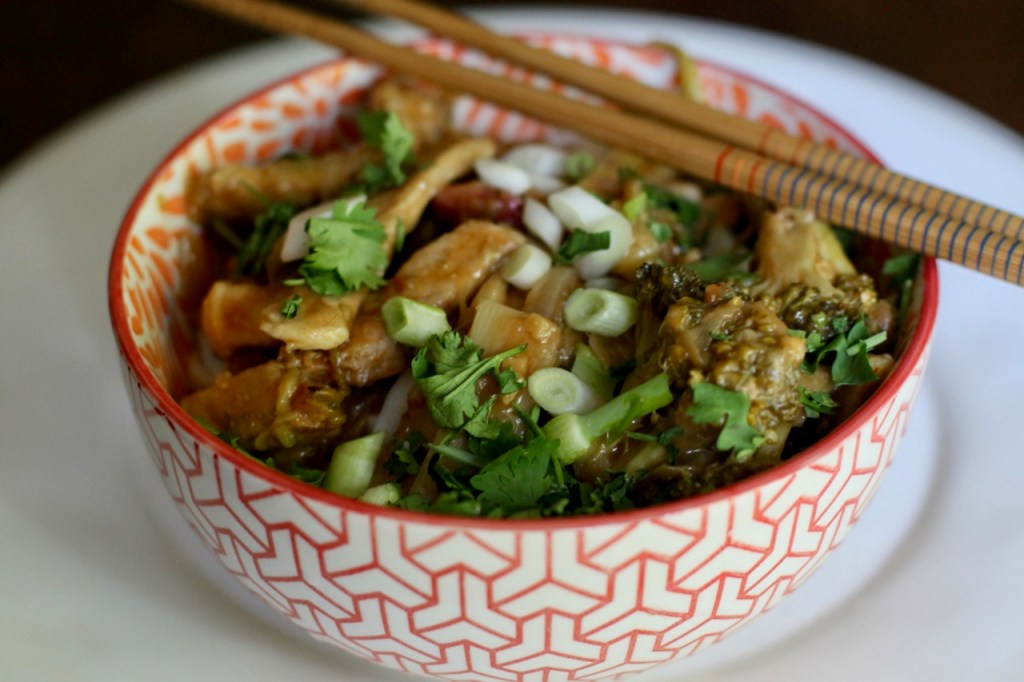
Sweet and sour pork with rhubarb

In the United States and Europe, rhubarb is known as the pie plant and in fact we tend to use it in sweet dishes. However, in Asia, it is more used in savory dishes. Today, I’m presenting a savory dish that was inspired by a blog. The rhubarb gives the sour taste that is balanced out nicely with the sweet and hot Chinese sauce and the bitter bamboo shoots. I chose broccoli as the main vegetable for the dish. If you prefer a vegetarian alternative, please check out my previous recipe that is a similarly made with tofu.

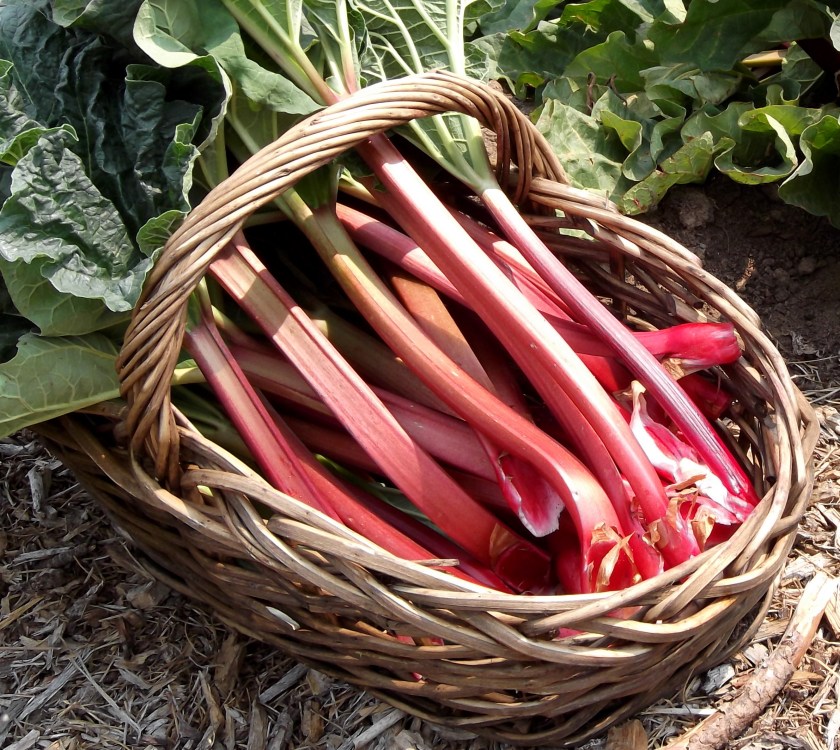
Rhubarb is everywhere here in the Midwest right now. It is almost ready in my garden but it has been available for a few weeks at the farmers’ market. It is actually a healthy plant. Rhubarb is great for health in the spring and the summer as it is cooling and detoxifying to the liver exactly what our body needs.

So what’s up with the ketchup? Is it Chinese? … I think of American cooking when I hear the word ketchup but in fact it originated from China. It is basically a sweet and tangy sauce made with tomatoes, sugar, vinegar and spices. It actually means fish sauce as they traditionally added fermented fish sauce to it. For this recipe, we just need the basic ketchup so feel free to use store-bought ketchup – unless of course you want to make it yourself.

This is a very tasty dish! I really wanted to make a dish with rhubarb then I found this recipe. I made a few changes to suit my taste. I cut the pork into long strips instead of squares. I replaced the green peppers with broccoli (you can use both). Also, I wanted to bring in more of the bitter flavor so I added bamboo shoots to offset the sourness of the rhubarb. For garnishing, I also added peanuts to get a bit of crunchiness. I think this is a fabulous recipe with an interesting twist to the usual sweet and sour pork dish that is served in restaurants with pineapples.
RECIPE

Ingredients

  • 300 g pork fillet, cut into thin long stripes or 1 inch cubes
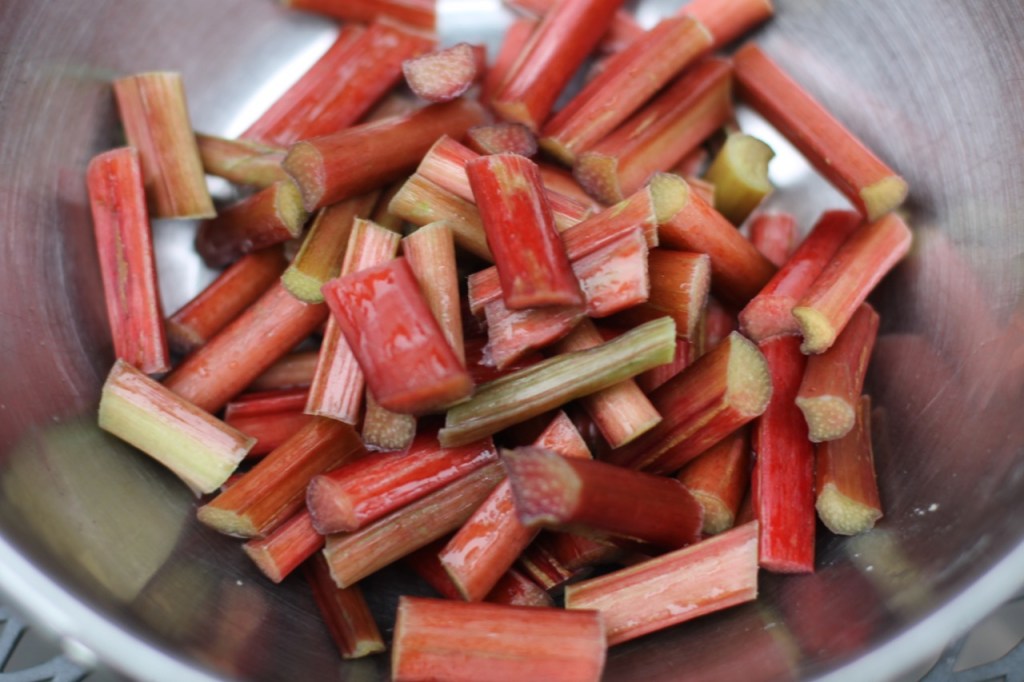
  • About 3 medium stems of rhubarb (200 g) cut into 1 inch batons – please use a scale
  • 1 Tbsp brown sugar
  • 1 large onion, peeled, halved and cut into thin slivers
  • 2 heads broccoli
  • 1 thumb of ginger, peeled and chopped (1 Tbsp)
  • sesame oils
  • 1 small can of bamboo shoots
  • rice or rice noodles

Marinade

  • 1 Tbsp soy sauce
  • 3 Tbsp rice vinegar
  • 1 tsp honey
  • 1 garlic clove, peeled and crushed
  • 1 Tbsp grated ginger, peeled
  • 1 Tbsp corn starch

Sauce

  • 2 Tbsp tomato ketchup
  • 4 tbsp rice vinegar
  • 1 tsp honey
  • 1 Tbsp sesame oil
  • 2 Tbsp soy sauce
  • 1 Tbsp cornstarch
  • 1 cup water
  • 5 cloves garlic, finely chopped

Garnish

  • 1 spring onion, finely sliced
  • 1 red chili pepper, finely chopped (optional)
  • cilantro
  • handful of chopped peanuts
  • soy sauce

Instructions

  1. Prepare rice according to its instructions. I used rice noodle last time.
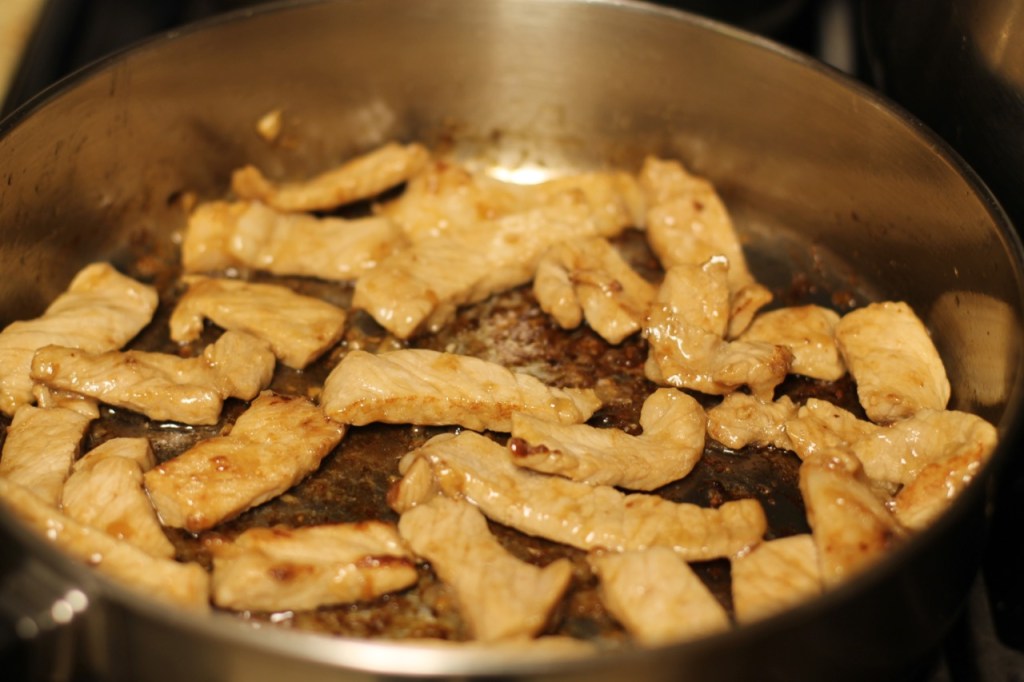
  2. Cut the pork pieces into longer (2 inches), thin (half inch) stripes. You can do squares too but the Chinese do long stripes traditionally.
  3. Whisk together the ingredients for the marinade, add the pork, cover well. Let it marinate overnight or at least a half an hour.
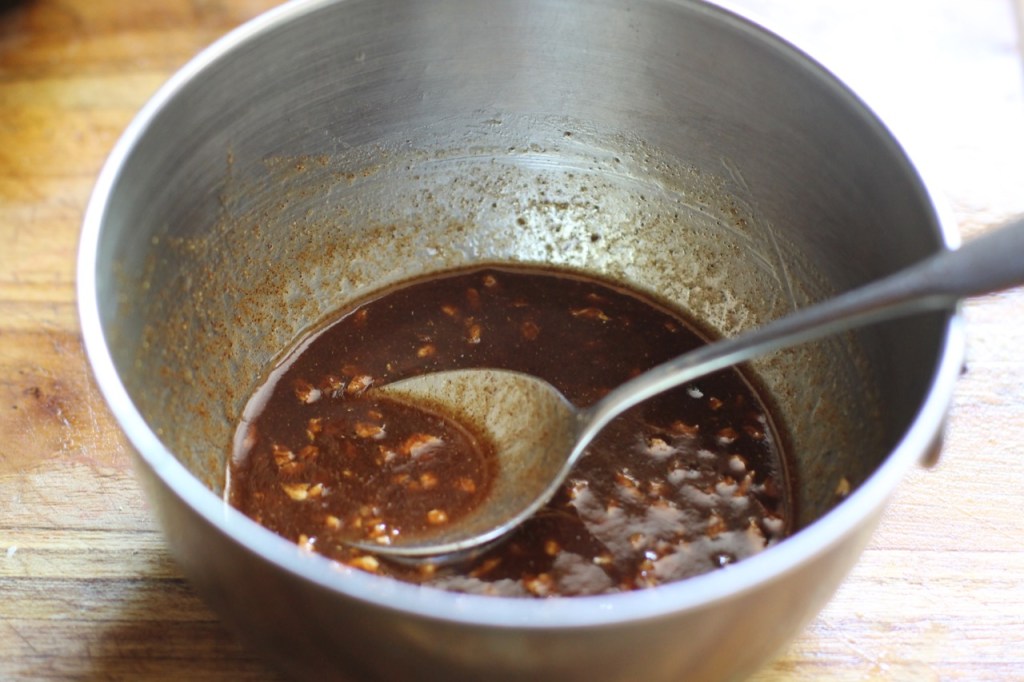
  4. In another bowl, whisk together the ingredients for the sauce. Cover and set aside.
  5. Heat oil in a large frying pan and add the rhubarb batons in a single layer. Cook for about a minute and a half, keeping them moving. Add a heaping tablespoon of soft light brown sugar, toss and cook for about minute more. You want them to be tenderized but still to have some bite. If they start breaking up, you’ve gone too far. Take them off the heat immediately. Scoop into a bowl and set aside.
  6. Take the pork out of the refrigerator, pour off the marinade and dry with a towel.
  7. Put a tablespoon of vegetable oil in a wok and stir-fry the pork on a medium-high heat for three or four minutes or until golden brown. Set aside.
  8. Make sure you’ve prepped all the vegetables before you start cooking the main dish because they will cook fast.
  9. Saute the sliced onion until translucent. Add the ginger and the broccoli. Continue sautéing for about 5 minutes on medium high heat or until it is crunchy. Add the sauce (from above) and pour it into the pan. Add the rhubarb and the bamboo shoot. Bring to a boil, reduce the heat and simmer for three or four minutes. Add the pork and toss and coat well. Warm until pork is hot.
  10. Add soy sauce and chili pepper if needed.
  11. Serve over rice, garnished with the sliced spring onion , cilantro, nuts.

enjoy!

Pictures and text by Twincitiesherbs.

Sources

https://en.wikipedia.org/wiki/Ketchup

https://wordpress.com/read/blogs/35104325/posts/55143

Photo and text by twincitiesherbs.com.

Eating with the summer season

SUMMER

Here is the season that we have been waiting for since the winter solstice! In the spring, we witnessed the buds emerging on the plants and maturing into full grown plants … oh and the days getting longer and warmer. Now finally we can appreciate what nature can give: warmth, light and food. This is a great time to get outside and socialize. You can travel and eat the abundant fruits and vegetables or just have fun. Also, we can take an advantage of all the gorgeous flowers blooming outside.

In Chinese Medicine, each season is associated with a natural element so summer’s element is Fire. Also, each element has corresponding Western organs. The Western organs of the Fire element are the Heart and the Small Intestines and in addition, the Pericardium and the Triple Warmer are included. Also, this element contains the Mind that might be a rather difficult concept for Westerners.

One of the elements in nature is Fire, in fact, it is probably the most important one for our survival. Fire or warmth is essential to keep the body going as our metabolism and our whole body depends on it. Fire is also important for our mental state. According to Karl Jung, Fire is needed to have clear perception. Also, psychotherapists believe that ‘cooking’ is important for meaningful changes to occur in their patients. In fact, “throughout the history of humankind, the symbol of Fire has always been synonymous with life”.

Element: Fire

Organs: Heart-Mind, Small Intestines, Heart protector, triple Warmer

Sense: Joy

Color: red

Taste: bitter

Supporting flavors: salt, pungent

Emotion: joy

Evil (Health problems): Heat

In Chinese Medicine, the Heart, the Emperor of our body, is not necessarily treated directly as it depends on the other organs for its nourishment. Basically, you are to take care of your body in order to keep the heart healthy. For prevention, we are supposed to attend to all the other organs all year around to help the Heart function properly.

It is believed that if the heart is not happy, nobody is happy. So let’s see what would be ideal for a happy Heart. The Heart needs to be warm, neither cold or hot. The biggest issue during the summer months is the heat so we should be avoiding getting overheated while paying attention not to weaken the Digestive Fire. In general, we should be eating cooling foods like all the summer fruits and vegetables but paying attention to our digestion too. For instance, the Chinese eat cooling mung beans to keep the body cool but these beans are also cooked with warming carminative pisces to support the digestive Fire.

Let’s look at how we can nourish the Heart. All cooling foods especially the brightly colored fruits and vegetables are great. In Chinese Medicine, the red color is associated with the Fire element. It is believed that consuming foods that are red (watermelon, strawberries, red beans, goji berries, red peppers, chili peppers, hibiscus flower) and heart shaped foods (chickpeas) are beneficial for the heart.

Another factor that can influence our Heart is our emotions. All five emotions, anger, joy, sadness, fear, and sorrow are initiated by our Heart to protect our body but emotions out of balance can negatively effect the Heart. Out of the five emotions, joy more exactly over joy can particularly weaken the Heart.

The Mind is unique concept in Chinese Medicine.

Furthermore, the Heart’s energy tends to move downward from the Mind that the bitter flavored foods support. However, avoid eating too much bitter foods in the summer as this flavor tends to be drying. Moderation is the best! (Summer bitter foods include all whole grains, bamboo shoots, celery, dill, lettuce).

The Small Intestine helps the body sort through important and toxic information. So the healthy Small Intestine helps us in letting go of unneeded things in our life and by the same token an unhealthy Small Intestine will accumulate toxins leading to the pollution of our body, mind and spirit.

We can certainly nourish the small intestines with food. It is part of the elimination system so food would be important. Fiber rich foods will make the intestines work more efficiently and hence result in a more effective absorption of nutrients. Foods like nuts and seeds can supply this necessary protein and fiber. Of course, any kind of whole grain is helpful as well in providing fiber.

In addition, it is summer, so we can take an advantage of all the fruits and vegetables, they are an excellent source of fiber. Probiotics such Lactobacillus and bifidobacterium can be beneficial for the small intestines as well which can be found in yogurt, kefir and fermented foods.

Also, to help calm the mind and deal with the heat of the summer, it is recommended to eat a more simple diet with light foods and avoiding complicated dishes. Oyster shells, whole grains, mushrooms, barley, oats, cucumber, basil, mulberries, lemon, ghee are especially useful.

The flavor of the summer is bitter and it is recommended to eat bitter foods because it brings energy from the brain, the mind down to the lower part of the body. (Summer bitter foods include all whole grains, bamboo shoots, celery, dill, lettuce).

To work with the summer season, mainly its heat, we need to make some changes to our cooking methods. Of course, eating some raw foods is great; however, cooking some food is still recommended supplementing the raw foods. Cooking should be quick on high heat. Add hot, pungent foods to your meals. In hot climates, it is customary to add lots of hot peppers to open up the pores and release the excess heat from the body. (Of course, this should be done with some caution as too much hot pepper can injure the stomach). Also, try to minimize heavy foods to avoid sluggishness.

This is a great time to be active, spend time outside and socialize. The biggest issue during the summer is heat. Our diet and life style should support the body so we can stay cool, while paying attention to our digestion. We naturally want to eat raw fruits and vegetables but in addition consider including some simple, cooked foods during the summer to keep the digestive Fire going. Eating bitter, salty and pungent foods can facilitate the energy of the summer. Also, paying attention to our emotions can be helpful too.

(I capitalized the organs because in Chinese Medicine, it is more like an organ is considered to be the organ itself and its energetic functions).

SOURCES

Paul Pitchford: Healing with Whole Foods

Gary Dolowich: Archetypal Acupuncture

Art: Unknown

Written by twincitiesherbs.

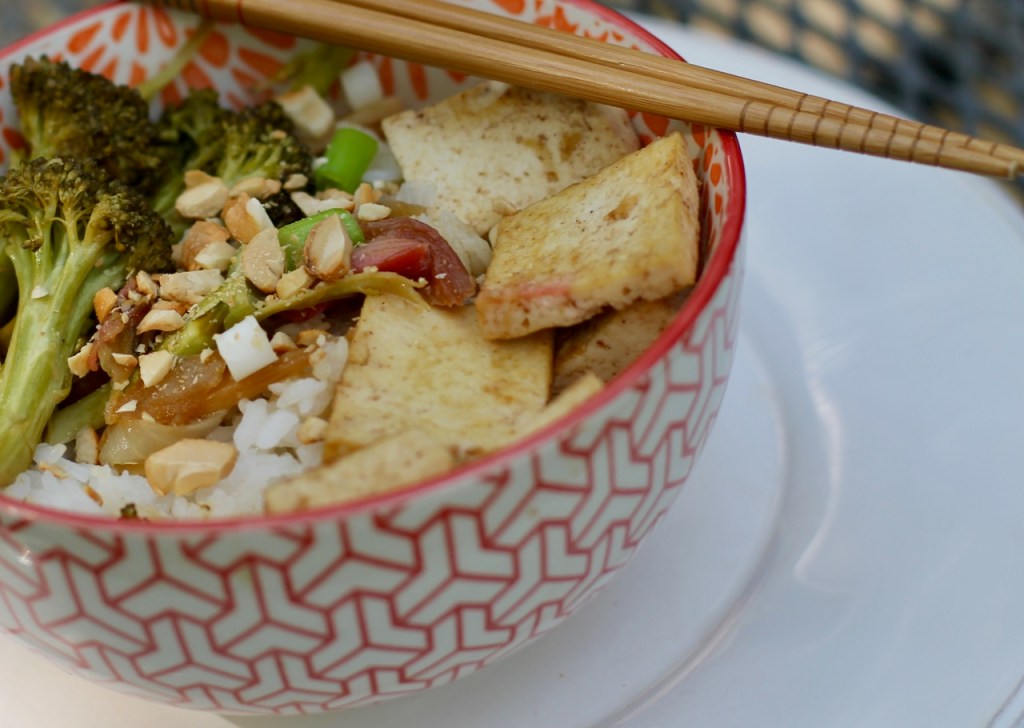
Hot and sour tofu with rhubarb

In the United States and Europe, rhubarb is known as the pie plant and in fact we tend to use it in sweet dishes. However, in Asia, it is more used in savory dishes. Today, I’m presenting a savory dish that was inspired by the following blogs: ( blog 1 and blog 2). The rhubarb gives the sour taste that is balanced out nicely with the sweet and hot Chinese sauce and the bitter bamboo shoots. I chose broccoli as the main vegetable for the dish. Traditionally, pork is used but is replaced here with the tofu. In the original recipe, the raw rhubarb is blended in the sauce but I made it more traditionally sautéed like the rest of the vegetables.

For the meat version of this dish, please, see this recipe.

Recipe


Serves: 4 people  

Ingredients

  • 500 g tofu
  • 2 tsp + 3 Tbsp honey (or replace with agaste sauce for a vegan option)
  • 1/4 tsp five spice
  • chili flakes to taste
  • Sesame oil
  • 3 Tbsp sake
  • 3 Tbsp rice wine
  • 3 Tbsp graded ginger
  • 3 Tbsp soy sauce
  • 5 large cloves garlic
  • 200 g of rhubarb stalks (about 3 smaller or 2 bigger stalks)
  • 2 large heads of broccoli
  • 1 large onion, thinly sliced
  • 1 can (8 oz / 225 g) of bamboo shoots, drained
  • handful of peanuts, chopped
  • 4 scallions, chopped
  • lime
  • cilantro
  • rice or rice noodles

Ingredients listed as used in groups

Rice or rice noodles

Marinade/tofu: 2 tsp honey, 1/4 tsp five spice powder, 1/4 tsp red chili pepper flakes (optional), 1 Tbsp sesame oil, 3 Tbsp rice vinegar, 3 Tbsp sake, 1 Tbsp soy sauce, 500 g tofu.

The sauce: 5 cloves garlic, 3 Tbsp honey, 3 Tbsp soy sauce, 1 Tbsp ginger, 1/2 tsp red chili flakes (or to taste).

Vegetables: 200 g (3 medium sized) rhubarb stalks, 1 large onion, 2 heads of broccoli, 1 can of bamboo shoots.

Toppings: handful of chopped peanuts, 4 scallions, small handful coriander, soy sauce and limes.


Directions

  • The rice.  Make the rice of your choice. I used sushi rice.
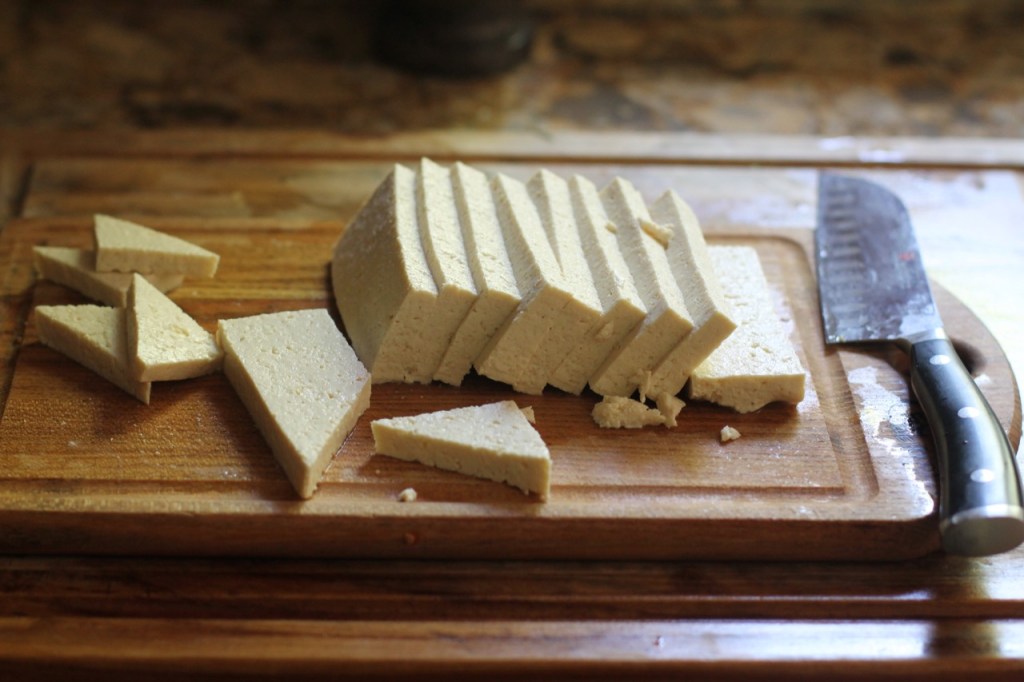
  • Cut up the tofu so it is about 1 cm / 1/2 inch thick. I made triangular shapes but rectangular or square shapes are fine too.
  • Mix the ingredients of the marinade in a small bowl and pour it all over the tofu. Cover and put it in the fridge for at least 1 hour.
  • Make the sauce. Put all the ingredients in a blender and mix to get a nice sauce. Set aside.
  • Take tofu/marinade out of the fridge and strain off marinade. Pat dry tofu with a towel. Sauté tofu slices in small amount of oil for about 5 minutes on each side. Cover and set aside.
  • Cut up the vegetables. Thinly slice the onions, cut up the broccoli flowers. Cut rhubarb diagonally in 2-3 inches length. If stalks are bigger, cut them in half first.
  • In a larger pan or wok, heat sesame oil, add rhubarb batons in a single layer and cook for about 1-2 minutes while stirring to make sure all sides cook well. Make sure you don’t over cook rhubarb, they should be firm and not mushy. Add 1 Tbsp sugar and cook for 1 minute. Take off heat and set aside.
  • On medium high heat, sauté the sliced onion for about 10 minutes until translucent. Add the broccoli and continue sautéing on medium high heat for about 5 minutes or until it is soft but still crunchy. Add the sauce made earlier. (Quickly whisk, then pour it into the pan). Add the rhubarb (that was set aside from earlier step) and the bamboo shoots and bring to a boil, reduce the heat and simmer for three or four minutes. Add the tofu and toss and coat well and cook until the tofu is warm.
  • Serve on rice with chopped cashew nuts, chopped scallions, cilantro, lime wedges and soy sauce.

enjoy!

Sources

http://www.mostlyeating.com/ tofu with hot and sour sauce

https://wordpress.com/read/blogs/35104325/posts/55143

Photo, recipe and text by twincitiesherbs.com.

Moroccan eggplant stew with garbanzo beans

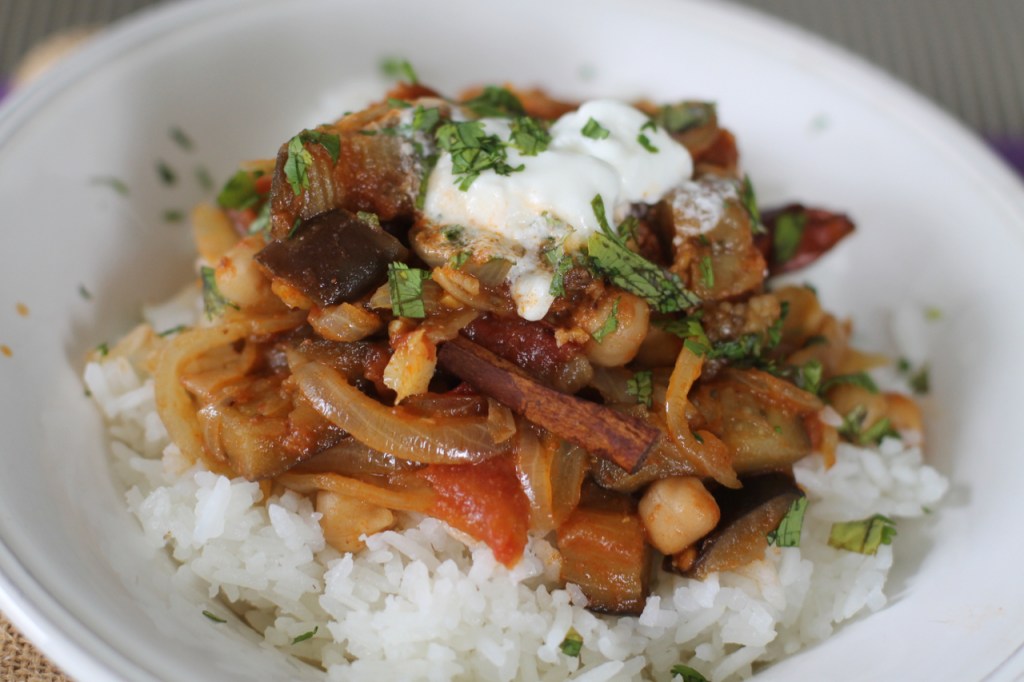
Enjoy this delicious and easy vegetarian eggplant dish. The eggplants are browned and cooked with some tomatoes, pungent spices, onions, and garbanzo beans. They can be served with rice or couscous and yogurt sauce. I also added sweet mama squash that complemented the dish nicely and made it more suitable for this ‘going from the summer into the fall’ time period. With the warming spices and the baked squash, it will be a great meal for this time of year. Not only that it suits the weather but it is delicious … honestly my family can’t get enough of it. I might have to go back to the farmers’ market tomorrow to get more eggplants.

RECIPE

Serves 4-5 people

Ingredients

  • 2 medium eggplants
  • couple of handful salt for salting the eggplants
  • olive oil
  • 2 large onions, sliced
  • 1 Tbsp grated fresh ginger
  • seasoning: 2 tsp paprika, 1 tsp cumin powder, 1 tsp coriander powder, 1/4 tsp nutmeg, 1 cinnamon stick,
  • pinch of saffron (optional)
  • 2 garlic cloves
  • 2 large tomatoes or 2 cups canned tomatoes
  • 1 cup dried garbanzo beans or 1 can (14 oz)
  • 1 dried hot pepper or to taste
  • squash (zucchini, sweet mama squash) – optional
  • salt and pepper to taste
  • couscous or rice to serve
  • cilantro

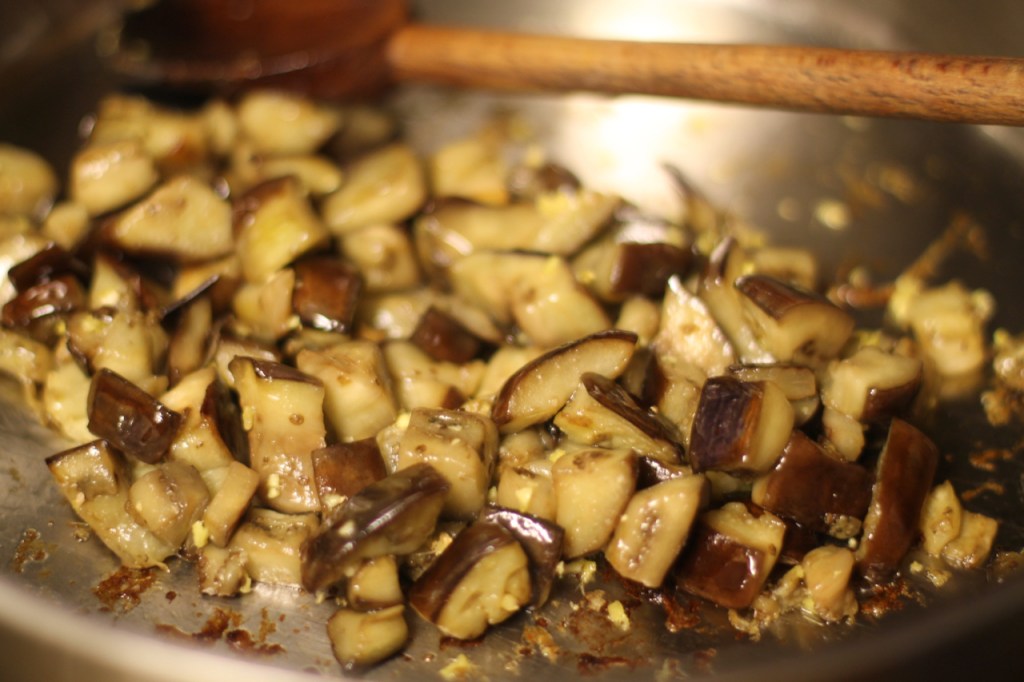
Browning the eggplants
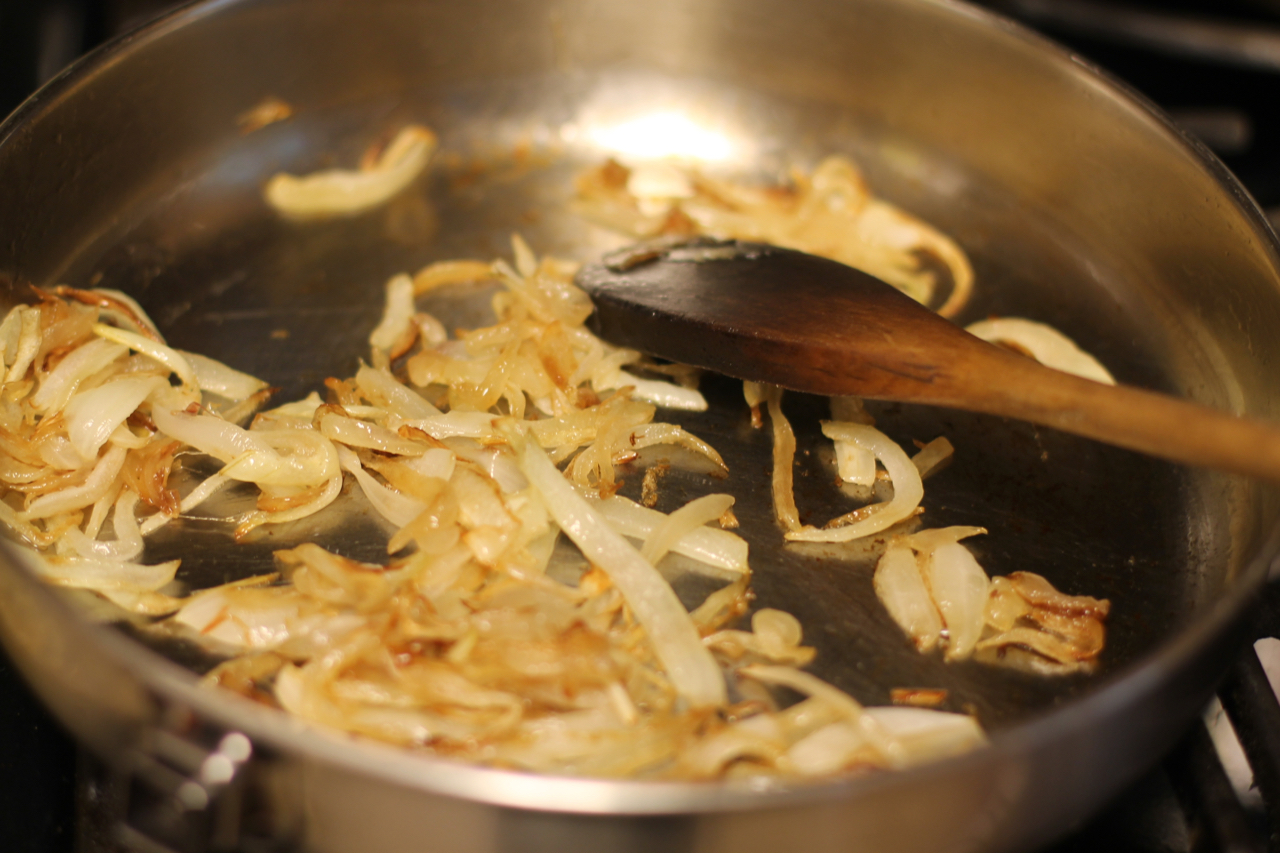
Browning the onions.

Directions

  • Garbanzo beans. Soak overnight or at least for 4 hours. When done, discard the soaking liquid. Add enough cold water to cover the beans. The water should be about 1 inch above the beans. Cook the beans for 2-3 hours. (You can use a pressure cooker, just adjust the time). They need to be cooked slowly for a long time until they are nice and soft. They can take up liquid after they are cooked so add more water if needed. Add 1 tsp salt when done.
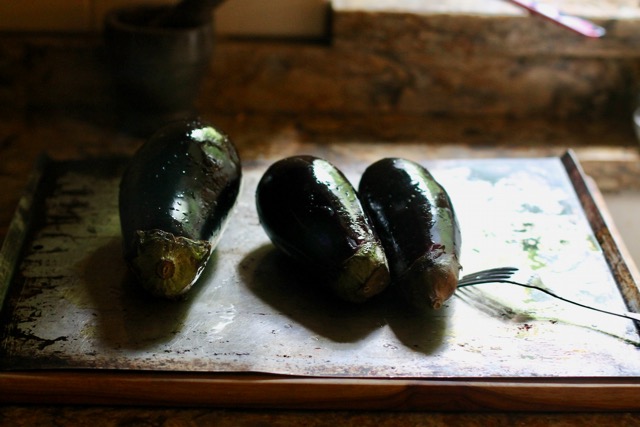
  • Preparing the eggplants. Wash and cut eggplants into cubes. Salt them and put them into a colander for 30 minutes to let the liquid drain. Wash off the salt and pat dry.
  • Frying the eggplants. In a wide large skillet, on medium low heat, slowly brown the eggplants in some olive oil for about 20- 30 minutes or until soft. They will not cook any more so make sure they are soft and well cooked before you add it to the sauce. Stir frequently. Make sure they don’t burn. Set aside.
  • Caramelize the onions. In a separate large skillet, brown the sliced onions in some oil with care, it takes about 30 minutes. Stir frequently. Set aside.
  • Crumple the saffron between your thumb and index finger and add hot liquid, stir well (optional). Otherwise you can just put whole saffron strains in the dish. Set aside.
    • Making the sauce. On medium high heat, warm up oil and add the ginger for 5 minutes. Then add the paprika, cumin, garlic and stir for 1 minute to activate the spices. Add the chopped tomatoes and the saffron from earlier and stir well. You can add a little water here too. Cook the tomatoes for about 5 minutes until they become ‘saucy’. Add the saffron, cinnamon stick, and hot pepper. Bring to a boil and turn down the heat. Cook for 10 minutes on low medium heat. Add a little water if needed. Add the browned onions, eggplants and garbanzo beans from earlier. Cook for 5 more minutes covered. Let the dish sit for 15 minutes so the flavors can come together. Take out the cinnamon stick and the hot pepper pieces. Add freshly graded nutmeg, salt and pepper or anything else that needs to be adjusted.
  • Serve with cilantro, rice or couscous and yogurt sauce. I also added some baked sweet mama squash slivers and they nicely complemented each other.

enjoy!

Recipe, photo and text by twincitiesherbs.com.
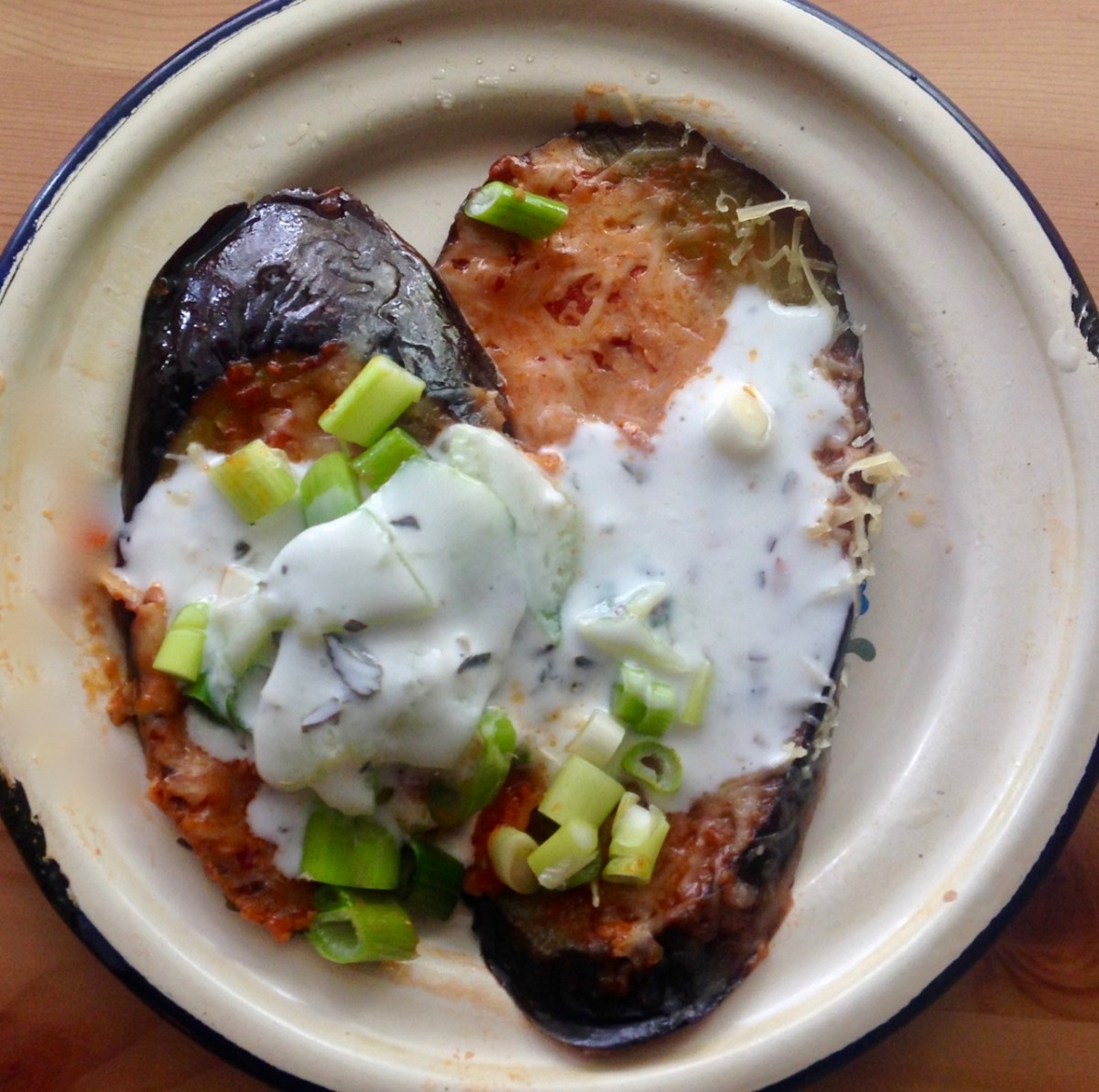
Pan seared eggplant parmesan

Eggplants are ready here in the Midwest! So I’d like to take the opportunity to post some recipes of this amazing plant. Before I post my vegetarian moussaka recipe, I would like to have a little preview of what is coming. Eggplant is the main ingredient in moussaka so I can get a head start with this recipe. Also, this makes an easy dish if you don’t want to make something more elaborate.

Eggplant slices are gently fried in some olive oil and cooked in a tomato based sauce. They are served with some Parmesan cheese and scallions on the top.

TIP

Salting the eggplants is a must in my opinion and have been done traditionally. Sprinkling them with salt takes away some of the bitterness and prevents them from becoming soggy.

Recipe

INGREDIENTS

  • 1 purple Italian eggplant
  • 2 Tbsp salt
  • olive oil
  • 2 cloves garlic, crushed
  • 1 tsp of oregano
  • hint of cinnamon
  • 1 cup tomato sauce
  • 1 handful Parmesan cheese for the top
  • yogurt
  • scallions

DIRECTIONS

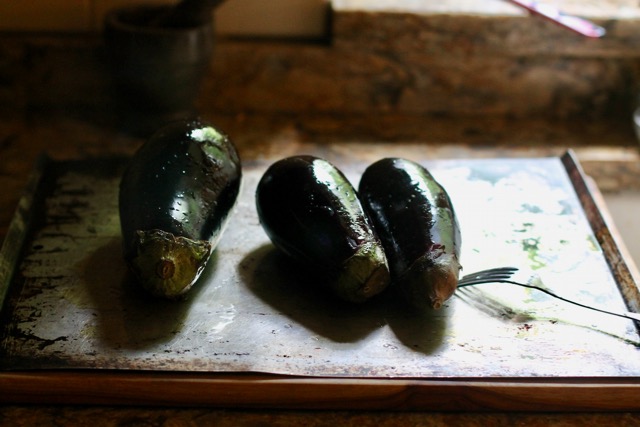
  1. Wash and slice an eggplant. I use a serrated bread knife to slice the eggplants. The slices should be about 1 cm thick.
  2. Salting the eggplants. Coat the eggplant slices with salt and leave on for 45 minutes.
  3. Wash the slices off with cold water and place them on a colander. Let the water drip down and dry them with towel.
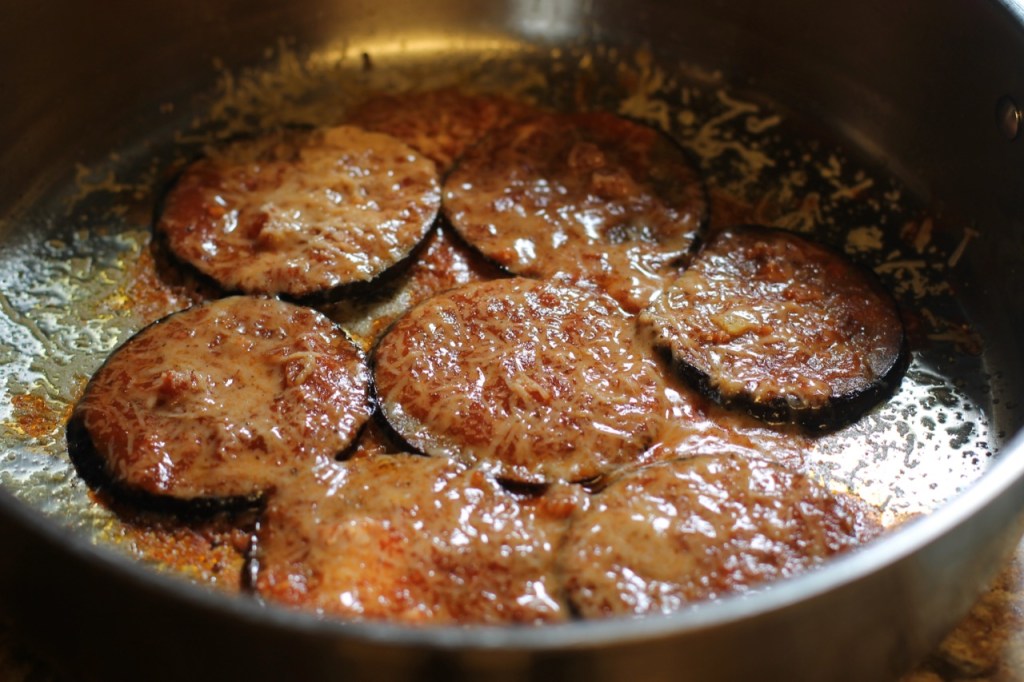
  4. Heat up a large frying pan on low medium heat. Add olive oil and a pinch of salt. Be careful, olive oil burns easily as it has a low boiling point. Add the slices. You will most likely have to add more olive oil as eggplant loves to soak it up. Cook for about 10 minutes on each side or until they are slightly brown and soft. I keep turning them to make sure they don’t burn.
  5. Add garlic and mix for 1 minute. Add the tomato sauce and oregano. Mix.
  6. Sprinkle parmesan cheese and ground cinnamon on the top.
  7. Serve warm with yogurt and scallions.

enjoy!

Recipe, photo and text by twincitiesherbs.com.
Turkish stuffed eggplants (vegetarian)

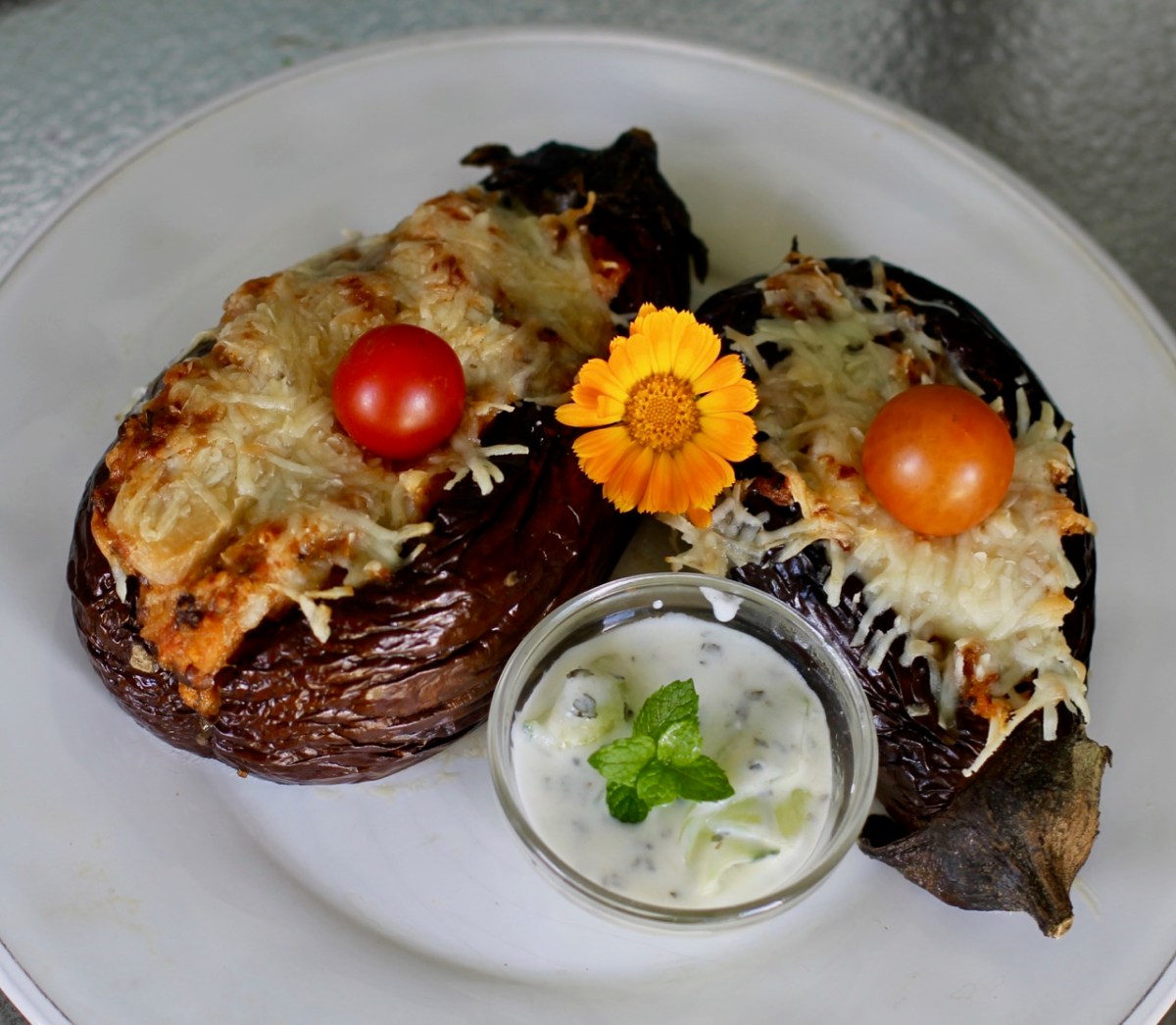
This is the vegetarian version of my previous recipe, the Turkish stuffed eggplants (karni yarik). I tried to keep the recipe’s Turkish authenticity but otherwise it is my creation. I replaced the meat with lentils, eggs and cheese and used oregano in the place of mint. I also used more tomatoes to keep the mixture moist. All these ingredients are used in Turkey and hope you will like it as much as I did. If you try it please let me know in the comment section how you liked it.  

List of my other eggplant dishes

Recipe

Ingredients

  • 1 cup of cooked rice (about half a cup raw)
  • about 1/4 cup of olive oil
  • 4 medium, equal sized purple eggplants. Try not to get different sizes because they need different cooking times.
  • 1 cup cooked lentils (about 1/2 cup uncooked)
  • 4 oz mushrooms, chopped (I used crimini).
  • 2 eggs, lightly beaten
  • 1 finally chopped yellow onion
  • 1 finally chopped peppers (green, red, yellow-your choice)
  • 2 cloves of garlic
  • 1 Tbsp cumin
  • 1 Tbsp dried oregano
  • 1/2 tsp paprika powder
  • 1/4 tsp hot red pepper flakes
  • 1 tsp salt or to taste
  • 6 fresh plum tomatoes or other tomatoes (canned is fine too)
  • 1 cup hard cheese + more for the top
  • freshly ground black pepper to taste
  • 1/2 cup flat leafed parsley

Direction

  • Soak the lentils for a few hours if you have time.
  • Cook lentils.
  • Prepare rice with bay leaves. Use 1/2 cup of rice with 1 cup of water.
  • Bake eggplants. Preheat oven to 350 Fahrenheit. Wash eggplants and put them on an oiled baking sheet. Prick them with a fork in 6-8 places, half inch deep to prevent them from exploding in your oven. Coat them with some olive oil with a brush. Bake them for 45 – 60 minutes or until they are nice and soft, so you can put the blade of a knife through easily. You don’t want them to be hard but they shouldn’t collapse either. Once they start becoming soft, keep an eye on them. If you’re using larger eggplants, you will have to cut them in half lengthwise. Oil the top and proceed like you do with the smaller ones.
  • When ready take them out and let them cool..
  • Prepare the stuffing. Sauté the onion in the oil. When onions are soft but not brown, add the green pepper pieces and continue sautéing the for about 10 – 15 minutes. Add spices (oregano, cumin, paprika), crushed garlic and stir. Then add tomatoes. Cook for about 10 minutes or until tomatoes are well cooked and there is a nice sauce. Take off the heat.
  • Put mixture into a bowl. Add rice, lentils, eggs, salt, ground black pepper, hot pepper flakes and graded cheese (I used 1 cup). Mix.
  • Sauté mushrooms and add to the previous mixture. Mix.
  • Preheat oven to 400 Fahrenheit. Gently cut a slit in the middle down from the top of a whole eggplant making sure you don’t cut through the skin on the bottom. Take out the seeds. You can use the seeds to make babaganoush or just simply discard them.
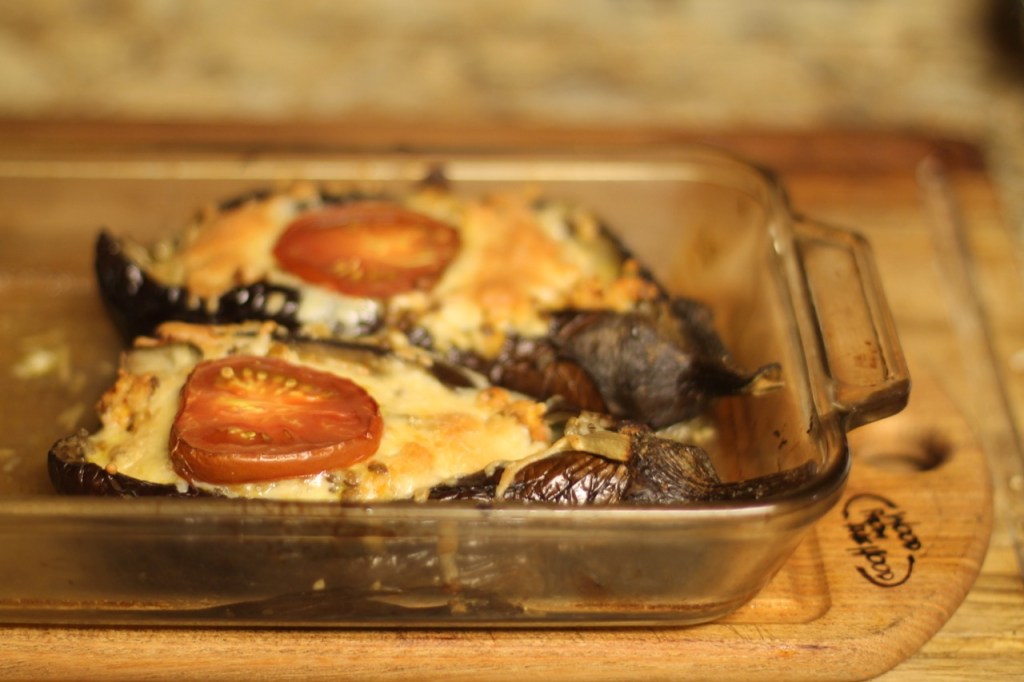
  • Just like its Turkish name, karni yarik, splitting belly suggests, stuff the inside of the eggplants, their bellies with the stuffing. You can put a little graded cheese and a thin slice of tomato on the top. Put eggplants in a baking dish. Pour boiling water into dish about 1 inch deep. Place dish into the oven and bake for 30 minutes. Take them out when top is brown. Let them cool.
  • Cut off the ends before serving them.
  • Serve warm with cucumber yogurt sauce.

Yogurt Sauce

Ingredients

  • 1 1/2 cups of yogurt
  • 1 longer English, slicing cucumber
  • 1/2 tsp salt
  • 2 cloves of garlic
  • 1 Tbsp of vinegar
  • 2 Tbsp of olive oil
  • 1 Tbsp of dried mint
  • fresh mint

Preparations

  • Peel and slice the cucumber. Place the slices in a bowl, salt and let it sit for 15 minutes. Salting is optional. Strain, squeeze out and discard the liquid.
  • In a separate bowl mix together all the other ingredients, stir well. Put in the cucumbers and gently stir mix them in.
  • Garnish with fresh mint. Serve with the eggplants.

enjoy!

Sources

  • Paul pitchford: Healing with Whole Foods
  • Sally Fallon: Nourished Traditions
  • Nancy Harmon Jenkin’s Mediterranean Diet cook book.  

Text, recipe and photo by twincitiesherbs.com.
Turkish stuffed eggplants with lamb (Karni Yarik)

I can’t help but notice the abundance of goods at the farmers’ market. The tables are filled with all kinds of fruits and vegetables. In fact, it is the time of the year when they have the most varieties available. For today’s post I picked eggplant. 

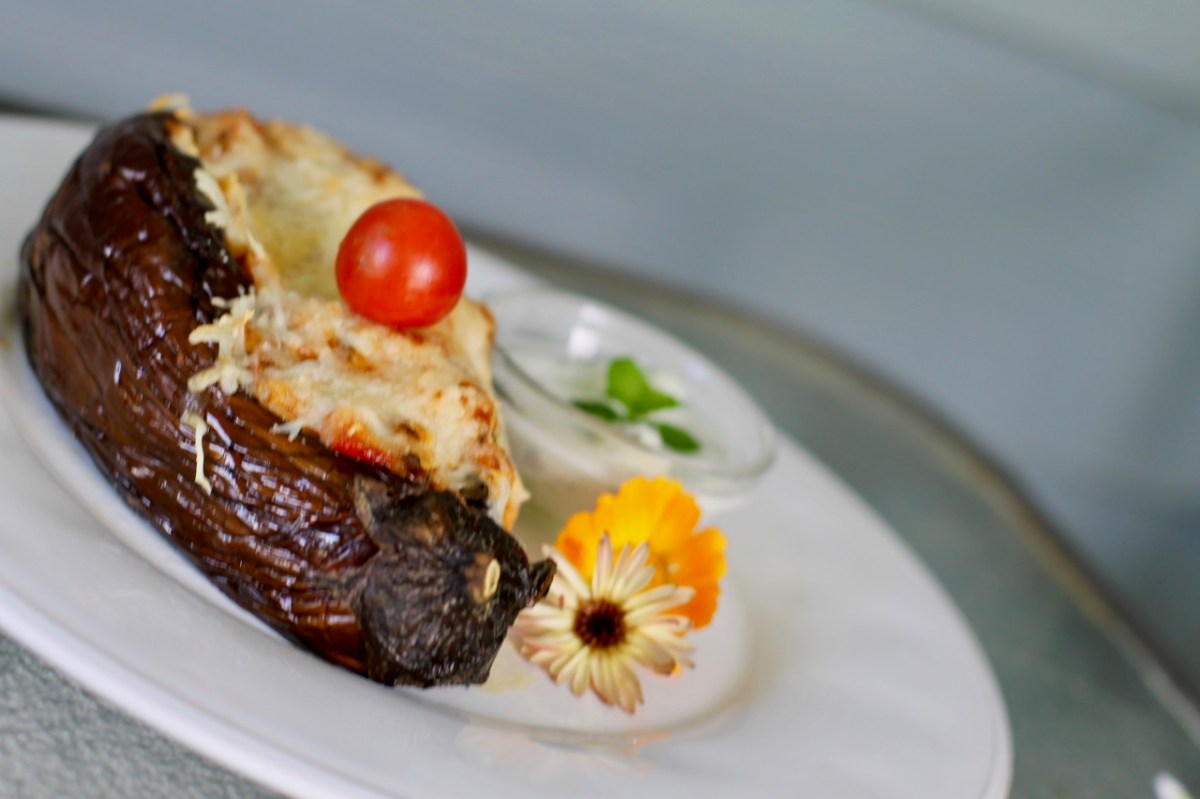
My recipe is the Turkish Karni Yarik that means ‘splitting belly’. If you look at the picture, this should make sense … you basically stuff the inside, the belly of the eggplant. The warming lamb meat pairs nicely with the cooling eggplant with a hint of mint creating a mouth watering dish.  

When I was in Turkey, I remember this dish was on the menu at many every restaurants and I really liked it.

RECIPE

INGREDIENTS

4 servings

  • 1/2 cup rice, raw
  • 1 bay leaf
  • 1/4 cup olive oil, or more if needed
  • 4 larger, equal sized purple eggplants
  • 1/2 lb ground lamb
  • 1 yellow onion, finally chopped
  • 1 finally chopped pepper (green, red, yellow-your choice)
  • 3 garlic cloves
  • 1 tsp cumin
  • 1 tsp coriander
  • 1 Tbsp dried mint
  • 1 tsp paprika
  • 1/4 tsp hot red pepper flakes or to taste
  • 1 tsp of salt or to taste
  • 2 large ripe tomatoes, chopped
  • hand-full of freshly grated hard cheese (parmegane)
  • handful parsley, chopped
  • freshly ground black pepper to taste
  • fresh mint to garnish, optional

PREPERATION

1. Cooking the rice. Cook 1/2 cup of rice in 1 cup of water. You can add bay leaves if you wish. Set aside when done.

2. Baking the eggplants. Preheat oven to 350 Fahrenheit. Wash eggplants and put them on an oiled baking sheet. Prick them with a fork in about 6-8 places, half inch deep to prevent them from exploding in your oven. Coat them with some olive oil with a brush. Bake them for 45-60 minutes or until they are nice and soft, so you can put the blade of a knife through easily. You don’t want them to be hard but they shouldn’t collapse either. Once they start becoming soft, keep an eye on them. When ready take them out and let them cool. Set aside.

3. Sauteing the vegetables. Sauté the onion in oil, add the chopped peppers and continue sautéing for about 5 minutes. Add spices (mint, coriander, cumin, paprika) and crushed garlic. Stir for 1 minute. Add 1 crushed tomato, stir. Cook for about 10 minutes or until tomatoes make a nice sauce. Set aside.

4. Preparing the lamb. In a separate pan, warm up some oil and sauté the lamb quickly for about 10 minutes. If lamb is not fatty enough, you might have to add more olive oil. Take off heat.

5. Preparing the stuffing. Put the cooked lamb into a larger bowl. Add rice, vegetable mixture, salt, parsley and hot pepper flakes. It is optional but I also added graded cheese. Mix. (The stuffing can be made a day ahead).

6. Preheat oven to 400 Fahrenheit.

7. Preparing the eggplants. Gently cut a slit in the middle down from the top of a whole eggplant. Take out the seeds. You can use the seeds to make babaganoush or just simply discard them. Just like its name suggests, stuff the inside of the eggplants, their bellies with the stuffing that was prepared earlier. You can put a little graded cheese and a thin slice of tomato on the top. Put the eggplants in a baking dish. Pour boiling water into dish about 1 inch deep.

7. Baking the eggplants. Place dish into the oven and bake for 30 minutes.

8. Remove from the oven. Let the eggplants cool. Cut off the ends before serving.

9. Serve warm with cacik and freshly ground black pepper. Garnish with fresh mint leaves.

enjoy!

Yoghurt sauce (cacik)

INGREDIENTS

  • 1 1/2 cups of yoghurt
  • 1 longer English, slicing cucumber
  • 1/2 tsp salt
  • 2 cloves of garlic
  • 1 Tbsp of vinegar
  • 2 Tbsp of olive oil
  • 1 Tbsp of dried mint
  • fresh mint

PREPERATION

  • Peel and slice the cucmber. Place the slices in a bowl, salt and let it sit for 15 minutes. Strain, squeeze out and discard the liquid.
  • In a separate bowl mix together all the other ingredients, stir well. Put in the cucumbers and gently stir mix them in.
  • Garnish with fresh mint. Serve with the eggplants.

enjoy!

Text, recipe and photo by twincitiesherbs.com.
Hungarian cucumber salad (uborkasaláta)

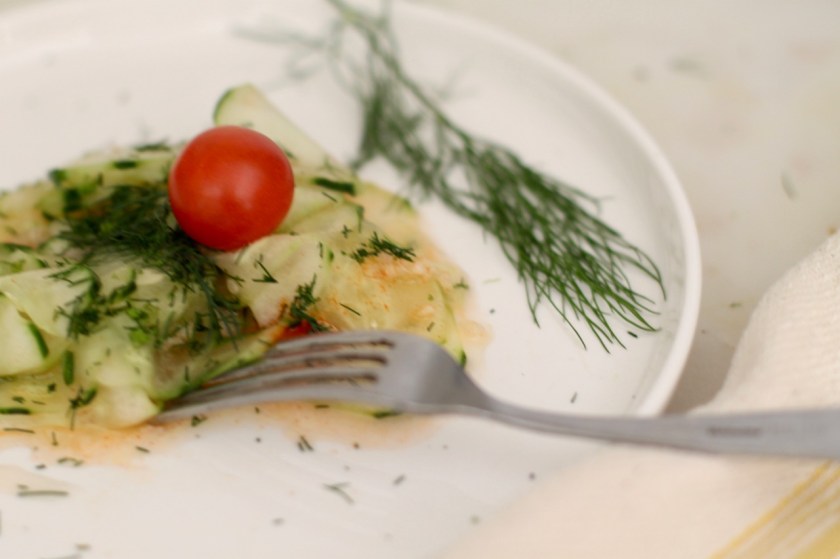
This simple Hungarian salad has a unique flavor. It is prepared in a vinegar base with Hungarian paprika, garlic and dill and is macerated in the fridge overnight. It is usually eaten with main dishes.

Recipe

6 servings

INGREDIENTS

  • 2 medium garden cucumbers with large seeds or 1 large slicing cucumber
  • 2 tsp salt
  • 1/8 cup vinegar + 1 cup water
  • 2 cloves garlic, crushed
  • a handful of dill, chopped
  • 1 Tbsp vegetable oil
  • 1 tsp sweet Hungarian paprika powder
  • pinch of sugar
  • 1 bunch scallions, optional

DIRECTIONS

  1. Peel cucumbers. Traditionally cucumbers are peeled completely but I sometimes leave a little peel on.
  2. Slice cucumbers very thin, you can use a potato slicer.
  3. Place cucumber slices in a medium sized bowl.
  4. Sprinkle with salt and mix well. Let the salt sit on the cucumbers to release their liquid for at least 15 – 20 minutes.
  5. Squeeze out all the liquid with your hands. Discard this liquid. I like to wash the cucumbers with some cold water to get some of the salt off. (Salting helps remove water so the salad won’t taste watery).
  6. Put the cucumber slices in a medium sized bowl. Add the garlic, chopped dill, oil, paprika, sugar and scallions. Adjust water, vinegar, salt, garlic to taste.
  7. Put the salad in the refrigerator and leave it macerate overnight.
  8. Serve it cold or at room temperature.

enjoy!

Recipe, photo by twincitiesherbs.

Pesto

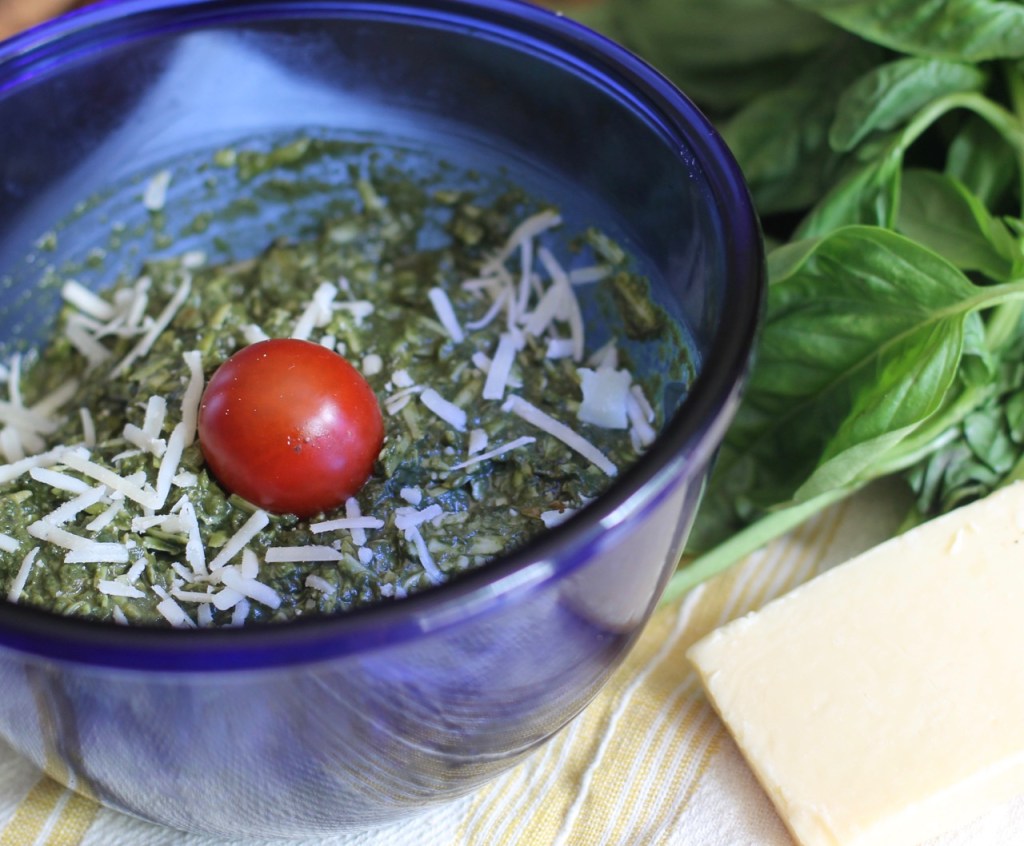
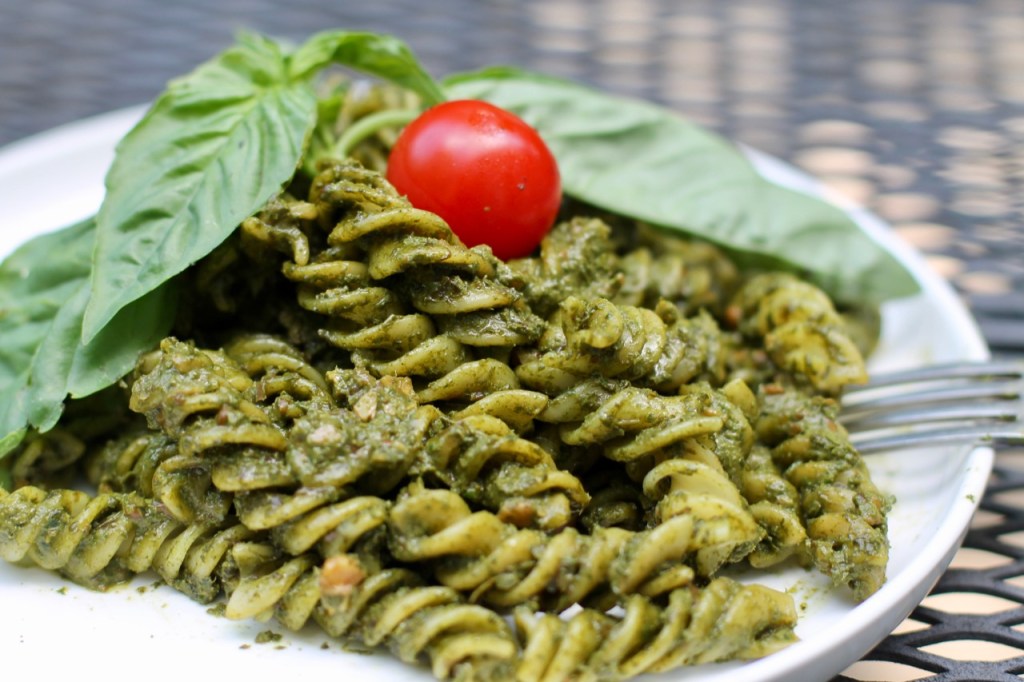
Pesto is a nice sauce to serve on pasta on a hot summer day. We just spent some time in the Mediterranean region of Europe where it was very hot. Pesto was great to eat during the day just to satisfy our quick hunger. I really like how the fragrant basil with all its ingredients olive oil, cheese, garlic, and pine nuts can create such a unique dish. Just make sure you use the best ingredients you can find!

Pesto is a unique and delicious sauce that originated in Genoa, Italy, around the 16th century. Originally, it was made in mortars and according to Genoese cooks, pesto can only be made in mortars. In fact, its name or its verb version ‘pestare’ means to pound and grind. Today, we have food processors that would be a fine replacement, just keep in mind that pesto is meant to be pounded and not so much chopped so in other words don’t over process it in the food processor and fold the cheese in at the end by hand.

Recipe

Ingredients

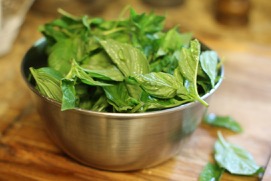
  • 4 cups tightly packed fresh basil
  • 1 cup fresh, cold pressed olive oil
  • 1/2 cup chopped up pine nuts (walnuts are fine too)
  • 4 garlic cloves
  • salt
  • 1 cup freshly grated parmi-giano-reggiano cheese
  • 4 Tbsp grated romano cheese (optional)
  • 1 pound of pasta (farfarelle or any pasta with a large surface area)

Directions

  • Take the leaves off of the stems and wash them well in cold water. Clip off the flowering tips and any brownish leaves if there are any. Put them in a colander and let the water drain off. By the time you have everything else ready the basil should be ready too.
  • Start boiling water for the pasta. Continue according to the package. Drain the liquid. Save 4 Tbsp cooking water for the pesto. Set aside.
  • Measure out all the ingredients.
  • Chop up the garlic with the blade of a sharp knife.
  • I do not have a mortar but I have a small food processor. The following directions are for a food processor. Put the basil in the food processor and process until chopped. (You are chopping at this stage). Add olive oil, pine nuts, chopped garlic, salt and chop quickly, gently just until they are nicely blended.
  • Transfer this mixture into a clean bowl. You will continue mixing in the cheese with a spoon by hand. (Please see explanation above).
  • When adding the pesto to the pasta, add 2-4 Tbsp of the reserved pasta water.
  • Serve with vegetables at room temperature.

enjoy!

Sources

Marcella Hazan: Essentials of Classical Italian Cooking

Hungarian sour cherry soup (meggyleves)

When I was a little girl, I used to go to the farmer’s market with my grandmother to sell her goods. I was in charge of the fruits. Whatever I was able to pick the day before, I could sell. I loved climbing up the tree and picking the fruits. We took the train to the nearest town where the market was. So of course I sold the cherries and the sour cherries. I remember I used to wonder though why the heck people got so excited about sour cherries, why not just buy the delicious sweet cherries. Well, try this soup and you will understand too :).

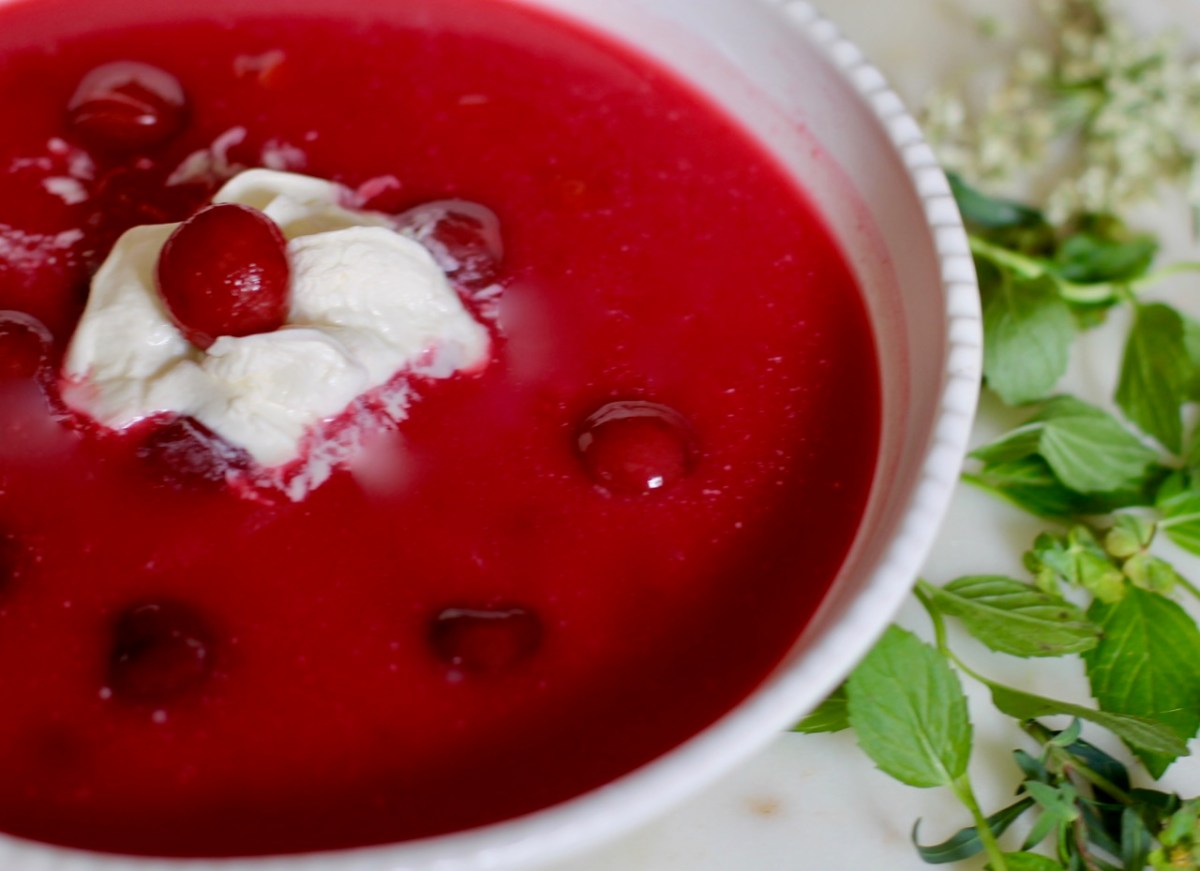
Honestly, nothing tastes as good as a bowl of cold sour cherry soup on a hot day. Sour cherry soup is popular in many Central European countries. I added a small amount of ginger, cloves and cinnamon to offset the sweetness and sourness of the cherries and orange peel and salt to balance it out nicely. At the end, I thickened the soup with egg yolks. Oh and I added a bit of alcohol, more exactly white wine and brandy (pálinka). The alcohol content will boil away so no worries, kids can have it too. 

The main ingredient is the sour cherries. If you have a tree growing in your back yard, it is the best source for sure. I have seen them in health food stores, farmer’s markets and some specialty shops too but otherwise it will be most likely hard to get fresh. You can get frozen sour cherries, they will work well as long as they are tasty, of course. Also, you can use soft cherries too but the harder kind, the bing cherries will not work. I leave the pits in but take the stems off. In addition to the cherries, I like to add some goose berries or currents to the soup, too.

RECIPE

INGREDIENTS

  • 2 lb sour cherries or soft cherries (Please see note above).
  • 1 cup goose berries, currants (optional)
  • water
  • enough water to well cover the content of the soup
  • 1/2-1 cup sugar (depending on your taste)
  • 2-3 lemons (juice and the rind)
  • 1 tsp dried orange peel
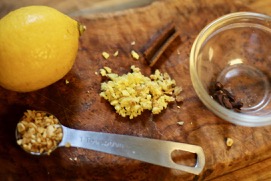
  • 1 Tbsp fresh ginger (chopped)
  • 3 whole cinnamon sticks
  • 3-5 pieces of cloves
  • 1-2 cup white wine (Vermouth is fine)
  • water
  • 1/4 cup brandy (cherry would be ideal but others are fine too)
  • 1/8 tsp of salt
  • 2 egg yolks, lightly beaten
  • whipped cream for serving

DIRECTIONS

  • Wash the cherries. Put them into a lager pot along with the sugar, and salt. Add water, wine and brandy. (The liquid should be about 1-2 inches above the cherries).
  • Bring to a boil. Turn heat down and add ginger, cinnamon and cloves. Cook for about 10 minutes on medium heat with the lid on until the fruits are soft.
  • Turn off the heat and take the cover off. Wait for 10-15 minutes before adding the egg yolk to the soup. Mix the yolk with a little liquid from the soup. Stir in gently so it is mixed nicely in the soup.
  • Add the lemon juice and the the chopped up rinds.
  • Let the pot cool on the counter.
  • Chill the soup in the refrigerator overnight but at least for a couple of hours.
  • Take out the larger pieces.
  • Serve cold with whipped cream.

enjoy!

Text, photos, recipe by twincitiesherbs.