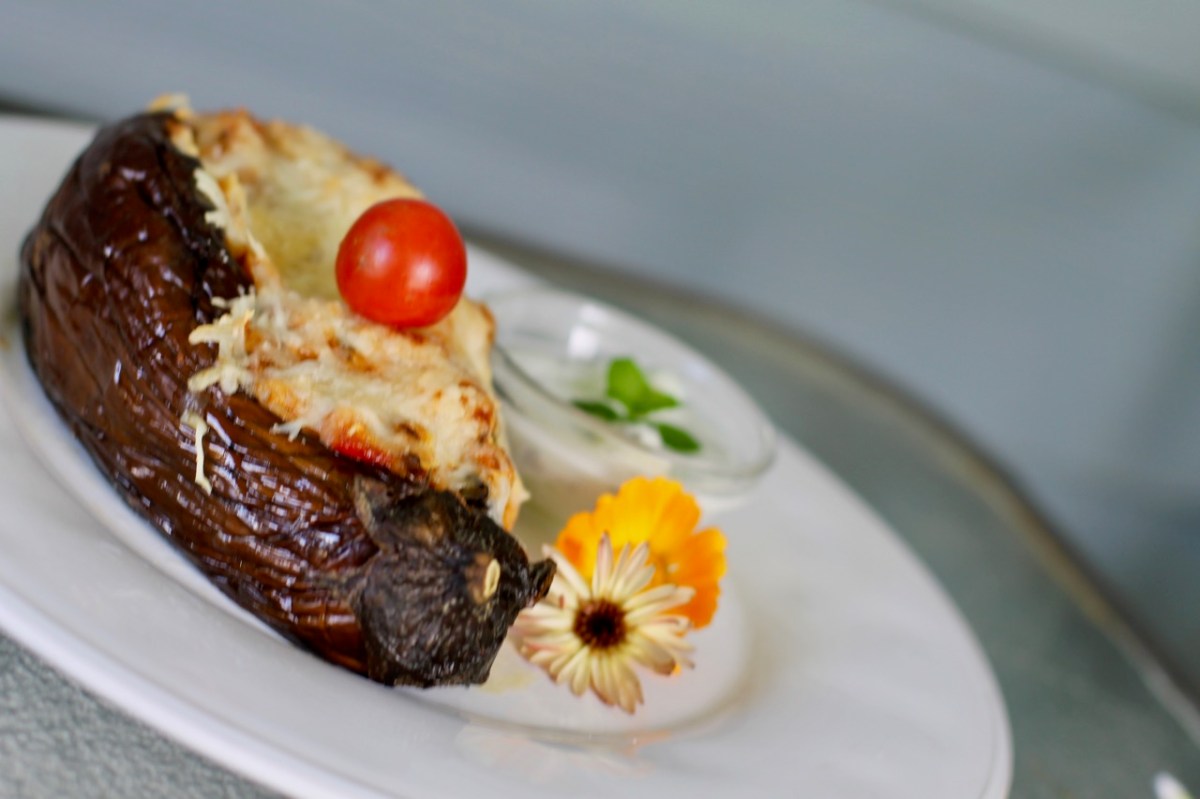
Turkish stuffed eggplants (vegetarian)

This is the vegetarian version of my previous recipe, the Turkish stuffed eggplants (karni yarik). I tried to keep the recipe’s Turkish authenticity but otherwise it is my creation. I replaced the meat with lentils, eggs and cheese and used oregano in the place of mint. I also used more tomatoes to keep the mixture moist. All these ingredients are used in Turkey and hope you will like it as much as I did. If you try it please let me know in the comment section how you liked it.

I can’t help but notice the abundance of goods at the farmers’ market. The tables are filled with all kinds of fruits and vegetables. In fact, it is the time of the year when they have the most varieties available. For today’s post I picked eggplant.  

We associate eggplants with the Middle East but it actually originated from India and has also been popular in other Asian countries for a long time. Today, it is used all over the world.  In Europe, it was a staple until potatoes arrived from the New World. The Turkish have certainly created many recipes with it and believe that they have the best eggplant dishes. The Spaniards had brought it over to the Americas in the 1600s. Eggplants have been used in the United States; however, earlier, people didn’t really know what to do with them. Many just used them for decorations only.

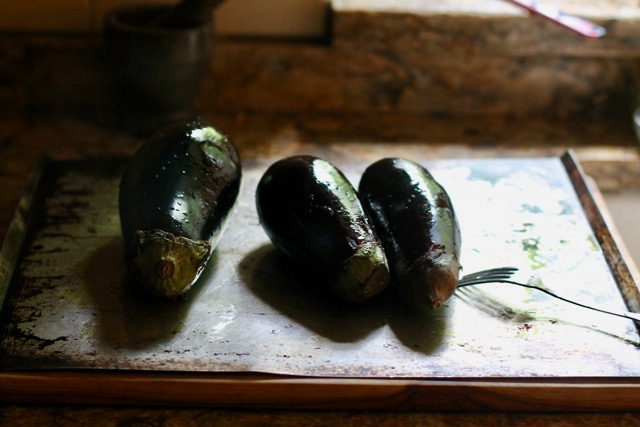
Eggplants come in all kinds of shapes and colors. Shapes can be round or more elongated and the colors can vary from white, green to purple.  In the United States, the rounder, purple, more oblong eggplant is usually available in stores. For this recipe, try to buy these medium sized, fat, purple eggplants that I have pictures of. Also, make sure they are about the same size because different sizes will vary their cooking times. Also they should be nice and firm.

Eggplants belong to the night shade family along with tomatoes and potatoes. It is a cooling bitter plant that is highly nutritious with vitamins A, B, C, K1, E and minerals manganese, magnesium, copper, potassium, calcium, iron, phosphorus, and zinc. An interesting fact is that we often believe that it is a vegetable but in fact it is a fruit. Also, it is thought to be aphrodisiac.

In addition to its nutritional values, people have been using eggplants for other health benefits too. Asians like to use them for their cooling property. It is good for digestion, particularly for stagnation and heat. It helps clear heat that gets trapped during the warmer months. This makes it a valuable plant now, during the Indian summer. In addition, its antioxidants can protect the liver from toxins.

It is also associated with fertility from its ability to unblock stagnation in the liver and the womb. In China, brides are supposed to posses 12 eggplant recipes before they got married. However, pregnant women are advised to limit the consumption of eggplants because of the possibility of miscarriage. 

List of my other eggplant dishes

Recipe

Ingredients

  • 1 cup of cooked rice (about half a cup raw)
  • about 1/4 cup of olive oil
  • 4 medium, equal sized purple eggplants. Try not to get different sizes because they need different cooking times.
  • 1 cup cooked lentils (about 1/2 cup uncooked)
  • 4 oz mushrooms, chopped (I used crimini).
  • 2 lightly beaten eggs
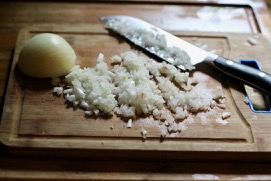
  • 1 finally chopped yellow onion
  • 1 finally chopped peppers (green, red, yellow-your choice)
  • 2 cloves of garlic
  • 1 Tbsp cumin
  • 1 Tbsp dried oregano
  • 1/2 tsp paprika powder
  • 1/4 tsp hot red pepper flakes
  • 1 tsp salt or to taste
  • 6 fresh plum tomatoes or other tomatoes (canned is fine too)
  • 1 cup hard cheese + more for the top
  • freshly ground black pepper to taste
  • 1/2 cup flat leafed parsley

Direction

  • Soak the lentils for a few hours if you have time.
  • Cook lentils.
  • Prepare rice with bay leaves. Use 1/2 cup of rice with 1 cup of water.
  • Bake eggplants. Preheat oven to 350 Fahrenheit. Wash eggplants and put them on an oiled baking sheet. Prick them with a fork in 6-8 places, half inch deep to prevent them from exploding in your oven. Coat them with some olive oil with a brush. Bake them for 45 – 60 minutes or until they are nice and soft, so you can put the blade of a knife through easily. You don’t want them to be hard but they shouldn’t collapse either. Once they start becoming soft, keep an eye on them. If you’re using larger eggplants, you will have to cut them in half lengthwise. Oil the top and proceed like you do with the smaller ones.
  • When ready take them out and let them cool..
  • Prepare the stuffing. Sauté the onion in the oil. When onions are soft but not brown, add the green pepper pieces and continue sautéing the for about 10 – 15 minutes. Add spices (oregano, cumin, paprika), crushed garlic and stir. Then add tomatoes. Cook for about 10 minutes or until tomatoes are well cooked and there is a nice sauce. Take off the heat.
  • Put mixture into a bowl. Add rice, lentils, eggs, salt, ground black pepper, hot pepper flakes and graded cheese (I used 1 cup). Mix.
  • Sauté mushrooms and add to the previous mixture. Mix.
  • Preheat oven to 400 Fahrenheit. Gently cut a slit in the middle down from the top of a whole eggplant making sure you don’t cut through the skin on the bottom. Take out the seeds. You can use the seeds to make babaganoush or just simply discard them.
  • Just like its Turkish name, karni yarik, splitting belly suggests, stuff the inside of the eggplants, their bellies with the stuffing. You can put a little graded cheese and a thin slice of tomato on the top. Put eggplants in a baking dish. Pour boiling water into dish about 1 inch deep. Place dish into the oven and bake for 30 minutes. Take them out when top is brown. Let them cool.
  • Cut off the ends before serving them.
  • Serve warm with cucumber yogurt sauce.
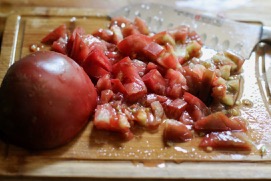
Yogurt Sauce

Ingredients

  • 1 1/2 cups of yogurt
  • 1 longer English, slicing cucumber
  • 1/2 tsp salt
  • 2 cloves of garlic
  • 1 Tbsp of vinegar
  • 2 Tbsp of olive oil
  • 1 Tbsp of dried mint
  • fresh mint

Preparations

  • Peel and slice the cucumber. Place the slices in a bowl, salt and let it sit for 15 minutes. Salting is optional. Strain, squeeze out and discard the liquid.
  • In a separate bowl mix together all the other ingredients, stir well. Put in the cucumbers and gently stir mix them in.
  • Garnish with fresh mint. Serve with the eggplants.

enjoy!

Sources

  • Paul pitchford: Healing with Whole Foods
  • Sally Fallon: Nourished Traditions
  • Nancy Harmon Jenkin’s Mediterranean Diet cook book.  

Text, recipe and photo by twincitiesherbs.com.

Hungarian spaghetti squash stew (tökfözelék)

Some like it white, some like it red … others use flour, some don’t … and could be served hot or cold …  Well, I like it red with flour and served hot. The red color comes from the paprika and the others should make sense. This is one of my favorite recipes and I believe it would make a nice transition into the late summer days as well.

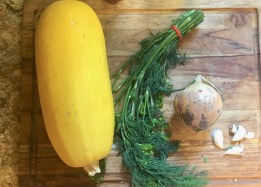
This dish is based on the Hungarian tökfözelék recipe. The sweet spaghetti squash definitely is the main ingredient. It is growing right now and would be perfect for the end of the summer. The other important ingredient that everybody uses regardless of other preferences is dill.

Dill is a unique sweet plant that gives the zesty, tangy flavor with slightly bitter undertones. It helps digestion and calms the mind. I like to balance the sweet flavor with pungent flavors, in this case, the onions and the garlic will do that. Of course, we also have the sour, acidic flavor from the vinegar and the Hungarian staple, sour cream. At the end, we add the salt to create this pleasant sweet and sour dish.

RECIPE

Ingredients

  • vegetable oil (sunflower)
  • 1 larger onion, chopped, or graded
  • 1 Tbsp flour
  • 1 tsp sweet Hungarian paprika powder
  • 1 garlic clove, crushed
  • 1/4 cup cold water
  • 1 smaller spaghetti squash (about 2 lb) (Not exactly what we use in Hungary but it is a perfect substitute).
  • 4 cups chicken stock or water
  • 4 dill springs, (about a hand-full)
  • sour cream
  • 1 tbsp white vinegar
  • salt and pepper to taste
  • red pepper flakes to taste

Preparation

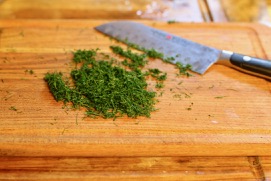
chopped dill

Using the large hole grater
grated squash

  • Prepare the spaghetti squash. Peel and grate through the larger holes of your cheese grater.
  • Soak in 2 tsp salt for 20 minutes. Squeeze water out. This step will make the squash less watery and taste better.
  • Chop the onion fine or you can grate too.
  • Have a 1/4 cup of cold water ready.
  • Sauté the onion with a pinch of salt in a little oil until translucent. When you can smell the aroma of the onion, add paprika powder and garlic, stir and after 1 minute add the cold water quickly that you set aside earlier. Stir.
  • Add the squash meat, stir and cover with water or stock.
  • Bring to a boil and then turn down to medium heat and cook covered for 30 minutes.
  • Also mix 1 Tbsp of flour with cold little water and add a little hot liquid from the dish. Whisk well and add it to the dish.
  • Bring the dish to a quick boil, cook for a few minutes and turn heat off.
  • Add vinegar, salt and pepper. Stir.
  • You can serve immediately but it will taste the best the next day.
  • Serve with chopped dill, a dab of sour cream and some protein (egg or beef dishes would go well). I served it with my Eggplant Parmesan dish. The bitter eggplants complemented this sweet and sour dish nicely.

Enjoy! Jó étvágyat!

Text, photos, recipe by twincitiesherbs.

Hungarian cucumber salad (uborkasalát)

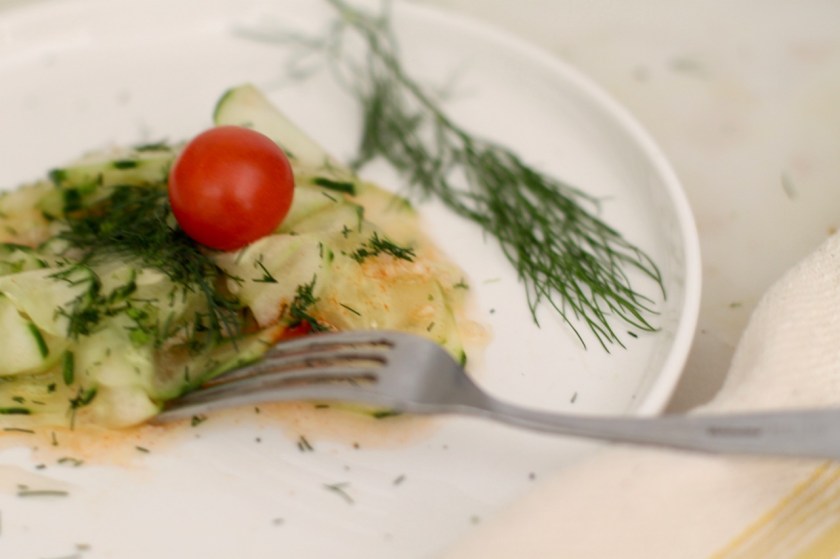
This simple salad has an unique flavor. It is prepared in a vinegar base with Hungarian paprika, garlic and dill and is macerated in the fridge overnight. It is usually eaten with meat or vegetarian main dishes.

Recipe

INGREDIENTS

  • 2 medium garden cucumbers with large seeds or 1 large slicing cucumber
  • 2 tsp salt
  • 1/8 cup vinegar + 1 cup water
  • 2 cloves garlic, crushed
  • a handful of dill, chopped
  • 1 Tbsp vegetable oil
  • 1 tsp sweet Hungarian paprika powder
  • pinch of sugar
  • 1 bunch scallions, optional

DIRECTIONS

  1. Peel cucumbers. Traditionally cucumbers are peeled completely but I sometimes leave a little peel on.
  2. Slice cucumbers very thin, you can use a potato slicer.
  3. Place cucumber slices in a medium sized bowl.
  4. Sprinkle with salt and mix well. Let the salt sit on the cucumbers and release their liquid for at least 15 – 20 minutes.
  5. Squeeze out all the liquid with your hands. Discard this liquid. I like to wash the cucumbers with some cold water to get some of the salt off. (Salting helps remove water so the salad won’t taste watery).
  6. Put the cucumber slices in a medium sized bowl. Add the garlic, chopped dill, oil, paprika, sugar and scallions. Adjust water, vinegar, salt, garlic to taste.
  7. Put the salad in the refrigerator and leave it macerate overnight.
  8. Serve it cold or at room temperature.

enjoy!

Recipe, photo by twincitiesherbs.

Pesto

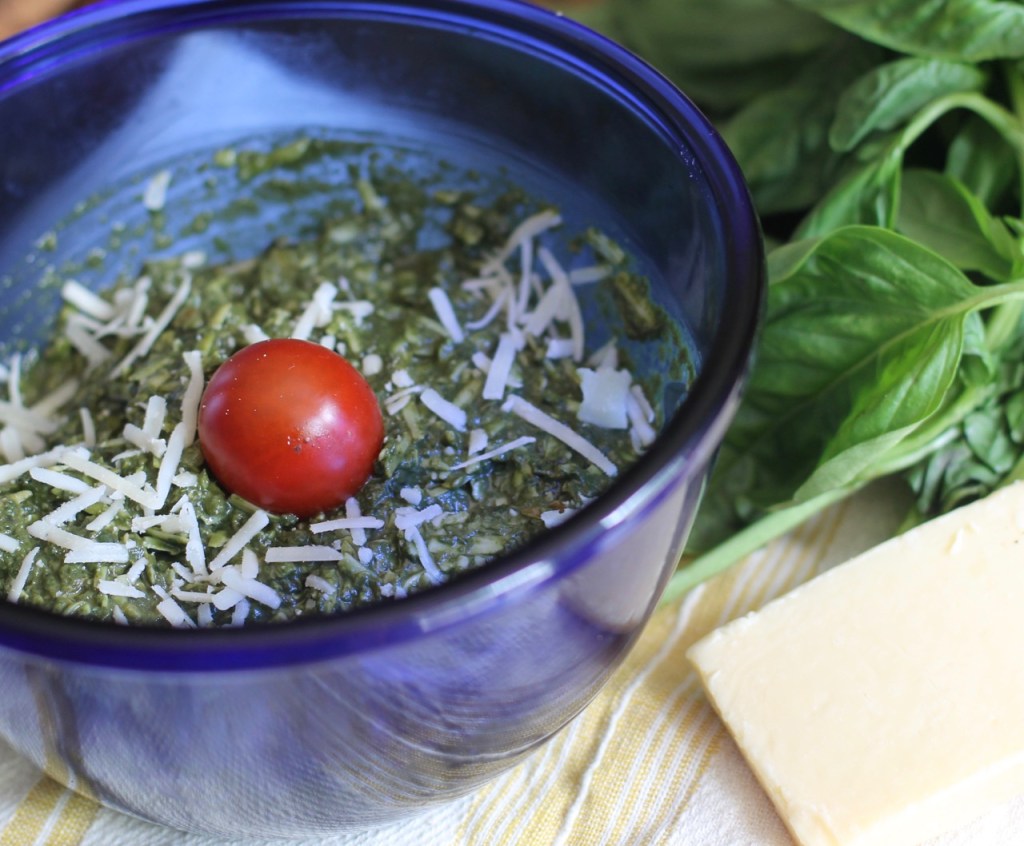
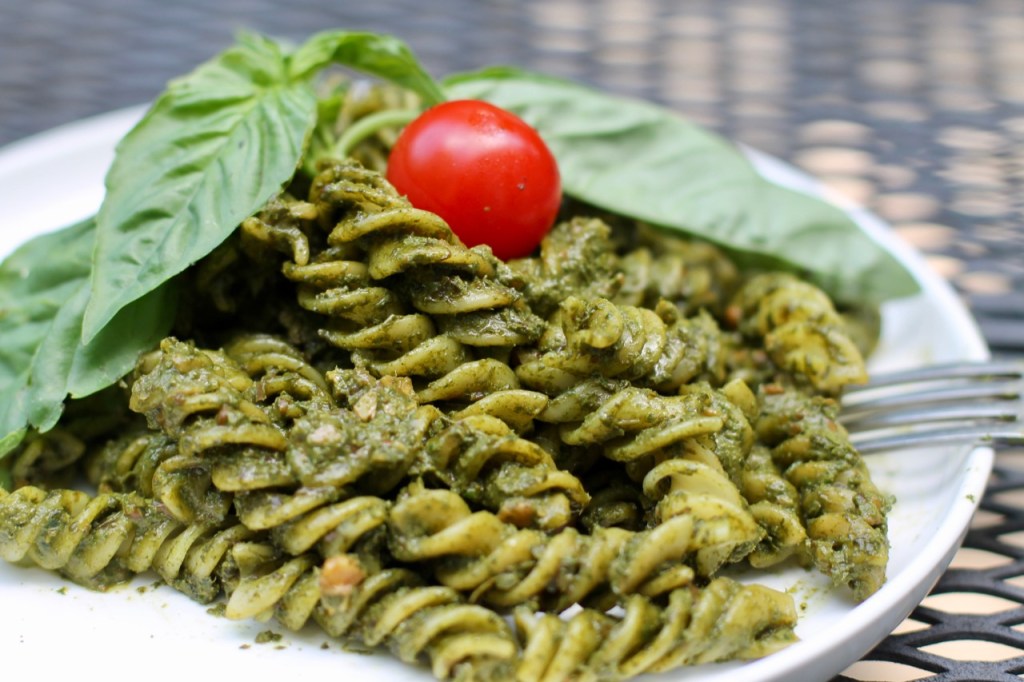
Pesto is a nice sauce to serve on pasta on a hot summer day. We just spent some time in the Mediterranean region where it was very hot. Pesto was great to eat during the day just to satisfy our quick hunger. I really like how the fragrant basil with all its ingredients olive oil, cheese, garlic, and pine nuts can create such a unique dish. Just make sure you use the best ingredients you can find!

Pesto is a unique and delicious sauce that originated in Genoa, Italy, around the 16th century. Originally, it was made in mortars and according to Genoese cooks, pesto can only be made in mortars. In fact, its name or its verb version ‘pestare’ means to pound and grind. Today, we have food processors that would be a fine replacement, just keep in mind that pesto is meant to be pounded and not so much chopped so in other words don’t over process it in the food processor and fold the cheese in at the end by hand.

Recipe

Ingredients

  • 4 cup tightly packed fresh basil
  • 1 cup fresh, cold pressed olive oil
  • 1/2 cup chopped up pine nuts (walnuts are fine too)
  • 4 garlic cloves
  • salt
  • 1 cup freshly grated parmi-giano-reggiano cheese
  • 4 Tbsp grated romano cheese (optional)
  • 1 pound of pasta (farfarelle or any pasta with a large surface area)

Directions

  • Take the leaves off of the stems and wash them well in cold water. Clip off the flowering tips and any brownish leaves if there are any. Put them in a colander and let the water drain off. By the time you have everything else ready the basil should be ready too.
  • Start boiling water for the pasta. Continue according to the package. Drain the liquid. Save 4 Tbsp cooking water for the pesto. Set aside.
  • Measure out all the ingredients.
  • Chop up the garlic with the blade of a sharp knife.
  • I do not have a mortar but I have a small food processor. The following directions are for a food processor. Put the basil in the food processor and process until chopped. (You are chopping at this stage). Add olive oil, pine nuts, chopped garlic, salt and chop quickly, gently just until they are nicely blended.
  • Transfer this mixture into a clean bowl. You will continue mixing in the cheese with a spoon by hand. (Please see explanation above).
  • When adding the pesto to the pasta, add 2-4 Tbsp of the reserved pasta water.
  • Serve with vegetables at room temperature.

enjoy!

Sources

Marcella Hazan: Essentials of Classical Italian Cooking

Hungarian sour cherry soup (meggyleves)

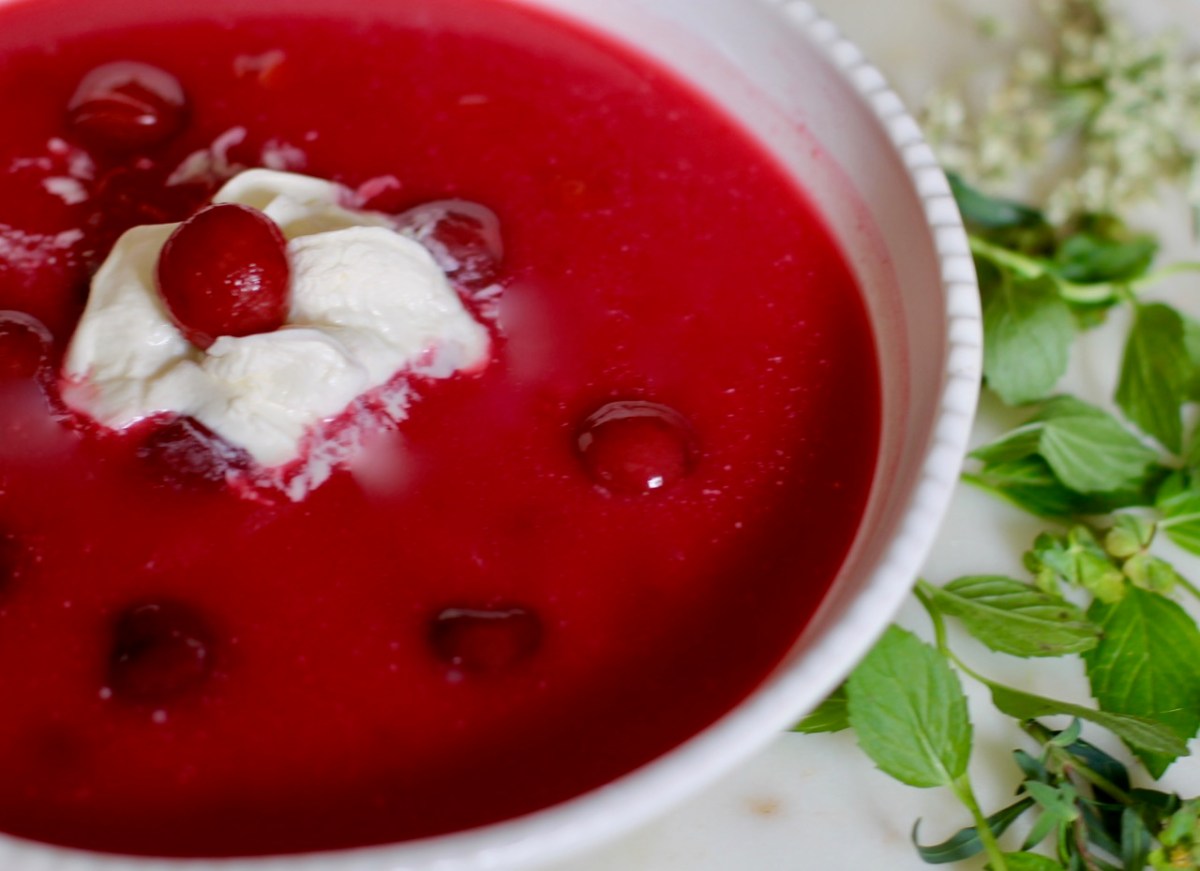
When I was a little girl, I used to go to the farmers’ market with my grandmother to sell her goods. I was in charge of the fruits. Whatever I was able to pick the day before, I could sell. I loved climbing up the tree and picking the fruits. We took the train to the nearest town where the market was. So of course I sold the cherries and the sour cherries. I remember I used to wonder though why the heck people got so excited about sour cherries, why not just buy the delicious sweet cherries. Well, try this soup and you will understand too :).

Honestly, nothing tastes as good as a bowl of cold sour cherry soup on a hot day. Sour cherry soup is popular in many Central European countries. I added a small amount of ginger, cloves and cinnamon to offset the sweetness and sourness of the cherries and orange peel and salt to balance it out nicely. At the end, I thickened the soup with egg yolks. Oh and I added a bit of alcohol, more exactly white wine and brandy (pálinka). The alcohol content will boil away so no worries, kids can have it too. 

The main ingredient is the sour cherries. If you have a tree growing in your back yard, it is the best source for sure. I have seen it in health food stores, farmers’ markets and some specialty shops too but otherwise it will be most likely hard to get fresh. You can get frozen sour cherries, they will work well as long as they are tasty, of course. Also, you can use soft cherries too but the harder kind, the bing cherries will not work. I leave the pits in but take the stems off. In addition to the cherries, I like to add some goose berries or currents to the soup, too.

RECIPE

INGREDIENTS

  • 2 lb sour cherries or soft cherries (Please see note above).
  • 1 cup goose berries, currants (optional)
  • water
  • 1/2-1 cup sugar (depending on your taste)
  • 1 lemon, sliced
  • 1 Tbsp dried orange peel or 2 Tbsp dried
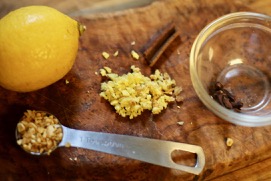
  • 1 Tbsp fresh ginger (chopped)
  • 1-3 whole cinnamon sticks
  • 3-5 pieces of cloves
  • 1-2 cup white wine (Vermouth is fine)
  • water
  • 2 Tbsp of brandy (cherry would be ideal but others are fine too)
  • 1/8 tsp of salt
  • 2 egg yolks, lightly beaten
  • whipped cream for serving

DIRECTIONS

  • Wash the cherries.
  • Put them into a medium sized pot along with the sugar, orange peel and lemon slices. Add water, wine and brandy. (The liquid should be about 1-2 inches above the cherries).
  • Bring to a boil and cook for about 10 minutes on medium heat with the lid. Continue cooking as you add the cloves, cinnamon, ginger and and cook for 10 more minutes on low heat with the lid on. We add the ginger, cinnamon and cloves in later because they only need 10 minutes of cooking.
  • Turn off the heat and take the cover off. Wait for 5-10 minutes before adding the egg yolk to the soup.
  • Add the egg yolk. Mix the yolk with a little liquid from the soup. Stir in gently so it is mixed nicely in the soup.
  • Let the pot cool on the counter.
  • Chill the soup in the refrigerator overnight but at least for a couple of hours.
  • Take out the cinnamon sticks, lemon slices and cloves.
  • Serve cold with whipped cream.

enjoy!

Text, photos, recipe by twincitiesherbs.

Kohlrabi soup (karalábé leves)

Yes Kohlrabi soup! … a simple and tasty soup! I am vacationing at my parents’ house and rediscovering this interesting vegetable. My mom apparently used to make it when we were kids but somehow it didn’t get my attention back then. I do throw it into soups in the summer but have never thought of using it as a main ingredient. What an amazing soup with an interesting flavor.

Honestly, when I heard she made kohlrabi soup, I can’t believe but I actually told her that the kids will not eat it. Well, to my biggest surprise, my kids loved it and asked for seconds! So I think I can add, it is a kid friendly soup as well.

Kohlrabi is a cross between wild cabbages (kohl) and turnips (rabi). It has a distinct earthy, nutty flavor and is mildly sweet and pairs well with the sweet carrots. There are several varieties and can be purplish and white greenish in color. I personally like the purple ones for its beautiful vibrant color but there is no difference in flavor.

They tend to be ready late spring and early summer. If they are left on the vine too long, they get too big and woody. Try to pick them on time to avoid this as it can effect the flavor or buy the smaller or medium sized ones avoiding the larger ones. The meaty part above the ground is used in general but the leaves are edible, too. In fact, the leaves have even more vitamins and minerals than the meaty part.

The recipe

Ingredients

  • oil (I used sunflower seed)
  • 1/4 cup of water
  • 2 medium sized kohlrabi or 4 smaller ones, shaved with a cheese grader
  • 1 medium sized carrot cut into long or circular pieces
  • 1 tsp curry powder or 1 tsp caraway seed, 1 tsp thyme, 1 tsp marjoram
  • 1 tsp Hungarian sweet paprika powder (make sure it is authentic)
  • 6 cup chicken or vegetable stock
  • 1/4 cup of millet or rice
  • croutons or twice baked bread pieces
  • parsley
  • salt to taste

Directions

  • Make the stock. Omit if you already have the stock.
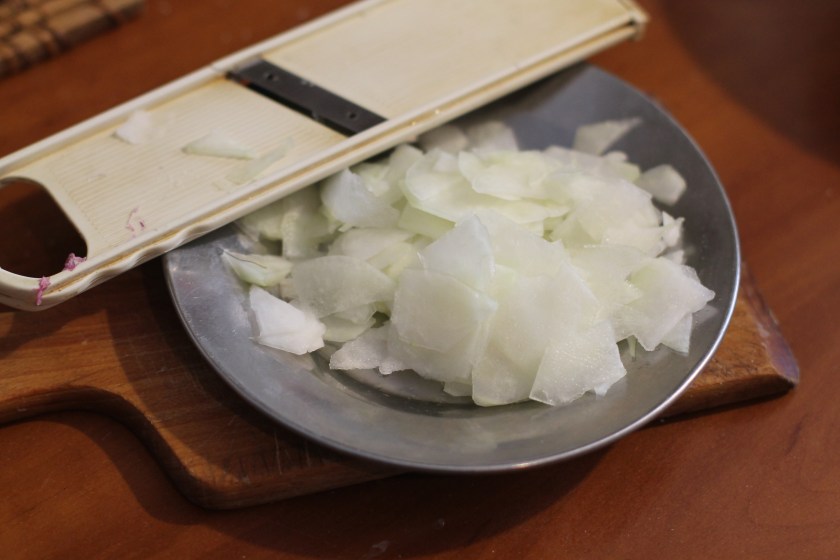
  • Peel the kohlrabi and shave it on a grader, – this is my mom’s secret. She claims that the shaved pieces make this soup pleasant instead of cutting them into chunks. You can keep the leaves from the top and put them in the soup as well.
  • Peel the carrots and cut them into small pieces.
  • Satué the kohlrabi in a little oil for 5-10 minutes. Add the curry and the paprika in for about 20 seconds, stir and add a little cold water, stir. If you don’t use curry, you can add caraway seeds, thyme and marjoram here.
  • Add the carrots and the millet and cover well with the stock. Bring to a boil and cook on low heat for 20 minutes. (The millet needs 20 minutes to cook).
  • Serve hot with the croutons, parsley and hot pepper.

Enjoy!

Source:

https://www.hazipatika.com/taplalkozas/zoldseg_gyumolcs/cikkek/karalabe_az_eltekozolt_levelek/20080110163701?autorefreshed=1

Hungarian sugar snap pea soup (zöldborsó leves)

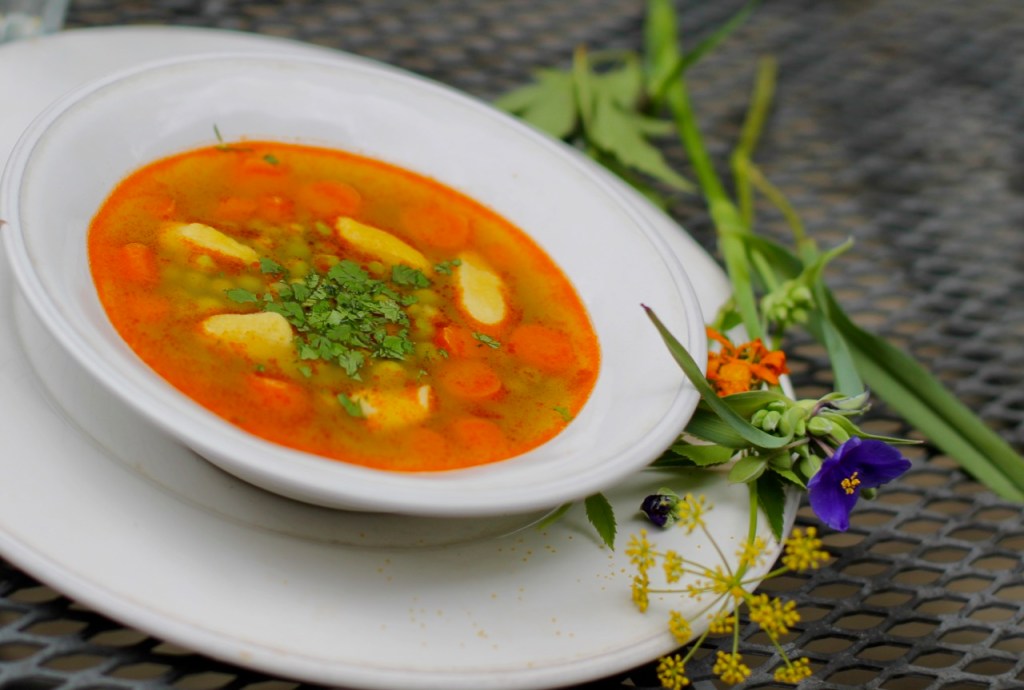
We just celebrated the Summer Solstice and suitably sugar peas are ready!  When I can make pea soup, I know summer is here. So why is pea soup so special? We can buy frozen peas all year long. Yes, it is true but we cannot make Hungarian pea soup with frozen peas alone, we need the fresh shells as well. 

This soup brings back some very nice memories. My mother and my paternal grandmother also made it. We had it regularly in the summer. It is such a tasty soup, it became a big favorite in my family now too. This nourishing soup is mildly sweet, filling and refreshing.

Unfortunately, these vegetables are becoming harder and harder to find. You will not be able to find them at supermarkets easily. However, they should be readily available at farmers’ markets and health food stores. Or just simply grow them in your garden. Again, the tastier your vegis are, the better your soup will be!

RECIPE

Ingredients for the soup

  • 2 lbs sugar snap peas with the shells, divided
  • oil (I like sunflower)
  • 1 tsp sweet Hungarian paprika (make sure it is authentic)
  • 6 fresh carrots, sliced
  • 1 kohlrabi
  • 1 tsp salt or to taste
  • parsley for serving
  • red hot pepper to taste (optional)
soup stock
dumplings

Ingredients for the dumplings (csipetke)

  • 1 large egg
  • 1/2 tsp of salt
  • 1/2 cup semolina or white wheat flour – possible a bit more
  • 1 tsp of oil

Directions

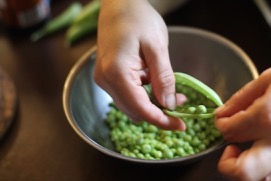
  • Start shelling the peas. Put the shells and the peas in separate bowls.
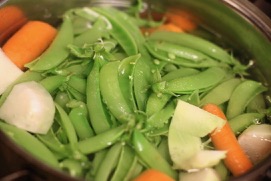
  • Wash the shells and put them into a larger pot. Add 3 stalks of carrots and 1 kohlrabi and enough water to cover all vegetables. Bring to a boil and cook on medium low heat for about 20 minutes.
  • Meanwhile, prepare the dumplings (csipetke). This can be a little tricky. Lightly whisk the egg, add the salt and the oil. Start slowly adding the flour, enough so a ball is formed. You don’t want it to fall apart in the soup but you also don’t want it to be hard as rock either. Try to find something in-between. The amount of flour really depends on how much the egg takes up. Once you find the right consistency, keep kneading it for about 5 minutes. Let the dough rise for 1 hour if possible. Set aside.
  • Have 1/4 cup of cold water ready for the soup.
  • Start preparing the soup. Heat the oil in a medium sized pot with a thicker bottom. When ready, put in the peas and stir. Sauté the peas for 5- 10 minutes (the younger ones for less, the older ones longer). Make sure there is enough oil for the flour. Add 1 Tbsp flour and stir. This thickens the soup. Then in 5 minute you can add the paprika and stir. (This activates the paprika). In 1 minute add the cold water and stir making sure there are no lumps in the soup.
  • Add the pea shell stock made earlier. Make sure the solids are strained from the liquid.
  • Wash and scrape the outside of 3 carrots. Cut them up into bite sizes.
  • Peel the kohlrabi and cut it into small, bite sizes (optional).
  • Put the carrots and the kohlrabi in the soup.
  • Bring to a boil and cook on medium low heat for about 20 -30 minutes.
  • While the soup is cooking, we will make the dumplings. Cut the dough (made earlier), into 6 long pieces and roll each to finger thickness. Each will make about a 6 inch long dough. With your thumb and index finger you can pinch a little piece off the dough or you can use a knife for this too. ‘Csipet’ means ‘pinch of’ in Hungarian hence where the name csipetke for this dumpling came from. When the soup is done, you can put the little dumpling pieces in the soup. They should be ready in a few minutes when they come up to the surface of the water.
  • Add the salt and red hot pepper to taste.
  • Serve hot with parsley.

enjoy!

Sources

George Lang: George Lang’s Cuisine of Hungary

Paul Pitchford: Healing with Whole Foods

Native American black bean burger

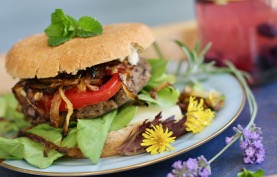
Summer is here and burgers are great for summer grilling! The combination of black beans, wild rice and quinoa make a tasty American burger. Each one is native to the Americas and has a rich history. Usually I am not a big fan of food substitutes but I think this is very tasty. It seems like this burger even tricks my feisty, meat lover corgi too. Seriously, he just sits and stares at me, hoping to get a little.

The moist burgers are highly nutritious and easy to take on trips. Oh and those mushrooms are mouthwatering … Just remember, the beans and the quinoa need to be soaked ahead before you cook them. 

There is always a pot of beans soaking in traditional Latin American homes, a pot waiting to be cooked for the next meal. As soon as a meal is finished, the preparation for the next one starts. And they eat beans for almost every meal.

Why should the beans be soaked? Wouldn’t cooking them for a longer time be enough? Beans and quinoa are nutritious but they also contain particles that actually can cause problems if not removed.  These anti-nutrient particles such as phytic acid, enzyme inhibitors can be only removed by soaking. In addition, to cost, this is also a good reason to make your own beans :). Remember to pour off the soaking liquid and add fresh cold water for cooking.

Black Bean Burger Recipe

  • Makes 8- 10 burgers
  • The inspiration for this recipe came from Heid E. Erdrich’s Original Local cookbook.

Ingredients

  • 1 cup of dried black beans (heirloom is the best if you can get it) or 1 can (14oz), rinsed and drained well.
  • 1/2 cup of uncooked wild rice (preferably the hand harvested )
  • ¼ cup of quinoa (or replace with 1/4 cup of wild rice) 
  • 1 tsp cumin
  • 1 tsp coriander
  • 1 egg, lightly beaten
  • 1 tsp paprika
  • ½ tsp salt
  • 1/8 tsp ground black pepper or to taste
  • 1 tbsp oil (olive, sunflower)
  • 2 cloves garlic
  • ½ cup bread crumbs
  • 1/4 tsp dried hot pepper (optional)
  • oil for cooking the patties (sunflower, grape seed)

To garnish  

  • 1 onion thinly sliced and sautéed or raw
  • 8 – 10 heads of portobello mushrooms grilled or cooked
  • lettuce, arugula
  • mustard
  • ketchup
  • 8- 10 buns
  • cheese
  • tomato slices
  • mayonnaise
  • pickles
  • sheeps’ milk cheese

Directions

  • Soak beans and quinoa (if used) overnight or at least for 8 hours. 
  • After 8 hours, rinse water off of the beans. Place them in a bigger pot, cover well with water, bring to a boil and turn down the heat. Cook for 2 hours covered on low heat. You can also use a pressure cooker to cook the beans (check pressure cooker manual for cooking time).
  • Rinse the quinoa. In a small pot add the rinsed quinoa and 1/2 cup of water. Bring it to a boil, turn down and cook on low heat covered until the liquid is absorbed, for 12-15 minutes. (omit if using wild rice instead).
  • Cook wild rice in 1 cups of water. Bring it to a boil and then turn the heat down and cook for 20 minutes half way covering the pot. Do not cover the pot completely. (Use 1.5 cup of water for 3/4 cup of wild rice).
  • In a large bowl, mash the cooked beans leaving it a bit chunky. This is a quick and easy process, I would not use a machine to do this step.
  • Add the cooked quinoa, cooked 3/4 cup of wild rice and the rest of the ingredients. Mix thoroughly. 
  • With your hand, form 4 patties.
  • Heat a pan with some oil over medium heat.
  • Place the patties in the pan and cook them for 5 minutes on each side. Use a wide spatula for turning and taking the patties out. 
  • Slice the onions. Sauté the onions for about 10-15 minutes over high medium heat or until they turn slightly brown. (If using).
  • Sauté the portobello mushroom heads in a little oil for 10-15 minutes or until mushrooms are soft. (If using).
  • Serve patties warm and garnish with condiments, vegetables of your choice. See earlier suggestions.

enjoy!

Sources

Sorrel nettle stew (Sóska csalán fözelék)

Every year, I look forward to spring just so I can make this dish. The main ingredients are sorrel and nettle. The sorrel gives a pleasant lemony flavor and the nettles add the substance, texture and protein to the dish. It is a simple recipe to make, the hardest part is really to find the sorrel and the nettles. Our ancestors regularly ate them in the spring but today unfortunately they are seldom available in stores.

My recipe is based on the Hungarian sorrel stew recipe, sóska fözelék with the addition of the nettles. Years ago, I could not find any recipes that had nettles so I decided to experiment. So I decided to make this dish with sorrel and nettle. I make it with half sorrel and half nettle, of course add as much nettles as you desire. I really like how this recipe turned out.

Before I post the recipe, I would like to talk about nettles and sorrel. Nettle is like the super food of the US and Europe. When I think of Nettles, two things come to my mind: nutritive tonic and the kidneys. It is very high in protein, vitamins, and minerals and makes a nutritious food for sure. With its sharp, tangy taste, sorrel adds zest to dishes. However, it is not just added for its flavor but it is also a nutritious goodness. Sorrel is a green leafy vegetable with packed with vitamins and minerals. No wonder our ancestors frequently included them in their diet.

RECIPE

INGREDIENT

  • 1 lb of washed sorrel or you can use spinach too but the dish will taste differently.
  • 1/2 – 1 lb washed nettles (the nettles should be fresh and stingy but they will not hurt your mouth after you cook them).
  • oil
  • 2 strips of bacon (optional)
  • 1 onion, finally chopped
  • 3 cloves of garlic, mashed
  • 1 tsp sweet Hungarian paprika (powder)
  • few springs of dill, chopped
  • about 2 cups cold water, vegetable or meat stock (preferably home-made)
  • 1/4 cup sour cream
  • 1 tsp salt or to taste
  • freshly ground pepper

PREPARATION

  • Saute the onions in some oil until translucent and can smell the wonderful aroma of the onion.
  • If desired add bacon and render until crisp.
  • Keeping the oil warm add the paprika and the garlic, mix for 1 minute and add cold stock.
  • Add sorrel and nettles.
  • Bring to a boil.
  • Turn the heat down and cook on low heat for about 15 minutes.
  • When done, take off heat and let the dish cool off.
  • Cream with an immersion blender. Here you are trying to create a sauce with a little texture.
  • Add salt, sour cream and black pepper to taste.
  • Serve on mashed potatoes along with fried eggs or hard boiled eggs. Sprinkle dill on top.

enjoy! Jó étvágyat!

SOURCES
  • Paul Pitchford: Healing with Whole Foods
  • Matthew Wood: The Earthwise Herbal

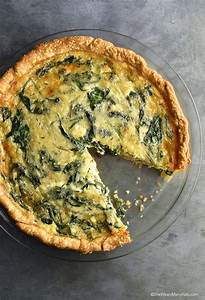
Spinach Quiche

This is a lovely dish that can be made for any occasion. I like to take it to parties because it is tasty and transports easily. It is also great for Easter but can be served any time. 

Quiche is a custard like mixture of cream, eggs, cheese along with vegetables in a shell of savory pastry dough. According to records, it originated in Lorraine, medieval Germany. It was called Kuchen that was made with eggs, cream and lard baked into a primitive base made with flour, water and salt. Along the history, Loraine became part of France when cheese was added and became Quiche as we know it today. I can easily see people in villages coming up with this dish. Just throw a little bit of eggs and some cream into a pie shell along some vegetables and meat and there is a fabulous dish that makes a meal. 

This is not just any old quiche recipe. The pie shell is from Martha Stewart cookbook. It is her pie shell recipe that she uses for her fall pies but it works great here as well. The filling is my creation.

Make sure you get the best quality cheese you can find or afford. Your dish will surely benefit from it. I use French or Midwestern cheeses.

RECIPE

INGREDIENTS FOR THE DOUGH
  • 1 ¼ cup flour
  • pinch of salt
  • 8 T (1 stick) cold butter
  • 7 Tbsp of icy water or more if needed
INGREDIENTS FOR THE FILLING
  • 1 lb vegetables  I used spinach but you can use many others like asparagus, nettle, chard, broccoli etc. -chopped.
  • 4 oz mushrooms like white bottom or crimini, chopped
  • 3 slices of bacon (omit if prepared for vegetarians)
  • 2 cloves of garlic
  • 200 gram of feta cheese (crumpled into small pieces)
  • ½ cup milk
  • ½ cup cream
  • 1/8 tsp nutmeg
  • ¼ tsp fresh ground black pepper
  • ½ tsp tarragon (crumpled between the fingers)
  • 3 whole eggs (lightly beaten)
  • 200 gram graded cheese like Gruyere, Parmesan, divided. Leave some for the top.
PREPARATION
  • Chill water in the freezer for 10 minutes.
  • Preheat oven to 350 F.

MAKING THE SHELL

  • Add the salt to the flour and mix it with the butter quickly in a food processor or with your finger tips.
  • Add the chilled water and mix quickly until there is a nice ball.
  • Wrap the dough in a plastic wrap and put it into the refrigerator for about 1 hour.
  • Take it out of the fridge. Using a rolling pin quickly roll it out into a circular shape so it fits the dish you use to bake the dough in.  Set it into the dish. You can press down into the dish so it fits snugly. 
  • Put it into the fridge for another hour.

PREPARE THE FILLING

  • Fry up the bacon for 5 minutes in in some oil. Add the spinach and continue to cook for 5 more minutes.
  • Sauté the mushrooms in a separate dish. Add to the spinach mixture.   
  • Put in this mixture in a medium sized bowl. Add the crumbled feta, whisked eggs, milk , cream, black pepper, nutmeg, tarragon. Mix.

PREPARE THE CAKE

  • Put the mixture in the pastry shell. 
  • Grade some cheese on the top.
  • Now it is ready to be put into the oven and bake for 40 minutes or until done. When the blade of a knife comes out clean, it is ready.
  • Let cool. Serve warm.

enjoy!

Source

Martha Stewart

Text and photo by Twincitiesherbs.